
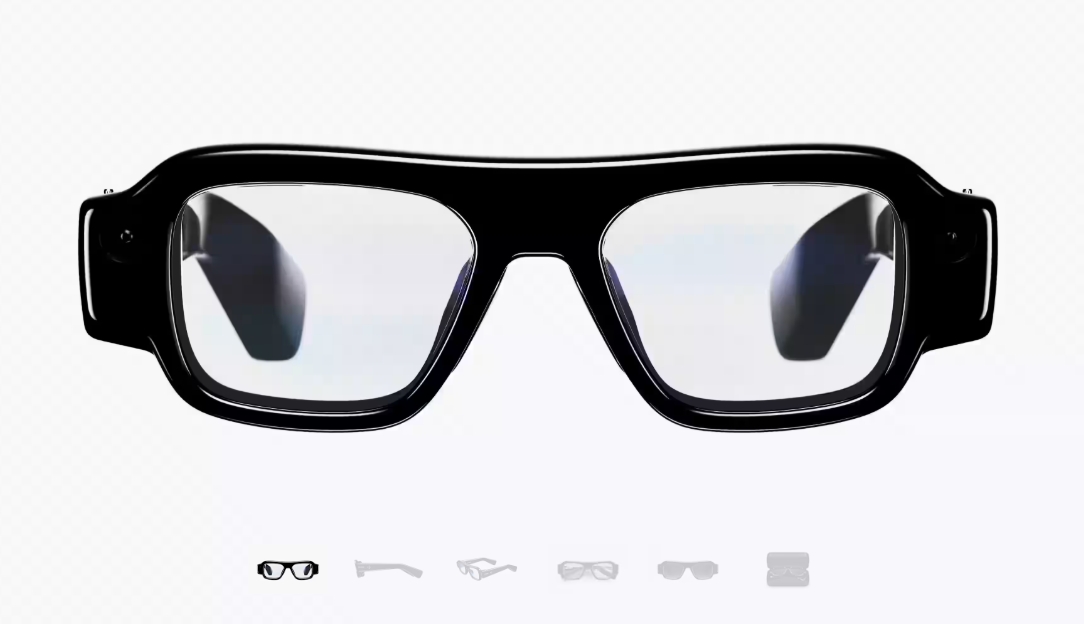
While the vast majority of AI smart glasses on the market follow the “smartphone accessory” model—focusing on audio translation and transcription while relying on a phone’s processing power—Snap Specs offers a different answer: a standalone, consumer-grade AR headset that operates entirely independently of a smartphone and possesses its own onboard computing power. Refined over more than a decade, Snap Specs integrates waveguide optics, a dual-chip architecture, dual AI assistants (OpenAI and Google), and spatial hand tracking, aiming to pack spatial computing capabilities into a pair of glasses suitable for everyday wear. Priced at $2,195 (approximately 15,000 RMB) and targeted at tech enthusiasts, developers, and early adopters, the device will launch first in North American and European markets this autumn, with no current plans for a release in China. This article provides a comprehensive analysis of this landmark AR-AI hardware, drawing on official demonstrations and hands-on testing by developers.
I. Product Positioning: Not Just for Media Viewing—A Standalone Spatial Computing Terminal for Daily Use
Mainstream AR glasses generally fall into two categories: screen-casting glasses designed for media consumption (requiring a wired connection to a phone or console to provide a giant-screen experience) and lightweight AI audio glasses (offering voice interaction but lacking spatial visual displays). Snap Specs occupies a unique position between VR headsets and standard smart glasses: it operates as a standalone, all-in-one device requiring no cables or external computing packs, delivering a complete suite of capabilities—spatial AR visuals, on-device large AI models, and gesture interaction—the moment you put them on.
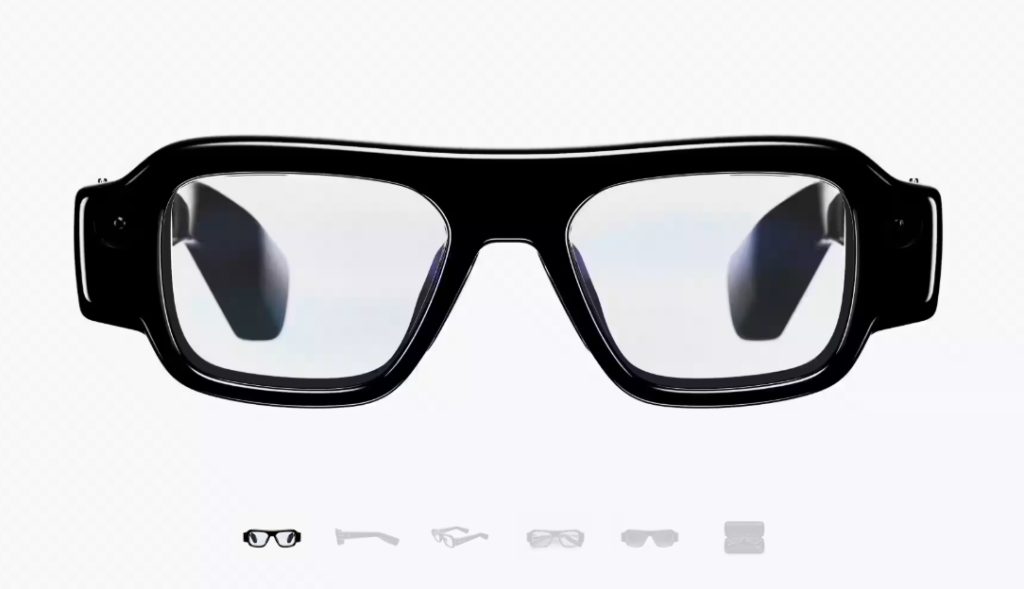
Hardware Specifications: The device comes in two frame sizes (47mm and 52mm) weighing 132g and 136g respectively, featuring TR90 polymer frames and support for custom prescription lens inserts. It is powered by dual Snapdragon chips—one dedicated to computer vision and spatial tracking, the other handling AR applications and AI tasks. It utilizes a full-color LCoS waveguide display with a 51° field of view and 1.6 million-color support. Motion-to-photon latency is as low as 7 milliseconds, and it supports high-precision bare-hand tracking. The lenses employ the same electrochromic technology found in the Boeing 787, allowing for a transition between clear and sunglass modes within 10 seconds to adapt to varying indoor and outdoor lighting conditions. The device offers up to 4 hours of continuous use on a single charge, with the included charging case providing four additional charges for a total battery life of up to 20 hours.
Compared to the previous developer edition, the new Specs feature a significantly more compact design. The entire computing unit, perception cameras, and waveguide modules are integrated directly into the frames, eliminating the need for an external host unit. The goal is to enable all-day wearability during commutes and outings.
II. Analysis of Four Core Use Cases: Overlaying AI and Digital Content onto the Real World
- Spatial AI Assistant Powered by Dual Large Models: Visual Awareness and Real-Time Contextual Services
This is the core differentiator of Snap Specs, setting them apart from standard glasses that rely solely on voice-based Q&A. The device integrates AI assistants from both OpenAI and Google. Leveraging multi-camera environmental perception, the AI directly interprets the real-world scene before your eyes rather than merely processing voice commands.
Scenario demonstrations: Look at a street-side building, and the glasses instantly display information about it within your field of view; observe a mechanical object, and step-by-step repair instructions appear as an overlay; while walking outdoors, navigation arrows hover over the actual path, eliminating the need to look down at a phone; when reading physical documents, the system provides real-time translation, summarization, and key point extraction. The AI assistant is not confined to a dialogue box; instead, it anchors information directly onto real-world objects.
The AI capabilities utilize a hybrid on-device and cloud-based architecture: basic recognition tasks run locally, while complex large-model operations are processed in the cloud. Privacy protections are built into the system: an LED indicator on the outside of the temple lights up whenever the camera or microphone is active, all sensitive operations require user authorization, and data can be managed locally to mitigate privacy risks associated with daily wear.
- Spatial Interaction: Bare-Hand Gesture Tracking and Mid-Air Interface Control
While traditional AR glasses often rely on touchscreens, voice commands, or external controllers, Snap Specs prioritize natural, bare-hand interaction. Using multiple spatial perception cameras to track hand gestures, users can tap, drag, and resize floating windows in mid-air. This allows for a virtual workspace—featuring a screen equivalent to a 24-inch monitor—positioned anywhere in the field of view, enabling work, document reading, and web browsing without a physical screen. For media consumption, the system provides a virtual display equivalent to a massive 115-inch screen, with windows that can be freely moved, resized, or minimized without occupying physical desk space. In developer demonstrations, gesture recognition is responsive and fluid; a low latency of 7ms ensures stable anchoring of virtual windows, preventing noticeable drift when the user walks or turns their head. However, recognition success rates drop in complex, brightly lit environments or during rapid hand movements—a common limitation of current spatial gesture technologies. - AR Social and Spatial App Ecosystem: Snap Lens Ecosystem Integration
Leveraging Snap’s vast Lens developer ecosystem, Specs can run a wide array of existing AR filters, spatial mini-games, and interactive applications. Users can generate virtual chessboards or instrument-learning guides on tabletops and share the same AR space with others; friends in different locations can view the same virtual objects, enabling collaborative interactions and AR gaming.
Open-ear spatial audio speakers allow users to remain aware of their surroundings—listening to audio or AI-generated updates while commuting or walking—without compromising safety. Bluetooth notification support projects messages directly into the AR field of view, eliminating the need to take out a phone.
III. Wearability, Battery Life, and Real-World Pain Points
Weighing 132–136g, the device is still heavier than standard optical glasses; prolonged wear causes pressure on the bridge of the nose and behind the ears, with fatigue setting in after 2–3 hours of continuous use—falling short of the “imperceptible” comfort of regular glasses. The temples are noticeably thicker than those of standard glasses, making the device highly conspicuous and difficult to pass off as ordinary, low-profile eyewear.
Regarding battery life, the device offers 4 hours of mixed-use runtime; however, continuous high-load operation—such as sustained AR display and AI processing—further reduces actual usage time. Heavy use relies heavily on the charging case, making all-day operation without a charging source impossible.
Optical waveguide hardware has inherent limitations: color degradation occurs when viewing from wide angles, and maintaining virtual image brightness in bright light remains a challenge. The high price tag of $2,195 effectively excludes average consumers; the current target audience consists primarily of developers and tech enthusiasts, creating a high barrier to entry for the mass market. IV. Review Summary: Key Highlights and Current Shortcomings
✅ Key Strengths
- Truly standalone all-in-one device: Eliminates the need for smartphones, cables, or external computing units; full spatial computing capabilities are integrated directly into the headset, representing a significant direction for consumer AR glasses.
- Spatial AI experience: Powered by dual large models (OpenAI + Google), the AI directly understands the real-world scene in front of the user and overlays information onto the physical world, transcending the limitations of traditional voice-based AI glasses.
- Electrochromic lenses: Seamlessly switch between transparent mode (indoors) and sunglass mode (outdoors), solving a major pain point for outdoor AR usage.
- Low-latency, hands-free spatial interaction: No controllers needed; virtual windows are controlled via mid-air gestures, offering natural interaction logic for work, media consumption, and gaming.
- Privacy-first design: Mandatory indicator lights for camera and microphone usage and a preference for local processing provide a secure foundation for daily wear.
⚠️ Current Shortcomings
- High price barrier: Positioned for the “pioneer” market at $2,195, it remains far from mass-market adoption.
- Weight and aesthetics: Starting at 132g, it is heavier than standard glasses, potentially causing fatigue during prolonged use; its distinctive appearance makes it difficult to wear inconspicuously in daily life.
- Nascent AR app ecosystem: Many applications are merely ported versions, and the number of high-quality, native AR experiences is limited.
- Battery life: Limited standalone battery life—which shrinks further during intensive AR/AI tasks—necessitates the use of the charging case; optical waveguides suffer from inherent issues like brightness limitations and color shift when viewed off-axis.
- Limited availability: Initially launched only in North America and Europe with no current plans for a domestic (Chinese) release, meaning users in China cannot directly access the full service suite.
V. Target Audience and Conclusion
Target Audience: AR developers, tech hardware enthusiasts, and spatial computing fans; suitable for early adopters willing to pay for cutting-edge technology despite an immature ecosystem. It is not recommended as a primary pair of glasses for the average consumer.
Snap Specs is not a mature consumer product aimed at the general public; rather, it serves as a prototype that answers the call of the spatial computing era. It successfully realizes the vision of “standalone AR glasses + spatial AI assistant,” proving the feasibility of packing full computing power, sensing capabilities, and large AI models into a pair of glasses suitable for outdoor wear. However, practical hurdles—namely weight, battery life, price, and ecosystem—still stand in the way.
On one side lies the path of AI glasses that focus solely on audio and prioritize lightweight design; on the other is the “all-in-one, full-fledged spatial computing” approach exemplified by Snap Specs. While it offers a glimpse into the future of wearable devices, it also demonstrates that truly accessible, consumer-grade AR glasses still have a long way to go.
Related reading: Rokid Max 2 In-Depth Review · Luxshare “Lark Air” AR Glasses · In-Depth Review of Bites 2 Lite Smart Pet Camera
2 thoughts on “Snap Specs AR-AI Glasses: A Decade in the Making”