
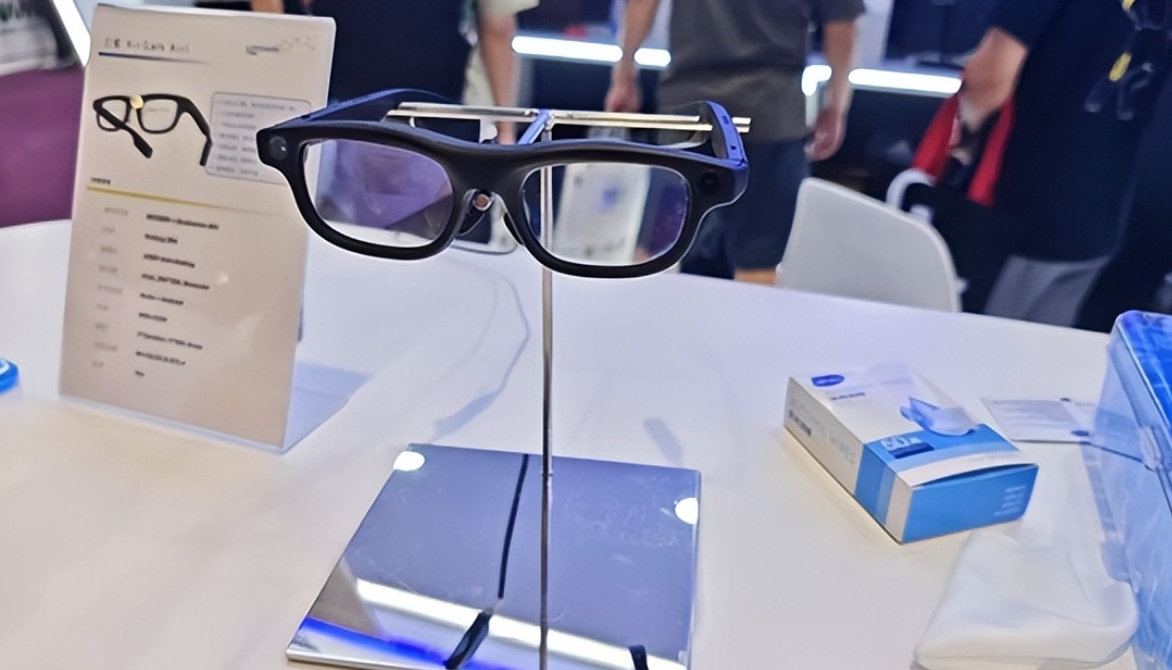
On September 9, 2026, at the CIOE (China International Optoelectronic Exposition) in Shenzhen, Luxshare Precision—in collaboration with Appotronics and Mude Weina—officially unveiled the “Lark Air” AR glasses. This is not a mass-market retail model available for immediate consumer purchase; rather, it is the industry’s first ultra-compact, full-color LCoS “one-to-two” AR system prototype. Its value lies not in immediate availability, but in its attempt to resolve a core, long-standing contradiction in consumer AR: balancing high-brightness full-color display, miniaturized form factor, and low power consumption. It charts a new course for the next generation of AI-enabled AR wearable hardware.
I. Core Optical Hardware: The LCoS Optical Engine is the Key Highlight
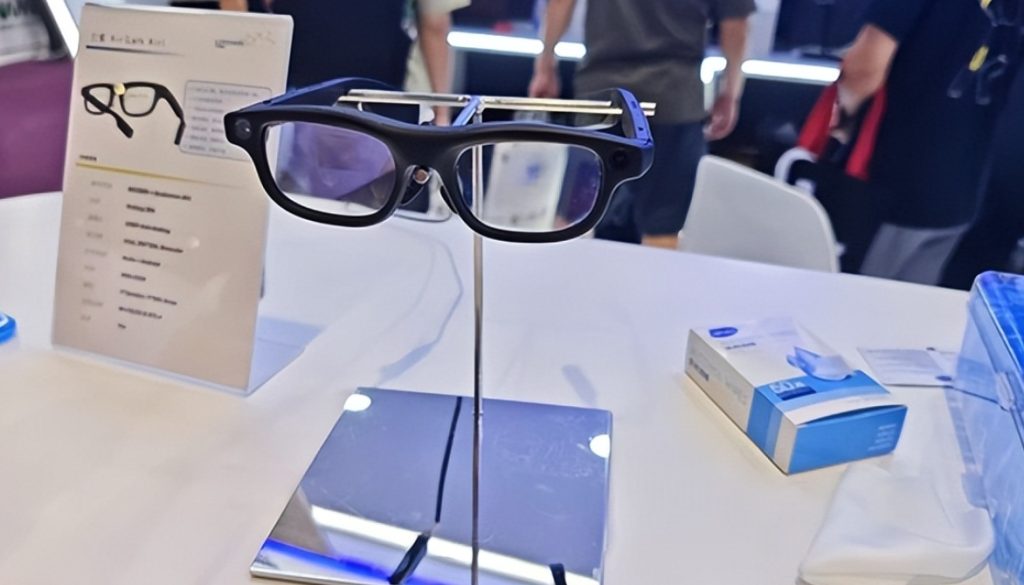
Mainstream AR glasses currently on the market either utilize Micro-OLED optical engines—resulting in bulkier designs—or rely on monochrome engines that limit color performance. Lark Air adopts an ultra-compact, full-color LCoS “one-to-two” solution, which serves as the exhibit’s primary technical selling point.
- The monocular display engine volume is a mere 0.25cc, enabling binocular full-color imaging;
- Eye-level brightness reaches 1,500 nits at full-screen pure white (100% APL);
- Optical engine power consumption is kept to 300mW, significantly reducing the power load for the binocular AR system.
An eye-level brightness of 1,500 nits ensures that AR overlays remain sufficiently readable even in bright outdoor daylight—addressing the common pain point where many AR glasses are restricted to indoor use because sunlight washes out the display outdoors. Meanwhile, the 0.25cc micro-optical engine provides the foundation for a lightweight, glasses-like form factor. With traditional binocular full-color AR devices, it is difficult to compress optical engine modules to this scale; the result is often bulky temple arms or helmet-like designs that fail to resemble everyday eyewear. This solution is the result of a three-party collaboration: Luxshare Precision handles complete system integration, structural design, and manufacturing; Appotronics provides the LCoS display engine; and Mude Weina is responsible for optical components. It represents a classic example of collaborative R&D within the domestic AR supply chain.
II. AI Capabilities: On-Device Augmented Reality for Multi-Scenario Perception and Interaction
Positioned as an AI-powered wearable device, the Lark Air uses AR display technology as its medium, with multimodal AI perception serving as its core capability.
The product supports on-device AI-driven AR information overlay and visual recognition: built-in perception cameras capture the real-world environment, while local AI algorithms identify objects, text, and scenes in real-time. Information such as translations, annotations, navigation cues, and alerts is overlaid directly onto the user’s field of view, eliminating the need to frequently pull out a smartphone to check information.
Clarification: The AI in the Lark Air prototype does not rely on a standalone large model fully deployed locally; instead, it utilizes an architecture combining lightweight on-device visual algorithms with external computing power. Unlike existing AI glasses that focus primarily on audio transcription and voice translation, its core interaction method is visual AR overlay, representing a form of spatial AI interaction.
Potential Use Cases
- Industrial settings: Equipment inspection and maintenance guidance, overlaying blueprints and operational steps directly onto equipment surfaces;
- Business & Tourism: Real-time text translation, landmark recognition, and information annotation;
- Personal productivity: Navigation, meeting assistance, and real-time guidance from remote experts.
Also featured at the booth is the Lark Gen3, which employs an X-Cube optical engine and waveguide solution, offering enhanced AI interaction capabilities. In contrast, the Lark Air focuses more on validating the feasibility of a binocular micro-LCoS solution; the two products serve different market positions. ## III. Advantages and Breakthroughs
✅ Advantages
- High Brightness and Outdoor Usability: With 1,500 nits of brightness reaching the eye, it solves the common industry issue of poor visibility outdoors, thereby expanding the usage scenarios for AI glasses;
- Immense Miniaturization Potential: The 0.25cc monocular optical engine lays the hardware foundation for future binocular full-color AR glasses that approach the size of standard eyewear;
- Low Power Consumption Design: An optical engine power draw of 300mW helps mitigate the persistent issue of short battery life in binocular AR devices;
- Native Full-Color Binocular Design: Compared to monocular AR, a binocular setup enables more natural spatial overlay effects and a stronger sense of blending the virtual and real worlds.
⚠️ Shortcomings and Limitations (Key Points)
- Currently a Prototype; No Retail Version: This exhibition focuses solely on technology demonstration; no pricing or launch date has been announced, and the product is not available for purchase by general consumers in the near term;
- Device Weight and Field of View (FOV) Not Yet Disclosed: While the optical engine is compact, there is still room for optimization regarding the overall device structure and optical coupling;
- Software Ecosystem Not Yet Mature: AI applications, operating systems, and interaction ecosystems are still being refined; currently, only basic real-world recognition and overlay can be demonstrated, with a rich library of third-party applications requiring further development;
- LCoS Technology Still Faces Traditional Challenges: Aspects such as response speed, color uniformity, long-term reliability, and mass-production yield rates for LCoS technology require validation over a longer period.
IV. Industry Positioning: Not a Direct Competitor, but a Technology Pioneer for Next-Gen AI Wearables
Many people might directly compare the Luxshare “Lark Air” (Yunque Air) with consumer AR glasses from brands like RayNeo, XREAL, and INMO; however, their fundamental positioning differs.
Most AR glasses currently on the market utilize monocular Micro-OLED solutions, focusing primarily on portable, large-screen media viewing. In contrast, the Luxshare Lark Air targets the spatial AI glasses segment; its core value proposition is not movie watching, but rather AI-powered augmented reality—overlaying information onto the real world. Luxshare possesses exceptional precision manufacturing capabilities and is deeply involved in the contract manufacturing of several leading XR hardware products. The significance of the Lark Air prototype lies primarily in demonstrating to the industry that binocular AR using miniature full-color LCoS is engineeringly feasible. Once the yield and cost of this solution are optimized, it can be supplied to various brand clients for the development of consumer-grade or enterprise-grade AI glasses.
V. Summary and Outlook
Lark Air is one of the most noteworthy AI wearable prototypes showcased at CIOE 2026. Its most significant contribution is achieving 1,500-nit binocular full-color display using a 0.25cc miniature LCoS module, thereby striking a new balance within the AR industry’s “impossible triangle” of brightness, size, and power consumption.
In a nutshell: Lark Air is not a consumer product available for immediate purchase, but it represents a highly promising technical direction for AI AR glasses. If further progress is made regarding structural design, weight, and the ecosystem, future AI glasses could shed their bulky form factors and evolve into ordinary-looking eyewear—suitable for daily wear—that provides instant access to spatial AI capabilities.
Target Audience: XR industry professionals, hardware enthusiasts, and readers interested in spatial AI wearable technology; general consumers may wish to adopt a “wait-and-see” approach pending news on future mass-production versions.
Related reading: Rokid Max 2 In-Depth Review · Snap Specs AR-AI Glasses · In-Depth Review of Bites 2 Lite Smart Pet Camera