
Apple officially launched the Apple Watch Series 12 at its autumn event. This marks the most significant update to the standard Apple Watch in three generations: while the exterior retains the established design, the core hardware, AI interaction capabilities, and health sensing systems have been completely overhauled.
No longer merely a tool for notifications and fitness tracking, the watch—powered by the S11 chip and Apple Intelligence—now possesses independent on-device AI capabilities for the first time. Additionally, a brand-new health sensing system pushes heart rate monitoring accuracy to new industry heights, effectively resolving the performance shortcomings of previous generations.
I. Hardware Configuration: Unchanged Exterior, All-New Interior
1. Core Chip: S11 – The Computing Foundation for On-Device Wearable AI
The Series 12 features the all-new, in-house S11 chip—Apple’s most powerful wearable processor to date—breaking the cycle of minor iterative updates seen over the previous three generations.
- Built-in dedicated Neural Engine and Secure Enclave: All audio-based AI processing occurs locally on the watch rather than in the cloud, ensuring complete privacy control.
- Significantly boosted computing power: App launches, watch face switching, and background multitasking are now smooth and lag-free.
- Fully optimized power management: Lays the energy-efficiency groundwork for continuous, high-frequency health monitoring.
2. All-New Health Sensing System
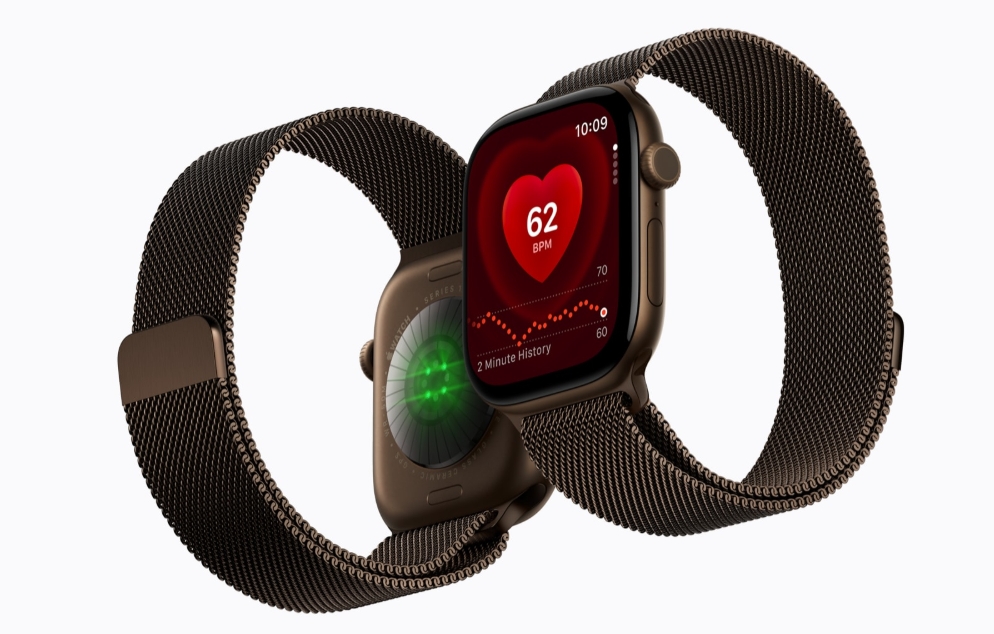
This represents the product’s most significant hardware upgrade, featuring a redesigned optical heart rate sensor. By combining larger green LEDs with high-sensitivity photodiodes, it achieves heart rate monitoring accuracy that leads the market for wearables in this price range.
- Heart Rate: Passive, automatic readings are taken every 5 seconds throughout the day—a vast improvement over the low-frequency sampling of previous models.
- HRV (Heart Rate Variability): Sampling frequency has increased 24-fold, providing two distinct datasets: Recovery HRV and All-Day Cardiovascular HRV.
- New “Readiness” Index: Synthesizes data on sleep, training load, heart rate, and body temperature to provide a daily physical readiness score (0–10), helping you decide whether to train or rest. ### 3. Body, Display, and Battery Life
- Sizes: Available in 42mm and 46mm versions; materials include aluminum and titanium, with the return of a high-end ceramic model; fully compatible with legacy watch bands.
- Display: LTPO 3 OLED with Always-On capability; peak brightness of 2000 nits ensures consistent visibility in bright outdoor light.
- Battery Life: Up to 24 hours of standard daily use, extending to 38 hours in Low Power Mode; supports continuous all-day heart rate and sleep monitoring—no need to disable health features to conserve battery.
- Storage: Uniformly upgraded to 64GB; available in GPS-only and Cellular models.
II. AI Capabilities: Audio Intelligence – A Voice Intelligence Revolution for the Watch
Leveraging the on-device processing power of the S11 chip, watchOS 27 introduces the exclusive Audio Intelligence suite for the Series 12. This serves as the core implementation of Apple Intelligence on the watch (currently in Beta in China).
1. Live Rewind: Conversation Playback
Double-click the Digital Crown to automatically transcribe and replay the last 15 seconds of audio. Whether in noisy outdoor environments or during meetings where you missed a detail, you can instantly review the text transcript without asking the speaker to repeat themselves. All audio is cached only locally and is not permanently stored.
2. Siri Recap: Conversation Summaries
The watch automatically records meetings and daily conversations in the background. Upon completion, it generates a concise text summary highlighting key information with a single tap, syncing directly to iPhone Notes. This marks the first time a wrist-worn device offers lightweight meeting recording capabilities.
3. Intelligent Ambient Sound Recognition
The watch’s microphone independently recognizes sounds such as alarms, doorbells, a baby crying, or vehicle horns. Recognition happens locally offline, triggering pop-up alerts even when the phone isn’t nearby—creating an accessible experience designed for the hearing impaired. ### 4. Next-Generation Siri AI
Eliminates the frustration of the old Siri’s “spinning wheel” while waiting for a network connection: on-device large language models understand context and support multi-turn, continuous conversations; accesses your schedule, health data, and notes to provide personalized suggestions; enables interaction with a simple wrist lift and offers significantly faster response times.
5. All-New One-Handed Gesture Interaction
- Double-pinch: Scroll through Smart Stack widgets;
- Single tap: Directly open the corresponding widget;
Perform all operations with one hand—making it more convenient while driving or exercising.
III. Health and Fitness: From Data Logging to Physiological Prediction
1. Comprehensive Upgrade to Vital Sign Monitoring
- All-day tracking of high-frequency heart rate and HRV; automatically distinguishes temporary blood pressure fluctuations caused by exercise, emotions, or meals to reduce unnecessary health alerts;
- New Health Age Assessment: Combines long-term heart rate, sleep, and HRV data to provide insights into long-term cardiovascular trends;
- Retains features like ECG, blood oxygen monitoring, body temperature tracking, and sleep apnea alerts; consolidates all health data in the “Vitals” app, distinguishing between daytime and nighttime physiological patterns.
2. Enhanced Fitness Capabilities
Dual-frequency L1+L5 GPS reduces positioning drift during outdoor running and hiking; automatically recognizes over a dozen workout modes, including running, strength training, and swimming; adds training load tracking to prevent physical exhaustion from overtraining. ## IV. Hands-on Pros and Cons
✅ Key Strengths
- Transformative AI Experience: On-device processing enables features like voice summaries and conversation recall; Siri no longer relies on the network, ensuring maximum privacy.
- Major Leap in Health Monitoring Accuracy: High-frequency heart rate tracking (every 5 seconds) and 24x HRV sampling shift the focus from mere “data recording” to “predicting physical condition.”
- Unleashed Performance: The S11 chip eliminates long-standing lag issues, and background health monitoring no longer causes significant battery drain.
- Seamless Ecosystem Integration: AI-generated content on the watch syncs instantly to the iPhone; supports cross-device handoff and unified functionality across scenarios.
- Universal Design Compatibility: Fully compatible with older watch bands, reducing the cost of upgrading.
⚠️ Shortcomings and Limitations
- Regional AI Restrictions: The full suite of Apple Intelligence features is not yet available in mainland China; users are limited to the basic version of Siri.
- Conservative Battery Life for Standard Model: Daily battery life remains at 24 hours—insufficient for two-day usage without charging; only the Ultra 4 offers an extended battery mode.
- No Non-Invasive Blood Glucose Hardware: Supports only long-term blood pressure trend monitoring; lacks medical-grade blood pressure or glucose measurement capabilities and cannot replace medical devices.
- Minimal Design Changes: Retains the previous generation’s chassis; users seeking a fresh look may find it lacking in novelty.
V. Comparative Positioning: Standard Model vs. Ultra 4
- Series 12: Targeted at daily commuters, casual fitness enthusiasts, and those focused on long-term health management; highlights on-device AI and high-precision daily vital sign monitoring at a more accessible price point.
- Ultra 4: Designed for outdoor trail enthusiasts and long-distance endurance athletes; features up to 50 hours of standard battery life (45 hours in extended training mode) and a rugged build; positioned as a professional sports flagship.
VI. Summary and Buying Advice
The Apple Watch Series 12 represents the most significant upgrade to the standard model in the past four years. Instead of simply piling on hardware specs for the sake of appearance, the focus has been placed on three core upgrades: the S11 chip delivering on-device AI computing power, a new sensor system enhancing health monitoring accuracy, and watchOS 27 reimagining smart interactions on the wrist.
In short: this generation elevates the Apple Watch from a mere “smartphone accessory” to a standalone AI-powered health device.
Who should buy it?
- Users of the Series 9 or older models looking for a smoother experience and new AI features;
- Those who track heart rate, sleep, and stress levels over the long term and require frequent physiological data for health management;
- Professionals who frequently attend meetings or work in the field and need quick on-wrist voice transcription and conversation summaries;
- Users invested in the Apple ecosystem who value privacy-focused, on-device AI.
Who should skip it?
- Those prioritizing ultra-long battery life (e.g., charging only once every three days)—the Ultra 4 is the better choice here;
- Those expecting non-invasive blood glucose or medical-grade blood pressure monitoring—these features have not yet been implemented in this generation;
- Those looking for a completely new physical design—the chassis remains unchanged.
Related reading: Nike “Recovery Sleep-Sock” Venous Compression Stockings · Smart Wheelchair Robots Address the Challenges of Aging · PathFinder