
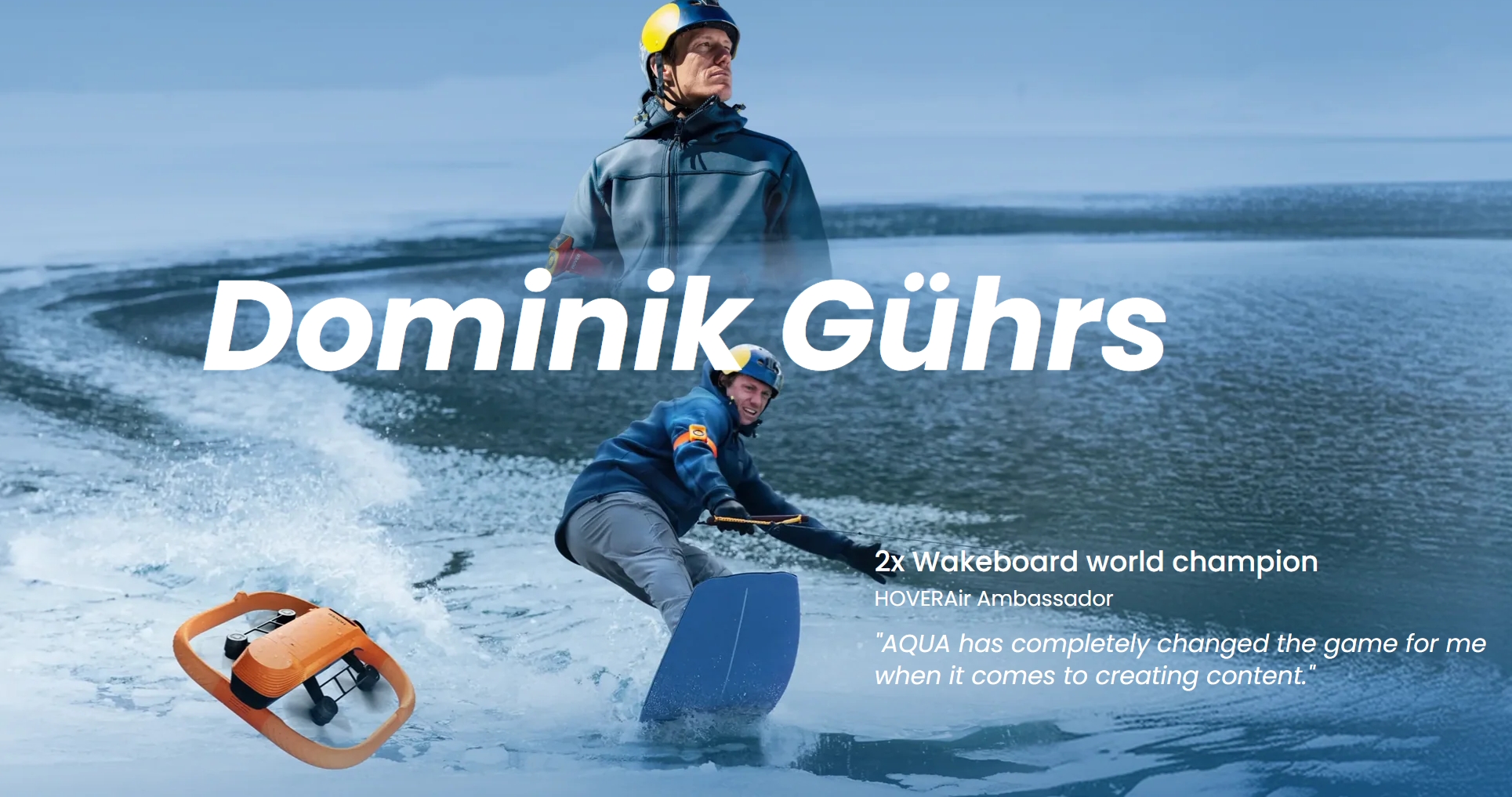
As a portable flying camera designed specifically for aquatic environments, Zero Zero Robotics’ Hoverair Aqua targets the aerial photography market for water sports—such as paddleboarding, surfing, and kayaking—by highlighting three key selling points: IP67-rated full waterproofing, the ability to take off and land freely on water, and a weight of 249g (exempting it from registration requirements). It is one of the few consumer-grade flying cameras on the market capable of dual land-and-water operation. Features touted by the manufacturer—such as AI-powered intelligent tracking, 4K stabilized video, and rugged, waterproof durability—have generated significant interest among water sports enthusiasts.
However, extensive real-world testing and genuine user feedback suggest that the product is more hype than substance, with glaring shortcomings. Limitations inherent to its water-specific design, hardware flaws, and issues with flight stability make it ill-suited for the demanding and varied requirements of water-based filming. Moving beyond typical promotional reviews, this article focuses on the product’s core deficiencies; through a comparative analysis with competing models and a detailed breakdown of pros and cons, it aims to provide consumers with an objective assessment to guide their purchasing decisions.
I. Comparative Analysis: Core Shortcomings Outclassed by Competitors
In the current market for portable smart flying cameras, the primary competitors are the DJI Neo series and Zero Zero Robotics’ own X1 series. While these three products share similar market positioning and weight, the Hoverair Aqua lags significantly behind in core performance, practicality, and operational reliability; furthermore, its touted “water-specific advantages” are subject to severe situational limitations. ZeroZero Robotics HoverAir Aqua | DJI Neo 2 | HoverAir X1 PRO
Core Positioning
Specialized waterproof flying camera for water use; limited use cases
All-scenario intelligent aerial photography; suitable for both land and water
All-round land-based tracking; lightweight and portable
Obstacle Avoidance System
Monocular vision + basic radar; lacks omnidirectional avoidance; blind spots on sides and rear
Omnidirectional multi-dimensional sensing; precise obstacle prediction
Multi-directional visual obstacle avoidance; high fault tolerance in land scenarios
Tracking Stability
Relies on a handheld beacon; signal loss and instability occur easily upon entering water or during high-speed turns
AI-based autonomous visual tracking; no hardware tethering; maintains lock during turns and speed changes
Stable tracking at standard speeds; suited for land-based sports scenarios
Interference Resistance
Visual positioning easily disrupted by water surface reflections, ripples, and mist
Resistant to light and airflow interference; adapts well to complex environments
Suited only for standard land environments
Airframe Design
Non-foldable; bulky; poor portability
Foldable body; excellent portability
Compact and lightweight design; easy to pack
Battery Life
Rated 23 mins; actual flight time 15–18 mins in windy water conditions
Rated 24 mins; actual performance closer to rating; higher stability
Solid battery performance; no significant discrepancy between rated and actual time
Comparison Conclusion: The HoverAir Aqua’s sole core advantage is its IP67 waterproofing and ability to take off/land on water; however, the waterproof design comes at the cost of core aerial capabilities like obstacle avoidance, tracking, and portability. In all but the most extreme water scenarios, the overall user experience falls far short of the DJI Neo 2. Even compared to other HoverAir products, its overall utility lags behind the land-focused X1 PRO, making it a niche product that is “highly specialized yet severely unbalanced.” II. Comprehensive Analysis of Pros and Cons: Shortcomings Far Outweigh Highlights
(i) Core Advantages: Suited Only for Casual Water-Based Filming
Objectively speaking, this product is not without merit; its design is highly specialized and suited only for low-intensity, casual water-based scenarios:
- Exceptional waterproofing and ruggedness, uniquely suited for water environments: The unit features an IP67 dustproof and waterproof rating and can float on the water’s surface. It supports direct takeoff and landing on water and automatically rights itself if it capsizes. Capable of flying in rain or over shallow water, it is one of the few portable flying cameras that can operate directly on the water, making it perfect for filming on calm lakes or in windless conditions while using stand-up paddleboards or recreational kayaks.
- Lightweight design requiring no registration, with a very low barrier to entry: Weighing just 249g, it requires no drone license and is ready to fly immediately upon startup. It supports 15 intelligent flight modes, allowing beginners with zero experience to get started quickly; it requires no manual piloting, making it ideal for solo, autonomous filming.
- Capable basic imaging specifications: Equipped with a 1/1.28-inch CMOS sensor, it supports 4K/100fps slow-motion recording and H-Log color grading. With 128GB of built-in storage—eliminating the need for an external memory card—it delivers image quality that meets the standards for everyday short-form video creation and casual recording.
(ii) Critical Shortcomings: Summary of Frequent Issues Encountered in Real-World Testing (Key Focus)
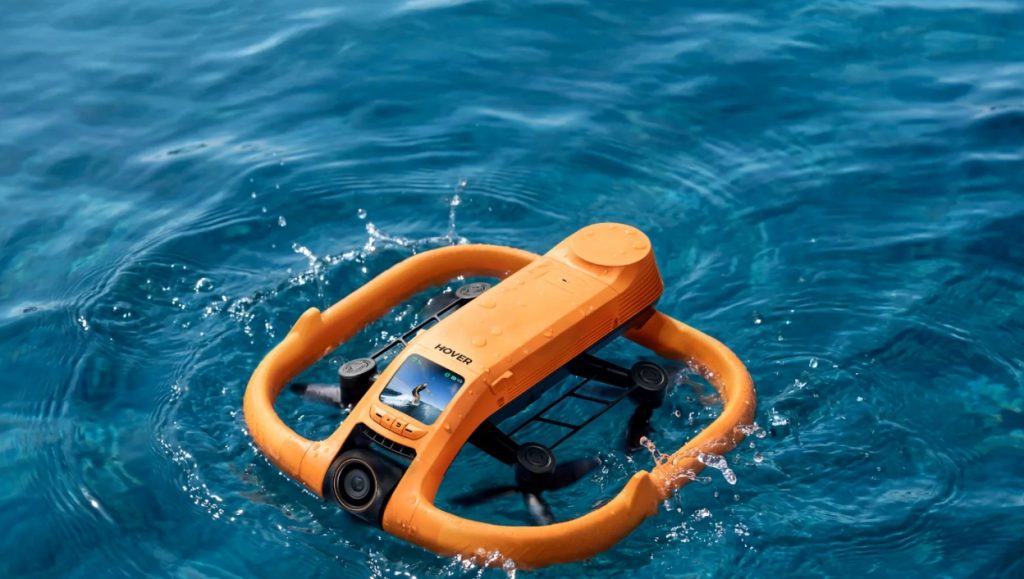
Based on extensive outdoor testing and genuine user feedback, the flaws of the Hoverair Aqua center on four key areas—flight stability, intelligent features, scenario limitations, and durability. These are the aspects users complain about most and where they are most likely to encounter problems:
- Obstacle avoidance capability is virtually “ineffective,” posing a high risk of crashes: The product is equipped only with a front-facing monocular vision system and basic radar; it lacks side, rear, or bottom obstacle avoidance modules, resulting in a severely limited obstacle avoidance system. When shooting over water, the device fails to detect obstacles—such as branches, ropes, or buoys—during rapid turns or sideways movements, leading to direct collisions. Furthermore, surface reflections and mist interfere with the forward obstacle avoidance system, causing frequent detection failures where the drone ignores obstacles and crashes straight into them; this makes it highly prone to accidents for beginners.
- The tracking mechanism is ineffective, failing completely in high-speed or dynamic scenarios: The device relies on a dedicated “beacon” worn on the right arm rather than pure AI-based visual tracking, which imposes significant limitations. If the beacon gets wet or submerged, the signal is instantly lost, causing the drone to fly erratically or hover unstably. In activities like swimming or dynamic surfing, the beacon frequently enters the water, resulting in stuttering, shaky footage, and lost tracking targets. Additionally, the device cannot keep pace with high-speed water sports exceeding 40 km/h; it frequently loses the target and, unlike advanced systems, fails to autonomously backtrack or avoid obstacles, instead simply hovering in place or drifting aimlessly.
- Poor flight stability over water and low environmental tolerance: While officially marketed as suitable for all water-based scenarios, real-world testing shows stable flight is only possible on calm, windless lakes. Even slight wind, waves, or air turbulence cause noticeable body sway, rendering the gimbal stabilization ineffective and resulting in blurry, distorted footage. Moreover, the device suffers from a critical flaw: upon entering the water, it briefly loses positioning signals and is easily swept away by wind and waves, unable to hold its position while waiting for retrieval, which significantly increases the risk of losing the drone entirely.
- Severely overstated battery life, drastically reduced in water scenarios: The official 23-minute flight time rating is based solely on static hovering over land in windless conditions. During water-based shooting, factors such as moisture, wind, waves, and air resistance reduce the actual effective flight time to just 15–18 minutes—or even less than 15 minutes during high-intensity dynamic shooting. This duration is insufficient for capturing complete water sports sessions, necessitating frequent battery swaps and resulting in a disjointed user experience. 5. Flawed body design; lacking portability and durability: To ensure a watertight seal, the body features a non-folding design; it is bulky and takes up significant storage space, offering no advantage over foldable, portable drones. Furthermore, using it in beach or saltwater environments poses major risks: taking off from a beach can easily allow sand to enter and damage the motors, while the salt in seawater is corrosive. After every use by the sea, the unit must be rinsed with fresh water and dried; failure to do so can lead to water seepage and circuit malfunctions, resulting in extremely high maintenance costs.
- Highly limited use cases; poor performance on land: The product sacrifices too much hardware capability for water-based operations. Stability during land-based flight and subject tracking is far inferior to portable drones in the same price range, with noticeable issues such as jerky turns, sluggish obstacle avoidance, and shaky footage. It is a niche device—”good for water, but not for general use”—offering very poor value for money.
III. Essential Tips for Consumers to Avoid Pitfalls
Based on the product’s shortcomings and real-world testing issues—and to avoid being misled by the “waterproof” marketing gimmick—here are the key points to consider before buying and using the device; these will directly determine your user experience:
- Precisely match the device to your use case; it is unsuitable for 90% of users: Purchase is recommended only for users operating on calm lakes, in windless conditions, and during low-speed, leisurely water activities (such as casual paddleboarding or slow kayaking). If you intend to use it for dynamic, high-speed activities involving wind and waves—such as surfing, kite foiling, or high-speed jet skiing—or if you need a device that works on both land and water for daily aerial photography or travel, you should skip this product entirely; it is completely unsuited for those purposes.
- Discard the misconception that “waterproof” means “indestructible”: The IP67 waterproof rating supports only brief immersion; it does not withstand deep-water submersion or high-pressure water jets. After seaside use, you must immediately rinse the body with fresh water and wipe salt residue from the seams. Regularly check the water-seepage indicator strip in the battery compartment; if the strip turns red, it indicates water has entered, and you must stop using the device immediately for inspection and repair. Do not take off directly from the beach; hand-launching and hand-landing are mandatory to prevent sand from entering and damaging the motors. 3. View the “smart follow” feature realistically and do not rely on it for high-speed tracking: After purchasing, do not place too much faith in official marketing regarding high-speed tracking; the drone is suitable only for low-speed, straight-line following. During filming, keep the “beacon” module visible above the water at all times and avoid turning sideways, leaning over, or submerging the unit, as doing so will likely result in signal loss or loss of control. In complex waters or areas with obstacles, manual control is recommended—disable auto-follow to avoid the risk of crashing.
- Accept the limited battery life and prepare accordingly: Actual flight time over water is significantly reduced; for extended outdoor water-based shoots, carrying at least two spare batteries is advised to prevent mid-shoot power failure. Avoid flying in strong winds, against the light, or in environments with intense glare to minimize the risk of malfunctions in positioning, image stabilization, and obstacle avoidance systems.
- Compare with competitors before deciding; avoid blindly following trends for niche models: If you prioritize all-around utility, reliability, and value for money, opt for versatile models like the DJI Neo 2, which handle both land and water, offer stable obstacle avoidance, and provide precise tracking. If you only shoot casually on the water, there is no need to pay a premium for a niche waterproof gimmick; a standard portable drone paired with waterproof accessories will suffice.
IV. Final Verdict: A Niche Specialist, Not a Mainstream Choice
The ZeroZero Hoverair Aqua is a niche product with extreme pros and cons and highly restricted use cases. While it addresses industry pain points—specifically the inability of standard drones to enter the water or take off/land on the surface—it sacrifices core aerial photography experiences such as obstacle avoidance, tracking capabilities, battery life, and versatility. Ultimately, it has become a specialized device that is limited to calm water, offers little margin for error, and is prone to frequent issues.
For the vast majority of consumers, the product’s shortcomings far outweigh its gimmicks; it offers poor value, limited practicality, and a high risk of failure—a classic case of “hype exceeding substance.” Purchase is recommended only for a tiny subset of enthusiasts who engage in casual water sports on calm water; for all other users seeking a stable, versatile, and reliable aerial photography experience, buying this product is not advised.