
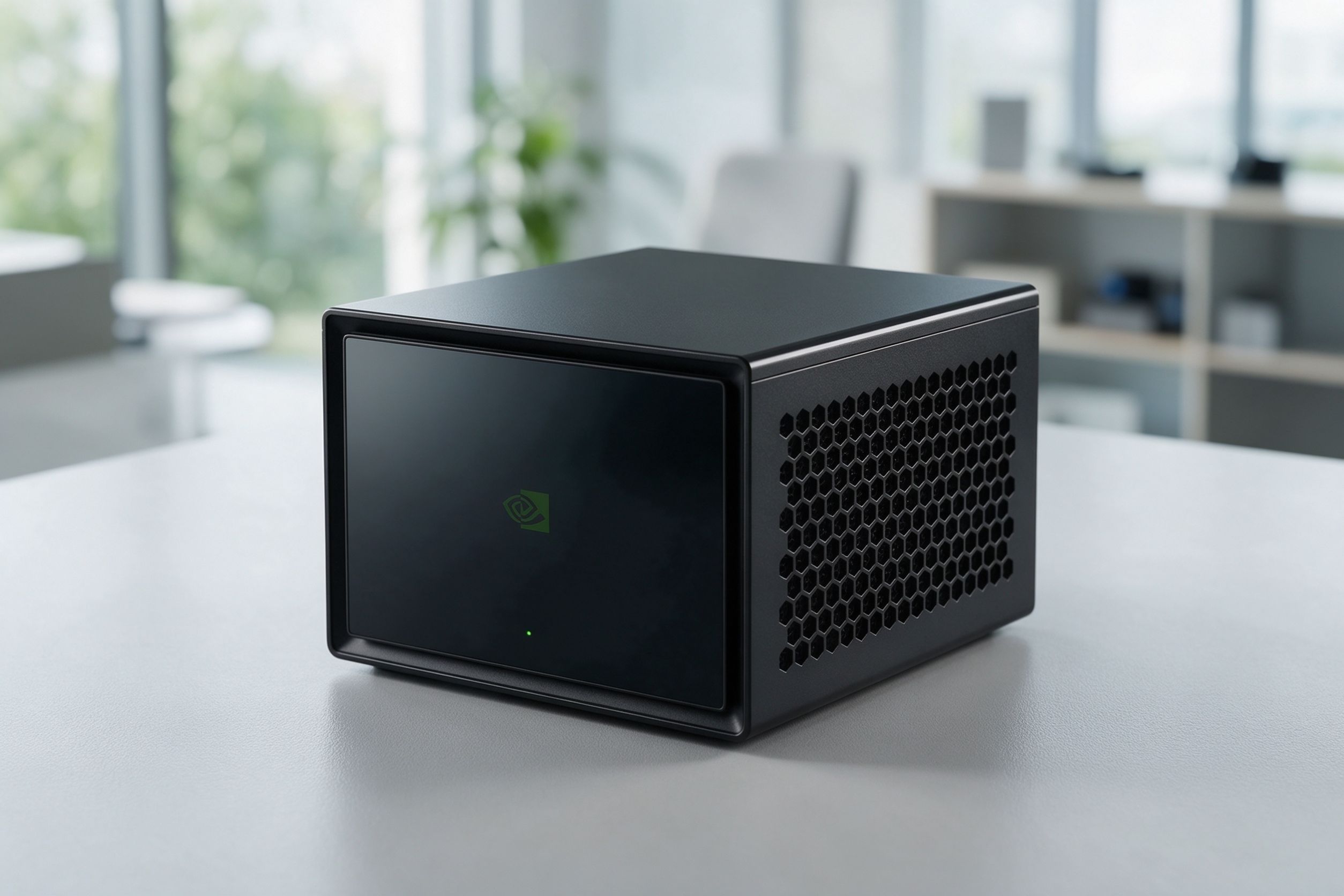
On October 23, 2026, NVIDIA quietly lowered the floor on personal AI supercomputing. The new 64GB configuration of its DGX Spark desktop, sold exclusively through Acer, ASUS, Dell, Gigabyte, HP and MSI, starts at $4,999 — $1,950 below the 128GB model. The question is whether the cheaper box is a genuine on-ramp for developers, or a memory-capped compromise that quietly pushes serious workloads back to the 128GB SKU.
Industry Context
The market for local AI inference hardware has split into two camps. On one side are consumer AI PCs and mini workstations powered by Core Ultra or Ryzen AI chips, which promise “Copilot+.” They run small quantized models but top out at 32GB or 64GB of disparate system memory, which the GPU cannot address as a single coherent pool. On the other side are cloud instances, where a single fine-tuning job can bill a developer hundreds of dollars before lunch.
NVIDIA launched the original DGX Spark in late 2025 to occupy the gap: a desk-sized box built around the GB10 Grace Blackwell superchip, pairing Arm CPU cores with Blackwell graphics on a coherent, unified memory fabric. The premise was simple enough. Developers who previously rented H100 time could now run inference, fine-tuning and agent workloads on their own desks, with data never leaving the building. The 128GB model, however, started at $6,950 — a price that read more like a research budget line than a purchase-order decision for an individual engineer.
The 64GB configuration that shipped on October 23 is NVIDIA’s response. It keeps the same silicon and software stack but halves the memory and the price, explicitly aimed at developers, researchers and AI enthusiasts who want to prototype locally without committing to the full configuration.
Competitive Landscape
The direct comparison is internal rather than external. The 64GB DGX Spark sits between two established alternatives. Above it is the 128GB DGX Spark at $6,950, which doubles the memory ceiling and ships as both an NVIDIA-built unit and OEM variants. Below it sits a growing field of Arm-based AI mini PCs and the RTX Spark laptops from Acer, ASUS, Dell, HP, Lenovo, Microsoft and MSI that began shipping this month from $2,399.
The RTX Spark laptops are the most dangerous neighbor. They bring the same “petaflop of local AI” marketing and the same Blackwell-class acceleration into a portable Windows machine, but they rely on discrete graphics memory rather than the fully coherent unified fabric that lets DGX Spark pool memory across CPU and GPU. AMD’s Ryzen AI Halo, reviewed on this site in May 2026, attempted a similar backpack-supercomputer pitch with a $1,999 price tag, but it used AMD instinct accelerator silicon rather than CUDA, leaving it on the wrong side of the software ecosystem most AI practitioners already use.
The uncomfortable truth is that the 64GB DGX Spark competes less with a rival box than with the decision to simply buy two of the 64GB units and cluster them — which is, not coincidentally, the path NVIDIA has engineered the hardware to encourage.
Design and Hardware Specs
The physical design is unchanged from the 128GB model. It remains a compact 150mm by 150mm by 50.5mm unit — roughly the size of a thick paperback — built around the GB10 Grace Blackwell superchip. That package integrates a 20-core Arm CPU (ten Cortex-X925 performance cores and ten Cortex-A725 efficiency cores) with a Blackwell-class GPU carrying fifth-generation Tensor Cores and fourth-generation RT Cores, rated at up to one petaflop of FP4 AI performance.
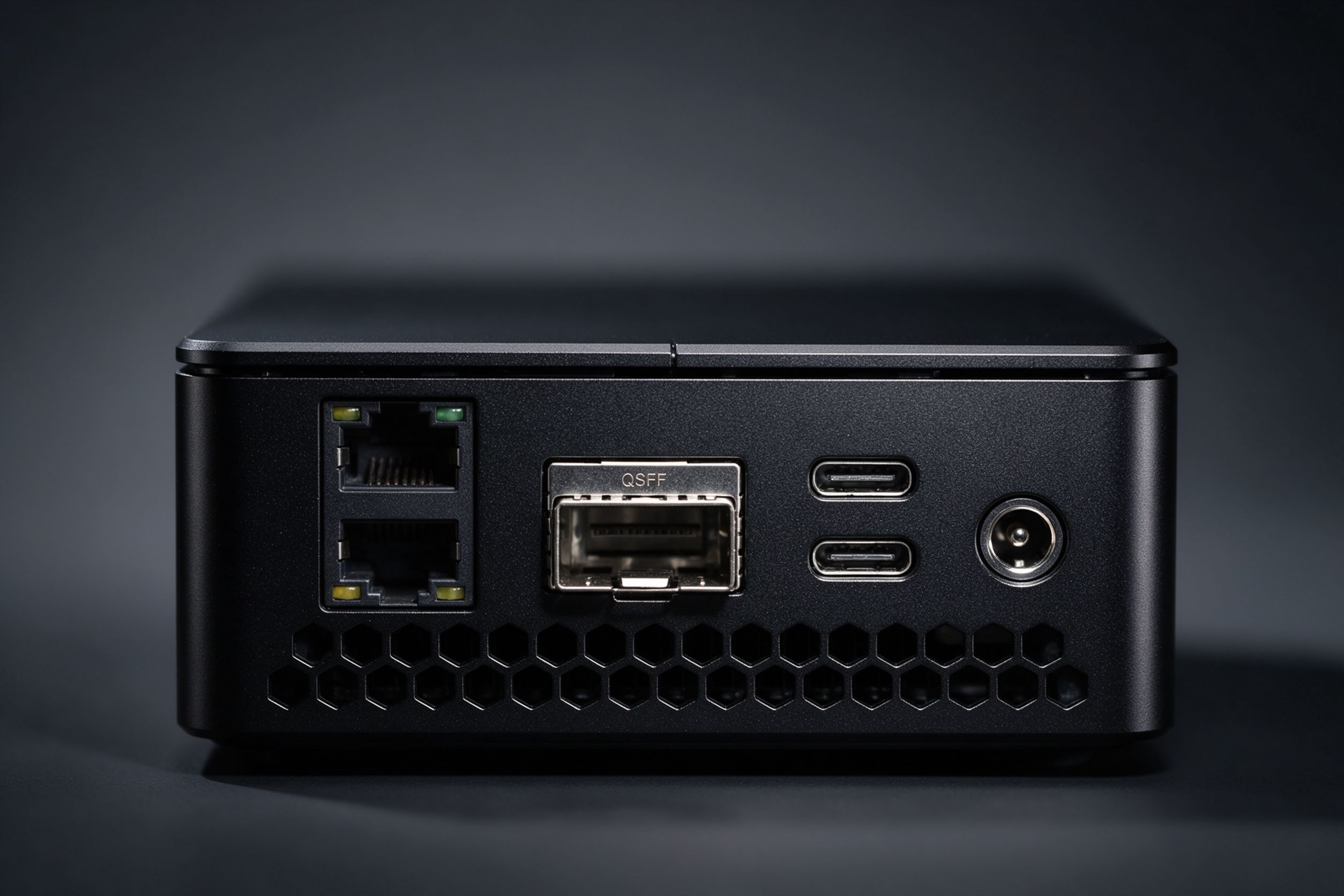
The memory is where the product changes. The 64GB configuration ships with 64GB of LPDDR5x unified memory, of which roughly 56GB is available for model weights and KV cache after the system reserves about 8GB. NVIDIA supports NVFP4 quantization, which is what allows the box to claim it can run models up to around 100 billion parameters on its own. Storage is a choice of 1TB or 4TB NVMe M.2, depending on the OEM. Every unit includes a ConnectX-7 Smart NIC, exposed as a QSFP port, plus USB-C and power.
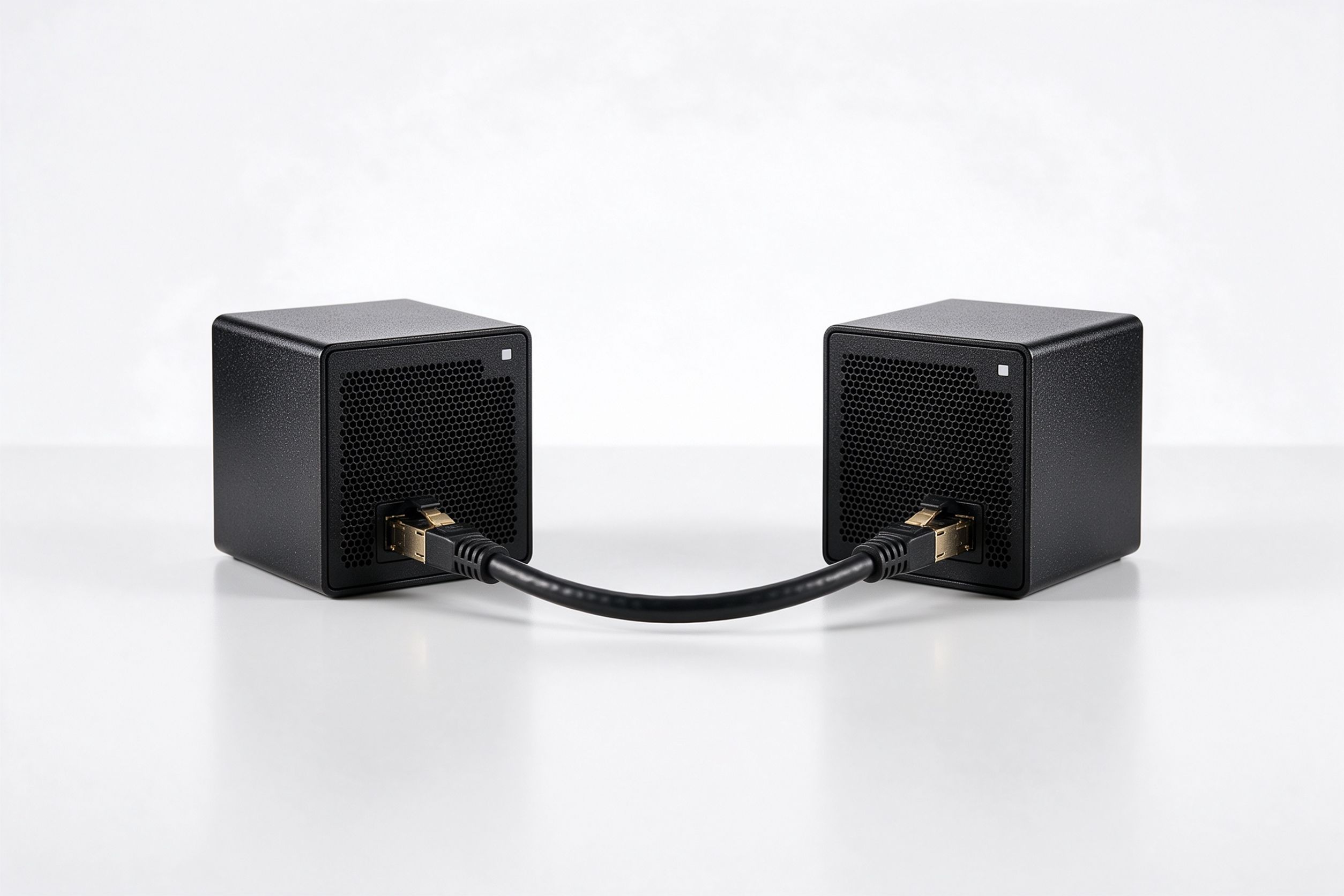
Two details matter more than the spec sheet suggests. First, the ConnectX-7 port is not an afterthought: it runs a 200GbE link, and two units can be joined directly with a passive QSFP cable, no switch required. Second, NVIDIA’s Sync Cluster Assistant software discovers the second box, validates the configuration and brings up the fabric automatically, pooling the two 64GB slabs into a 128GB coherent pool.
Core AI Features
What runs on the box is, on paper, generous. DGX OS ships with the CUDA-X AI library stack, the NVIDIA Agent Toolkit, Nemotron open models, and day-one support for the runtimes developers already use: Ollama, vLLM, llama.cpp, LM Studio and PyTorch with CUDA. NVIDIA claims a developer can go from power-on to running a model within minutes. In its own testing, two clustered 64GB systems delivered up to 1.7 times the performance of a single unit on a Qwen 3.8 27B workload, and the pooled 128GB extends the model ceiling to roughly 200 billion parameters.
The agent story is the real pitch. NVIDIA frames the box as a host for always-on coding or research agents that review code, summarize documents or carry out multi-step tasks without tying up the developer’s laptop. A companion app routes model inference to the DGX Spark while the user works on their everyday machine. A Sync Model Launcher, due at the end of October, is meant to make launching Qwen3.8 27Q across one or two units a matter of a few clicks, with OpenCode wired in for browser-based coding.
Pros and Cons
The strengths are real. The $4,999 entry price cuts the cost of admission to a CUDA-accelerated, unified-memory AI platform by nearly a third. The ConnectX-7 fabric and the one-cable clustering path are genuinely differentiated — no other desk-sized box lets you pool coherent memory between two units that cleanly. And the day-one software stack means the machine is not a bare board; it ships ready for inference and agent work.
The weaknesses, however, are where this review has to be blunt.
First, the memory ceiling is a deliberate product-management lever, not an engineering accident. At 64GB total and roughly 56GB usable, the box cannot comfortably run the very frontier models developers are curious about without aggressive quantization, and NVIDIA’s own “100-billion-parameter” figure assumes NVFP4 compression — the practical sweet spot sits closer to 30 to 40 billion parameters. Anyone hoping to run uncompressed 70B-class models will be pushed toward the 128GB SKU or the two-box cluster.
Second, the math of clustering is less generous than it sounds. Two 64GB units at $4,999 each total $9,998 — nearly $3,050 more than a single 128GB unit at $6,950 — for the same pooled memory but doubled power, doubled heat and two boxes to manage. NVIDIA quotes a 1.7x performance gain on one specific model; it does not publish efficiency numbers. The clustering path is attractive only if you already own one unit and outgrow it, not as a deliberate purchase strategy.
Third, the software stack is a one-way door. DGX OS, CUDA-X and the Sync tooling are NVIDIA-owned; workloads built around them do not port cleanly to AMD or Apple silicon. The box is also unavailable as a first-party NVIDIA Founders Edition — buyers get an OEM enclosure from Acer, ASUS, Dell, Gigabyte, HP or MSI, each with its own firmware, fan curve and support contract, and final pricing above the $4,999 floor once storage and warranty options are chosen.
Finally, the buyer persona is narrow. This is not a machine for running a chatbot demo, and it is overkill for anyone whose workflow lives in the cloud. It is a developer tool with a developer price tag, dressed up as a consumer product.
Target Users
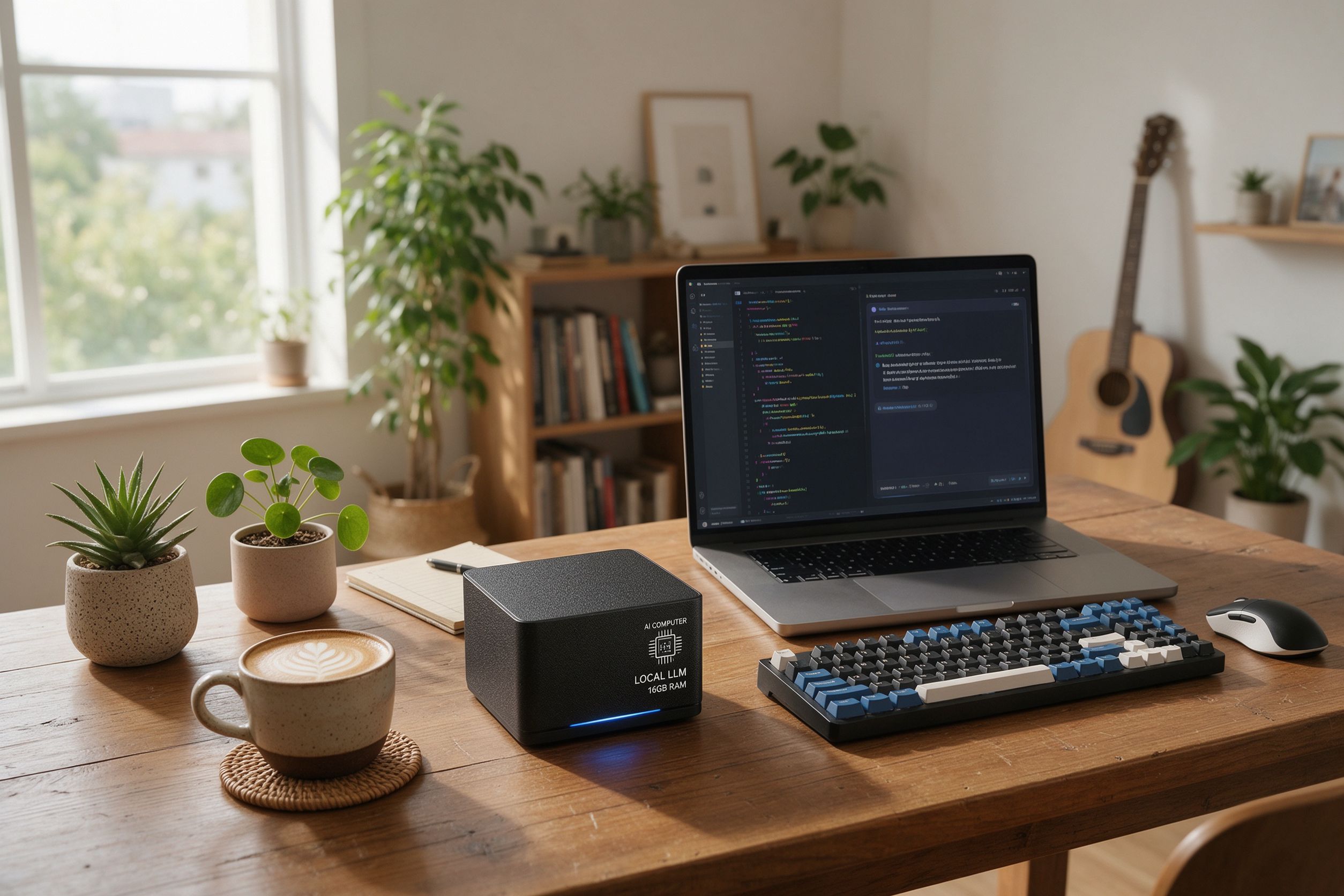
The 64GB DGX Spark is aimed squarely at three groups: independent AI developers and researchers who need a local, private inference box outside their employer’s procurement cycle; engineers building and testing always-on agents who want workloads off their main laptop; and AI enthusiasts and students who want hands-on access to the CUDA software stack without renting cloud GPUs. It is not aimed at gamers, content creators who need a one-box workstation, or enterprises looking for a server replacement.
Who Should Buy
Buy the 64GB DGX Spark if you are a CUDA developer who already knows which 7B-to-30B models you want to run locally, you care about keeping fine-tuning data on-premises, and you expect to outgrow a single box in six months — at which point a second unit slots in over QSFP with near-zero reconfiguration.
Skip it if you want a single do-everything desktop, if your models comfortably exceed 50GB of weights, or if you are price-sensitive enough that $4,999 is a stretch. In that last case, the 128GB model, despite the higher sticker, is often the more rational purchase: it avoids the double-box tax and gives headroom from day one. And if you are a laptop-first user, the RTX Spark line delivers much of the same local-AI promise at half the price, even if it sacrifices coherent unified memory.
Pricing and Availability
The NVIDIA DGX Spark 64GB became available on Friday, October 23, 2026, through Acer, ASUS, Dell, Gigabyte, HP and MSI, starting at $4,999. The 128GB configuration remains on sale at $6,950. Two 64GB units can be clustered over their built-in ConnectX-7 ports with a QSFP cable and NVIDIA Sync Cluster Assistant. A Windows laptop line powered by the same RTX Spark architecture launched this month from $2,399. As with any OEM-dependent product, street pricing, storage configuration and warranty terms vary by partner, and the $4,999 figure should be treated as a starting point rather than a checkout price.