
Foreword
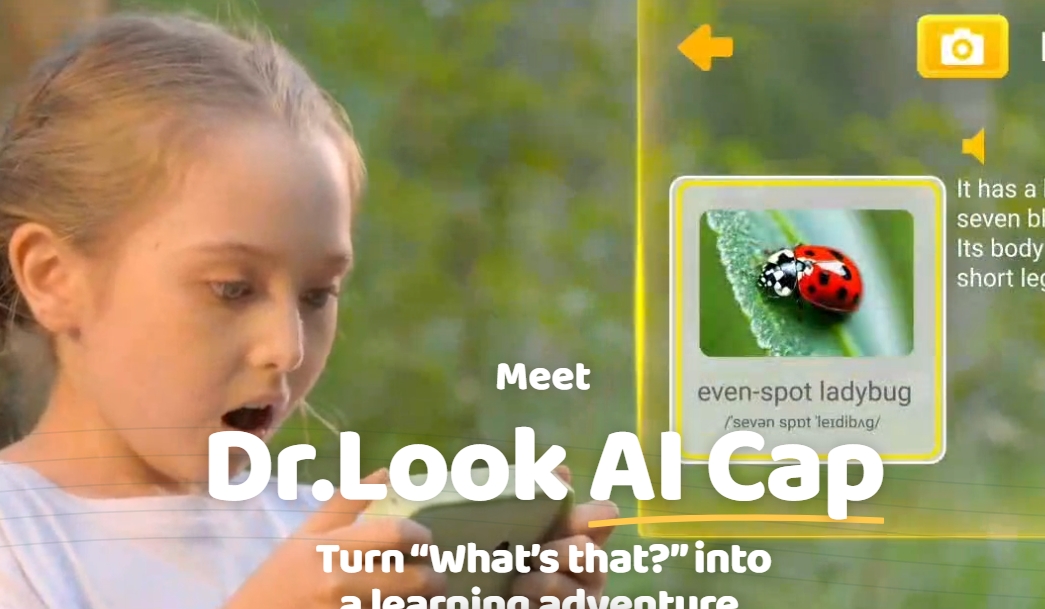
While traditional learning machines and e-readers still rely on built-in, fixed question banks and picture book resources, an increasing number of children’s AI hardware devices are shifting towards real-world interaction. At IFA 2026, Dr. Luka’s AI-powered learning camera, from CloudWalk Technology, won an international innovation award. It breaks away from the screen-based question-and-answer mode, using a camera as the AI interaction interface to address children’s endless “why” questions, turning the outdoors, parks, museums, and everyday home into learning scenarios.
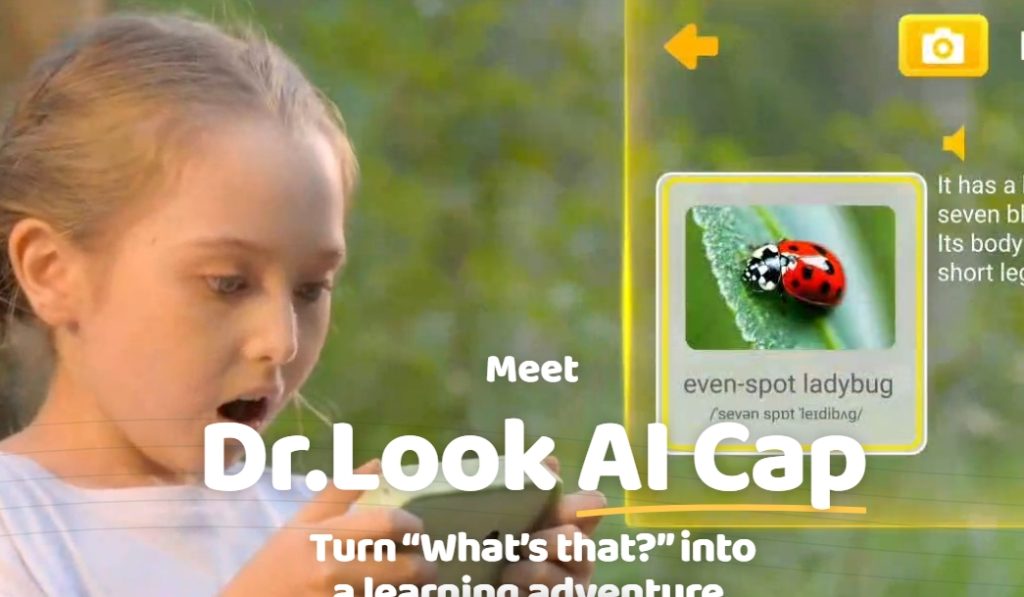
Many parents share a common pain point: children are full of curiosity about flowers, insects, architecture, and cultural relics, but parents cannot always provide accurate and easy-to-understand answers; when they take out their phones to look up information, they are easily distracted by short videos and games. The core idea of Dr. Luka’s AI-powered learning camera is to provide a clean, social-free, browser-free device that allows children to take photos themselves and acquire knowledge independently, completing the transformation from passive learning to active exploration.
drlookai.a… ## Hardware Appearance and Build Quality: Child-Friendly Safety Design
Weighing 170g, roughly the size of a small apple, the device features a rounded, screwless design. Made of environmentally friendly ABS+PC material, it’s drop-resistant and impact-resistant. Available in multiple macaron colors, its grip is optimized for children’s hands, preventing excessive pressure.
- Screen: 3.4-inch IPS eye-protection touchscreen, supporting blue light filter eye protection mode. Touch operation is intuitive, offering a superior visual experience compared to most 2.4-2.8 inch screens in the same category.
- Camera: 8MP rear camera, primarily for AI recognition, not for high-definition children’s photography.
- Network: Supports both WiFi 2.4G/5G + LTE CAT.1 4G cellular networks, eliminating reliance on home WiFi outdoors. Perfect for travel and study trips.
- Battery Life: 2000mAh battery, sufficient for a full day’s use during daily outings. Type-C charging and a standard lanyard prevent loss from drops.
- Interfaces: No unnecessary openings, demonstrating a clear focus on safety.
The hardware design prioritizes functionality: it’s not a children’s camera primarily for taking photos and checking off photos. The lens is the eye for AI recognition, and the screen is the window for knowledge output. All design elements prioritize learning and exploration, rather than entertainment and photography.
Core Functionality Testing: Multimodal AI is the Core Competitive Advantage
1. Object Photo Recognition: Unlock Multi-Dimensional Knowledge Cards with One Shot
This is the product’s core function. Point the camera at flowers, insects, everyday objects, picture books, or museum exhibits, press the prominent yellow AI button, and the camera will recognize and output content such as bilingual (Chinese and English) names, Chinese character definitions, science encyclopedia entries, fun stories, idiom extensions, English word cards, and fun quizzes. Multiple knowledge cards can be generated from a single recognition.
Supports age-appropriate content: The 3-6 year old mode uses simple, easy-to-understand language and focuses on engaging stories; the 6+ age-appropriate mode adds depth to scientific information and includes thought-provoking questions to avoid overly childish content.
Actual Experience: Outdoor scene recognition success rate is very high; recognition of flowers, plants, and common flora and fauna is stable; recognition of complex textures and distant artifacts may occasionally show errors; recognition speed decreases significantly when network signal is weak.
2. AI Virtual Companion Dialogue, Continuous Interaction
Multiple AI digital learning companions with different personas are built-in. After recognizing an object, users can continue to ask follow-up questions, forming a continuous dialogue rather than a single question-and-answer session. After a child takes a picture of a flower, they can ask, “How long does its bloom last?” or “What can it be used for?” The AI will continuously provide answers tailored to the child’s understanding, avoiding complex and obscure technical jargon.
Also supports AI painting creation, generating creative paintings based on the photographed object. Combined with a badge incentive system, badges are unlocked by completing exploration tasks, using gamification to drive continuous exploration for children, rather than forced learning.
Simultaneously supports AI painting creation, generating creative paintings based on the photographed object. Combined with a badge incentive system, children unlock badges by completing exploration tasks, using gamification to drive continuous exploration rather than forced learning.
3. Parental Control and Privacy Security (Key Points)
The product adheres to the principle of protecting minors’ information and does not collect children’s facial biometric information. The visual algorithm is only used to identify flowers, objects, and books, without facial recognition comparison. Data storage is minimized, and it complies with international COPPA child privacy standards, which is crucial for children’s hardware.
The WeChat mini-program/parent app allows users to view their child’s exploration records and knowledge footprints, set usage time limits, and remotely control the device. The device is ad-free and does not have an open browser, blocking inappropriate online content and preventing fragmented internet information from interfering with Dr. Luka’s learning.
4. Multi-Scenario Adaptability
- At Home: Recognizes picture books, toys, plants, and animals for daily cognitive development;
- Outdoor Parks and Zoos: Captures images while walking for instant science education;
- Museums and Cultural Tourism: Recognizes exhibit landmarks, serving as a portable learning tool;
- Short Trips: Supported by 4G cellular network, it allows independent exploration without a mobile hotspot.
Summary of Advantages and Disadvantages in Real-World Use
✅ Advantages
- Innovative product logic extends learning from the screen to the real world, guiding children to look up and observe their environment, reducing passive screen scrolling;
- Integrated hardware and software, with built-in 4G network, strong usability in outdoor scenarios, no need to bind to a mobile phone;
- Comprehensive privacy and security design, no facial recognition, no ads or browser, complete parental controls;
- Age-appropriate content system, with content suitable for both younger and older children;
- Low barrier to entry for interaction, large AI physical button, even young children can operate independently.
⚠️ Limitations and Limitations
- Relies on network connectivity; AI recognition and large model generation capabilities are significantly limited offline.
- The lens is designed for recognition purposes; its ordinary photo-taking capabilities are average and it cannot be used as a primary children’s camera.
- Primarily voice output; some knowledge cards lack on-screen subtitles, compromising the reading experience for children in the literacy stage.
- 4G data requires ongoing subscription, increasing long-term usage costs.
- AI-generated content has probabilistic errors; parents are advised to review important knowledge points.
Who is it suitable for, and who is not suitable for?
Suitable for
Children aged 3-10 who frequently engage in outdoor excursions and study tours; parents who want to protect their children’s curiosity and avoid frequent phone searches; parents who value children’s privacy and security and prefer ad-free hardware.
Not suitable for
Those who want a high-performance children’s camera; primarily for indoor practice and textbook study; have limited budgets and do not want to incur subsequent data charges.
Comparison with Competitors
Compared to similar AI learning devices on the market, Dr. Luka’s advantages lie in its complete multimodal agent architecture, continuous dialogue capabilities, and robust privacy and security system; its larger screen size also provides a superior interactive experience; however, its image quality is weaker than some competitors, and it incurs data renewal costs.
Summary
Dr. Luka’s AI learning device represents a new direction for children’s hardware: AI is no longer just simple voice Q&A, but a bridge connecting the real world and digital knowledge. It cannot replace books and parental companionship, but it can capture children’s endless curiosity, turning countless “What is this?” questions into mini-explorations.
Related reading: WIKO Xingzai Unboxing · Faraday Future’s EAI Educational Robot · Jollybubu’s First AI Interactive Doll