
The biggest challenge for seniors living alone isn’t a lack of conversation partners; it is the risk of undetected accidents, unnoticed health issues, and a lack of assistance during emergencies. With adult children often working away from home—unable to check on their parents during the day or provide real-time care at night—and seniors facing issues like declining memory, unfamiliarity with smart technology, and a reluctance to ask for help, a single fall, sudden illness, or missed dose of medication can lead to irreversible consequences.
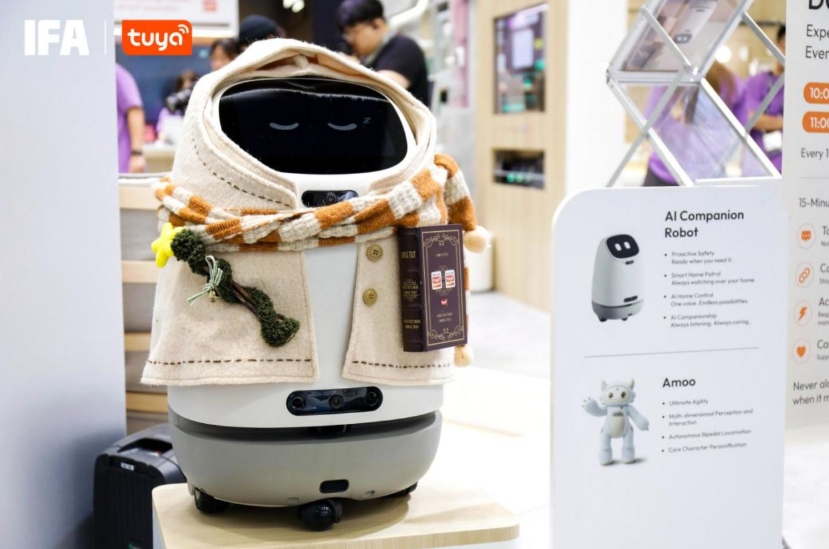
Most elderly companion devices on the market either rely on passive voice chat or feature intrusive monitoring functions that make seniors feel uncomfortable or spied upon. Tuya Smart’s newly launched Doova AI companion robot breaks the mold of traditional monitoring devices by focusing on proactive care, unobtrusive safety monitoring, and warm emotional companionship. Leveraging AI-based skeletal recognition, multimodal emotional interaction, and whole-home smart connectivity, it serves as a dedicated 24-hour smart steward for seniors living alone. This review evaluates the device’s real-world performance, practical features, and actual value through hands-on testing in a home environment.
I. Core Product Positioning: More Than Just a Companion—A Safety Guardian for Seniors Living Alone
Unlike standard companion robots for children or fixed surveillance cameras, Doova is an AI home-care robot specifically designed for seniors living alone. Its core logic has evolved from “passively waiting for commands” to “proactive sensing, inquiry, and early warning.” Moving away from cold, intrusive surveillance, it employs anthropomorphic interaction and gentle care modes to balance privacy with safety, effectively solving the two main flaws of traditional elderly care devices: intrusive monitoring and impractical functionality.
In terms of hardware, the robot features a 10.1-inch HD “expressive” screen, LiDAR navigation, a four-microphone array, and an AI visual skeletal recognition system. It supports autonomous movement, whole-home patrolling, precise human detection, and long-range voice interaction. The unit boasts a rounded, edge-free design tailored for seniors, offering ultra-simple operation without complex menus, large fonts, and loud, clear audio. Seniors can use it immediately without a learning curve, making it perfectly suited to their habits and needs. II. Hands-on Testing of Core Features: Four Essential Capabilities Addressing the Pain Points of Aging Alone
- [Signature Feature] AI Fall & Anomaly Monitoring with Rapid 60-Second Emergency Response
This is Doova’s most practical core feature and what sets it apart from ordinary companion robots. In real-world home scenarios, the robot utilizes AI-based skeletal pose recognition and bio-sensing radar to monitor the senior’s activity 24/7—without requiring manual activation or precise positioning—while patrolling the entire home with zero blind spots.
When it detects anomalies such as an accidental fall, a senior remaining on the floor for an extended period, prolonged inactivity, or a sudden drop in movement, the robot does not immediately trigger an alarm that might startle the user. Instead, it first initiates a gentle, human-like inquiry to check on their status. If there is no response within 60 seconds, the system automatically launches an emergency rescue protocol. It simultaneously sends a distress notification to the children’s smartphones—including two-way video capabilities, location data, and a live feed of the scene—allowing family members to view the situation remotely, communicate via two-way audio, and immediately contact relatives or property management for on-site assistance. This effectively bridges the dangerous “information gap” that occurs when an accident goes unnoticed.
Additionally, the robot supports customized monitoring for high-risk areas—such as bathrooms and bedrooms where accidents frequently occur—prioritizing these zones during patrols to minimize safety risks for seniors living alone. Unlike traditional cameras, which suffer from fixed angles and blind spots, Doova navigates autonomously to provide comprehensive coverage of every corner of the home.
- [Warm Companionship] AI Emotional Interaction: Understanding Emotions, Listening, and Empathizing
Seniors living alone often struggle with loneliness, low moods, and a lack of someone to confide in; ordinary smart devices offer only mechanical, impersonal responses. Doova is equipped with a proprietary AI model designed specifically for senior emotional companionship. It supports multimodal emotion recognition, dialect comprehension, and memory-based interaction, moving far beyond stiff, robotic exchanges.
Hands-on testing reveals a highly human-centric interaction experience: when seniors chat, share their thoughts, or vent about their worries, the robot avoids mechanical interruptions or perfunctory replies. Instead, it accurately captures emotional shifts—proactively engaging in playful banter when the senior is happy and offering gentle comfort when they are down—while remembering daily preferences, health status, and past conversations. For instance, if an elderly user previously mentioned a cough or discomfort, the device will proactively check on their recovery, remind them to drink warm water and rest, and offer ongoing care much like a family member.
It also features a vast library of content tailored for seniors—including traditional operas, classic songs, news broadcasts, and storytelling—and proactively engages in conversation to alleviate loneliness, reads out newspapers and text messages, answers daily inquiries, and explains health tips. Seniors can operate the device through natural conversation without needing to use their hands or a wake-up command, significantly easing the sense of isolation often felt by those living alone.
- [Essential for Seniors] Smart Schedule Management: No More Forgotten Medication or Missed Appointments
Memory decline is a common issue among the elderly; forgetting to take medication, missing medical check-ups, or mixing up schedules are frequent challenges in daily life. Doova is equipped with a comprehensive smart reminder system designed for seniors, supporting personalized alerts for medication, check-ups, birthdays, and daily routines.
Adult children can remotely input details such as medication times, dosages, and appointment dates. When the time comes, the device provides gentle voice reminders accompanied by clear, large-text pop-ups on the screen, ensuring medication is never missed or taken incorrectly. To address the prevalence of telecom fraud, the device includes an anti-fraud alert feature; it proactively identifies risks when seniors answer calls or view messages from unknown numbers, warning them of potential scams and safeguarding their assets.
- [Whole-Home Smart Control] Smart Home Hub: Effortless Control of All Devices
Many seniors struggle to operate smart appliances or use smartphones to control devices. Doova perfectly solves this problem by serving as a central control hub for the entire smart home. It integrates with the full range of Tuya smart devices, enabling voice control for lights, curtains, air conditioners, power outlets, robot vacuums, and other household equipment.
The system relies entirely on simple voice commands—requiring no manual operation or touchscreen interaction. A senior simply needs to say “Turn on the lights,” “Lower the AC temperature,” or “Close the curtains” to trigger a quick response tailored to their daily habits. Additionally, the device supports automatic recharging and autonomous whole-home patrols; it returns to its charging dock when the battery is low, eliminating the need for manual intervention and ensuring round-the-clock, independent operation. III. Hands-on Review: Privacy and Senior-Friendly Features Reflecting Human-Centric Care
Many seniors are resistant to home surveillance devices, primarily due to concerns about privacy breaches and constant monitoring. Doova addresses the psychological needs of the elderly by creating a dual-mode system that combines gentle care with privacy protection. All monitoring data and conversation logs are stored locally, eliminating the risk of cloud-based leaks. Additionally, users can set privacy protection periods—manually disabling patrol monitoring while resting or changing clothes—thereby fully respecting privacy and alleviating resistance.
Comprehensive senior-friendly design: The device features a rounded, bump-proof design with no sharp edges; a 10.1-inch HD screen with extra-large fonts and high-contrast visuals accommodates presbyopia; a high-fidelity speaker delivers loud, clear audio, ensuring usability despite age-related hearing decline; and the operation logic is ultra-simple—free of complex nested menus—allowing seniors with no prior tech experience to get started easily.
IV. Objective Summary: Key Highlights and Areas for Improvement
✅ Key Advantages
- Proactive Safety Protection: Unlike passive monitoring, AI autonomously detects falls and abnormal periods of inactivity, issuing rapid alerts within 60 seconds to address the biggest safety concerns for seniors living alone;
- Warm Emotional Companionship: Features emotion recognition and memory-based interaction; understands dialects and shows empathy, moving beyond robotic exchanges to alleviate the loneliness of living alone;
- Superior Senior-Friendly Experience: Ultra-simple operation, large screen and loud volume, automatic recharging, and zero manual maintenance, all tailored to seniors’ usage habits;
- Multifunctional All-in-One Protection: Integrates safety monitoring, medication reminders, anti-fraud protection, whole-home smart control, and emotional companionship, offering far better value than single-function devices;
- Guaranteed Privacy and Security: Local data storage and the ability to disable patrol monitoring ensure gentle care without infringing on privacy. ⚠️ Areas for Improvement
- Mobile patrolling relies on smooth, level indoor flooring; complex home layouts may slightly restrict patrol paths, requiring some tidying of the living space to ensure clear movement routes.
- Smart interaction depends on network connectivity; without internet access, only basic local alerts and patrol functions remain available, while cloud-based smart features are limited.
- Compared to fixed cameras, the unit is bulkier, requiring sufficient space for both placement and movement.
V. Target Audience and Final Verdict
Ideal for: Households with elderly individuals living alone (including “empty nesters”), families where adult children live elsewhere, and households with elderly members who have limited mobility. It suits users seeking a cost-effective home safety and monitoring system that balances physical safety with emotional companionship; it also makes a highly practical gift for aging parents.
In an era where smart home products often prioritize functionality over the human element, the Tuya Doova AI companion robot truly understands the core needs of the elderly living alone: ensuring safety, providing warm companionship, and offering monitoring that feels non-intrusive. It is not merely a cold piece of smart hardware, but a smart surrogate that stands guard 24/7 in place of adult children. By using AI to proactively safeguard the home, it bridges the emotional gap caused by living apart—alleviating the worries of distant children while protecting the physical safety and mental well-being of the elderly. It stands out as a premier AI-powered home care solution that offers exceptional value and practicality.
Related reading: FSL Xiaoban AI Voice Night Light · Google Home Gemini Preview · DESMAN Q60Ultra AI Smart Lock Review