
As a star AI home companion robot that dominated Samsung’s CES booths for years, Ballie—from its 2020 debut to its 2024 iteration—consistently touted five futuristic selling points: a whole-home smart hub, autonomous mobile companionship, an AI scenario manager, portable projection, and pet monitoring. With its minimalist spherical design and a combination of a mobile chassis, projector, and multiple sensors, it was once hailed as the “ultimate form of home service robots,” raising hopes among countless users that it would replace traditional smart home systems and deliver fully automated domestic services.
However, after five years of iteration and multiple delays, the project was indefinitely shelved and its consumer launch completely cancelled in 2026; it was downgraded to an internal Samsung AI experimental platform and never officially released to the public. An analysis of official demos, prototype testing, and real-world scenario trials reveals that Ballie was not a groundbreaking piece of “black technology.” Instead, it was a deeply flawed, unfinished product plagued by critical navigation issues, exaggerated specifications, a closed ecosystem, extremely limited use cases, and zero practical utility. Its “cool” features existed only in presentation slides and could not be implemented in real-world home environments, making it a prime example of Samsung’s recent tendency to hype up “vaporware” products. This article focuses on Ballie’s core shortcomings, dissects its actual pros and cons, compares it with industry competitors, and analyzes the reasons behind its ultimate failure—as well as key takeaways for consumers looking to avoid such pitfalls.
I. Breakdown of Real Pros and Cons: Flawless Aesthetics, Fatal Flaws in Implementation
(I) Advantages Existing Only on Paper (Limited to Launch Demos)
- Innovative Form Factor: High Aesthetic Appeal for Home Environments
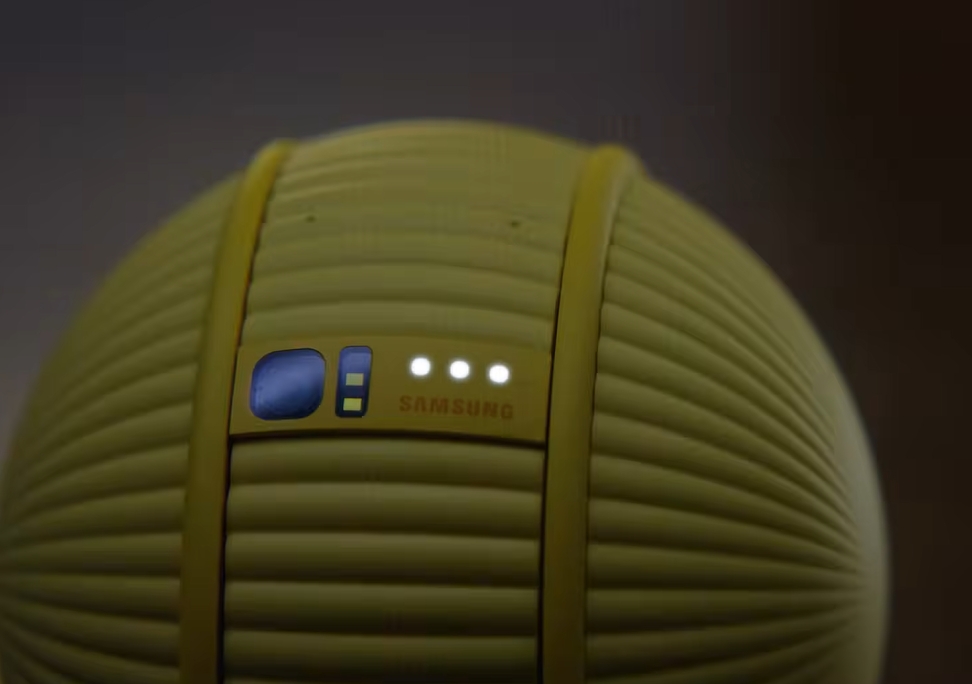
It features a smooth, spherical body with no sharp edges and a concealed wheel design. Its rounded, soothing appearance stands in stark contrast to the industrial, mechanical look of traditional robots, blending seamlessly with home décor to offer both decorative appeal and a high-tech vibe. Compact and agile, the unit is visually unobtrusive, placing it in the top tier of home robot design in terms of aesthetics. 2. Comprehensive functional integration and a forward-looking conceptual experience
It integrates autonomous mobility, LiDAR navigation, AI visual recognition, a central hub for whole-home device control, portable projection, pet monitoring, and environmental sensing. Powered by Google’s Gemini large language model, it theoretically enables a full spectrum of services—such as autonomous patrols, scenario-based automation, intelligent companionship, and media projection—spanning the sectors of smart home management, security, companionship, and entertainment. - Proactive AI service logic, distinguishing it from passive smart devices
Unlike smart speakers or sensors that require manual triggers, Ballie actively learns user habits. It autonomously initiates scenario-based services, patrols the home environment, and monitors pets or the elderly. This embodies an intelligent logic where the “device proactively serves the user,” representing an advancement over the passive interaction models of traditional smart home systems.
(II) Fatal core shortcomings: An insurmountable impasse regarding hardware and algorithms (ultimately leading to the project’s cancellation)
- Deficient basic navigation capabilities; failure in complex home environments
This is the fundamental hardware flaw preventing Ballie from entering mass production. The device is limited to movement on a single flat level; it cannot climb stairs, traverse obstacles, or handle common household terrain features such as carpets, door thresholds, or floor gaps. Everyday elements—like tile grout lines, low thresholds, or thick carpets—cause the unit to stutter, slip, or stall, rendering autonomous movement impossible. Furthermore, the LiDAR mapping precision is inadequate; the device easily gets lost, crashes, or becomes trapped in corners when navigating complex furniture layouts or areas with low-lying clutter. Consequently, the autonomous patrol function is rendered useless, as the device cannot even achieve basic whole-home mobility. - Gross exaggeration of core functions; the “PowerPoint” vision far exceeds the actual experience
The officially touted features—pet monitoring, home security, smart device integration, and scenario-based assistance—all fall drastically short of claims in reality. Real-world testing shows that pet movement or household clutter causes recognition failures. The so-called proactive smart home integration supports only a handful of Samsung flagship appliances, with no compatibility for third-party devices. When encountering household anomalies, it cannot issue proactive alerts—only passively record footage—offering no genuine security warning capability. Even after five years of iteration, the issue of poor generalization in scenario recognition remained unresolved; the “cool” features were confined entirely to the minimalist settings of trade show booths. 3. The projection function is highly impractical—essentially a useless gimmick
Although the device features a built-in micro-projection module, its brightness is woefully inadequate; it fails to produce a visible image in daylight or natural light, functioning only in pitch-black darkness. Furthermore, the fixed projection angle, lack of autofocus, and absence of image correction mean that any unevenness in the wall surface or slight device misalignment results in distorted, blurry images. It fails to meet basic needs for movie watching, screen casting, or entertainment, serving merely as a decorative feature with no real-world utility. - An extremely closed ecosystem tethered to Samsung’s product suite; zero versatility
All of Ballie’s smart connectivity, scenario-based services, and AI control functions are compatible exclusively with Samsung’s high-end smart home ecosystem. Users without Samsung appliances or phones are virtually unable to access any core features. Since few ordinary households are fully equipped with Samsung’s high-end smart appliances, this extremely low ecosystem compatibility leaves almost no viable use cases; outside the Samsung ecosystem, it is nothing more than a useless spherical toy. - Poor stability and low fault tolerance pose significant risks for home use
As a mobile smart device, Ballie lacks collision buffering or emergency braking optimization, making it prone to erratic bumping, system freezes, and malfunctions in complex environments. Its AI decision-making is unstable, leading to issues like scene misidentification and accidental appliance activation, which create safety hazards in the home. Samsung ultimately abandoned mass production because it could not resolve these stability and safety issues for consumer environments, making it too risky to release to the general public. - Exorbitant pricing and a complete lack of value for money
Although the official price was never announced, industry estimates—based on its hardware stack of sensors, projectors, AI chips, and mobile chassis—suggest a price point far exceeding 10,000 RMB. Compared to mature home robots, its functional capabilities are poor, yet it is priced like a top-tier device. It lacks the cost-effectiveness and mass-market appeal required for consumer adoption, destined to remain a niche experimental product. - Years of empty promises and stalled development led to its ultimate cancellation
From its debut in 2020 to its shelving in 2026, the project suffered repeated delays and sluggish iteration; new features showcased at successive CES events never materialized into mass-produced products. Ultimately, Samsung removed it from its consumer product lineup and downgraded it to an internal innovation experiment platform; ordinary consumers will never be able to purchase a mass-produced version, and all previously advertised features have been scrapped.
II. Comparative Analysis with Competitors: Lagging Behind Mature Home Robots in Every Aspect
When compared to mature consumer-grade home service robots, AI companion robots, and robot vacuums, Ballie is comprehensively outperformed in terms of practicality, real-world viability, stability, and cost-performance—surpassing competitors only in its visual concept.
- Comparison with High-End Robot Vacuums (e.g., Ecovacs/Roborock)
Mainstream high-end robot vacuums support precise whole-home mapping, obstacle navigation, carpet detection, cliff detection (anti-drop), and multi-floor mapping; they are compatible with 99% of home layouts and feature mature, stable automatic cleaning, recharging, and dust-emptying capabilities. In contrast, Ballie fails to master even basic home mobility, obstacle avoidance, and terrain adaptation. Its practical utility falls far short of mid-range robot vacuums, with its only advantages being its appearance and conceptual AI interaction. - Comparison with Mature Companion Robots (e.g., LG CLOi, UBTECH)
Mature companion robots like LG CLOi and UBTECH offer stable voice interaction, facial recognition, home security, and caregiving features for the elderly and children. They are adapted for complex home environments and are ready for mass production and routine use. Ballie, however, has remained stuck at the trade-show demonstration stage with no real-world home deployment cases. It lags significantly in AI interaction, scene recognition, and service stability—making it a purely conceptual product. - Comparison with Standard Smart Speakers + Whole-Home Smart Kits
A combination of a mid-range smart speaker and whole-home sensors can achieve appliance interconnection, scenario automation, voice interaction, and security monitoring. These systems offer high stability, mature implementation, compatibility with appliances from various brands, and no terrain limitations. With an estimated price point in the tens of thousands of yuan, Ballie falls far behind affordable smart kits in feature coverage, stability, and versatility; it carries an exorbitant premium while offering virtually zero practical utility. III. Consumer Buying Guide: No Need to Wait, Do Not Buy, Steer Clear
Given the reality that the product has been completely scrapped, features were exaggerated, and it failed to reach the market, here is a clear conclusion for consumers: - Give up on waiting for mass production; the project is permanently terminated.
As of 2026, Samsung has indefinitely shelved the Ballie project, removed overseas product pages, halted iterative R&D, and completely abandoned plans for a consumer launch. No mass-production models will be released; any rumors circulating online regarding a launch date are false. - Do not fall for marketing hype; it offers no practical utility.
All the flashy features—companionship, central home control, monitoring, and projection—were merely demonstrations of idealized laboratory scenarios and cannot adapt to real-world home environments. Even if the project were restarted in the future, the first-generation product would inevitably be a deeply unfinished prototype, unsuitable for purchase by average users. - Unless you are already in the Samsung whole-home ecosystem, do not consider it.
Even if the product were to launch, heavy ecosystem dependency would mean average users face severely crippled functionality, rendering the device a useless ornament with terrible value for money and a poor user experience. - If you have a genuine need for a home robot, prioritize mature, mass-produced models.
For needs such as smart home services, security patrols, or companionship, opt directly for mature, reliable mass-produced robots from domestic or Korean brands. Do not pay for or wait on Samsung’s unrealized concept product.
IV. Final Verdict: A five-year-long tech fantasy with no consumer value.
The only value of the Samsung Ballie lies in showcasing the potential form factor of future home AI robots; its innovative concepts—such as an integrated spherical design and proactive AI services—offered new R&D directions for the industry.
However, setting aside the concept and aesthetics, it suffers from fatal structural flaws: zero terrain adaptability, abysmal navigation and obstacle avoidance, grossly exaggerated features, an extremely closed ecosystem, poor stability, and an absurd price premium. It is an experimental, unfinished prototype that failed to reach the home market and was ultimately scrapped.
For the average consumer, the Ballie holds no value—whether in terms of waiting for it, buying it, or using it. It demonstrates that proactive home AI robots are not yet mature, and that flashy futuristic concepts cannot currently adapt to real-world household environments. For essential needs such as whole-home smart systems, home-based caregiving, and intelligent inspection services, mature, mass-produced equipment is always the more reliable and practical choice.