
Leveraging Bosch’s century-long reputation for industrial manufacturing, the Bosch Smart Home Camera markets itself on German-engineered security, hardware durability, whole-home smart integration, and privacy protection, specifically targeting users of high-end home renovations and premium smart home systems. Compared to mass-market home cameras from brands like Xiaomi, EZVIZ, and 360, Bosch commands a premium price point, positioning itself as a “safer, more stable, and more durable” piece of “affordable luxury” security equipment.
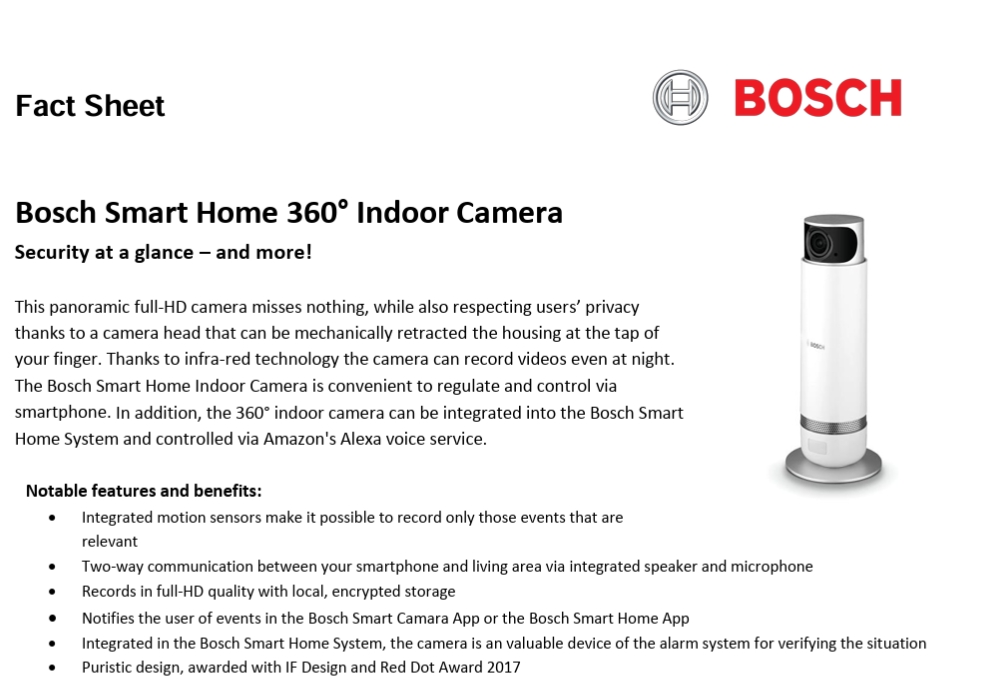
However, after extensive real-world home testing—including multi-scenario video recording, evaluation of smart features, and side-by-side comparisons with competitors—it becomes clear that this camera, despite its “precision-engineered” aura, suffers from a host of glaring flaws: severely crippled functionality, outdated AI algorithms, restrictive storage policies, poor compatibility, convoluted hidden costs, and abysmal value for money. While its hardware build quality is decent, the smart user experience and core practicality fall far short of domestic competitors costing under 1,000 RMB; it is a classic example of a product defined by a “big-brand premium” yet delivering a “half-baked” user experience. This article focuses on the product’s shortcomings, objectively dissecting its pros and cons, benchmarking it against mainstream rivals, and providing a guide to help consumers avoid potential pitfalls.
I. A Breakdown of Real Pros and Cons: Superior Build Quality, Yet Inferior User Experience Across the Board
(I) A Few Key Strengths
- Industrial-grade build quality with exceptional durability
Upholding Bosch’s German industrial manufacturing standards, the device features a body made of high-quality, rigid materials. It is robust, drop-resistant, and wear-resistant, with a stable mounting structure and neat cable management that resists loosening or degradation over time. Unlike the plastic bodies common in domestic cameras, the Bosch unit offers superior tactile quality, longevity, and resistance to environmental interference; it is well-suited for continuous, 24/7 home monitoring with a very low failure rate. - Solid privacy protection and security fundamentals
The device includes a built-in physical privacy shutter, allowing users to manually cover the lens and cut off recording permissions, thereby eliminating the risk of unauthorized background recording. Data transmission utilizes encrypted protocols, ensuring superior local storage security; compared to the open transmission methods found in some domestic devices, the privacy protection system is more robust, making it ideal for families with elderly members or children who prioritize home privacy.
For users of the Bosch whole-home smart suite, the camera integrates seamlessly with door/window sensors, motion sensors, smart lighting, and security alarm systems to enable automated scenario triggers—such as activating monitoring upon leaving, triggering alarms during unauthorized intrusions, and disabling monitoring upon returning home. The stability of this ecosystem integration surpasses that of most generic smart cameras. - Consistent basic image quality without major flaws
Daytime image quality offers natural color reproduction and clarity, free from issues like over-sharpening or distorted saturation. Night vision imagery is reasonably clean, lacking significant noise, and the basic monitoring resolution is sufficient for standard home security needs, such as keeping an eye on the house or monitoring the elderly and children.
(II) Fatal Flaws: Premium pricing meets entry-level performance—unavoidable shortcomings
- Extremely stingy free storage and severely limited basic playback
This is the primary drawback that drives users away from Bosch cameras. The device lacks standard free continuous loop cloud storage; official free benefits cover only a maximum of 200–400 event clips within a 30-day window. Furthermore, individual clips are extremely short, with no options to customize recording duration or access continuous playback. Features that are standard on typical home cameras—such as 24/7 loop playback and high-capacity cloud storage—require paid unlocks with Bosch. If events trigger frequently, the free quota is rapidly exhausted, often resulting in missed critical footage and failing to meet the standards for round-the-clock security monitoring. - Cumbersome paid subscriptions and significant hidden costs
Bosch employs a dual-payment system involving “Home+” membership and “Cloud+” storage subscriptions. International pricing ranges from approximately €2.99 to €4.99 per month, while the annual cost for the domestic version runs into the hundreds of yuan. Subscriptions are mandatory to unlock basic features like extended recording, high-capacity cloud storage, intelligent audio analysis, and precise event filtering. In contrast, most domestic cameras at the same price point offer free 24/7 loop cloud storage and AI-powered detection without hidden fees, making Bosch’s charging model starkly inconsistent with its premium positioning. 3. AI algorithms lag significantly behind; the smart experience is disjointed.
The device supports only basic motion detection, lacking essential mainstream features such as accurate human/vehicle classification, perimeter monitoring, privacy masking, and loitering alerts. Real-world testing reveals frequent false alarms triggered by moving curtains, shifting light and shadow, or pets running by; the resulting flood of useless notifications can easily bury alerts for actual human intrusions. Furthermore, it lacks smart tracking, gesture recognition, and digital zoom/close-up capabilities, with an intelligence level comparable to entry-level models from five years ago. - Poor audio performance; frequent issues with background noise and static.
Several Bosch camera models suffer from officially acknowledged audio defects. Firmware updates have occasionally introduced background noise and electrical static in live feeds and recorded videos. Two-way audio suffers from severe echo and muffled, distorted sound, making clear remote communication or monitoring impossible and severely undermining the device’s utility for caregiving and intercom use. The manufacturer offers only a temporary fix—restarting the device—without providing a permanent patch. - Limited installation options and poor scenario compatibility.
The device is officially not supported for ceiling mounting and is designed only for placement on flat surfaces; ceiling installation causes malfunctions, inverted images, and failure of smart recognition features, drastically limiting home installation scenarios. Compared to domestic cameras that support multi-angle mounting—including ceiling, wall, and magnetic mounts—this device lacks flexibility and cannot meet common home installation needs like ceiling monitoring or high-wall mounting. - Picky Wi-Fi compatibility and mediocre network stability.
The device has poor compatibility with router protocols; some newer Wi-Fi 6 or AX-protocol routers cause setup failures, frequent disconnections, and video stuttering. Users must manually disable advanced router protocols for the device to function correctly. This high barrier to entry and instability compared to domestic devices make it extremely unfriendly to average users. - Inflated pricing and poor value for money.
Bosch smart cameras are priced far higher than mid-to-high-end models from brands like EZVIZ, TP-LINK, and 360, yet they lag behind in core areas such as image quality, smart features, storage benefits, and overall user experience. The high price relies solely on the brand’s reputation for build quality, as the product’s actual capabilities fail to justify the premium cost. II. Horizontal Comparison with Competitors: Thoroughly Outclassed by Domestic High-End Models
In the mainstream home security camera market (priced between 200 and 800 RMB), domestic brands have engaged in fierce feature competition and offer comprehensive service packages. When placed in this same price bracket, Bosch cameras lack competitiveness, and their shortcomings are glaringly exposed. - Comparison with EZVIZ/Hikvision High-End Home Cameras
Models from EZVIZ and Hikvision in this price range come standard with free 24/7 loop cloud recording, precise AI classification (people, vehicles, pets), zone monitoring, smart tracking, and full-color night vision. They offer clear, noise-free two-way audio, support versatile installation (ceiling, wall, or desktop), and feature full Wi-Fi 6 compatibility. Furthermore, there are no mandatory subscription fees, and all basic functions are free. While Bosch offers slightly superior build quality, it lags significantly behind in core security, smart features, and playback capabilities, resulting in a vast gap in everyday practicality. - Comparison with TP-LINK and 360 Smart Home Cameras
TP-LINK and 360 models emphasize high cost-performance ratios. They are not only feature-rich but also include free long-term local playback, robust privacy protection, and precise alerts for abnormal behavior, alongside frequent firmware updates for bug fixes. In contrast, Bosch suffers from persistent issues such as audio noise, finicky network setup, stingy storage options, and stripped-down functionality; its OTA update cycle is slow, and user experience improvements lag significantly. - Comparison with Xiaomi Smart Cameras (Mi Home Ecosystem)
Xiaomi’s camera ecosystem offers seamless integration and ease of use, supporting quick smart home automation across the entire house. It includes free basic cloud storage and comprehensive smart recognition features, making it ideal for average home users. Bosch cameras, however, are compatible only with the brand’s own high-end smart home suites; the ecosystem is closed and the barrier to entry is high. Users who do not own a full Bosch smart home setup gain almost no advantage, rendering the camera little more than an overpriced, lackluster standalone device. III. Consumer Buying Guide: Three Types of Users Should Definitely Avoid This Product
Considering the product’s inherent flaws and premium pricing, average consumers should discard the ingrained notion that “Bosch equals high-end quality.” Keep the following points in mind to avoid a bad purchase: - Skip it entirely if you aren’t a Bosch whole-home smart system user.
The camera’s only core advantage lies in its integration with the Bosch ecosystem. Buying it as a standalone unit entails a massive price premium while delivering crippled functionality and a poor user experience; it offers no advantages over domestic cameras costing a fraction of the price—essentially a “brand tax” paid for nothing. - Exercise caution if you need 24/7 security or continuous video playback.
With minimal free storage and no 24-hour loop recording, users requiring constant monitoring, complete home footage archives, or the ability to review past anomalies must pay for ongoing subscriptions. The long-term cost is exorbitant and offers poor value. - Do not buy if you prioritize smart features, low false-alarm rates, and convenient two-way talk.
Outdated AI recognition, frequent false alarms, significant audio static, and a poor intercom experience make it unsuitable for scenarios requiring precision security, remote monitoring, or real-time communication. Its smart capabilities lag far behind domestic products in the same price range. - Avoid if your installation scenario is restricted.
Do not buy if you need ceiling or high-wall mounting; the hardware and algorithms do not support ceiling installation. Forced installation in such positions leads to malfunctions and image distortion. It is designed only for tabletop placement, offering very limited installation flexibility. - Essential tips for those who insist on buying.
Only users with a specific need for the Bosch whole-home smart system should consider purchasing. You must configure the device for standard routers and disable the high-end AX protocol to prevent connection drops. Subscribe to services as needed to avoid missing critical footage due to insufficient free storage. Regularly reboot the device to minimize audio static and firmware bugs. It is not recommended as a primary security camera, but rather as an auxiliary device within the Bosch ecosystem. IV. Final Verdict: A Niche Product for a Specific Ecosystem, Not a Top Choice for General Security Needs
The Bosch Smart Home Camera’s only highlights are its solid German build quality, superior privacy protection, and seamless integration with the proprietary Bosch smart home ecosystem. It is best suited for a niche segment of high-end users who have ample budgets, own a full suite of premium Bosch smart home products, and place a premium on device durability and privacy.
However, for 99% of average consumers, this product offers poor value—characterized by a high price tag, lackluster specifications, limited functionality, onerous fees, outdated algorithms, and poor compatibility—making it a poor choice. For the same price, opting for high-end domestic cameras from brands like EZVIZ, Hikvision, or TP-LINK delivers a more comprehensive feature set, greater stability, and lower long-term costs, comprehensively outclassing this overpriced, “half-baked” smart home offering from Bosch.