
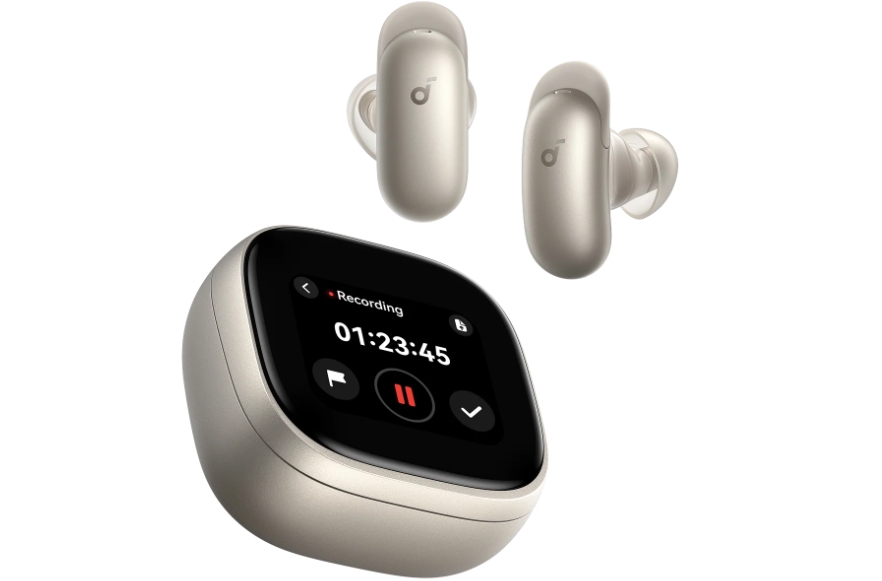
As Soundcore’s annual flagship TWS (True Wireless Stereo) earbuds, the Liberty 5 Pro Max entered the premium “1,000-yuan” market segment immediately upon launch, boasting three key selling points: a charging case with a built-in screen, AI-powered meeting recording and transcription, and Guinness-certified call noise cancellation. It targets business professionals, high-definition calling scenarios, and smart interaction use cases. While many consumers purchased it based on its “all-rounder flagship” positioning, in-depth testing reveals a product with concentrated highlights but fatal flaws; marketing hype has masked numerous detailed issues, leading to problems like a “feature premium” that doesn’t translate to a superior user experience.
This article moves beyond blind praise to objectively dissect the product’s actual pros and cons. By benchmarking it against mainstream competitors in the same price range and outlining key pitfalls for average consumers and business users to watch out for, we help you determine whether this flagship model is truly worth the investment.
I. Core Product Weaknesses (Critical Flaws Revealed in Testing)
Compared to its impressive AI features and call performance, the Liberty 5 Pro Max’s shortcomings have a greater impact on the daily user experience. These flaws are the primary reason for its poor value-for-money proposition and the main source of negative user feedback.
- The screen design is a gimmick: poor visual quality and build feel, driving up the price unnecessarily
This screen is the “Pro Max” version’s core selling point—and its most useless feature. The charging case houses a 1.78-inch AMOLED touchscreen, but it suffers from thick bezels and a low screen-to-body ratio, creating a cheap visual impression that falls far short of the premium quality expected in this price range. The touch controls are clunky; swiping is occasionally unresponsive or laggy, and accuracy is far inferior to competing products with screens at the same price point. Users frequently experience accidental touches or a lack of response when adjusting volume or switching modes.
More importantly, the screen offers minimal practical value. It supports only basic functions like playback control, mode switching, device management, and simple translation, lacking any specialized, in-depth features. The experience improvement over a standard case without a screen is negligible, yet this feature accounts for the significant price premium over the standard “Pro” version, severely undermining its value proposition. - Grossly exaggerated battery life claims; performance drops sharply with all features enabled
Official specifications claim 6.5 hours of playback per charge with ANC (Active Noise Cancellation) on and a total battery life of 28 hours. While these figures look impressive, they are based on testing in a basic mode. Real-world testing shows that enabling the full suite of features—ANC, Dolby Atmos, and AI voice control—causes single-ear battery life to plummet to around 4 hours, with a total combined battery life of just 17 hours—effectively cutting the runtime in half.
Enabling LDAC high-resolution codec and spatial audio further reduces battery life. Consequently, daily commuting or all-day office use requires frequent charging, falling far short of the long-lasting battery life advertised by the manufacturer and causing significant anxiety for heavy users. - Mediocre noise cancellation; poor high-frequency noise suppression
As a flagship headset marketed for its noise-cancellation capabilities, the Liberty 5 Pro Max fails to meet the standards expected of flagship models in the 1,000-yuan price range, exhibiting clear shortcomings. While low-frequency noise cancellation is decent—effectively filtering out the low-frequency rumble of subways and buses—suppression of mid-to-high frequency noise is weak; human voices, keyboard clatter, and ambient clamor cannot be effectively blocked out.
In crowded environments like offices, shopping districts, or subway stations, surrounding voices remain clearly audible, and the noise-cancellation performance lags far behind mainstream competitors like the Sony WF-1000XM6 and Bose QC Ultra. The adaptive noise cancellation logic is conservative; adjustment speeds are sluggish when ambient noise changes suddenly, preventing quick adaptation to the environment and resulting in an inconsistent noise-cancellation experience. - Disappointing sound tuning; muddy default audio profile
The default factory tuning leans heavily toward bass, with excessive low-end volume and loose texture. This results in a muddy, muffled overall sound that obscures vocal details and lacks mid-range clarity. When listening to pop music or vocal tracks, the audio suffers from a lack of detail and layering, sibilance issues, dry high-frequency extension, and a narrow soundstage.
Although it supports features like HearID personalized tuning, AI audio enhancement, and Dolby Atmos, the Dolby mode overrides custom EQ and AI audio settings. These features conflict with one another, making it difficult for average users to achieve a balanced, pleasing sound profile; in its default state, the audio quality is far inferior to competitors in the same price range. - Core AI features locked behind paywalls and regional restrictions; free allowances are woefully inadequate
AI meeting recording, real-time transcription, and smart summarization are the Pro Max’s core differentiating features, yet they are subject to severe paid-access restrictions. The official service offers only 120 minutes of free transcription per month for a period of 24 months—an allowance that falls woefully short for business users who frequently attend meetings or make recordings.
Exceeding this limit requires a paid subscription costing tens of yuan monthly, leading to high long-term costs. Furthermore, the AI transcription accuracy is limited; real-world testing in multi-person meetings reveals issues such as miscounting participants, confused speaker attribution, and inaccurate summaries, failing to faithfully capture meeting content. It also lacks support for transcribing mobile calls or online meeting audio, significantly undermining its practical utility. - Flaws in fit and design details
The earbud housings are rather large and feature fixed ear wings, resulting in poor fit compatibility. Users with small ear canals experience noticeable pressure and pain, making prolonged wear highly uncomfortable. The ear wing attachment is overly tight, making it difficult to remove or swap ear tips and wings; excessive force risks damaging the accessories, resulting in a frustrating user experience.
Additionally, the earbuds only carry an IP55 dust and water resistance rating, offering limited protection; exposure to light rain or sweat can cause touch controls to malfunction, posing risks during outdoor use or exercise.
II. Summary of Objective Pros and Cons
【Key Advantages】
- Industry-leading call noise cancellation: Equipped with 10 sensors and dual bone-conduction microphones, it holds the Guinness World Record for the clearest call quality. It captures clean vocals even in noisy or windy environments—ensuring the other party hears no background noise—making it a top-tier product in the 1,000-yuan price range and perfect for users who frequently make calls or attend online meetings.
- Flexible multi-device connectivity: Supports simultaneous connection to three devices with smooth, lag-free switching between phones, computers, and tablets—ideal for professionals who use multiple devices.
- Feature-packed: Offers a comprehensive suite of features including head tracking, Dolby Atmos, HearID personalized audio tuning, voice assistant support, remote camera control, and face-to-face translation, ensuring high versatility across various usage scenarios.
- Stable core performance: Features stable Bluetooth 6.1 connectivity with a low risk of disconnection or latency; delivers balanced latency performance for media and gaming, ensuring excellent stability for daily use. [Critical Flaws]
- The charging case with a built-in screen feels cheap and lacks practicality; it carries a significant price premium but offers poor value for money.
- Battery life claims are exaggerated; runtime drops drastically when all features are enabled, proving insufficient for heavy use.
- Noise cancellation performance is weak in the mid-to-high frequency ranges; overall noise cancellation capabilities fall short of mainstream flagships in the same class.
- Default sound quality is muddy and muffled; feature conflicts exist, and achieving optimal sound tuning requires significant effort/expertise.
- Core AI features are locked behind paywalls (usage quotas), resulting in high long-term costs and inconsistent feature stability.
- Fit and comfort are poor; the design is unfriendly to users with small ear canals, and water resistance is weak.
III. Comparative Analysis with Key Competitors in the Same Price Range
Priced in the 1,000-yuan range, the Liberty 5 Pro Max competes with mainstream flagships; however, its core advantages are limited to call noise cancellation and AI meeting functions, while its overall product performance reveals significant shortcomings.
- Comparison with Sony WF-1000XM6
The Sony XM6 excels with top-tier noise cancellation, superb sound quality, ultra-low latency, and long battery life, offering a well-rounded experience without weak points. Its tuning is refined and balanced, making it suitable for media consumption, commuting, and gaming. The Liberty 5 Pro Max only holds an edge in call clarity and AI features; it lags behind the XM6 in noise cancellation, sound quality, and battery life, offering far inferior overall value. - Comparison with Bose QuietComfort Ultra
The Bose Ultra focuses on immersive spatial audio and balanced noise cancellation, offering more robust low-frequency noise suppression. Its comfort far surpasses that of the Liberty 5 Pro Max, making it ideal for extended wear. The Soundcore product wins only on call quality and smart features; its peak noise cancellation, sound atmosphere, and wearing comfort all fall short of the Bose model. - Comparison with the Liberty 5 Pro (Same Series)
The core hardware, noise cancellation, sound quality, and battery life of both products are virtually identical; the only differences are the Pro Max’s screen-equipped charging case and AI recording/transcription features. Given the price difference of several hundred yuan—combined with the screen’s low utility and the paid nature of the AI features—there is no compelling reason for average users to pay extra for the Max version; the standard Pro model offers vastly superior value. 4. Comparison with JBL Tour Pro 3 (a competitor in the same price range featuring a display case)
While both are TWS earbuds with display cases, the JBL model offers superior screen quality and touch responsiveness, a smoother functional workflow, and no forced paywalls. In contrast, the Liberty 5 Pro Max suffers from a lackluster screen experience and locks core features behind paywalls; its premium pricing is harder to justify, making the competitor a stronger choice.
IV. Essential Buying Guide & Pitfalls to Avoid
- Who Should Think Twice (90% of Average Users)
Commuters, multimedia enthusiasts, and gamers seeking top-tier noise cancellation, an immersive listening experience, or ultra-long battery life should avoid this model. It lacks flagship-level performance in noise cancellation, sound quality, and battery life; its shortcomings significantly impact daily use, and there are other options in the ~1,000 RMB price range that offer a better overall experience.
Users who prioritize value for money and do not require frequent meeting recordings should opt for the standard Liberty 5 Pro; there is no need to pay a premium for a gimmicky screen and paid AI features. - Who Should Buy It
Professionals who frequently participate in online meetings, business calls, or off-site negotiations should prioritize this model. Its top-tier call noise cancellation and voice pickup capabilities make it a rare product in the ~1,000 RMB range capable of delivering high-definition calls in complex environments, while the AI recording and transcription function meets the needs for light meeting documentation.
It is also a suitable choice for users who work across multiple devices and need frequent switching, demand exceptionally high call quality, but do not prioritize extreme sound quality or noise cancellation performance. 3. Key Purchasing Considerations
① Clarify AI feature costs: Free transcription quotas are limited; long-term, high-frequency use requires a paid subscription. Once annual costs are factored in, the product’s value-for-money drops significantly, so carefully assess your needs beforehand.
② Battery life trade-offs: Battery life shrinks drastically when all features are enabled; for heavy use, keeping the charging case handy is recommended. Turn off unused features like Dolby Atmos and Spatial Audio to extend battery life.
③ Fit and comfort: Users with small ear canals should try them on in-store first to avoid discomfort or pain during prolonged use. Handle ear wings and tips gently when swapping them to prevent damage.
④ Look past the “flagship” hype: Don’t be misled by marketing buzzwords like “Guinness World Record,” “AI flagship,” or “screen-equipped design.” It is a flagship specialized for calls, not an all-rounder; its overall experience falls short of top-tier products in the 1,000-yuan price range.
⑤ Usage scenario limitations: Unsuitable for sports or rainy outdoor environments; its water resistance is weak, making it prone to touch-control malfunctions.
V. Summary: A niche flagship with outstanding specialized strengths but unbalanced overall performance
The Anker Soundcore Liberty 5 Pro Max is a business-focused headset with highly specialized strengths rather than an all-around flagship. Its call noise cancellation and voice pickup capabilities are industry-leading, and its AI meeting features precisely address professional needs. However, its flaws are glaring: a gimmicky screen that drives up the price, overstated battery life, mediocre noise cancellation, disappointing default sound quality, and a paywall for core features make it a poor fit for the average consumer.
If you are a heavy user of business calls and office meetings, are willing to pay for specialized call performance, and accept the ongoing cost of the AI subscription, this headset is worth buying. However, if you are an average consumer prioritizing sound quality, noise cancellation, battery life, or value for money, products from Sony, Bose, or even Anker’s own standard models in the same price range are safer and more cost-effective choices.