
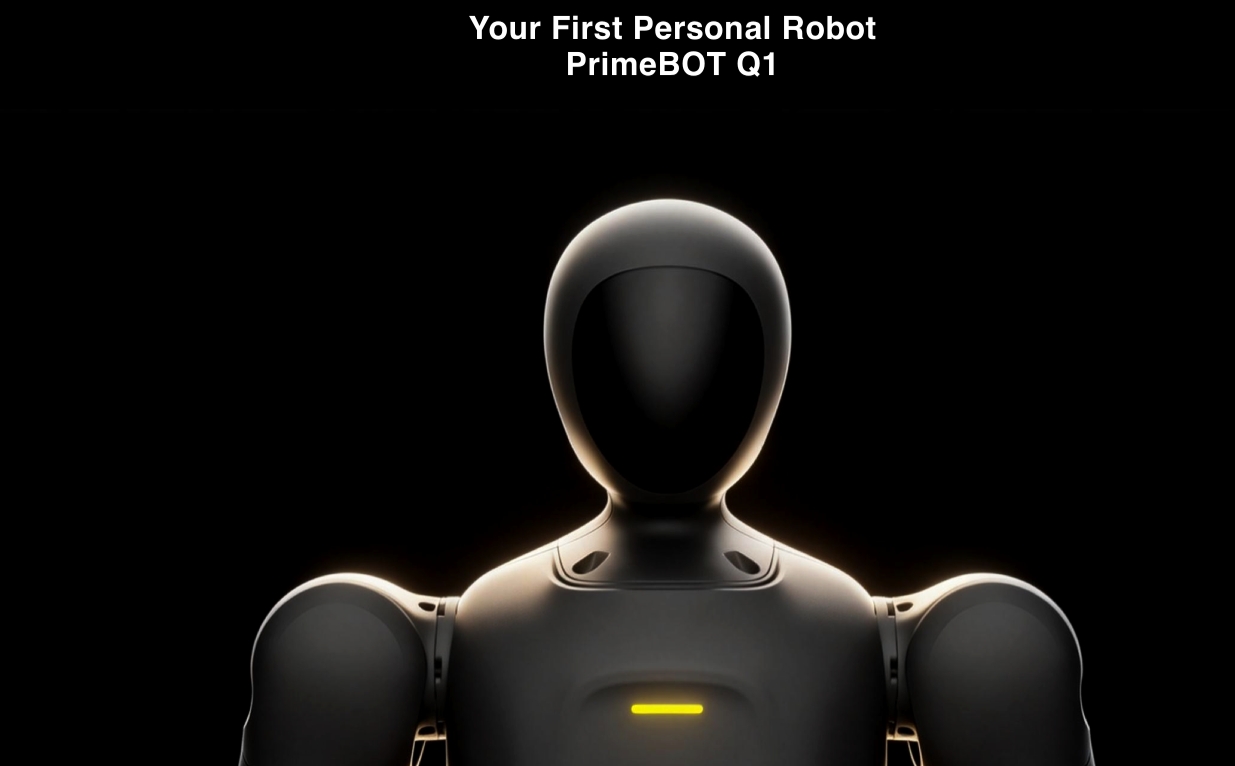
As the world’s first personal robot capable of transforming between humanoid and quadrupedal forms, the Qiyuan PrimeBOT T1 became a viral hit in the 2026 consumer robotics market. It garnered attention through high-tech selling points such as a rapid 3.5-second transformation, switching between wheeled-humanoid and quadrupedal modes, and embodied AI interaction. With its futuristic transformation effects, smart home integration, intelligent tracking, and interactive companionship features, the T1 captivated tech enthusiasts and earned the nickname “Home Transformer.”
However, once the flashy launch event demos and viral video filters are stripped away—and after hands-on testing across various scenarios—it becomes clear that the product is heavy on technical gimmicks but severely lacking in practical utility. It suffers from critical flaws, including structural design defects, a lack of specialized functionality, limited adaptability to real-world scenarios, and high costs. This article moves past the marketing hype to deeply analyze the PrimeBOT T1’s actual strengths and weaknesses, benchmark it against mainstream competitors, and outline key pitfalls for consumers to consider, ultimately revealing the true capabilities of this viral robot.
I. Core Product Weaknesses (Critical Flaws Revealed in Testing)
The Qiyuan T1’s biggest issue is that it sacrifices practicality for the sake of transformation. The cool experience provided by its dual-form architecture comes at the cost of significant engineering compromises and a degraded user experience—factors that ultimately deter the vast majority of average consumers.
- Dual-form design: “Jack of all trades, master of none”—neither form meets professional standards.
This is the T1’s most fundamental flaw. To enable seamless switching between humanoid and quadrupedal modes, the product utilizes a unified, general-purpose joint structure. This results in significant shortcomings in both forms; neither can match the performance of specialized robots designed for a single mode, leaving the T1 stuck in a dilemma where it can do a little of everything but nothing exceptionally well.
In humanoid mode, the robot moves by gliding on wheels rather than walking in a biomimetic fashion, severely limiting its interactive capabilities. To accommodate the structural requirements of the quadrupedal mode, the unit lacks dexterous robotic arms. Consequently, it cannot perform core household tasks such as grasping objects, operating appliances, or moving items; it is limited to basic actions like holding hands, touch responses, and voice interaction, resulting in extremely low practical utility. In its quadrupedal mode, the limbs must balance the functions of support, locomotion, and transformation; consequently, structural strength and terrain traversal capabilities are significantly compromised. When facing complex outdoor surfaces—such as steps, loose gravel, or lawns—its stability and obstacle-avoidance abilities fall far short of specialized quadrupedal robot dogs, rendering it incapable of tasks like outdoor following or navigating complex terrain.
In short, it lacks the competence of specialized humanoid robots and the stability of specialized quadrupedal robot dogs; the dual-mode design ultimately amounts to little more than a visual gimmick. - Bulky body and poor agility; ill-suited for home environments
The Qiyuan T1 weighs 16 kg and stands up to 1 meter tall; its large physical footprint makes it highly unsuitable for typical home environments. It occupies significant space in smaller homes and is inconvenient to store when not in use. During operation, the robot’s high inertia results in stiff, sluggish movements when starting, stopping, or turning, preventing it from quickly navigating tight indoor corridors or narrow gaps between furniture.
Furthermore, the circular wheel assembly at the base creates significant blind spots for cleaning and navigation, leaving areas under furniture and in wall corners unreached, which severely limits its utility for daily patrols or whole-house following tasks. Additionally, the lack of a flexible cushioning design combined with high operating speeds makes it prone to scraping or bumping into walls and furniture; using it at home requires extensive protective measures, adding to the cost and complexity of operation. - Wheel assembly lacks self-cleaning capabilities; maintenance is troublesome and prone to fouling and damage
Although designed to operate both indoors and outdoors, the T1’s wheel assembly lacks any self-cleaning mechanism—a major shortcoming that significantly impacts daily usability. After outdoor use, the wheels accumulate mud, dust, and debris, which then soil indoor floors; manual cleaning is required after every outdoor excursion before the robot can operate indoors.
For the average user, manually “wiping the feet” after every use is an extremely tedious chore. This negates the robot’s core value of intelligent, effortless convenience, drastically reduces usage frequency, and ultimately relegates the device to a mere decorative object. Moreover, the accumulation of dirt and constant friction accelerate the aging and wear of the wheel assembly, leading to high long-term maintenance and replacement costs. 4. Questionable durability of the transformation mechanism and high risk of failure
The T1’s primary selling point is its ability to frequently switch forms; however, the complex multi-joint folding and dynamic center-of-gravity adjustment mechanisms introduce a high risk of failure. Unlike fixed-form robots that rely on a single movement logic, the T1 requires repetitive joint bending, center-of-gravity shifting, and structural load adjustments. Prolonged, high-frequency use makes it highly susceptible to issues such as loose joints, cable fatigue, jamming during transformation, and postural misalignment.
The product is currently in the early promotional phase and has not undergone long-term market validation; there are no clear specifications regarding the mechanical lifespan or guaranteed transformation cycles. It is highly likely to suffer from problems where it impresses initially but breaks down later and proves difficult to repair. If the transformation mechanism fails, the entire unit will likely become inoperable—unable to function independently in a single mode—indicating extremely low fault tolerance. - Lack of practical utility and hollow core value; leans towards being a toy
Setting aside the transformation effects, the T1 lacks significant practical functionality. As a personal home robot, it cannot perform essential tasks such as assisting with housework, transporting objects, or precisely controlling home appliances. Basic features—such as intelligent tracking, voice companionship, and smart home integration—offer a user experience far inferior to that of entry-level smart gimbals or smart speaker systems.
Its headline features—embodied AI and long-term conversational memory—are limited to basic small talk and command execution, falling short of enabling deep interaction or personalized services. Features like backflips, transformations, and rhythmic displays are merely for entertainment and offer no real-world utility. For the average household, the product lacks essential, practical functions; relying solely on a high-tech gimmick to justify its value results in extremely poor cost-performance. - Not yet in full-scale production; lack of transparency regarding after-sales support and specifications
According to official information, the Qiyuan T1 is currently in the prototype demonstration and marketing phase and has not yet entered mass production. Key details—such as the retail price, official launch date, battery life, charging speed, core hardware specifications, and warranty policies—have not been fully disclosed.
Furthermore, the brand’s robotics division has yet to establish a mature revenue model or supply chain system. This creates risks regarding delayed R&D optimization, inconsistent quality control in mass production, a scarcity of after-sales service centers, and difficulty in sourcing replacement parts. For the average consumer, repairs following a malfunction or part damage involve long turnaround times and high costs, offering no advantage in terms of after-sales support.
II. Summary of Objective Product Pros and Cons
[Key Advantages]
- Pioneering dual-form transformation technology: Features a proprietary “Transformer” cross-form integrated architecture, enabling autonomous switching between humanoid and quadruped modes in 3.5 seconds without manual intervention. It boasts excellent dynamic balance, a striking high-tech visual appeal, and significant differentiation.
- Excellent movement stability: Offers zero-radius turning on wheels and decent indoor maneuverability. The chassis is highly impact-resistant, capable of performing advanced maneuvers like landing impact absorption and backflips. Mature motion control algorithms ensure smooth, stable performance during demonstrations.
- Solid smart interaction foundation: Supports AI-driven long-term conversational memory, whole-home smart device integration, intelligent following, autonomous patrolling, and voice command control. It offers basic capabilities for companionship, security, and interaction, making it suitable for light home use.
- Innovative multi-scenario adaptability: The humanoid form suits indoor human-machine interaction and companionship, while the quadruped form handles outdoor navigation and following/escort duties. This scenario coverage aligns with future trends for home robots, maximizing playability and technological showcase value.
[Critical Disadvantages] - Dual-form design lacks specialization; it offers neither professional-grade operational precision nor advanced mobility, rendering core functions somewhat gimmicky.
- Bulky chassis and poor indoor maneuverability; navigation blind spots exist, and it is prone to bumping into furniture, resulting in low suitability for home environments.
- Wheel assemblies lack self-cleaning features, making maintenance cumbersome and leading to high daily operating costs and a poor user experience.
- Durability of the complex transformation mechanism is unknown; there is a high risk of failure and very low fault tolerance for the unit as a whole.
- Scarcity of practical functions and weak ability to address essential needs; the product leans heavily toward being a high-end tech toy.
- Not yet in mass production; core specifications, pricing, and after-sales systems are not fully established, posing significant risks for buyers.
III. Comparative Analysis with Key Competitors
In the current consumer-grade embodied AI robot market, the Qiyuan T1 emphasizes its unique dual-form capability. However, when evaluated on overall practicality, stability, cost-performance ratio, and real-world utility, it lags significantly behind professional-grade competitors in the same class; its advantages are limited to its visual transformation effects. 1. Comparison with Agibot Expedition A2 (Humanoid Robot)
The Agibot Expedition A2 focuses on professional interaction and manipulation in a true humanoid form. Equipped with dexterous robotic arms, it performs essential real-world tasks such as opening doors, handing over objects, operating equipment, and handling simple household chores; its depth of AI interaction and practical utility in real-world scenarios far surpass the Qiyuan T1. The Qiyuan T1 offers only the gimmick of a transformation feature; it lacks actual operational capabilities and serves primarily as a visual novelty, offering far less comprehensive utility than its true humanoid competitors.
2. Comparison with DJI RoboMaster S2 (Quadruped Robot)
DJI’s professional quadruped robot excels in mobility, stability, payload capacity, and obstacle-avoidance precision. It is adaptable to diverse scenarios—including complex outdoor terrain, scientific research and training, and security patrols—and boasts superior structural durability, mature quality control, and a comprehensive after-sales support system. The Qiyuan T1’s quadruped mode makes significant compromises to accommodate the transformation feature; its mobility and stability fall short of DJI’s professional models, and it lacks robust after-sales support, offering nothing more than the novelty of humanoid transformation.
3. Comparison with Qiyuan Q1 (Entry-level Model from the Same Brand)
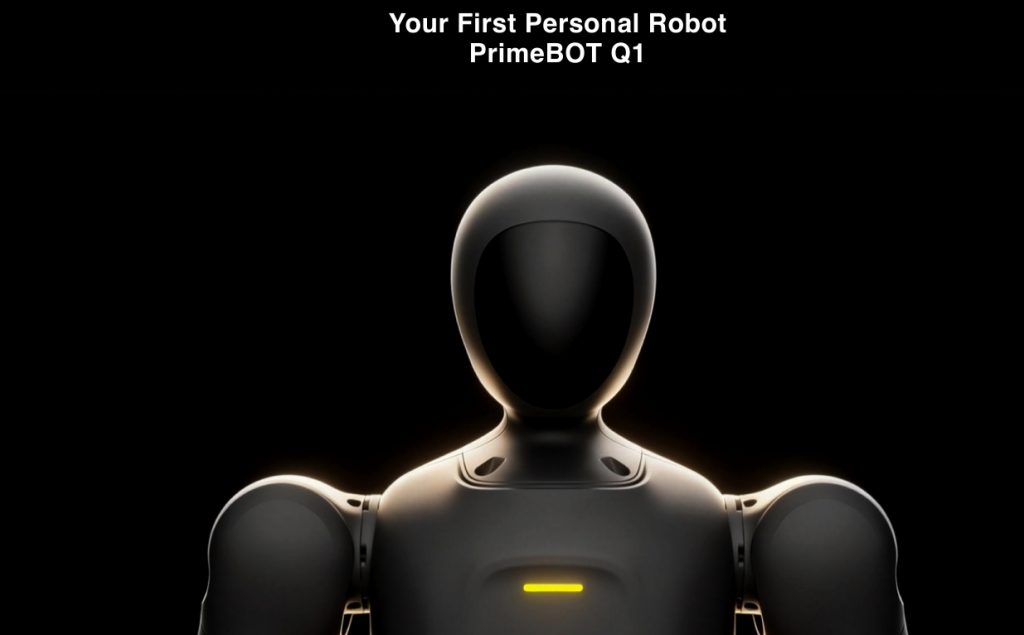
The Qiyuan Q1 focuses on being lightweight, highly adaptable, and modifiable. Its compact, safe design makes it ideal for close-range parent-child interaction and daily home companionship. It offers high playability through customization and provides far better value for money than the T1. The T1 is bulky, features redundant functions, and lacks practicality; its high price tag stems entirely from the “black technology” of its transformation capability, making it a far less cost-effective choice for average consumers compared to the entry-level Q1.
4. Comparison with Mijia Smart Robot Set (Home Smart Ecosystem)
The combination of a Mijia robot vacuum, smart speaker, and security camera covers essential needs—home cleaning, security monitoring, voice interaction, and smart home control—at a lower price point, with easier maintenance and extremely low failure rates. Priced in the tens of thousands, the Qiyuan T1 cannot replace any of these standard smart home devices; its ability to meet practical, everyday needs is a weakness, and its only advantage lies in its value as a technological showcase.
IV. Essential Buying Guide: Pitfalls to Avoid
- Who Should Definitely Avoid Buying (95% of Average Consumers)
Average household users who prioritize practicality, hassle-free maintenance, and value for money are strongly advised against purchasing this product. The T1 lacks essential, practical functions for daily use; it is cumbersome to maintain, bulky, and has an unknown failure rate. It cannot replace standard smart home devices and will likely end up as a decorative item gathering dust. For users prioritizing essential household tasks, security, or smart control, a combination of traditional smart devices offers a far superior experience.
Pragmatic users who value stability, durability, low failure rates, and reliable after-sales support should steer clear. As the product has not yet entered mass production, quality control and after-sales service remain unproven; furthermore, the transformable structure is fragile, entailing high risks and maintenance costs during long-term use. - Target Audience
Tech enthusiasts, digital collectors, and smart home geeks looking to try something new. Featuring a pioneering dual-form transformable architecture, it offers high “tech appeal” and collector’s value—ideal for experiencing cutting-edge embodied AI technology or hands-on testing.
Suitable for commercial settings such as corporate showrooms, tech museums, and trendy venues. Its impressive transformation effects and interactive smart displays make it an excellent tech showcase piece that enhances the futuristic atmosphere of a space; its commercial value far outweighs its utility in a home setting. - Key Purchasing Considerations
① Discard the “all-in-one robot” illusion: Clearly understand the product’s positioning. The T1 is a tech-showcase toy and a prototype for cutting-edge technology, not a practical household robot. Do not be misled by marketing buzzwords like “whole-home intelligence,” “all-around companion,” or “multifunctional robot.”
② Beware of risks associated with pre-mass-production status: There are currently no confirmed details regarding price, battery life, or warranty terms. As it has not yet reached mass production, quality control is inconsistent and after-sales support is uncertain; it is advisable to wait for official mass production and market validation before considering a purchase.
③ Assess home suitability beforehand: Do not buy if you live in a small apartment, have densely packed furniture, or have walls covered in soft furnishings. The bulky body is prone to collisions and struggles to navigate tight spaces, resulting in a poor daily user experience.
④ Be prepared for high maintenance costs: Only consider purchasing if you are willing to use it outdoors regularly, manually clean the wheel assemblies after every use, and shoulder potential future repair costs.
⑤ Avoid paying a premium for gimmicks: Do not pay a high price solely for the transformation gimmick. All its basic smart functions can be easily replicated by smart devices costing a fraction of the price; it offers no unique, essential utility. V. Conclusion: A pioneering prototype—technologically advanced yet immature in execution, prioritizing spectacle over utility.
The PrimeBOT T1 is a cutting-edge embodied AI robot that boasts advanced technological concepts but suffers from immature product execution. It pioneered the ability to freely switch between humanoid and quadrupedal forms, redefining the boundaries of form factors for consumer-grade robots and pointing toward the future of personal robotics; its technological appeal and value for industry exploration are undeniable.
However, when viewed through the lens of home consumer use, the product’s shortcomings are critical: its dual-form capability lacks depth, practical functions are scarce, maintenance is cumbersome, durability is unproven, after-sales support is inadequate, and the price is excessively high—rendering it completely incapable of meeting the essential daily needs of average users. It is better suited for tech enthusiasts, commercial displays, or early adopters looking to experience new technology, rather than for everyday use in a typical household.
In summary, the PrimeBOT T1 succeeds thanks to its impressive, high-tech transformation capabilities but fails in the crucial area of practical, real-world application. For the average consumer, it is currently an object to be admired from afar rather than a purchase worth making for actual utility.