
Market Analysis
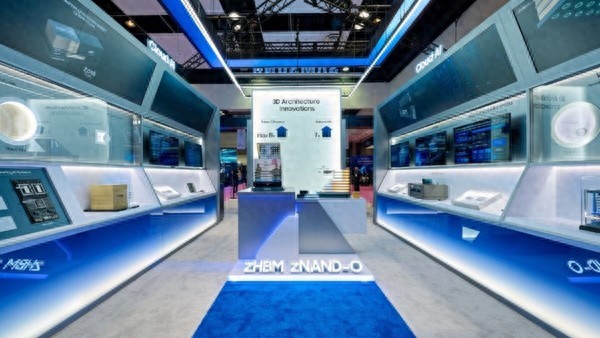
Samsung Semiconductor used the Global Storage Innovation Forum in Shenzhen on October 15 to lay out the next rung of its AI-storage ladder. The package is deliberately broad: the compact E3.S BM1773 QLC SSD rated at up to 256 TB, the PM1763 PCIe 6.0 enterprise SSD, the industry’s first 400-plus-layer V10 BV-NAND, and — the product the marketing team clearly wants headlines about — zNAND-O, a TSV-stacked V-NAND memory positioned as a bridge between DRAM and NAND for on-device and edge AI. The pitch is that a single vendor can now stack HBM in the server, run high-throughput NVMe on the flash tier, and carry a 70-billion-parameter model out to a laptop or phone without touching the cloud.
The numbers on the enterprise side are concrete. BM1773 uses 9th-generation 2Tb QLC die on a 16-lane PCIe 5.0 controller, rated at roughly 4.5 GB/s sequential and 50,000 random-write IOPS, with 0.6 drive-writes-per-day endurance and a die-failure-recovery mode that keeps the drive online after a single NAND dies. PM1763, already in mass production, pushes to 28.4 GB/s sequential read and 21 GB/s sequential write, with direct-to-chip liquid cooling, 1.8x better energy efficiency, and post-quantum cryptography built in. V10 adds 58% density by wafer-bonding 400-plus layers.
zNAND-O, by contrast, is deliberately light on hard numbers. Samsung describes it as stacking multiple V-NAND dies through through-silicon vias, at roughly 10x the density of DRAM, with bandwidth high enough to weight-feed a large language model locally on a notebook. It is a genuinely interesting architectural idea — flash with DRAM-like access patterns — but it was shown as a concept model in Shenzhen, not as a shipping SKU.
Competitor Analysis
The enterprise-SSD tier is crowded and aggressive. SK Hynix, through Solidigm, has spent two years building a QLC franchise that hyperscalers trust, and is pushing its own high-bandwidth flash effort that stacks NAND dies on the GPU bus — a direct challenge to zNAND-O. Solidigm’s QLC roadmap already targets 240 TB-class drives, which means BM1773’s 256 TB headline is a parity move rather than a landslide. Micron is the quiet challenger, with its own PCIe 6.0 SSD road map and a strong HBM3E position; if on-device AI ends up solved by bigger LPDDR stacks and smaller quantized models, the “10x DRAM density” pitch loses its urgency.
Kioxia is arguably the sharpest technical rival right now. It has already launched its first PCIe 6.0 enterprise SSD on 10th-generation BiCS flash with direct liquid cooling, plus a CXL-attached XL-FLASH module shipping samples to partners. In other words, by the time zNAND-O is a product, Kioxia may already have three competing positions on the shelf. Samsung’s advantage is integration — HBM, DRAM, NAND, controller and firmware from one roadmap — but that advantage shrinks when the ecosystem chooses standards over single-vendor lock-in.
Pros and Cons
Pros. The BM1773 / PM1763 pair is the most defensible part of the announcement. PM1763 is shipping today, hits credible PCIe 6.0 numbers, and was designed around liquid-cooled AI racks. BM1773’s 256 TB E3.S form factor and double TBW on QLC, plus per-die failure recovery, addresses two real hyperscaler complaints — rack density and surprise QLC read-only lockups. V10’s wafer-bonded 400-plus-layer process is a genuine manufacturing first that matters for every future Samsung SSD.
Cons. Start with price and timing. PCIe 6.0 enterprise SSDs launch at severe premiums, and a 256 TB QLC drive rated at 0.6 DWPD will be aimed at a handful of hyperscalers. There is no consumer story and no public per-drive pricing. Second, BM1773’s performance looks modest for a 2026 flagship: roughly 4.5 GB/s sequential and 50,000 random-write IOPS is warm-archive territory, not active-AI territory, confirming it is for archival KV cache rather than hot workloads.
Third, and most importantly, zNAND-O is a concept looking for an ecosystem. Samsung offers no announced sampling date, no controller partner, no OS integration story, and no laptop or handset vendors committed to it. On-device AI in 2026 is bottlenecked as much by model quantization, CPU/NPU bandwidth and battery thermals as by flash capacity; a denser flash tier does not matter if the SoC cannot stream weights fast enough to feed the NPU. Fourth, the edge-AI software stack — the Linux zoned-storage tooling needed to make low-latency flash act as memory — is experimental. Samsung is also arriving late to high-bandwidth flash: SK Hynix and Kioxia showed comparable ideas months ago.
Buyer’s Guide / Things to Watch Before You Buy
For enterprise storage buyers, the recommendation is narrow but clear. PM1763 is a credible near-term buy if your racks are already moving to PCIe 6.0 motherboards, direct-to-chip liquid cooling and NVMe 2.1 firmware; otherwise it is premature because the platform upgrade cost dominates. BM1773 is a strong fit only for write-light, capacity-heavy workloads — archival KV cache, cold RAG storage — and budget around the 0.6 DWPD rating rather than the 256 TB headline. Do not buy it for active databases; the random-write figure will be the bottleneck.
For everyone else watching the edge-AI narrative, the right move with zNAND-O is to watch, not buy. Track three signals over the next two quarters: whether Samsung names a sampling date and a reference client, whether an OS or runtime partner commits to a software path, and whether SK Hynix’s HBF or Kioxia’s stacked flash pulls ahead on real bandwidth. The honest takeaway: Samsung delivered two real, shippable enterprise SSDs and one process breakthrough. The shiny zNAND-O concept is what will get shared on LinkedIn, but it is also the part most likely to slip or be quietly absorbed into a future embedded-memory SKU. Treat the Shenzhen announcement as a two-product launch with a teaser attached — not as a four-product launch.
Related reading: dynabook 2026 AI Business Laptop Lineup Review · Microsoft Project Solara Deep Dive · NVIDIA RTX Spark