
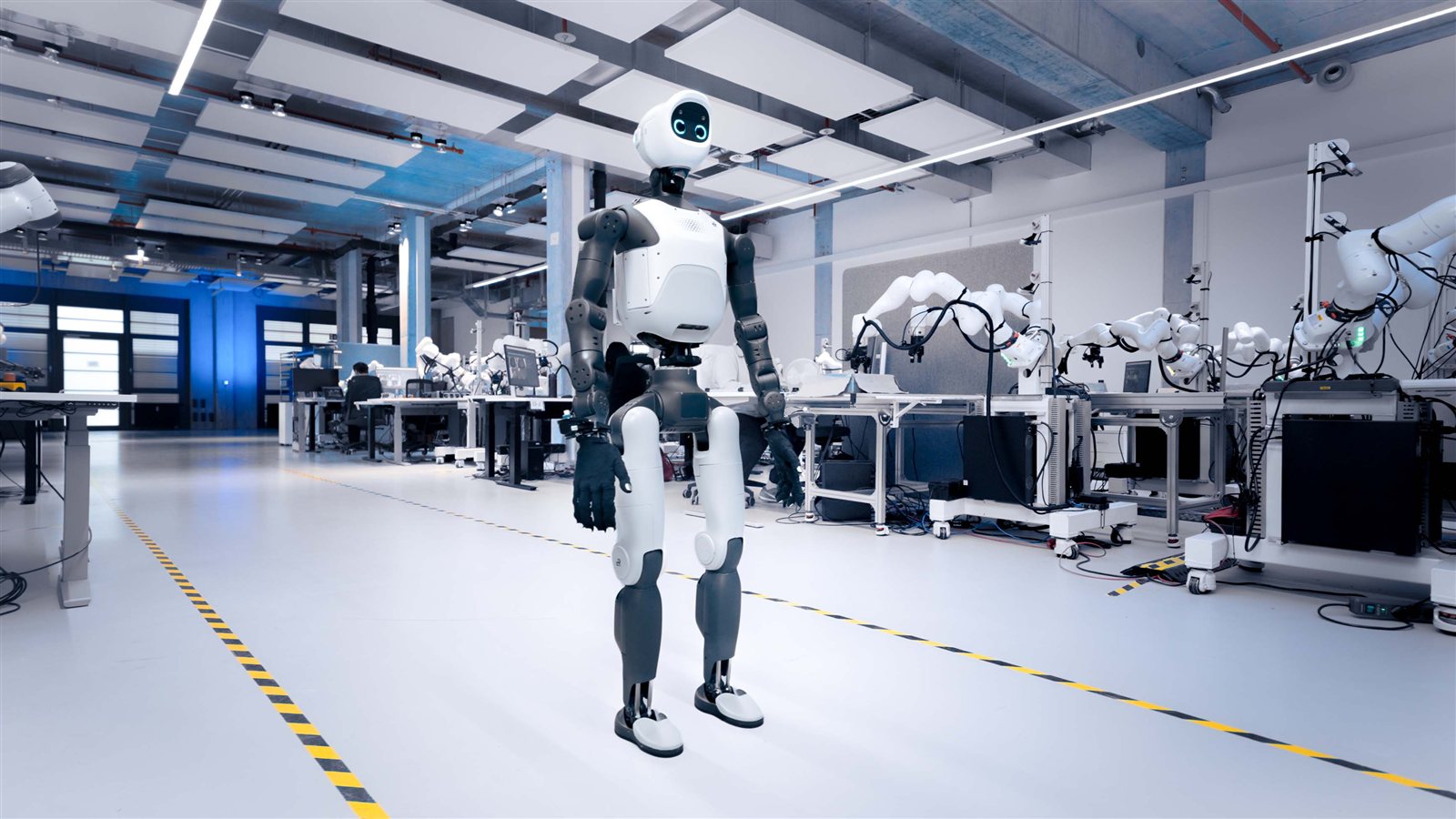
Agile Robots SE, the Munich-based German robotics company founded in 2018 by DLR researchers, unveiled the Agile ONE SN on October 21, 2026 at NVIDIA GTC Berlin in a joint reveal with NVIDIA. It is a compact humanoid built strictly as an R&D reference platform, shipping preconfigured with Isaac GR00T software and Jetson Thor onboard compute. Developer availability is targeted for early 2027. No price or preorder deposit has been disclosed; the robot was shown at the NVIDIA booth and Agile Robots booth 3007.
Overview and Positioning
The Agile ONE SN is not a consumer robot and not a turnkey unit for production lines. It is a lab instrument: a complete humanoid body that research teams use to develop, train, validate, and later deploy manipulation and locomotion skills without cobbling hardware, capture, simulation, and training tools from separate vendors. Agile Robots, producing in Kaufbeuren and headquartered in Munich, positions the SN as the compact entry in its humanoid portfolio below the full-size industrial Agile ONE. Skills and data developed on the SN transfer to that larger machine.
Physical-AI Background
Humanoid development has become a physical-AI arms race, yet most labs lose weeks to integration rather than invention: hardware, demonstration capture, synthetic data, simulation, training, and deployment often run on unrelated tools. The NVIDIA stack answers this directly. Jetson Thor supplies onboard edge compute for real-time sensor processing and robot inference, while Isaac GR00T pairs the open VLA model GR00T 1.7 with whole-body control and an end-to-end workflow from demonstration capture through data generation, simulation, training, evaluation, and deployment. URDF and USD assets drop the robot into Isaac Sim and Isaac Lab. The SN packages that ecosystem inside a ready-made biped, bridging software stack and usable body.
How It Compares
- Vs. Unitree G1 and H2: Unitree’s compact open platforms are retrofitted with compute, hands, and software; the SN arrives with Jetson Thor, GR00T, and tactile hands already integrated, trading build-your-own flexibility for a shorter setup path.
- Vs. Figure 02: Figure 02 targets production deployment under a closed commercial roadmap. The SN sits upstream: an R&D reference body for studying skills, not a day-one worker.
- Vs. NVIDIA GR00T developer kits: NVIDIA’s kits supply compute and software, but a lab still needs a body and hands to test manipulation end to end. The SN bundles both in one frame, deep inside the NVIDIA toolchain.
Specifications
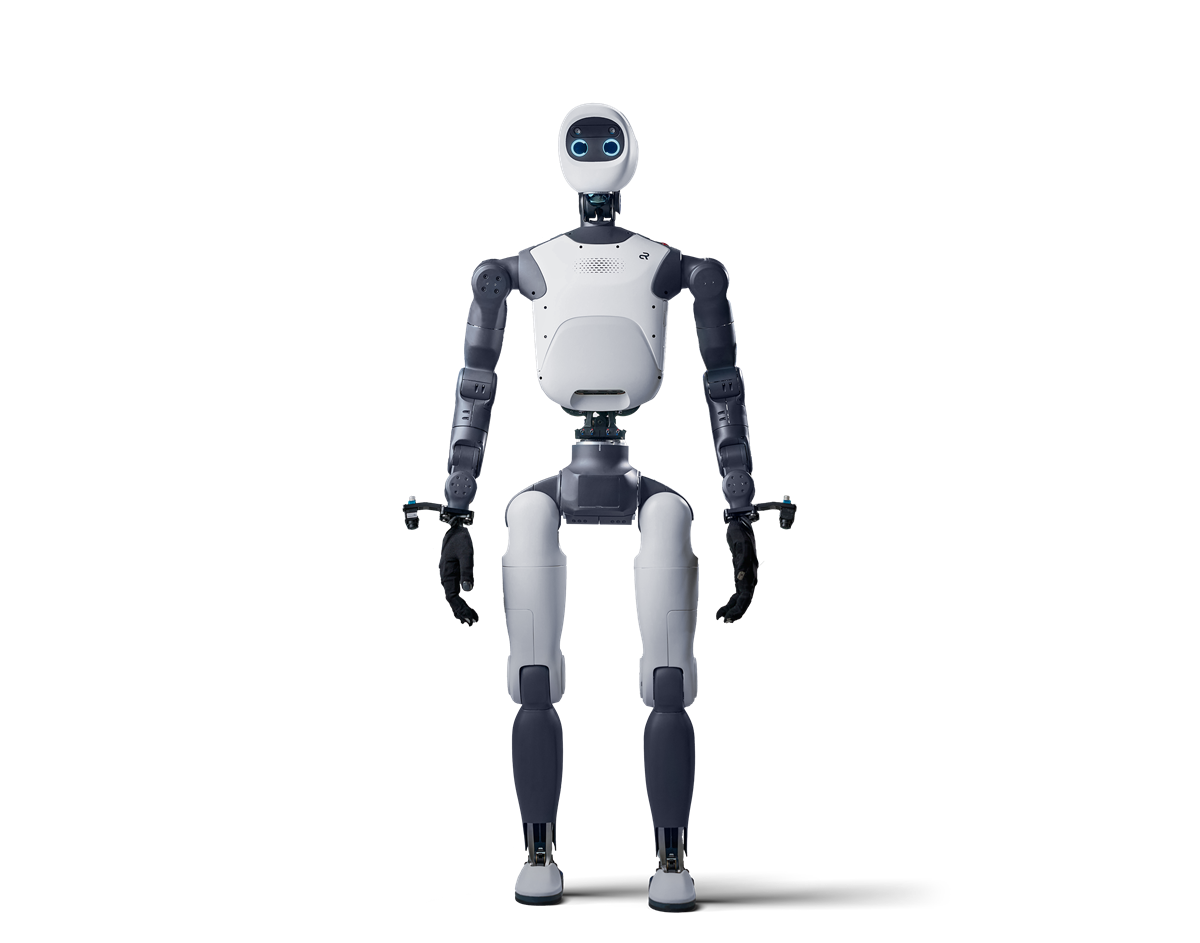
- Body: Agile ONE S compact humanoid, 1.40 m (4.59 ft) tall; 43 kg (95 lb) including hands and wrist cameras
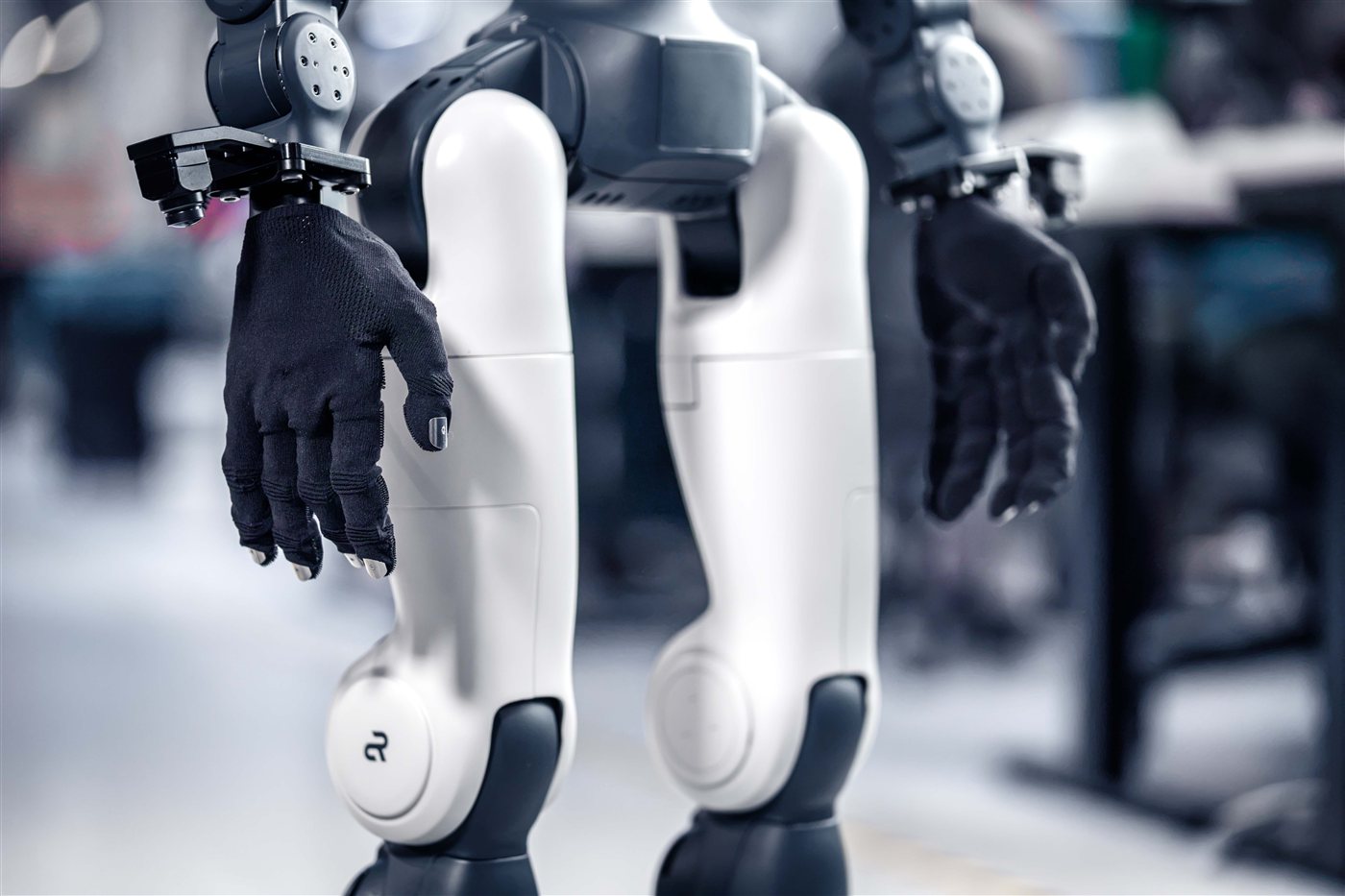
- 31 degrees of freedom (DoF) in the body; 71 DoF total with two Wuji tactile five-finger hands (20 DoF each)
- NVIDIA Jetson Thor onboard for real-time sensor processing and robot inference
- RGB-D head cameras, wrist cameras for close-up manipulation, and 3D LiDAR with multi-view coverage
- Joint torque up to 140 Nm; 3 kg payload per arm
- Wi-Fi 7 and Bluetooth; hard e-stop button and additional safety functions
- Preconfigured Isaac GR00T: open VLA model GR00T 1.7, whole-body control, capture-to-deploy workflow; URDF/USD assets for Isaac Sim and Isaac Lab
- NVIDIA Halos safety platform integration under evaluation, including IGX Thor design
- Early 2027 developer availability; price not disclosed; Stanford University and ETH Zürich cited as interested institutions
Pros
- Jetson Thor and GR00T 1.7 arrive preconfigured, with the full capture, simulation, training, evaluation, and deployment workflow built in.
- Two Wuji tactile 20-DoF hands deliver dexterous manipulation out of the box, with no separate hand sourcing or integration.
- Skills and data developed here transfer to the full-size industrial Agile ONE, giving research a path toward industry.
- Open and modular: use the whole workflow or plug selected components into your own stack; researchers keep control of their data.
- URDF and USD assets drop directly into Isaac Sim and Isaac Lab for simulated training before physical trials.
Cons and Shortcomings
- No price is disclosed; budgets cannot yet size the purchase, and true cost remains unknown ahead of early 2027.
- R&D-only target: unsuited to consumers, schools, or companies wanting a deployed worker.
- Tied to the NVIDIA stack: Jetson Thor, GR00T, Isaac Sim, and Isaac Lab are tightly coupled, a lock-in for teams on other tools.
- The 3 kg per-arm payload is modest, limiting the objects and tools early experiments can manipulate.
- At 43 kg, the body remains heavy for a shared lab, raising the safety bar around untethered operation despite the hard e-stop.
- NVIDIA Halos safety integration is still under evaluation rather than guaranteed at launch, so certified coverage may lag.
Who It Is For
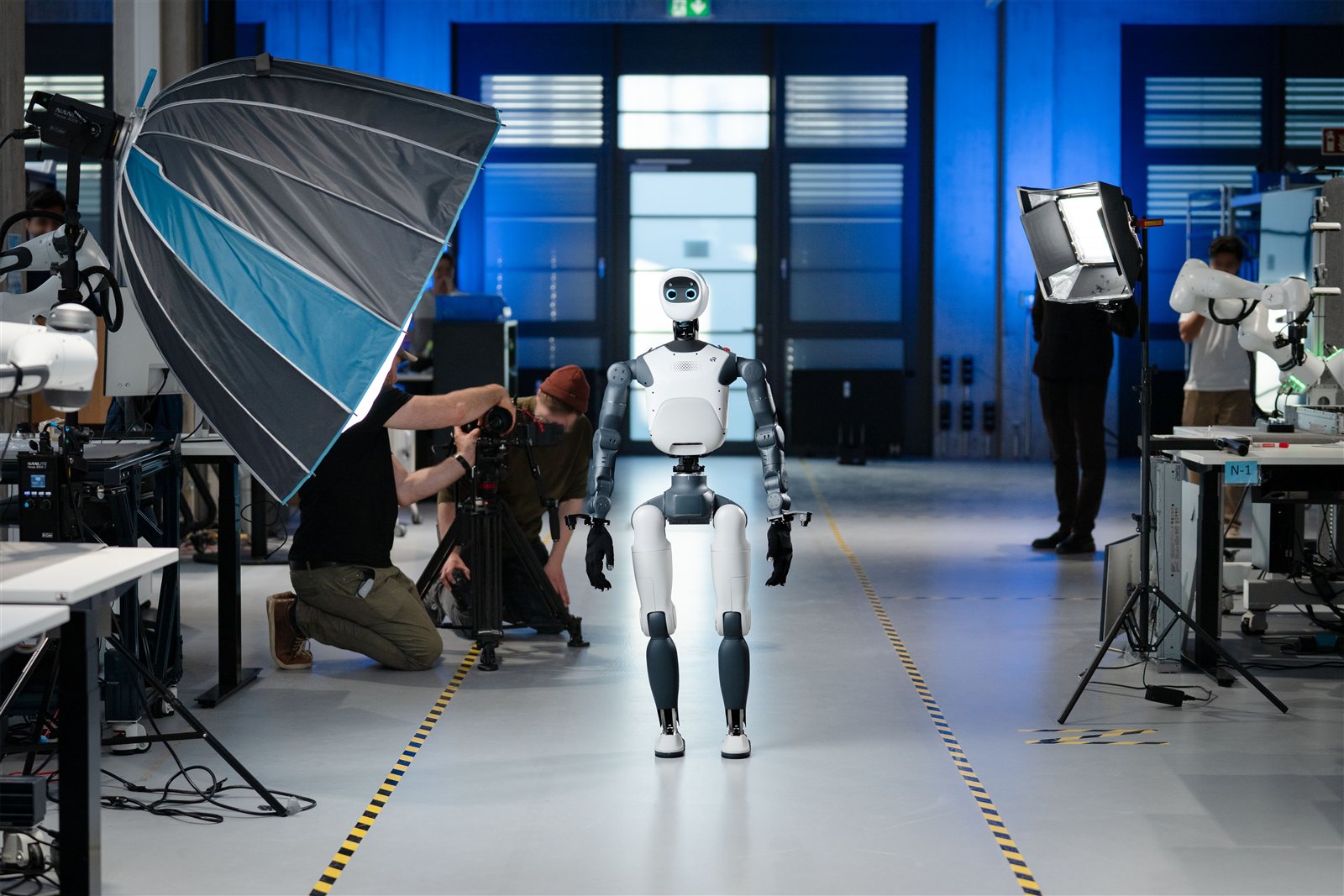
The SN speaks first to university and industry research labs invested in humanoid learning and physical AI, and to OEM integrators needing a proven body to validate manipulation skills before scaling. Stanford and ETH Zürich are cited as interested institutions, signaling an academic early-adopter audience. It appeals least to anyone seeking a finished, price-known product today.
Verdict
The SN is a packaged answer to the integration burden slowing humanoid research: a Jetson Thor and GR00T-ready body with tactile hands and a clear transfer path to Agile Robots’ industrial platform. Its appeal hinges on accepting the NVIDIA stack, an undisclosed price, and a 2027 delivery date. For labs committed to Isaac GR00T, it is a head start; for everyone else, a promising but unpriced reference platform to watch.