
SABERA, the AR smart-glass born in the eyewear capital of Sabae, Japan, opened general consumer sale on October 27, 2026. After crowdfunding past 100 million yen on Makuake in the spring, it now lands on shelves at Bic Camera, Yodobashi and Yamada Denki. The pitch is modest: an ordinary-looking frame that overlays green text in your field of view, nothing more. That modesty is also the product’s whole argument.
What It Is
SABERA is a collaboration between software firm jig.jp, waveguide optics maker Cellid and Sabae eyewear craftsman Boston Club. At roughly 38 grams it reads as a normal prescription frame, but Cellid’s waveguide optics render a monochrome, right-eye, 30-degree field overlay in green. There is no onboard operating system, no camera. The glasses pair over Bluetooth with your phone and exist to put text where you do not have to look down to find it.
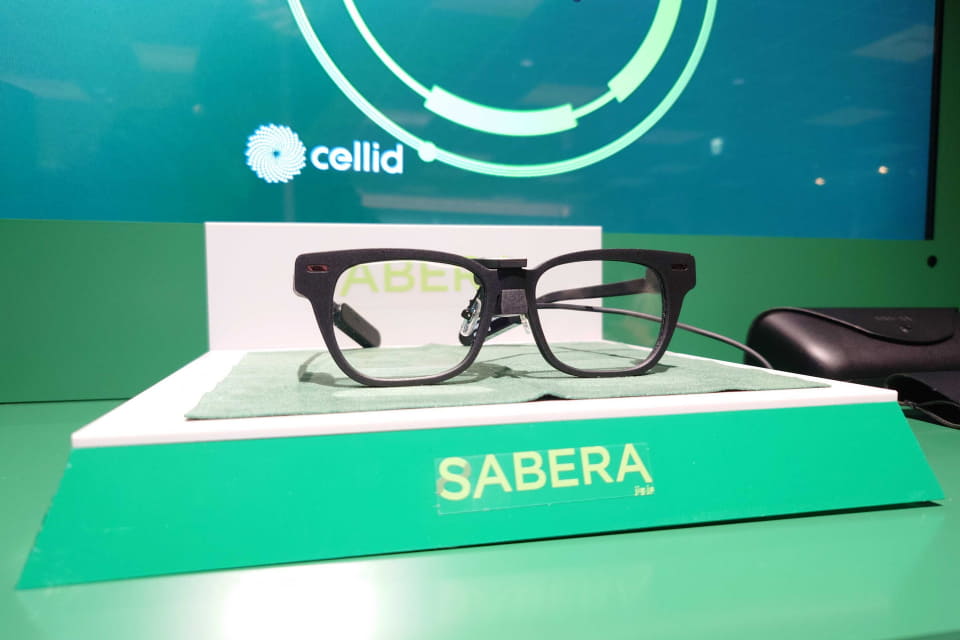
Design and Hardware
The design language is deliberately un-futuristic: a near-black rectangular frame, slim temples, a subtle optical waveguide area near the nose bridge. Because SABERA skips the camera entirely, the front face stays clean, which is why it passes as everyday eyewear rather than a gadget. Prescription lenses for myopia, astigmatism and progressive prescriptions are supported as a paid option, a big deal for a market where most people under 50 already wear glasses.
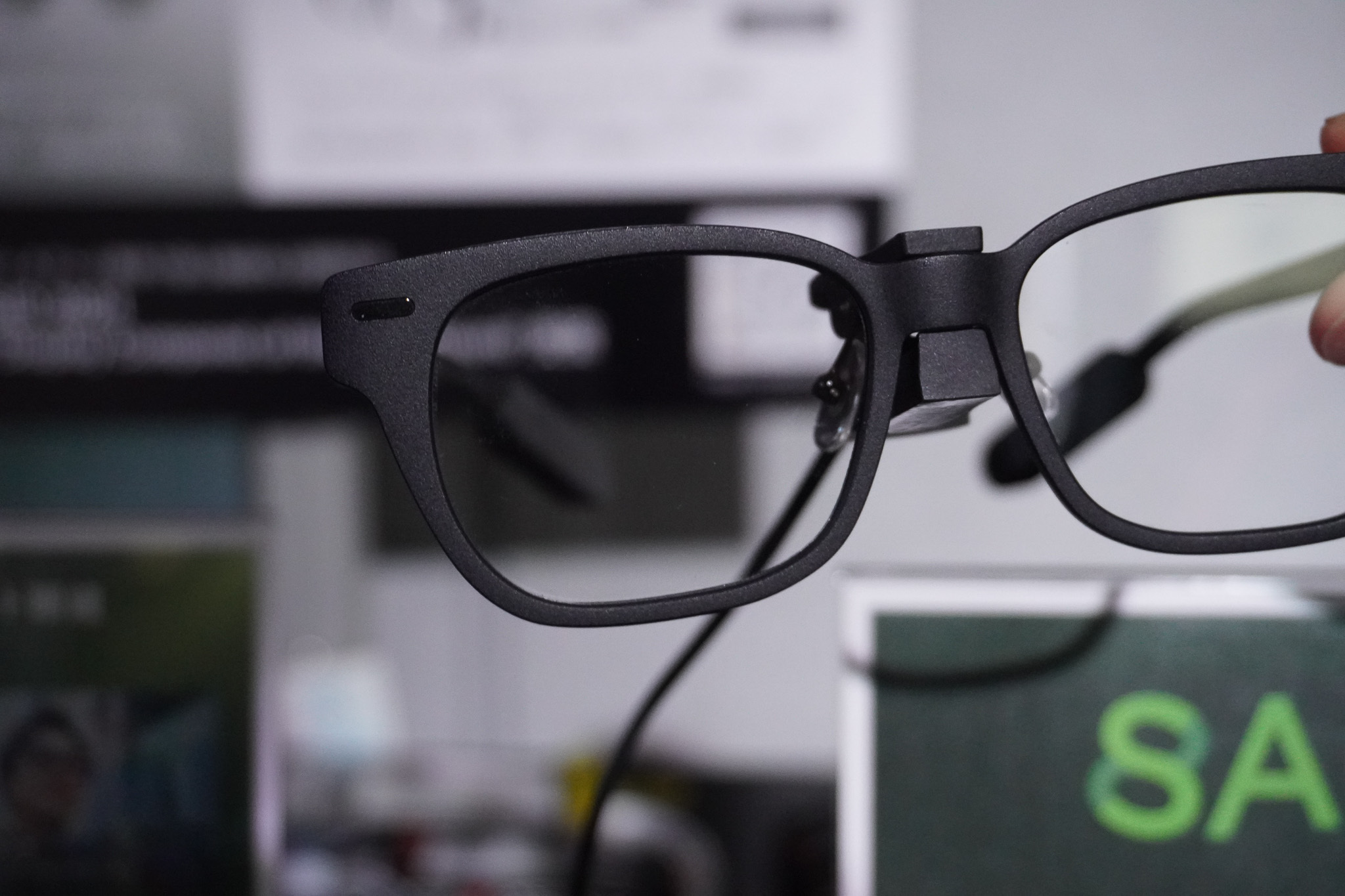
Core Features
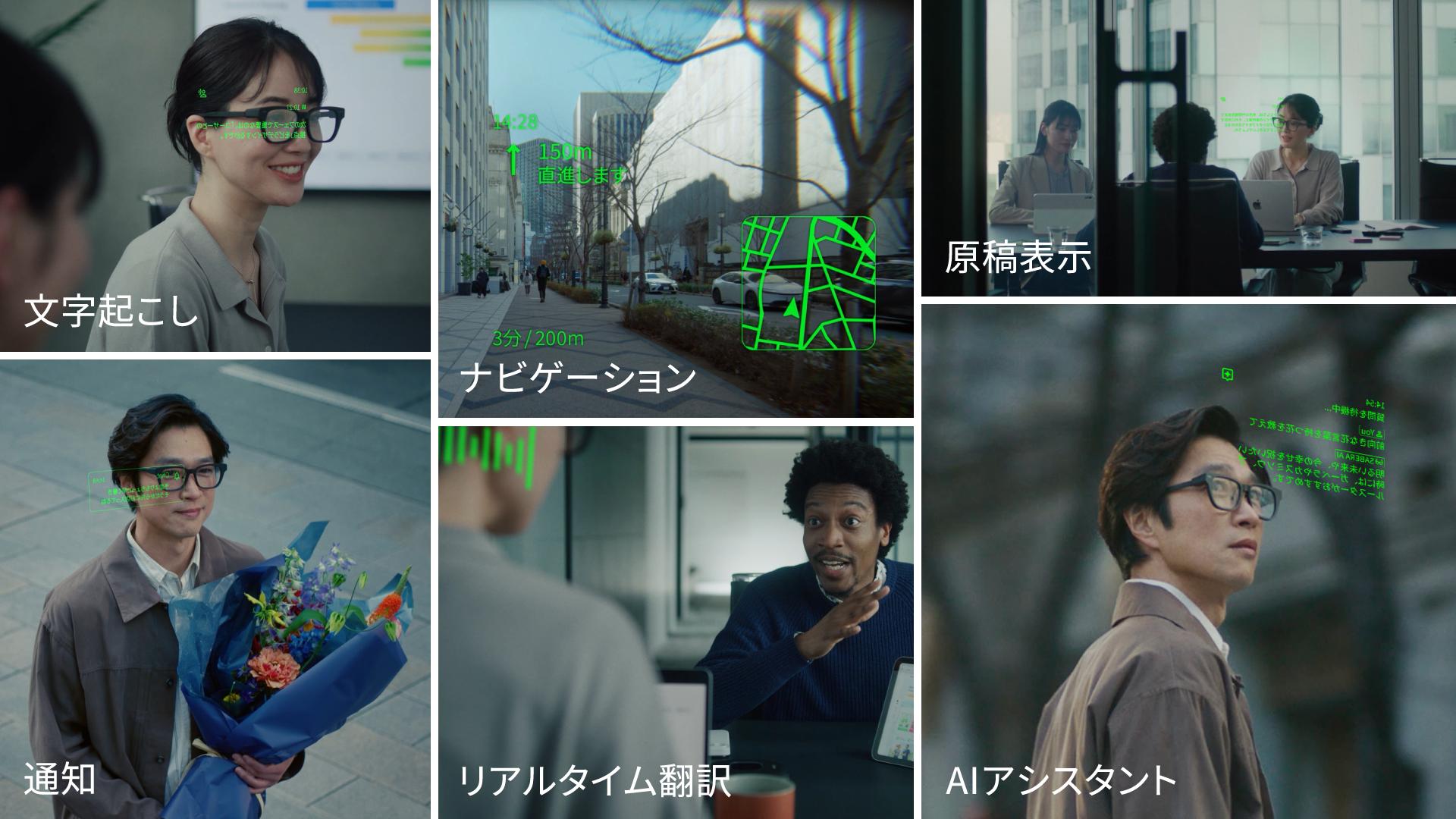
The feature set is all about glanceable text: smartphone notifications, turn-by-turn navigation, a teleprompter mode for presentations, real-time translation, voice transcription with AI summarization, and a conversational AI assistant. The marketing grid frames six daily jobs, from reading meeting transcripts to walking directions, all rendered as green overlay rather than a video feed.
jig.jp signed business personalities Yutaka Kubo and Miki Ozaki as official partners to push the device beyond early adopters. The Makuake run raised over 100 million yen in under three weeks back in April 2026, and later shipments topped 190 million yen across more than 2,700 backers.
Hands-On Experience
This is a first-impression account from press material rather than a long daily-driver test. The green overlay reads as low-contrast but legible, anchored low in the right eye, which keeps the real world dominant. The 38g weight disappears on the face quickly, and skipping the camera means nobody around you worries about being recorded. The trade-off is immediately obvious the moment you want to photograph something or point the glasses at a whiteboard.
Shortcomings and Cons
It is a monochrome green text display, not a color AR screen. The 30-degree single-eye field shows green text and arrows only. There is no video, no color media, no spatial mapping. Anyone expecting a Ray-Ban Meta with overlays will be underwhelmed.
There is no camera at all. That is a privacy choice, but it also kills photo capture, visual search, document scanning and camera-fed AI. SABERA cannot see the world; it only displays what your phone sends it.
No onboard OS means a dead phone means dead glasses. All intelligence lives on the paired smartphone over Bluetooth. Leave your phone behind and you are wearing an expensive, inert frame.
Ninety-two thousand yen is a lot for a text overlay. The standard price is around 92,400 yen (roughly $600), with early Makuake buyers closer to 71,000. For a monochrome, camera-less, phone-tethered device, that sits uncomfortably close to full-color camera glasses that do far more.
Prescription lenses and app polish are Japan-only for now. Prescription upgrades cost extra, and the companion app, AI services and retail network are built around the Japanese market. Overseas buyers are an afterthought.
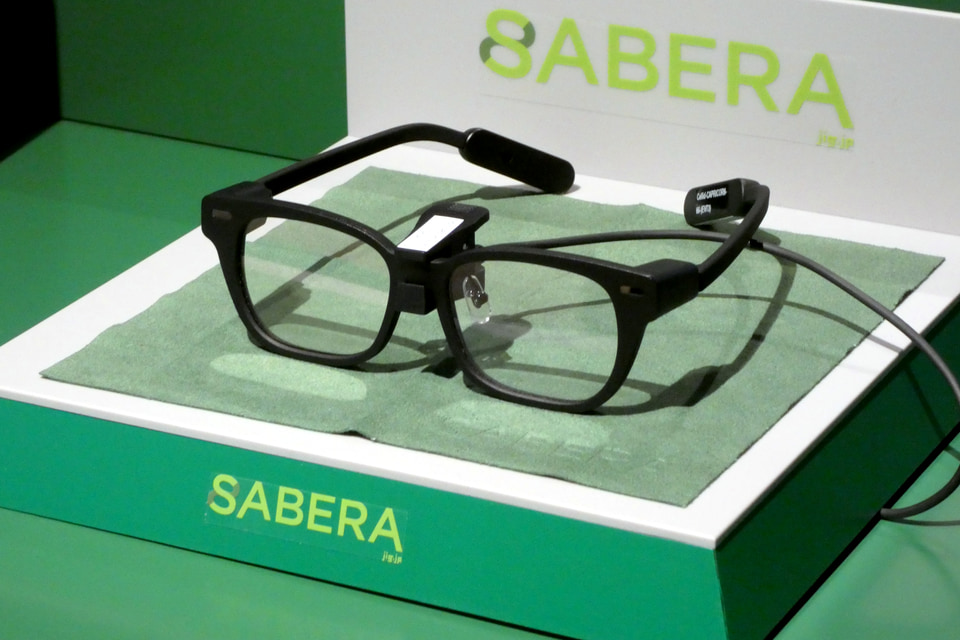
Pricing and Availability
SABERA is on sale now online from the official EC site, with in-store launch at Bic Camera, Yodobashi Camera and Yamada Denki from October 28, 2026, plus optician shops. Pricing sits around 92,400 yen, with prescription lenses as a separate paid configuration.
Verdict
SABERA is a disciplined product: it chooses to be a lightweight, camera-free, prescription-friendly text overlay and does that job credibly. For commuters who want glanceable navigation and captions without the surveillance anxiety of camera glasses, it is a thoughtful option. But the monochrome display, missing camera, phone-tethered brain and near-$600 price tag mean it is a niche tool for a specific Japanese commute, not a mainstream AR breakthrough. It succeeds by refusing to do everything, which is also exactly why it will not be for everyone.