
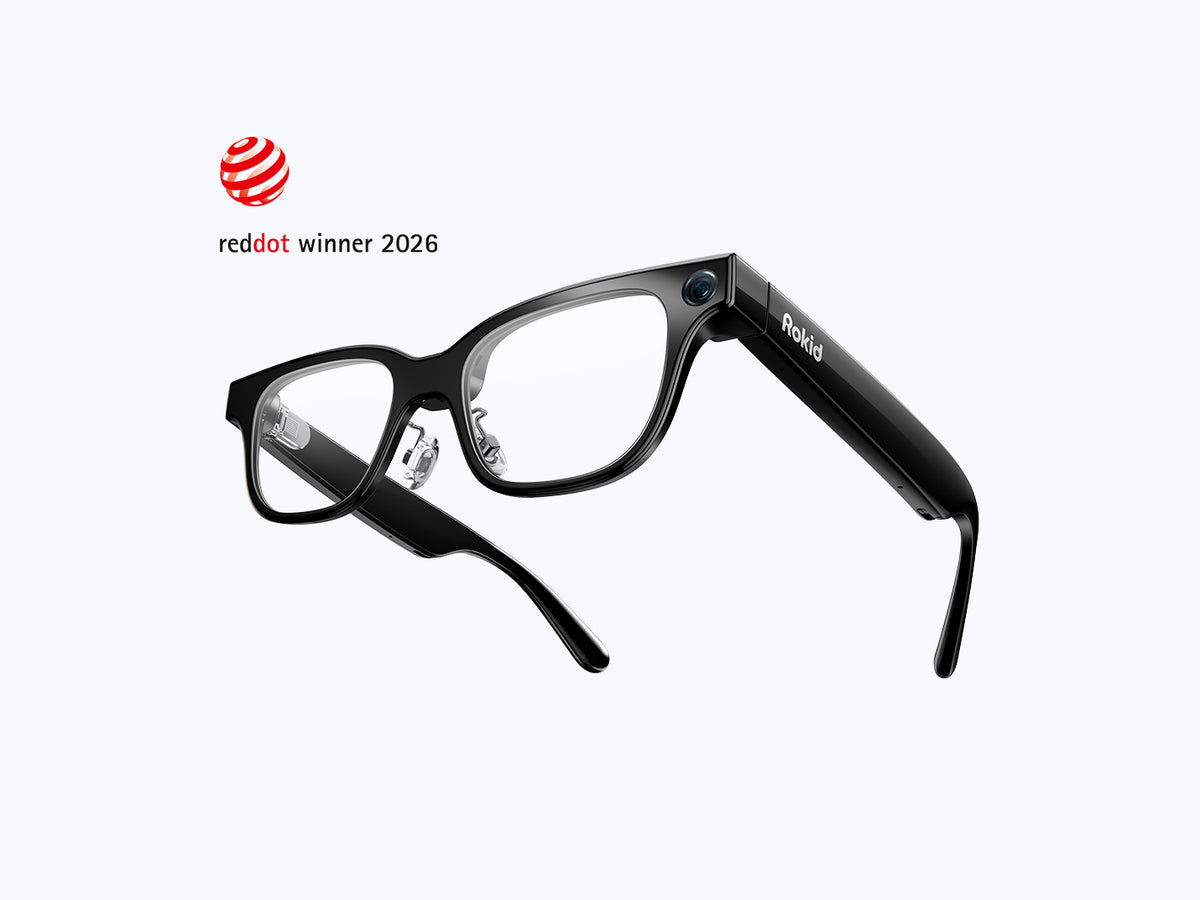
Rokid took the wraps off the Color on October 27, 2026 at its Rokid Jungle 2026 keynote in Hangzhou, pitching it as the company’s first consumer glasses built around a custom full-color Micro-LED optical engine. Priced from 4,999 yuan and shipping next April, it is the most credible Chinese answer yet to Meta’s Ray-Ban line. But a six-month pre-order wait and a pricey ring controller mean the real story is more complicated than the headline.
What It Is
The Color is a pair of everyday-shape AI glasses with a see-through display baked into the lens stack, not a head-mounted computer you strap to your face. Rokid’s headline claim is a custom 0.16 cubic-centimeter Micro-LED engine that renders full-color imagery directly in the wearer’s peripheral vision, a clear step up from the monochrome or display-less Rokid glasses sold internationally today. The intended uses are familiar: live translation, navigation, on-screen captions, camera framing and a hands-free AI assistant.
Design and Hardware
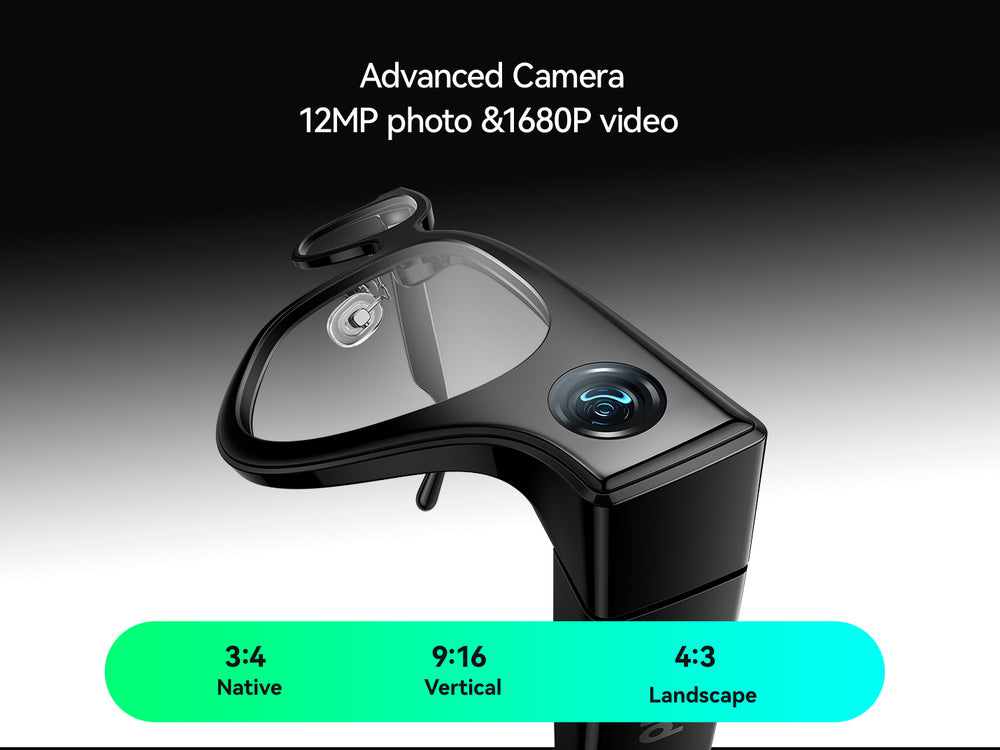
The frame weighs 55 grams without the nose pad, which puts it squarely in comfortable all-day territory and close to the weight of a regular optical frame. Two SKUs are offered: a black 2GB RAM / 64GB storage model at 4,999 yuan, and a tortoiseshell 4GB / 64GB variant at 5,499 yuan. On the right temple sits the camera module Rokid pairs with a 12MP still and 1680P video pipeline, while the opposite temple houses the touch strip and speakers.
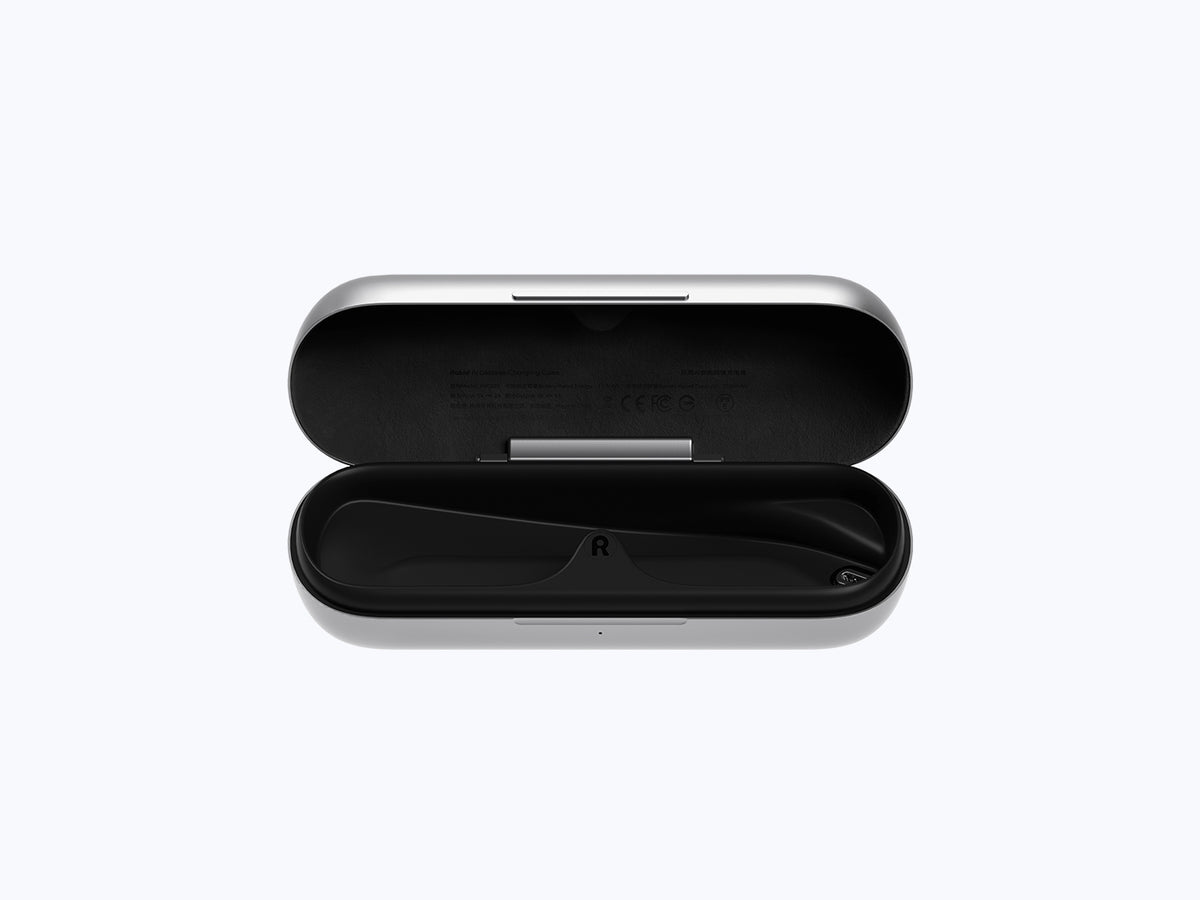
The design borrows the now-standard recipe: thick front rim, slim arms, and a dedicated charging case. What separates the Color visually from earlier Rokid eyewear is the optical waveguide area visible through the lens, the giveaway that this is a display device rather than a speaker-and-camera accessory.
Core Features
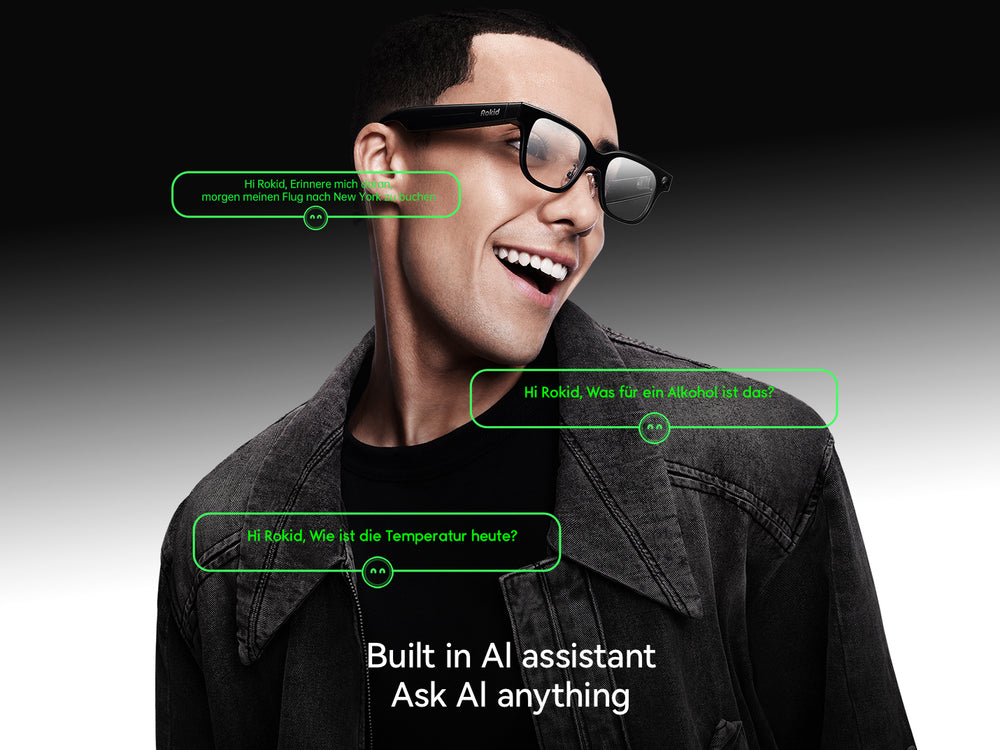
On the software side the Color leans on a phone companion app that ties into ChatGPT and Gemini for assistant queries, plus Rokid’s own translation layer that overlays bilingual subtitles in real time. A touch strip on the temple handles quick access, and the glasses support head gestures such as nodding to answer and shaking to hang up calls. The camera doubles as a hands-free viewfinder, with the display letting you frame a photo before capture.

The co-announced piece is the Rokid Ring, a finger-worn controller priced at 1,699 yuan. Left and right swipes, single taps and double taps map to navigation, selection and back, removing the need to tap the temple or shout voice commands in meetings. The ring also packs heart-rate, skin-temperature, blood-oxygen and sleep sensors, doubling as a small health wearable.
Hands-On Experience
Until units ship in April 2027 this is an on-stage impression rather than a daily-driver test. From the keynote demo, the Micro-LED overlay reads as a bright, color-saturated strip anchored in the lower field of view, well suited to captions and turn-by-turn prompts rather than dense reading. The ring gestures felt low-effort in the recorded demos, and the 55g frame should stay comfortable for multi-hour wear. The open question is how legible the projection stays in direct sunlight, and how the 2GB base model holds up once the assistant and translation stacks run at once.
Shortcomings and Cons
The price is not really 4,999 yuan. That figure buys the 2GB base model, and the ring that makes the hands-free interaction actually work adds another 1,699 yuan. The realistic entry cost for the full intended experience is closer to 6,698 yuan (about $920), which is not the budget Meta-beater the press line suggests.
2GB of RAM is thin for on-device AI. The base SKU leaves almost no headroom for multimodal processing, and the only way to buy breathing room is the 5,499 yuan tortoiseshell. Rokid has not disclosed how much of the AI work runs on-glasses versus on the phone.
You cannot buy it for six months. Shipping begins April 2027. By then Meta, RayNeo and likely Snap will have shipped their own refreshes, eroding the first-mover window Rokid is spending today’s launch to open.
Key specs are missing. Field of view, peak brightness, battery life and display resolution were not committed on stage. A 0.16cc Micro-LED is impressive on paper, but daylight readability and all-day endurance are the numbers that decide whether these are daily glasses or a conference-room demo.
The health sensors are uncertified. Heart-rate, SpO2 and skin-temperature tracking on the ring are consumer-grade features, not medical-grade, and should not be read as a clinical alternative.
Pricing and Availability
The Rokid Color is open for pre-order now: 4,999 yuan for the black 2GB / 64GB model and 5,499 yuan for the tortoiseshell 4GB / 64GB model. The Rokid Ring is 1,699 yuan. First units ship starting April 2027, initially in China. There was no firm international launch date at the event, though Rokid continues to operate its global storefront for existing eyewear.
Verdict
The Color is a meaningful milestone: a major Chinese hardware company betting that a full-color Micro-LED frame at sub-5,000 yuan can go mainstream. The hardware shape, weight and gesture input all point in the right direction. But the bait-and-switch pricing, the anemic 2GB base model, the missing brightness and battery numbers, and the April 2027 wait mean this is a device to pre-order with caution, not one to call a winner yet. Come back in summer 2027, when real-world daylight tests are in, and the verdict will be worth writing.