
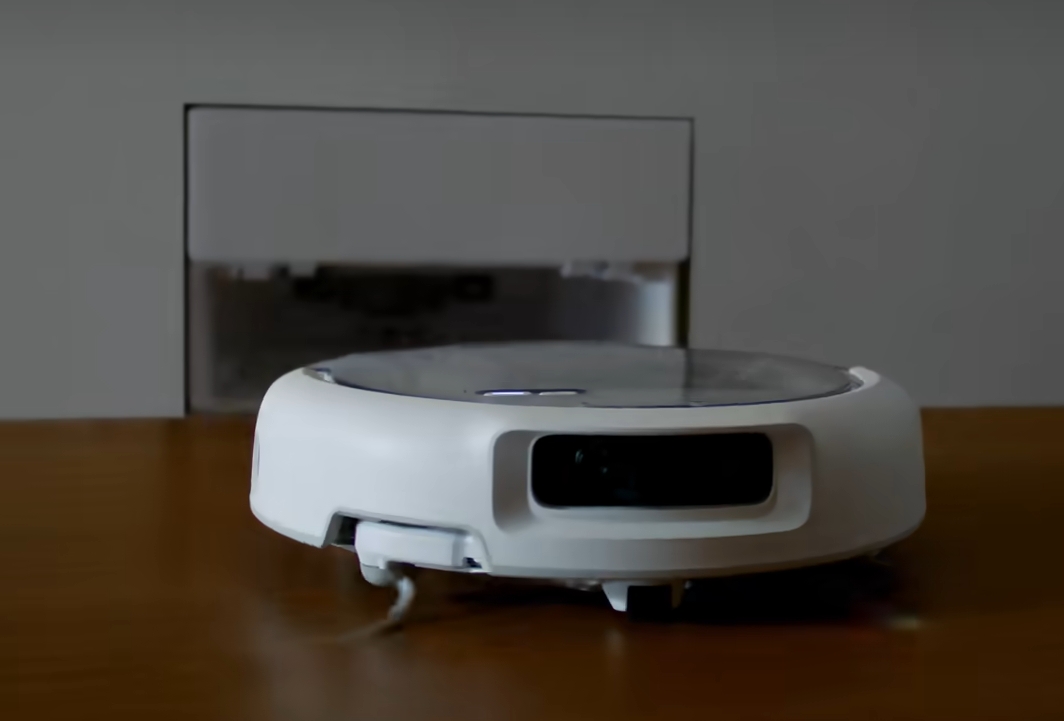
The robotic vacuum cleaner market has long entered an era of intense competition based on specifications: suction power and base station functionality are key factors. However, the real pain points for users remain unresolved: accidental collisions with transparent objects, tangled cables, getting stuck on door thresholds, poor corner cleaning coverage, liquid and dirt spread, and long-term buildup of dirt in the base station requiring manual cleaning. DJI’s Romo 2 doesn’t simply pile on hardware specifications; instead, it brings mature spatial perception algorithms from drones to a ground-based robot, relying on multi-sensor fusion and AI decision-making to attempt to solve the cleaning challenges of complex home environments.
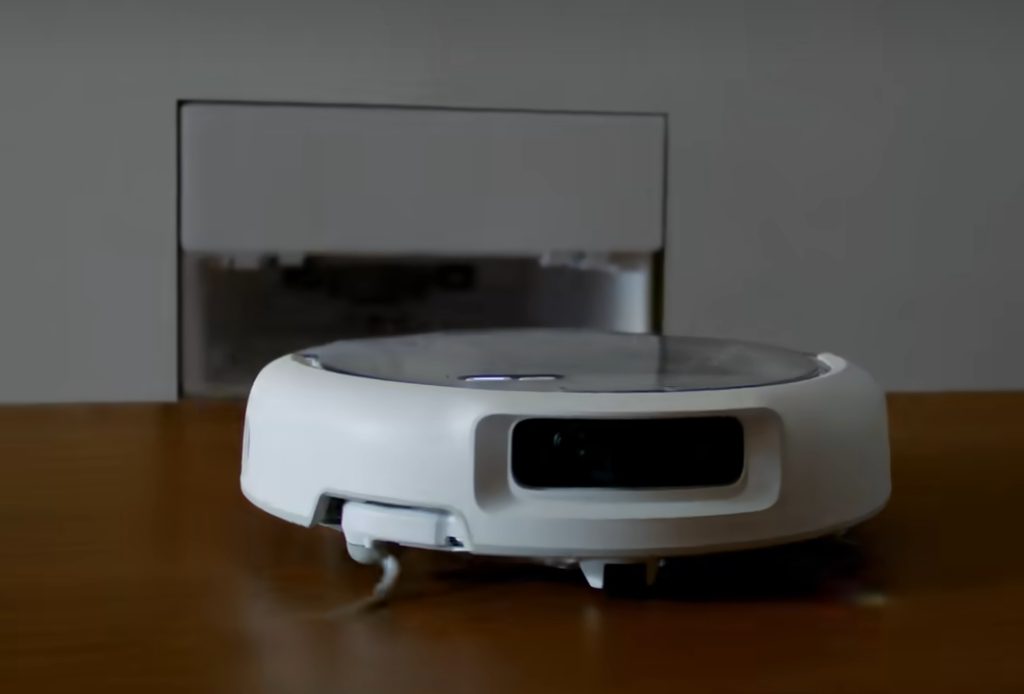
Hardware Architecture: Bringing the Drone Perception System to the Ground
The Romo 2 system consists of two main hardware units: the main unit and the fully automatic base station. The series includes the P2 Transparent Explorer and the A2 Minimalist versions, with identical core hardware; the differences lie mainly in the exterior design and some optional features.
Main Unit Perception Hardware
It employs a multi-modal fusion perception solution: area array speckle projection LiDAR + binocular fisheye vision + lateral area array ToF + independent LiDAR at the end of the robotic arm, achieving near-millimeter-level environmental perception capabilities.
- Forward: Speckle structured light + binocular fisheye lens enables obstacle recognition even in low-light environments, solving the industry-wide challenge of recognizing transparent objects such as glass and mirrors. It can also identify thin lines, cables, small ornaments, pet toys, and other low-thickness objects.
- Lateral: Utilizes a ToF radar at the end of the robotic arm for real-time distance measurement during edge cleaning, avoiding collisions with table and chair legs and ensuring close cleaning around corners.
- Dynamic Adaptive Robotic Legs: With an obstacle-crossing capability of up to 8.5cm, it can autonomously navigate balcony tracks, bathroom thresholds, and uneven floors, significantly reducing the likelihood of getting stuck inside the home.
- 123° Extra-Wide Outward-Swing Mop Arm: The mop extends outwards by up to 7.8cm, targeting corners and areas around furniture legs for effective cleaning, compensating for the edge-cleaning limitations of disc mops.
- 36000Pa powerful suction, dual roller brush anti-tangling structure, optimized for pet hair; automatic pressure boosting in carpeted areas enhances deep dust removal (DJI Store).
Fully Automatic Base Station Hardware
The base station is available in two versions: a water tank version and an ultra-thin water-cooled version. The ultra-thin version can be embedded in balconies or bathroom cabinets.
- Four-way high-pressure water jets rinse the mop and base station chassis. A 16mm large-diameter suction port and a filterless design allow for maintenance-free operation year-round, reducing dirt buildup and odor issues.
- 80℃ high-temperature mop cleaning, hot air drying, and automatic cleaning fluid dispensing; dustbin drying and antibacterial function; the water-cooled version automatically replenishes and drains water, while the water tank version supports an optional silver ion sterilization module (DJI Store).
Core AI Capabilities: More Than Just Obstacle Avoidance, but Full-Scene AI Cleaning Decisions
Most robotic vacuum cleaners on the market have AI limited to obstacle recognition, and their cleaning paths remain fixed. The core upgrade of Romo2 lies in its AI All-Scene Cleaning Strategy Engine. After sensors identify dirt, obstacles, and floor materials, the cleaning behavior is adjusted in real time, allowing it to “work based on dirt” rather than rigidly following a map.
AI Obstacle Avoidance 2.0
Thanks to the drone’s simplified perception algorithm, it can identify not only common items like slippers, data cables, and toys, but also surfaces that are traditionally considered “blind spots” for robot vacuums, such as glass, acrylic, and mirrors. In real-world home testing, it avoids rough collisions with small earphone wires and Lego pieces, slowing down and avoiding them in advance. It also doesn’t avoid cleanable debris, effectively distinguishing between “obstacles” and “dust to be cleaned.”
Shortcomings: Recognition of extremely thin, flat objects and soft plastic bags remains unstable. For complex homes, it’s still recommended to set up no-go zones for backup.
AI Dynamic Cleaning Strategy
The machine automatically adjusts its cleaning action chain based on the real-time environment, which is the biggest difference between Romo2 and its competitors:
- Particle Debris Mode: Recognizes cat litter and treat crumbs, automatically reducing side brush speed and slowing down to avoid scattering particles, concentrating suction power for focused collection.
- Liquid Stain Strategy: Recognizes liquid stains such as coffee and soup, prioritizing avoidance and returning to the affected area for focused mopping during the final stages of whole-house cleaning, preventing liquid from being spread everywhere by the mop. Suitable for pet owners dealing with vomit and urine stains.
- Carpet Adaptive Mode: Automatically raises the mop when approaching carpets to avoid wetting them; presses down to increase pressure when entering carpets, and returns to normal operation when leaving carpets.
- Heavy Dust Mode: In areas with heavy dust accumulation, such as under beds and sofas, automatically switches to single-sweep mode, reducing speed to prevent dust from being blown away by airflow. 5. AI-Powered Home Zoned Cleaning: After completing whole-house mapping, AI automatically identifies the spatial attributes of the kitchen, bedroom, and living room. The kitchen automatically activates an enhanced grease-removal cleaning program; the bedroom prioritizes avoiding cables around the bed; it supports customizable room cleaning order and single-room suction and water volume strategies. The app generates a complete cleaning report, recording areas with high dirt concentrations.
The DJI Home App has a simple interactive logic, with easy-to-use map editing, no-go zones, and targeted cleaning zone settings. It also supports voice control. However, its ecosystem primarily serves DJI’s own system, with limited cross-brand smart home integration capabilities.
Actual User Experience: Advantages and Disadvantages
Highlights
- Strong Ability to Navigate Complex Layouts: With an 8.5cm obstacle-crossing capability and adaptive lifting mechanism, the machine can easily enter and clean multi-room layouts without manual handling, including balconies and bathrooms. This is a crucial factor affecting long-term user experience.
- Significantly Improved Corner Cleaning: The 123° outward-swinging robotic arm, coupled with an end-of-arm radar, significantly improves coverage in corners and table leg crevices compared to traditional disc-type robot vacuums, addressing the biggest historical pain point of disc-type models.
- Low Base Station Maintenance Burden. A large-diameter suction port + filterless design + high-pressure washing result in minimal dirt residue on the base station chassis after two weeks of continuous use, reducing the frequent chore of manually cleaning the base station – a convenience for those who prefer convenience.
- AI Strategies Reflect Real-World Home Experiences. Strategies such as rear-mounted cleaning of liquids and anti-particle cleaning are based on real-world home pain points, not just theoretical specifications, making it highly pet-friendly.
- Excellent Noise Control. The combined sweeping and mopping function operates at approximately 54 dBA, ensuring minimal disturbance to DJI Stores during daytime cleaning.
Existing Shortcomings and Areas for Improvement
- Inherent Limitations of Disc Mops. 1. When faced with large areas of dried, thick oil stains, its cleaning capacity is weaker than that of roller mops; in heavily soiled scenarios, repeated cleaning is required to achieve the desired effect.
- The machine is relatively heavy, making manual movement difficult; the wastewater tank in the water tank version has only average splash resistance, requiring vertical operation to empty, as tilting can easily lead to leakage and overflow.
- Weak ecosystem integration. Compared to Roborock and Ecovacs, it has limited integration with whole-house smart home systems like Mijia and HarmonyOS, offering more standalone intelligence and lacking deep integration with the whole-house AI hub.
- High price point. Starting at 5499 yuan, it falls into the flagship price range; consumable costs are moderate, with disc mops costing less to replace than roller mops, but long-term use still requires continuous investment.
- In extremely complex low-light environments, it occasionally misses transparent objects and thin fabrics, failing to achieve 100% collision-free recognition.
Summary: Perception capability is the biggest competitive advantage, suitable for these two types of families
The DJI Romo 2 series represents an evolution in robotic vacuum cleaners: the cleaning hardware no longer simply runs in circles according to a preset route, but relies on environmental perception AI to understand dirt, obstacles, and the layout of the house, dynamically adjusting the cleaning plan.
Its biggest core competitiveness is not industry-standard parameters like 36000Pa suction power, but rather the complete set of perception and decision-making algorithms derived from drones, delivering a high level of performance in transparent obstacle recognition, obstacle crossing, corner cleaning, and maintenance-free base station operation.
Suitable for: Families with many thresholds and rooms; homes with many glass doors and glass furniture; pet owners who frequently encounter particulate or liquid dirt; flagship users who dislike frequent base station cleaning and prefer minimal intervention.
Related reading: DJI ROMO 2 · Roborock P20 Max Robotic Vacuum Cleaner · FSL Xiaoban AI Voice Night Light