
Introduction
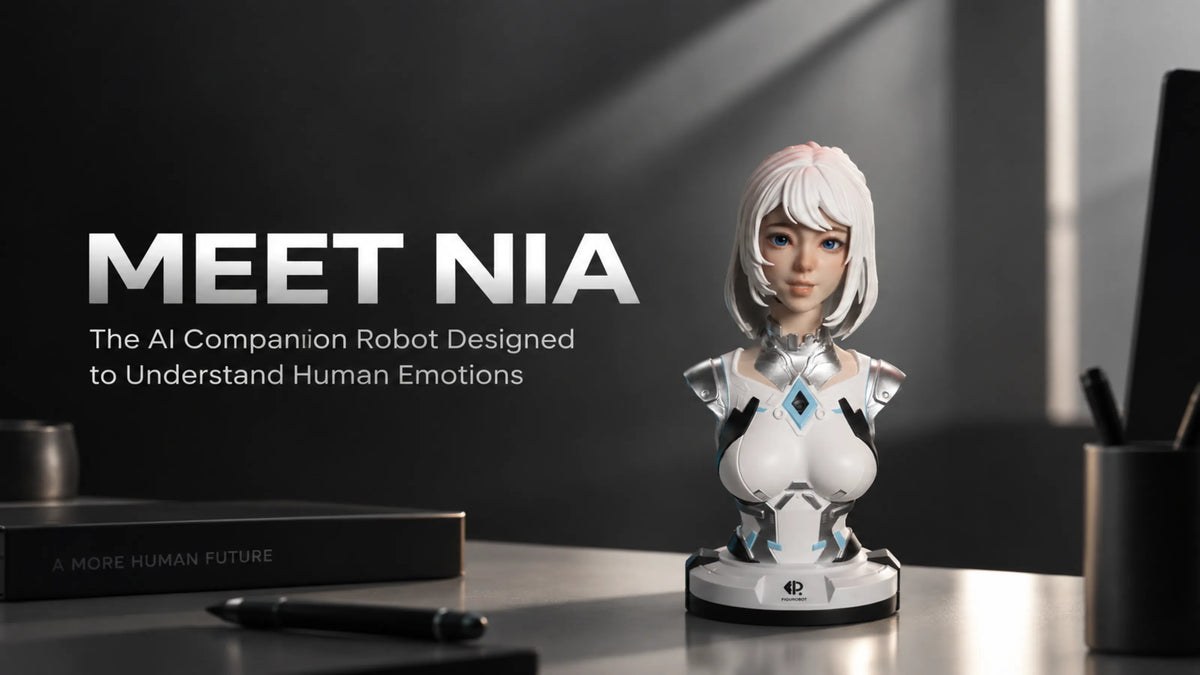
Most desktop AI devices speak from a speaker or type inside an app. Figurobot, the Shanghai-based studio founded by Jim Lu in 2024, is trying something different with FR-NIA: an 11-inch bionic companion that sits on a desk or bedside table and answers conversation with a moving, silicone-covered face rather than a screen. A October 19, 2026 press release describes FR-NIA as live on Kickstarter in Lite, Pro, and Pro Max configurations with early-bird pricing from $599, but the direct campaign listing could not be independently verified at review time; third-party coverage found the campaign still reading “Launching soon” on October 19, while the official site advertised an October 20 Kickstarter opening and small-deposit reservations ahead of campaign pricing. This piece evaluates the product on published specifications and marketing materials; no retail unit has shipped, and the crowdfunding listing remains being confirmed.
What It Is
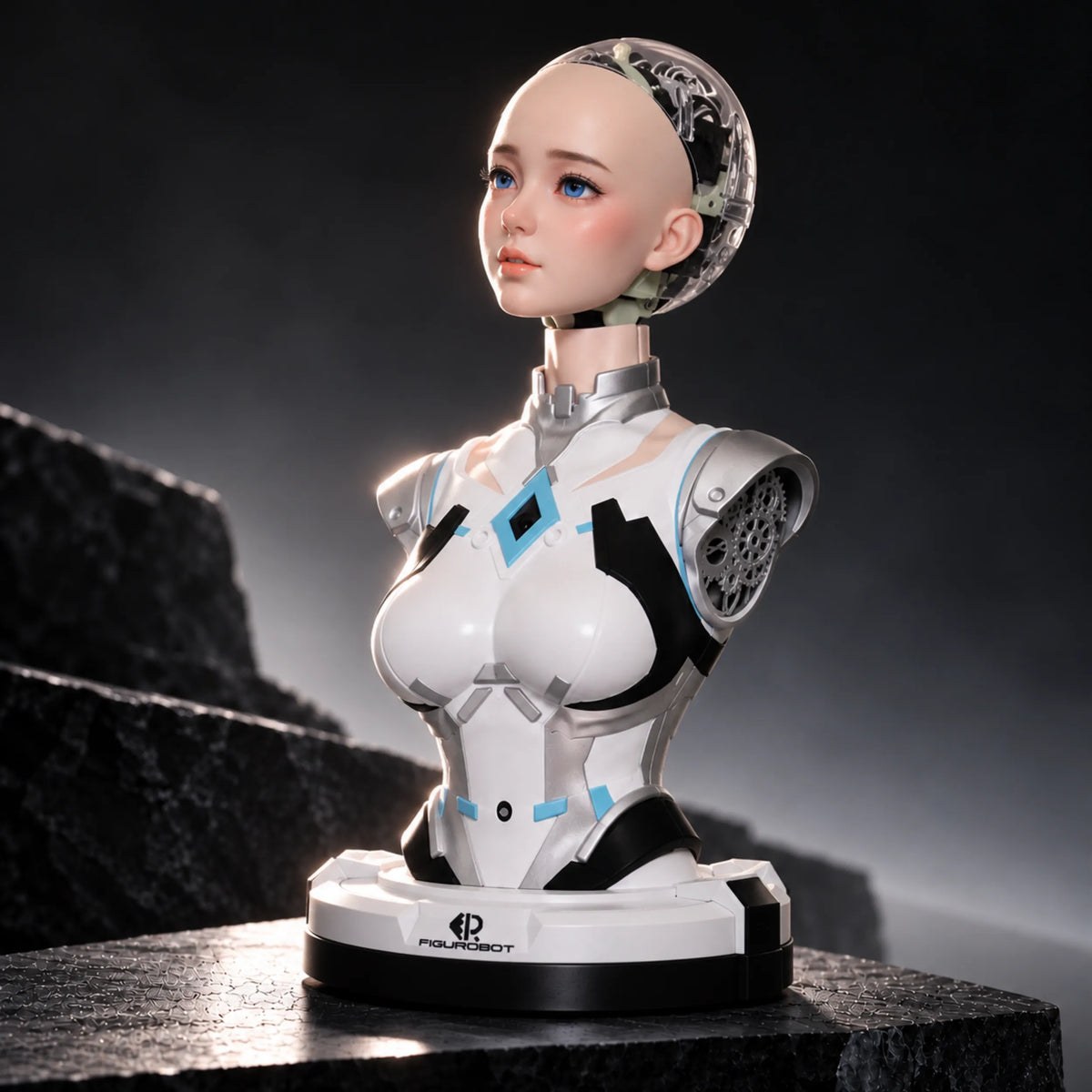
FR-NIA is a roughly 28-centimeter, bust-style desktop robot built around physical expression rather than household tasks. Its head packs seven facial degrees of freedom plus three neck degrees of freedom, all wrapped in a 2-millimeter biomimetic silicone skin that the company says is meant to feel skin-like under the fingertips. Rather than relying purely on voice, the robot uses multimodal perception to read a user’s position, the direction of sound, and the context of an interaction, then responds with coordinated eye, eyebrow, and mouth movement. Through the Figurobot app, owners get real-time movement control, motion recording, keyframe tuning, custom expressions, and cloud backup, with planned memory and relationship-development features intended to carry continuity across repeated conversations.
Specifications
| Attribute | Detail |
|---|---|
| Form factor | 11-inch (~28 cm) desktop bionic companion; bust on a circular base |
| Actuation | 10 DoF total: 7 facial + 3 neck; precision motion control at 0.01-degree accuracy |
| Surface | 2 mm biomimetic silicone skin over a high-integrity facial structure |
| Perception | User position, sound direction, interaction context; conversational responses via eyes, brows, mouth |
| Actuators | Proprietary miniature torque joints; under 0.1 Nm torque-control accuracy; 50 N·m/kg torque density; low-noise, low heat |
| App | Real-time control, motion recording, keyframe tuning, custom expressions, cloud backup |
| Configurations | Lite / Pro / Pro Max; customizable appearance, personality, and expressive style; open DIY ecosystem |
| Pricing | PR early-bird from $599; reservation deposits $1/$10/$20 unlock KS pricing $799/$749/$699; MSRP $999 |
| Status | Preview; Kickstarter listing being confirmed; no confirmed shipping date |

Highlights
The headline engineering story is the micro-actuation inside a compact 8-centimeter head. Figurobot says its custom miniature torque joints reach sub-0.1 Nm torque-control accuracy with a 50 N·m/kg torque-density figure, and internal testing kept motor temperatures below 30°C (86°F) under extended use, compared with much hotter conventional motor control. That precision is what makes micro-expressions possible: subtle eye glances, brow lifts, and mouth shapes that read as conversational feedback rather than a servos-led wave. The companion layer sits on top: FR-NIA detects where a person is standing, follows sound direction, and combines that with interaction context to shape its facial response, while the app lets owners choreograph their own motions and expressions and back them up to the cloud. Customization extends outward too: official preview images show a wardrobe of hairstyles, outfits, glasses, hats, and costume looks, signaling a broader accessories ecosystem around the base robot.

Pros
- A physical, expressive face fills a gap left by voice-only assistants and screen avatars.
- 10 DoF facial and neck motion with 0.01-degree control promises genuinely subtle micro-expressions.
- Silicone skin and miniature torque joints point to careful hardware engineering, not a plastic toy shell.
- App motion recording, keyframe tuning, and custom expressions invite creative personalization.
- Three configurations and an open DIY ecosystem leave room for tinkerers and accessories.
Cons
- Kickstarter launch status is inconsistent: the PR claims a live campaign, while independent checks showed “Launching soon” on October 19.
- Memory and relationship-development features are planned, not available at delivery.
- Voice interaction reportedly relies on third-party large-language-model technology, adding a cloud dependency.
- Pricing across Lite, Pro, and Pro Max tiers is not clearly mapped to the $599 early-bird and $699-$799 reservation figures.
- No confirmed delivery timeline, and expression quality cannot be judged from marketing renders alone.
Who It’s For
FR-NIA speaks to people who want an emotionally responsive desk presence, collectors of expressive humanoid art objects, and makers who enjoy choreographing custom motions on a precise mechanical platform. It is not a task robot: it will not clean, carry, or navigate a room, and buyers who expect utility hardware should look elsewhere. It suits owners who value companionship aesthetics, personalization, and a physical object that reacts to conversation.

Verdict
FR-NIA is an intriguing hardware bet on embodied expression: a silicone-skinned, 10-DoF face with precise miniature joints aimed at making AI feel present on a desk. The engineering claims are credible on paper, and the app toolset encourages personalization, but the launch picture is muddled by conflicting live-campaign claims, planned-only memory features, and an unconfirmed delivery window. Until the Kickstarter listing is verified and hands-on expression testing is possible, it earns a cautious 6/10 as a promising preview rather than a confirmed shipping product; interested buyers should reserve rather than commit, and track the campaign page before pledging.