
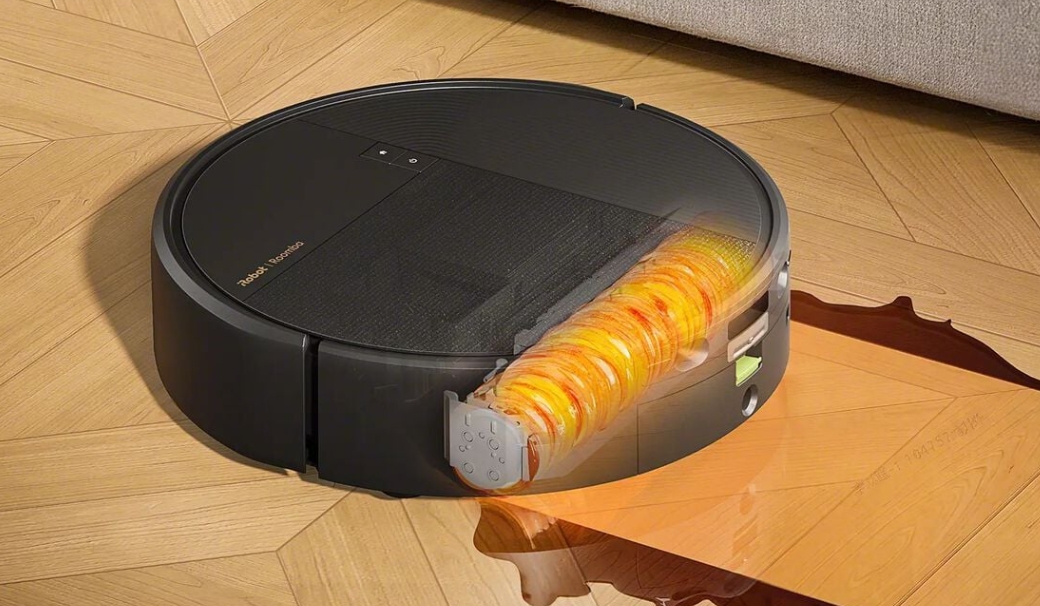
At IFA 2026 in Berlin, iRobot unveiled the revolutionary Roomba Duo AI cleaning robot system. Breaking away from the saturated market of standard all-in-one vacuum-mop robots, it employs a collaborative dual-robot strategy—where the “mother unit” tackles large areas and heavy soiling, while the “sub-unit” navigates low-profile, hard-to-reach spaces. This approach addresses a long-standing industry pain point: high-performance machines are often too bulky to fit under sofas or beds, whereas ultra-thin models lack the cleaning power to handle stubborn, dried-on kitchen grease. This is not merely a combination of two vacuums, but an integrated home robotics system featuring AI-driven coordination, shared mapping, and automated deployment and retrieval.
Product Overview
The Roomba Duo consists of a mother unit (primary floor-scrubbing robot) and an ultra-thin sub-unit, paired with an all-in-one automated maintenance base station. The mother unit features a mechanical deployment arm to place the sub-unit on the floor; upon completing its task, the sub-unit returns to the mother unit and is retrieved and stowed by the arm. The entire system shares a single base station for dust collection, dirty water recovery, mop washing, and hot-air drying.
Note: The Roomba Duo is currently a prototype concept product debuted at IFA; it has not yet entered mass production or retail. This overview is based on official release materials and hands-on testing at the exhibition.
Hardware and AI Perception System
1. Mother Unit: The Primary Workhorse for Large-Area Deep Scrubbing
- Perception Hardware: ClearView Pro Dual-Line LiDAR + PrecisionVision AI Camera. It identifies obstacles, floor materials, and stain types in real-time, simultaneously handling mapping, zone segmentation, and obstacle avoidance.
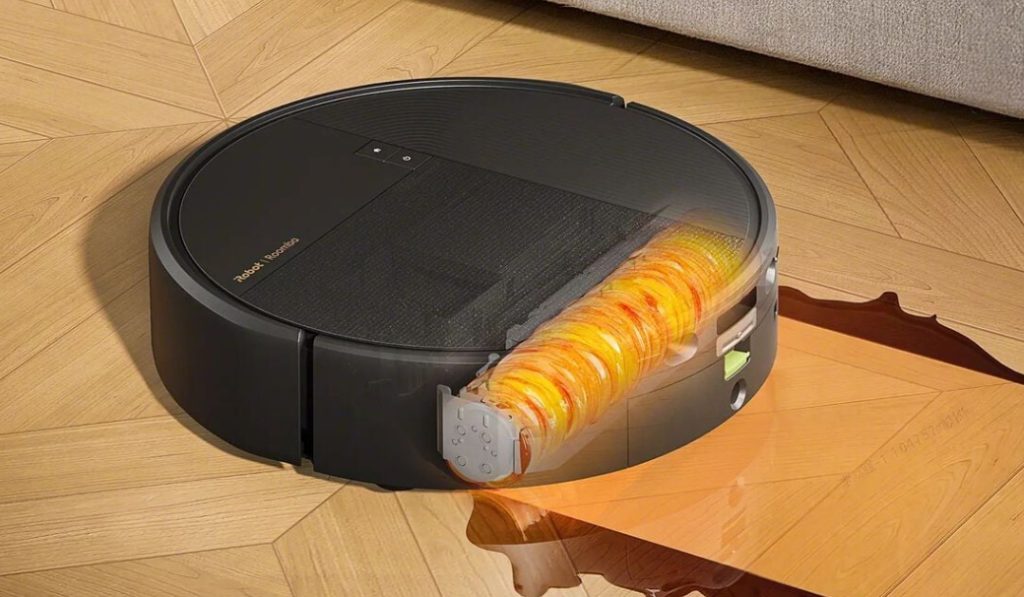
- Core Cleaning Technology: PowerSpin Max 60mm scrubbing roller, capable of applying 46N of downward pressure to simulate vigorous manual scrubbing. It supports steam pre-treatment to soften dried grease and food residue, ensuring deep cleaning on hard floors.
- Integrated hot-air drying module: Dries the floor after mopping to minimize the risk of water seepage and mold on wood flooring, while simultaneously self-cleaning and drying the roller to prevent odors.
- High-capacity water tank and dust bin, designed to clean large homes in a single pass. ### 2. Sub-unit: 8.35cm Ultra-slim “Dead-Zone Hunter”
Standing just 8.35cm tall and 29.8cm wide, the sub-unit is specifically designed for low-clearance spaces inaccessible to traditional robots—such as the areas under beds, sofas, and TV cabinets.
- PerfectEdge Technology: The mopping module extends outward by 31mm; combined with an extended side brush, it enables close-edge cleaning along walls and baseboards, effectively capturing pet hair and debris.
- Air-Suspension Omnidirectional Wheels: Capable of traversing thresholds up to 3.5cm high, allowing for seamless movement between rooms.
- Integrated Navigation: Equipped with dedicated navigation sensors, the sub-unit shares the same home map as the main unit. The two devices communicate in real-time, with AI centrally coordinating their cleaning zones.
3. AI Collaborative Scheduling & Division of Labor
The system’s core highlight is its cross-robot AI task scheduling.
- Mapping Phase: The main unit scans the entire home first to build a comprehensive floor plan, identifying low-clearance “no-go zones,” heavily soiled areas, and carpeted sections.
- Task Planning: AI automatically splits tasks; the main unit handles steam-mopping for large, open areas like the living room and kitchen, while low-clearance areas (under beds and sofas) are designated for the sub-unit.
- Automatic Deployment: The main unit moves to the entrance of a low-clearance area and uses a robotic arm to lower the sub-unit, which then independently enters the space to clean beneath the furniture.
- Retrieval & Docking: Once the sub-unit finishes cleaning these hard-to-reach spots, it autonomously returns to the main unit. The robotic arm retrieves the sub-unit, and the main unit returns to the base station to perform wastewater drainage, roller cleaning, and dust emptying.
The two robots operate without conflict, avoiding redundant cleaning of the same area and minimizing unnecessary movement.
Real-World Usage Experience (Testing with Exhibition Prototype)
Key Advantages
- Highly Targeted Solution for Pain Points
The biggest weakness of traditional robot vacuums is their inability to access low-clearance spaces; in many households, dust accumulates for years under beds because it cannot be cleaned. The Roomba Duo employs a physical separation strategy, splitting the conflicting requirements of “heavy-duty floor scrubbing” and “ultra-slim clearance for under-furniture cleaning” into two separate robots; this eliminates the need to compromise between chassis thickness and cleaning pressure. The main unit handles pressurized scrubbing for stubborn, congealed kitchen grease, while the ultra-slim sub-unit tackles dust under beds—creating a single system that covers the entire home. - Mature AI Multi-Robot Coordination Logic
Multi-robot coordination goes beyond simply operating simultaneously; it involves shared mapping, task segmentation, and mutual location awareness. The main unit determines where to deploy the sub-unit, while the sub-unit understands its operational boundaries, preventing it from getting lost or colliding with obstacles. This approach offers significantly improved efficiency for large homes, multi-room layouts, and households with low-profile furniture. - Enhanced Edge-Cleaning Capability
The sub-unit features a mop that can extend 31mm outward, solving the problem of dust accumulation in corners. This ensures a more thorough cleanup of snack crumbs and pet hair in corners—ideal for households with pets or children.
Current Shortcomings and Issues to Address (Prototype Stage)
- High Structural Complexity
The mechanical deployment arm is the system’s core mechanism but also a potential point of failure. The extension, gripping, and retrieval actions involve numerous moving parts; long-term durability and the risk of jamming remain to be validated through mass production. The overall size and weight of the system far exceed those of standard robot vacuums, imposing stricter requirements for home entry and base station placement. - High Projected Costs
Combining two robots, a mechanical arm, steam mopping capabilities, and an integrated base station results in hardware costs significantly higher than those of flagship all-in-one robot vacuums; the retail price will likely fall into the premium flagship category. - Battery Life and Scheduling Overhead
With the main and sub-units operating in turns, the total time required for a full-house cleaning is longer than with a single robot. Additionally, the scheduling process—where the main unit waits in place while the sub-unit operates independently—adds to the overall duration. - Prototype Limitations
The current unit is merely a prototype showcased at IFA; full app interaction, firmware iterations, and after-sales maintenance plans have not yet been finalized, meaning there is still a significant timeline before an official consumer launch. ## Comparative Analysis
Flagship robot vacuums on the market generally aim for “all-in-one” functionality, balancing capabilities through features like lifting mops, ultra-slim bodies, and pressurized mopping; however, inherent physical limitations remain.
- Standard flagship robot vacuums/mops: A single unit handles the entire home, but bulky bodies cannot fit under low-profile furniture; conversely, ultra-slim models often lack sufficient mopping pressure, struggling to remove stubborn stains.
- Roomba Duo: Adopts a distributed robotics approach; it sacrifices structural simplicity to gain specialized, zone-based cleaning capabilities, representing a new paradigm for home cleaning robots.
Target Audience & Non-Target Audience
✅ Suitable for: Users with large homes, low-profile furniture (low beds/sofas), extensive hard flooring in kitchens, frequent greasy messes, or pets; those who demand thorough cleaning of every corner and are willing to accept a higher price point for comprehensive performance.
❌ Not suitable for: Users with small homes, furniture with high ground clearance, or limited budgets; those prioritizing compact size, simple construction, and low maintenance costs.
Summary
The iRobot Roomba Duo stands out as one of the most imaginative consumer AI hardware products at this year’s IFA. It demonstrates that the evolution of home robots need not involve cramming every function into a single chassis; instead, AI can coordinate a team of robots to collaborate and resolve physical contradictions that a single unit cannot simultaneously address.
As a prototype, it still faces challenges regarding structural reliability, cost, and cleaning duration that need optimization before mass production. However, this “parent-child” collaborative architecture represents a significant direction for home service robots: shifting from standalone autonomy to multi-agent collaboration. If the mass-production version successfully controls failure rates and optimizes scheduling efficiency, the Roomba Duo could fundamentally transform the product landscape for high-end home cleaning robots.