
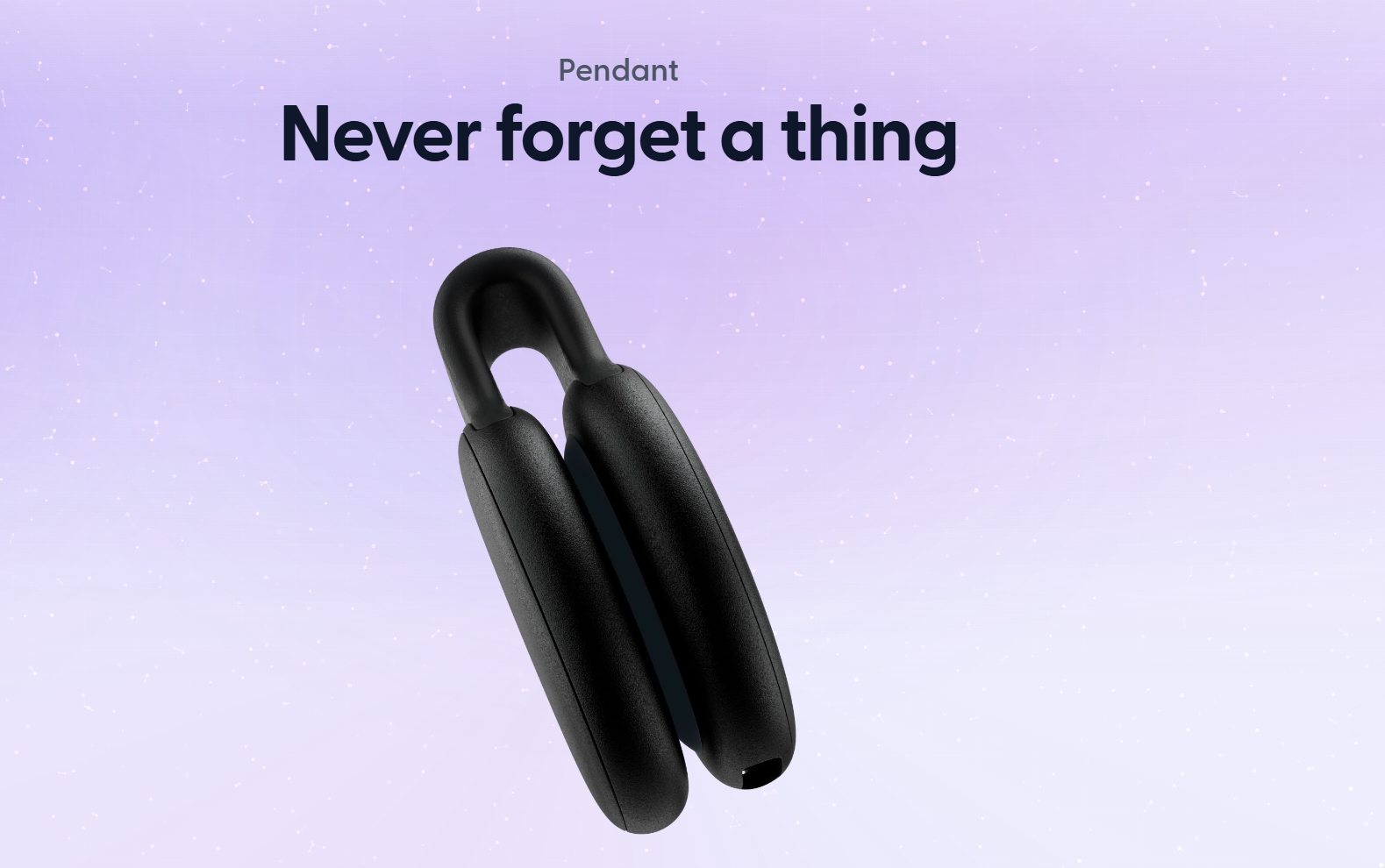
With Meta’s formal acquisition of the Limitless brand, the Limitless AI Pendant—a device that once generated significant buzz—has been fully integrated into the Meta ecosystem. Priced affordably and marketed as an “accessible personal AI assistant for everyone,” this wearable device—featuring all-day voice memory, real-time meeting recaps, and on-the-go AI memos—garnered considerable attention from professionals, students, and businesspeople alike. Its appeal lay in its ultra-compact pendant form factor, long battery life, and screen-free, lightweight design.
Unlike the overpriced and underwhelming AI Pin, this product focuses on low barriers to entry, ease of use, and a specialization in voice recording and AI summarization—seemingly hitting the mark on genuine consumer needs. However, extensive real-world testing, usage across various scenarios, and post-acquisition software updates reveal that the device’s core flaws far outweigh its advantages: uncontrolled privacy risks, questionable AI summary accuracy, severe feature homogenization, service degradation following the acquisition, and significant situational limitations. This article provides an objective breakdown of the product’s actual pros and cons, compares it with mainstream competitors, analyzes the critical flaws that drive users away, and offers a guide to help consumers avoid potential pitfalls when purchasing.
I. The Product’s Sole Core Advantage: Lightweight Design is the Only Highlight
To ensure an objective and fair review, we must first identify the Meta AI Pendant’s differentiating advantages—the very qualities that fueled its initial popularity. Its strengths lie primarily in hardware form factor and basic user experience, rather than any core technological barriers.
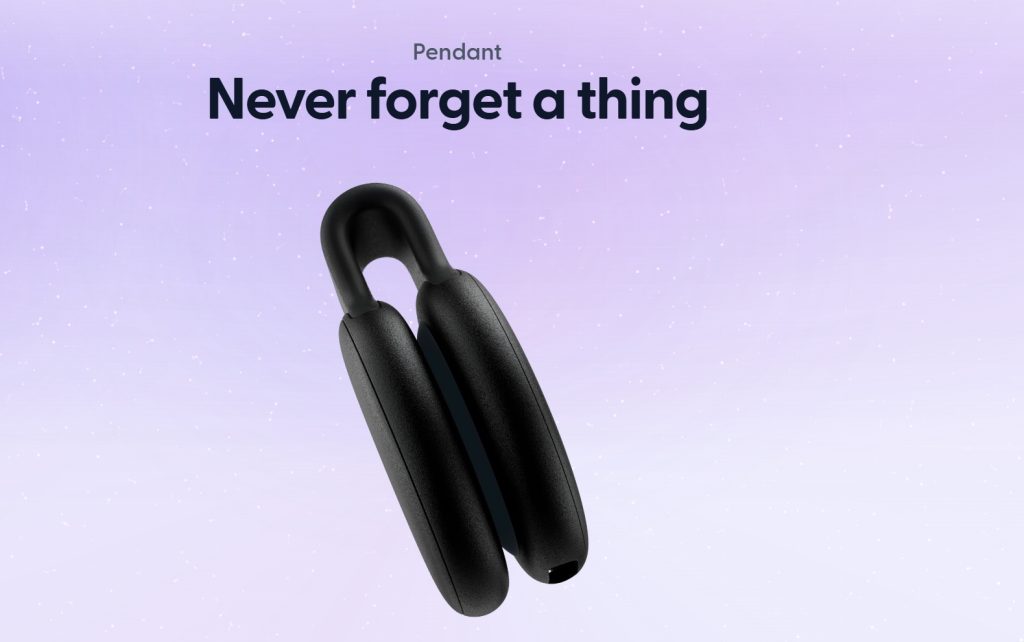
First, it is ultra-portable and effortless to wear. Compact and slim, the device can be worn as a pendant or magnetically attached to clothing. Its weight is negligible, making it easy to carry during daily commutes, meetings, or outings. It completely sheds the bulkiness associated with traditional recording devices and other smart wearables; its high level of unobtrusiveness makes it suitable for use in a wide range of public settings.
Second, it boasts exceptional battery life, eliminating “battery anxiety.” Compared to the short battery life—often lasting only a few hours—of competing products like the AI Pin and smart glasses, this pendant boasts impressive endurance. It offers nearly 100 hours of standby time with light use, meaning a single weekly charge suffices for daily routines; this eliminates the need for frequent recharging and makes it ideal for scenarios requiring heavy usage, such as extended outings or all-day meetings.
Third, the basic voice transcription is smooth and accessible to beginners. Powered by an integrated large language model, it enables real-time speech-to-text conversion and supports full-session recording for meetings, conversations, and classes. Its transcription speed meets industry standards, matching the capabilities of similar devices ranging from the low-end to the high-end market, yet it comes at a lower price point, making it an approachable entry-level option.
Fourth, its screenless, minimalist design minimizes distractions. By stripping away superfluous hardware like screens and cameras to focus purely on voice interaction and recording, the device ensures users aren’t distracted by on-screen pop-ups, perfectly aligning with a product philosophy of “focusing on the moment and reviewing later.”
II. Core Flaws: Fatal Shortcomings That Deter Most Users
In contrast to its limited advantages, the Meta AI pendant suffers from structural and experiential flaws—critical issues that were further exacerbated following Meta’s acquisition. Some of these problems cannot be resolved via firmware updates, significantly undermining the device’s value for money and practical utility.
- Extreme Privacy Risks; Meta’s Involvement Heightens User Concerns
This is the product’s most fatal and unavoidable issue. The Meta AI pendant is designed for continuous, all-day audio monitoring, keeping the microphone constantly active. Despite featuring a recording indicator light and third-party authorization mechanisms, significant privacy vulnerabilities remain. On one hand, Meta has a history of controversy regarding user data privacy; following the acquisition, all recordings, conversation data, and AI-generated summaries are uploaded to Meta’s cloud. There is a profound lack of transparency regarding how data is stored, accessed, or anonymized, leaving users unable to verify whether their personal conversations, work secrets, or private life details are being collected and utilized by the system. On the other hand, the device suffers from a latent audio recording vulnerability; in certain scenarios, the indicator light may delay turning on or trigger accidentally, capturing conversations without the participants’ knowledge. This easily leads to privacy disputes and poses compliance risks, particularly in regions with strict privacy protection regulations. The so-called “local privacy protection for cloud services” is merely a marketing gimmick; core data must still be uploaded to the cloud for AI analysis, preventing a truly closed-loop local process. - AI summarization capabilities are grossly overstated, with inconsistent accuracy
While the product’s core selling point is the automatic generation of key summaries, task breakdowns, and recaps of critical information following transcription, actual performance is poor. Although it handles casual chit-chat and simple, short sentences reasonably well, the AI frequently fails when dealing with multi-party meetings, technical terminology, complex work discussions, or academic lectures. Issues include missed key points, logical errors, redundant filler, and a failure to distinguish between primary and secondary information.
Critical work decisions and key data are often omitted in favor of useless filler. Consequently, users must manually cross-check the recap against the original recording and transcript word-for-word. Far from saving time, this adds the burden of re-processing the information, drastically diminishing the utility of the core AI features. Furthermore, the device lacks contextual awareness, failing to connect the logic of the entire conversation and resulting in fragmented, disjointed summaries. - Service quality plummeted following Meta’s acquisition; product longevity is in jeopardy
Since Meta acquired Limitless, post-acquisition operations have been drastically scaled back, creating significant uncertainty for both current and prospective users. The company has explicitly announced the cessation of new product sales and the phased shutdown of web and desktop meeting recording functions, offering only one year of basic technical support.
Although existing users can unlock the “Unlimited” service plan for free, the reduction of features and the absence of future updates or new feature support are inevitable. For new buyers, purchasing the device is akin to acquiring a “discontinued product nearing end-of-life”; there is no guarantee of long-term usability, bugs or compatibility issues cannot be fixed, and the device depreciates rapidly. 4. Extremely limited functionality and highly restricted use cases
The Meta AI pendant relies entirely on voice capture; it lacks cameras, screen casting capabilities, offline standalone intelligent interaction, and customizable shortcut functions. Compared to all-in-one AI wearables, it is limited to “recording plus basic summarization” and cannot perform mainstream AI functions such as translation, real-time Q&A, schedule planning, or document integration.
Its use cases are severely restricted—suitable only for simple meeting notes or daily conversation memos—and it is completely incapable of handling complex work or study scenarios. Furthermore, the device is heavily dependent on a smartphone and internet connection; while offline, it can only perform basic recording without AI analysis or review, effectively rendering it a standard digital voice recorder when disconnected from the network. - Significant flaws in hardware build and usability
First, the audio pickup capability is overstated; despite official claims of “clear audio capture in noisy environments like cafes,” real-world testing in noisy multi-person settings reveals poor voice isolation and noise filtering, a sharp increase in transcription errors, and an inability to accurately distinguish between speakers. Second, usability is poor; when worn as a pendant, factors like collar obstruction and changes in posture directly impact audio quality, and the magnetic attachment is prone to detaching. Third, the hardware lacks protective features; the device body easily attracts fingerprints and scuffs, resulting in mediocre durability.
III. Comparative analysis with mainstream competitors: Outclassed across the board
The market for AI recording wearables and smart memo devices is currently mature. Competitors—both within the same price range and across different price points—surpass the Meta AI pendant in every aspect, including privacy, functionality, usability, and service quality, effectively nullifying its core competitiveness. Meta AI Pendant (Limitless)
Approx. 699 RMB
Relies on Meta’s cloud for processing; significant privacy risks
Very limited; offers only audio recording and basic summarization
Development halted and production cut; service termination imminent
Weak performance; limited use cases and inconsistent accuracy
The comparison yields a clear conclusion: the Meta AI Pendant’s only advantage is its lightweight, wearable form factor. However, it lags significantly behind competitors in four core areas: privacy and security, functional accuracy, long-term service support, and versatility across use cases. Even traditional AI voice recorders costing a few hundred RMB outperform this viral AI pendant in core capabilities like recording, transcription, and noise reduction; the product’s price premium stems entirely from viral marketing and Meta’s brand endorsement.
IV. Consumer Buying Advice (Key Pitfalls to Avoid)
- Who should absolutely avoid this product?
Professionals who prioritize privacy—such as office workers, civil servants, and those in sensitive industries—should strictly avoid it, as cloud-based data storage poses a high risk of information leakage. Users requiring precise meeting recaps, professional study notes, or business minutes should not purchase it; the AI summarization accuracy is insufficient and would severely hinder work or study efficiency. Those seeking long-term device usage and continuous feature updates should steer clear entirely, as the product has been discontinued and lacks future service support. Users on a budget seeking good value for money will find the experience of a traditional AI voice recorder far superior to this product. - A very small group for whom purchase might be considered (with caution)
It is suitable only for casual users who have no privacy concerns and simply need to record everyday conversations or make quick memos, and who are willing to accept drawbacks such as AI summarization errors, limited functionality, and a lack of future updates. Users must also be aware beforehand that there is no official support for fixing malfunctions or compatibility issues; it is essentially a “disposable” or “one-off experience” product. 3. Key Pitfalls to Avoid When Buying
First, dispel the myth of “Meta’s cutting-edge tech”; the product lacks core technological innovation and is merely a simple wearable recording device. Its AI capabilities are entry-level and fall far short of a true intelligent assistant. Second, strictly avoid purchasing overpriced second-hand or old stock units; the product has been discontinued and is no longer receiving updates, meaning it holds no resale value, not to mention the risks of residual data and hardware aging associated with used devices. Third, be aware of data risks; all conversation data is uploaded to the Meta cloud during use rather than remaining in a secure local loop, so do not use it to record work secrets or sensitive private information. Fourth, do not be misled by claims of ultra-long battery life; while standby time is impressive, power drains rapidly during frequent recording and AI usage, making the actual battery life far shorter than officially advertised.
V. Review Summary: Gimmick Over Substance—A Discontinued Product Not Worth Buying
At its core, the Meta AI pendant is a transitional AI wearable that relied on influencer marketing and brand acquisition to generate hype, yet it suffers from lackluster core functionality, significant privacy risks, and a terminated product lifecycle. While it cultivated a perfect marketing persona through its minimalist wearable design and long battery life, it failed miserably in the areas users care about most: accurate interaction recaps, privacy security, and practical utility.
Its former advantage of low cost vanished completely following Meta’s acquisition, which led to reduced services and the cessation of product updates. Compared to professional recording devices or mature AI wearables in the same price range, it offers no irreplaceable features, no reliable long-term support, and no secure data protection.
For the vast majority of consumers, this product is simply not worth buying. If you need accurate meeting recaps and secure voice memos, traditional AI voice recorders or professional office wearables are safer and more efficient choices. If you want a smart wearable experience, the functionality and practicality of all-round AI hardware far surpass this gimmicky gadget. Ultimately, the Meta AI pendant is a “viral product” that looks smart but proves useless in practice—a device fraught with hidden risks that essentially amounts to a tax on the gullible.