Introduction
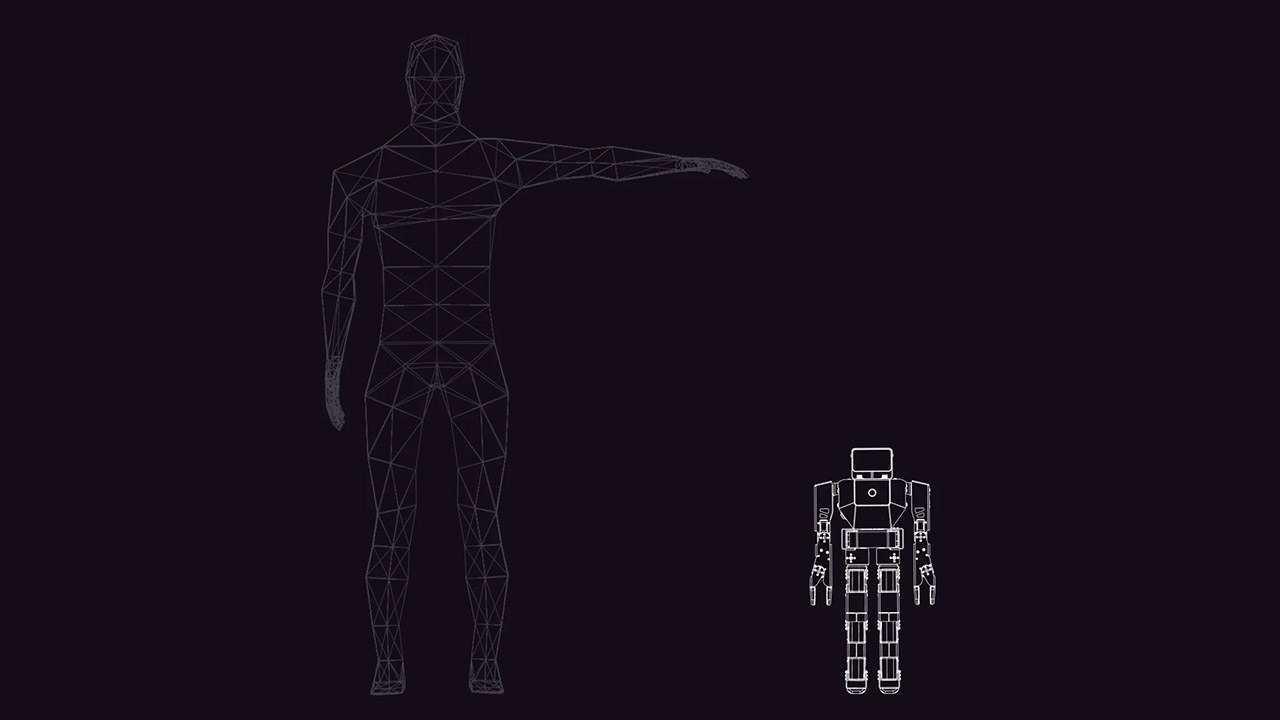
Humanoid robots have mostly lived in research labs and billion-dollar budgets, while hobby kits stayed wheeled or tracked. Zeroth Bot, a Palo Alto-based open-source project built on the K-Scale Labs software stack, takes aim at the gap: a small, programmable bipedal humanoid that can be commanded by voice, taught through gestures, or scripted in Python, advertised on its Kickstarter preview as available “for under $1000.” The campaign page currently reads “Launching soon” with no announced opening date, no pledge tiers, and no confirmed price; it shows Project We Love recognition, a Palo Alto, California location, and 1,730 preview followers. This is a preview review based on the Kickstarter page, the open-source GitHub repository, and public coverage; no hardware has shipped through this campaign.
What It Is
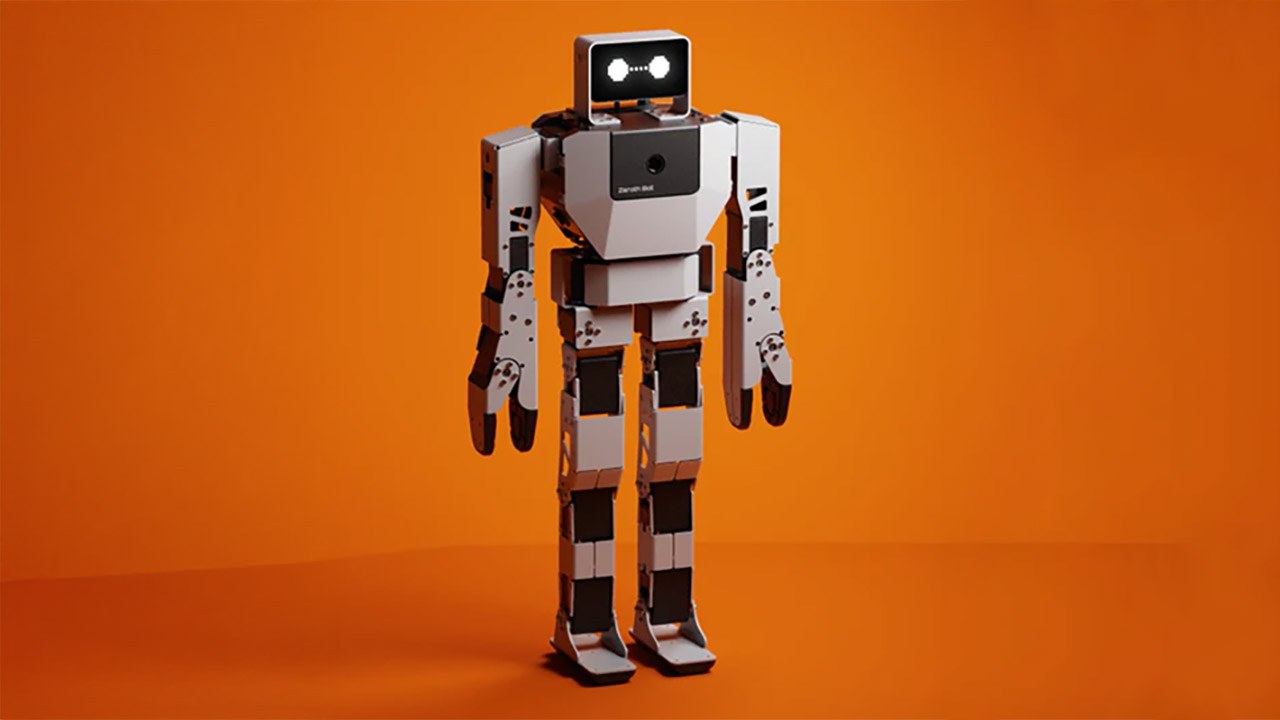
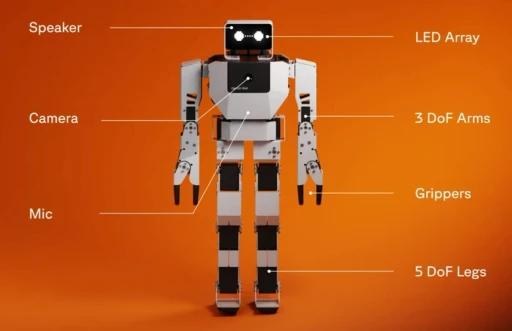
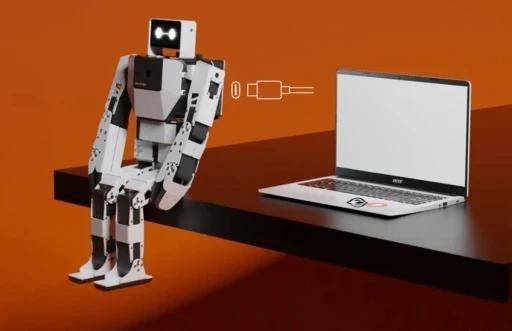
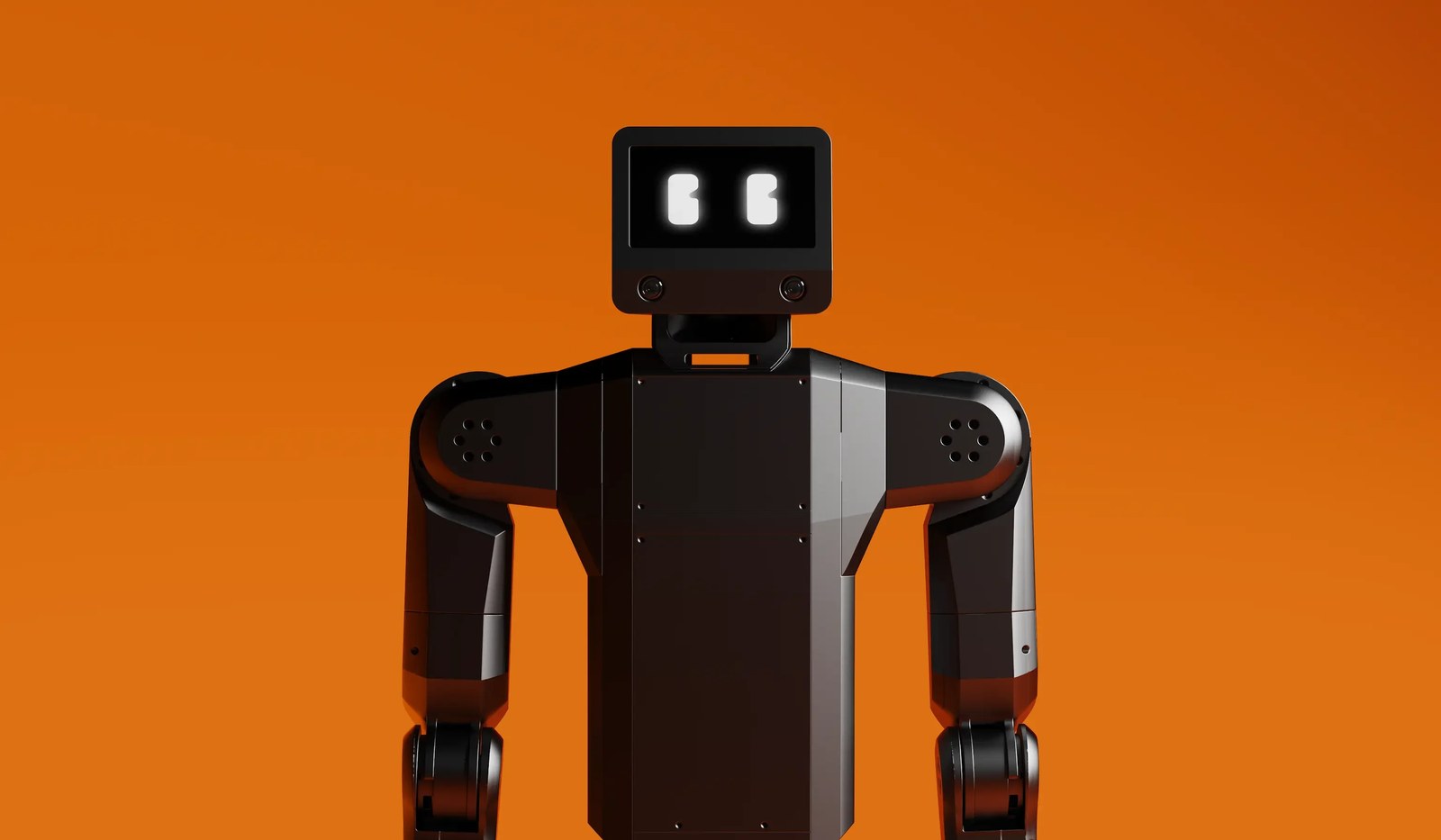
Zeroth Bot is an open-source, AI-enabled humanoid platform designed for students, tinkerers, and developers who want a bipedal body for learning robotics and machine learning. Three control paths meet on the same hardware: natural-language voice commands, gesture teaching that lets an owner move arms or legs and record a motion, and direct Python programming through the PyKOS library. The physical body packs 18 metal-gear actuators, five in each leg and four in each arm, while the onboard electronics include a dual-core RISC-V processor, a 1080p wide-FOV camera, a microphone, speaker, LED screen, and a 6-axis IMU, with Wi-Fi and a rechargeable battery for untethered operation. The hardware runs on K-Scale’s fully open-source software stack rather than a closed app wall.
Specifications
| Attribute | Detail |
|---|---|
| Positioning | Open-source AI humanoid for voice, gesture, and Python control; Kickstarter preview |
| Actuators | 18 high-performance metal-gear servos; 5 per leg, 4 per arm |
| Compute | Dual-core RISC-V processor; Wi-Fi; rechargeable battery |
| Sensors / I/O | 1080p wide-FOV camera, LED screen, microphone, speaker, 6-axis IMU |
| Software | PyKOS Python API; KOS Rust-based operating system; EdgeVLA vision-language-action model; K-Sim |
| Simulation | Reinforcement-learning training in IsaacSim, MuJoCo, and Genesis; sim-to-real policy deployment |
| Control | Voice commands, gesture teaching, Python scripting; community-driven open collaboration |
| Price | “For under $1000” per preview page; no confirmed pledge tier or final price |
| Status | Preview / launching soon; no announced launch date; 1,730 preview followers; 0 backed |
Highlights
The differentiator is the full open-stack story rather than any single sensor. PyKOS exposes a Python API that drives every motor and sensor, while KOS, written in Rust, handles reliable real-time control beneath it. EdgeVLA, a vision-language-action model, supplies robot skills that the community can keep improving with its own data, and K-Sim lets developers train reinforcement-learning behaviors in NVIDIA IsaacSim, MuJoCo, or Genesis before deploying a trained policy to the physical body. That sim-to-real pipeline matters because locomotion on two legs is precisely the problem simulation exists to solve. The accessible price framing, under $1000 against the $100,000 robots the page contrasts against, targets classrooms, robotics clubs, and ML learners who would otherwise face Unitree-class pricing or settle for wheeled robots.
Pros
- True bipedal humanoid form at a fraction of research-robot pricing, framed under $1000.
- Three control paths: voice, gesture teaching, and Python suit beginners and advanced developers alike.
- Full open-source stack across PyKOS, KOS, EdgeVLA, and K-Sim supports real ML experimentation.
- Sim-to-real training across IsaacSim, MuJoCo, and Genesis de-risks locomotion experiments.
- Active community on GitHub and Discord with an open, collaborative roadmap.
Cons
- No launch date, pledge tiers, or confirmed final price; “under $1000” is a preview-page framing only.
- Preview status means nothing has been backed or shipped through this campaign yet.
- Real-world walking reliability and battery life are unverified in published materials.
- AI features such as EdgeVLA skills depend on community data and continued software maintenance.
- Assembly, tuning, and debugging require genuine comfort with Python and embedded robotics.
Who It’s For
Zeroth Bot fits engineering and CS students learning robotics, hobbyists who want to train reinforcement-learning policies, ML researchers testing small-scale vision-language-action ideas, and educators building bipedal robotics labs on a budget. It is not a home companion or a consumer toy: it rewards coding and iteration, and buyers expecting a ready-made talking helper should look elsewhere.
Verdict
Zeroth Bot is a promising open-source entry point into bipedal AI robotics: an affordable physical body, a mature open software stack, and a serious sim-to-real pipeline that serious learners rarely get at this price. The campaign itself remains a preview with no date or tiers, and real-world gait and battery performance are unproven, so it earns a provisional 6.5/10 worth following rather than backing blind. Watch for the launching announcement, confirmed pricing, and early builder builds before committing.