
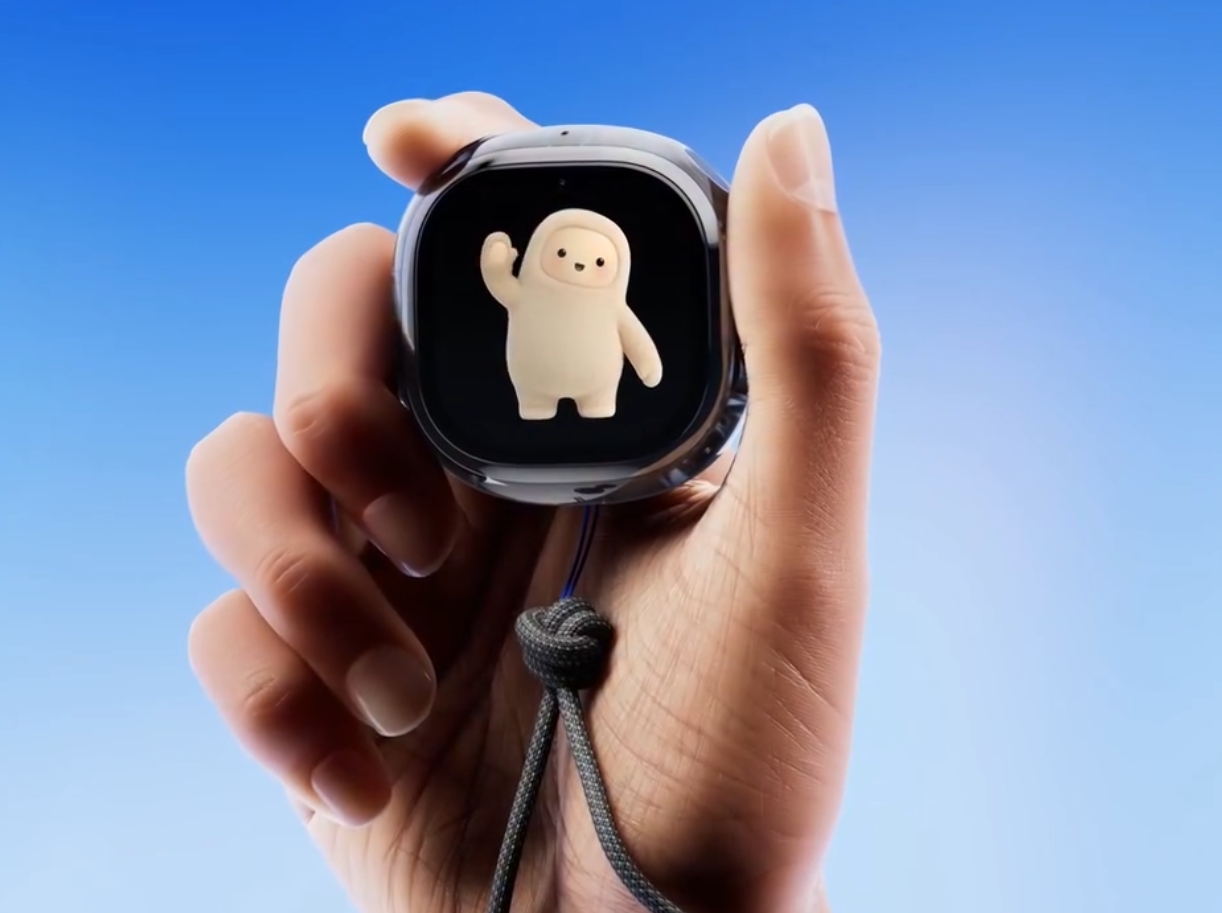
Unveiled as the grand finale at the 2026 Meta Connect conference, the Muse Charm was defined by Mark Zuckerberg as a “next-generation portable AI agent.” This keychain-sized device features a 2-inch OLED screen, standalone 5G connectivity, dual-camera sensing, fingerprint wake-up, and a customizable virtual AI avatar. It markets itself on “phone-free interaction, 24/7 AI companionship, environmental intelligence, and cross-device AI integration.” With its cute “digital pet” aesthetic and lightweight wearable design, it quickly generated a buzz in the tech community.
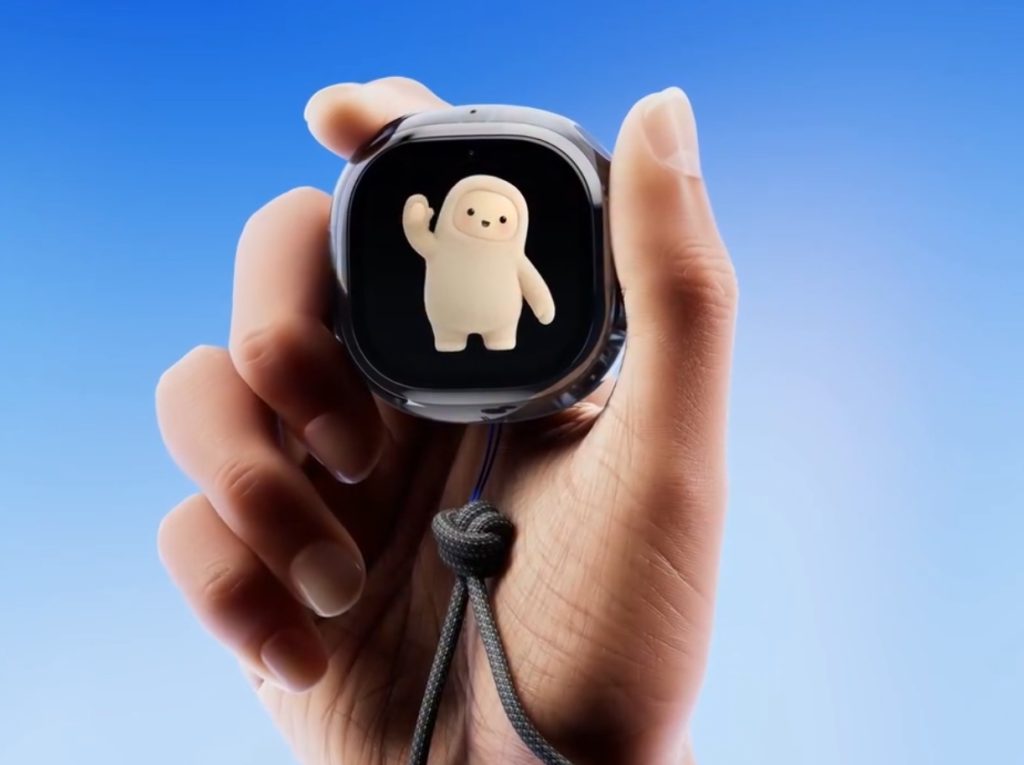
In terms of product positioning, Meta aims to fill the gap between smartphones, smartwatches, and AI glasses with the Muse Charm, creating a lightweight AI gateway that is always online and requires no unlocking. However, hands-on testing, in-depth feature analysis, and industry comparisons reveal a different reality: the Muse Charm is a concept-driven product where marketing hype far outweighs actual substance; it is heavy on entertainment value but severely lacking in practical utility. It inherits the chronic flaws of Meta’s previous hardware: futuristic gimmicks, poor execution, negligible practicality, and significant privacy risks. This article objectively breaks down the device’s actual pros and cons, benchmarks it against mainstream competitors, analyzes its critical shortcomings, and offers a buying guide to help consumers avoid potential pitfalls.
I. The Only Superficial Strengths: Novelty in Design and Interaction
To ensure an objective review, we first outline the Muse Charm’s few differentiating advantages—the key features that attract young users. These are primarily surface-level improvements to the user experience rather than breakthroughs involving core technological barriers.
- Innovative form factor with strong wearable appeal. The device is ultra-compact and features a dual-mode design (keychain or pendant), allowing it to be attached to backpacks or keys, or worn around the neck; its portability far exceeds that of traditional AI hardware. A 2-inch high-definition OLED screen displays a customizable “Muse” virtual avatar—complete with changeable outfits and voices—creating a personalized AI digital pet. It stands out for its visual appeal and fun factor, offering a distinct aesthetic advantage.
- Fully independent connectivity, eliminating reliance on smartphones. It features a built-in 5G module, supporting standalone connectivity and voice interaction without the need to pair with a smartphone or unlock an app; a simple fingerprint touch wakes up the AI conversation instantly. Compared to traditional AI wearables that rely on Bluetooth, it offers a lower barrier to response and a more direct interaction experience.
- Lightweight interaction logic with a zero learning curve. It eschews complex operations in favor of minimalist touch and voice controls. It supports close-range AI pet interactions between two devices—a fun feature tailored to young users—ensuring ease of use and broad consumer appeal.
- Potential for cross-device ecosystem integration. As the hardware host for the Meta Muse AI agent, it can link with Meta glasses, VR devices, and PC ecosystems. It possesses fundamental capabilities for multi-device task synchronization and continuous execution, offering theoretical advantages for ecosystem expansion.
II. Critical Flaws: Real Shortcomings That Deter Most Users
Unlike its superficial advantages in aesthetics and interaction, the Muse Charm suffers from structural and experiential flaws. These issues span five key dimensions: exaggerated feature claims, a lack of practical utility, high costs, privacy risks, and poor performance—most of which cannot be fixed via firmware updates.
- Grossly exaggerated features and extremely weak practical AI capabilities.
This is the Muse Charm’s most fundamental issue. The officially touted “environmental AI perception,” “autonomous task execution,” and “all-scenario AI assistant” capabilities remain largely conceptual. Real-world testing shows that its dual-camera environmental recognition is limited to basic object identification and scene assessment; it fails to translate into practical functions such as decision support, information organization, or context-aware services. Furthermore, the much-hyped continuous task execution by the AI agent is limited to simple web-based operations; it cannot integrate with native apps or handle complex work and lifestyle tasks.
Compared to mature AI assistants, the Muse Charm is slow to respond and lacks logical reasoning. When faced with complex questions, it frequently gives irrelevant answers or suffers from logical breakdowns. It is capable only of basic tasks like casual chatting, simple Q&A, and setting reminders. It fails to handle core needs such as work reviews, information organization, schedule planning, or high-efficiency assistance. In essence, it is merely a “voice-chatting toy with a screen” rather than a productivity tool. 2. Standalone 5G connectivity proves to be a pseudo-need with exorbitant costs
While the inclusion of a standalone 5G module is Muse Charm’s biggest hardware selling point, it is also its most superfluous feature. To utilize standalone connectivity, users must purchase a separate 5G data plan and cover monthly network fees, incurring hundreds of yuan in additional hidden costs annually.
However, since the vast majority of users carry smartphones daily, mobile hotspots or portable Wi-Fi devices can easily meet connectivity needs; the “phone-free” advantage offered by standalone 5G fails to justify the long-term cost of service fees. Furthermore, the device suffers from high power consumption; with 5G connectivity, an always-on screen, and continuous standby, battery life is severely compromised. Heavy usage necessitates daily charging, effectively negating the portability and battery-life advantages typical of lightweight wearable devices. - Excessive focus on entertainment with a complete lack of productivity features
The product’s overall positioning is severely unbalanced; 90% of hardware and algorithmic resources are dedicated to entertainment functions—such as virtual avatar customization, device interaction, and visual display—while genuinely useful assistive features are sorely lacking. Compared to similar AI wearables, it lacks essential capabilities such as accurate audio transcription, meeting summaries, emotional companionship, schedule management, real-time translation, and document integration.
Users pay a premium price only to experience features like outfit changes, casual chatting, and virtual pet interactions. Long-term use easily leads to aesthetic fatigue; once the novelty wears off, the device often ends up as a neglected ornament, with its practical value dropping to near zero. - Dual risks regarding privacy and security
Muse Charm is equipped with an always-on microphone, front and rear cameras, and an AI monitoring system that remains constantly active. Moreover, all interaction data, environmental sensor data, and conversation logs are uploaded to the Meta cloud for processing. Given Meta’s history of controversy regarding user data privacy, the device poses a significant risk of privacy breaches.
In its always-on standby mode, the device continuously records ambient sounds and captures visuals. Lacking precise activation or deactivation thresholds, it can easily—and unintentionally—record private conversations, confidential work information, and personal details of the user’s life. Furthermore, cloud-based data masking, storage retention periods, and permission controls are completely opaque; users lack autonomous control over data flow, creating extremely high risks when used in scenarios involving sensitive information or private daily activities. - Inflated pricing and poor value for money
Based on industry pricing projections and competitor benchmarking, the Muse Charm is priced in the same tier as smartwatches—far exceeding the actual value of its hardware and features. Its core hardware consists merely of an entry-level OLED screen, a generic 5G module, and basic camera and audio components; it lacks proprietary chips, breakthrough AI algorithms, or essential, exclusive functions.
The price premium stems entirely from the Meta brand, launch event marketing, and the novel “digital pet” concept. The hardware cost is vastly disproportionate to the retail price, making it a classic example of a product with a “concept-driven premium.” Moreover, the product was rushed to market prematurely and lacks refinement; it suffers from numerous compatibility bugs, incomplete features, and poor optimization—essentially a “Version 1.0” aimed at testing the waters and cashing in on early adopters. - Incomplete ecosystem integration; cross-device connectivity is virtually non-existent
The flagship features—full Meta ecosystem integration and AI agents operating continuously across devices—remain purely theoretical and are far from fully realized at this stage. The device fails to integrate deeply with mainstream office software or lifestyle tools, supporting only basic web-based redirects. Operational permissions are severely restricted, preventing automated tasks or efficient cross-device synergy; the touted ecosystem advantages fail to materialize in practice, serving merely as marketing rhetoric.
The conclusion is clear: the Muse Charm is a niche novelty device that sacrifices utility for gimmicks. At the same price point, smartwatches, professional AI recorders, and portable AI terminals vastly outperform it in terms of practical value, cost-effectiveness, and security. Its only advantage lies in the entertainment value of a personalized virtual pet—offering no unique, irreplaceable utility. IV. Key Considerations for Consumers (A Guide to Avoiding Pitfalls) - Groups strongly advised against purchasing
Professionals, students, and businesspeople seeking productivity tools, office aids, or practical functionality should firmly avoid this device; it fails to deliver any high-efficiency assistive features and is a sheer waste of budget. Users who prioritize privacy, handle sensitive information, or require data security should steer clear; the device’s continuous data collection and cloud uploading pose a high risk of information leakage. Budget-conscious users seeking value for money should not buy it; the high price tag combined with lackluster, “gimmicky” features makes it poor value. Those who dislike recurring fees or additional costs should think twice, as 5G data plans drive up the total cost of ownership. - Niche groups for whom it might be worth a try
It is suitable only for young early adopters who enjoy novel tech gadgets, virtual avatar customization, and stylish wearables, and who have no pressing need for practical functionality. Buyers must accept significant drawbacks—including poor battery life, limited features, high service costs, and privacy risks—and view the device merely as an entertainment accessory rather than a productivity tool. - Key details to avoid pitfalls when buying
First, disregard the marketing hype framing it as a “next-generation AI agent”; at this stage, Muse Charm is merely a visual AI chatbot toy. It lacks autonomous task execution and deep intelligent services, with core capabilities far inferior to the AI assistants built into smartphones. Second, view the 5G standalone connectivity feature with skepticism and do not pay for a gimmick; using a smartphone hotspot is perfectly adequate for daily needs, eliminating the need for an extra data plan. Third, the first-generation product is unrefined, suffering from numerous bugs, incomplete features, and poor optimization; with no clear roadmap for future updates, it is highly likely to be a short-lived “test-the-waters” product. Fourth, do not overestimate its ecosystem integration capabilities; cross-device and cross-scenario AI services are currently largely unrealized and remain long-term conceptual features. Fifth, it is highly likely to end up gathering dust; once the novelty of the entertainment wears off, it offers no further utility and has a very low resale value. V. Verdict: Gimmick over substance—a “sucker’s tax” for early tech adopters.
The Meta Muse Charm perfectly embodies the common flaws of Meta’s hardware products: visionary concepts paired with poor execution, and top-tier marketing matched by zero practical utility. It pushes gimmicks like AI virtual pets, lightweight wearables, and standalone connectivity to the extreme, while completely ignoring the core needs users have for portable AI devices: efficiency, practicality, security, and affordability.
It functions less like a smart wearable tool and more like an overpriced tech accessory or a stress-relief toy. While it boasts attractive aesthetics, personalization, and novelty, it is plagued by exaggerated specifications, abysmal battery life, high costs, privacy risks, and a lack of productivity utility. Compared to mature AI wearables on the market, the Muse Charm offers no core technological advantages, no essential practical functions, and no reliable long-term value.
For the vast majority of consumers, this product is simply not worth buying. If you need portable AI assistance, office recording capabilities, or smart interaction, mature AI hardware or smartwatches costing under 1,000 yuan offer a far superior experience. It appeals only to a tiny niche of tech enthusiasts with deep pockets who crave novelty and enjoy “raising” virtual pets; for the general public, it is unequivocally just another “sucker’s tax” product in the realm of next-gen portable AI.