
Market Analysis
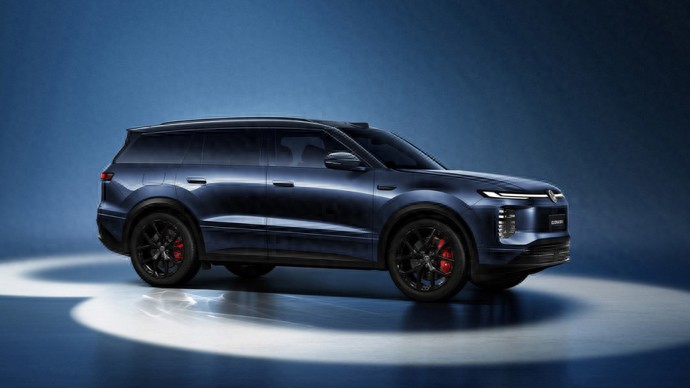
SAIC Volkswagen walked onto the Chinese range-extender SUV stage in October 2026 with the ID.ERA 8X, a 5,020 mm mid-large five-seater priced at a limited-time RMB 206,800–269,800 (list RMB 226,800–289,800). Four trims are on offer, and, unusually for a joint-venture (JV) product, every single one ships with a roof-mounted LiDAR and the Momenta R7 world-model ADAS as standard. The mechanical headline is a “Golden Extended-Range System” built on the VW Group EA211 engine with Miller-cycle combustion and a Porsche-derived VTG variable-geometry turbo, bolted to an 800 V platform, a dual-chamber air suspension, and either a 51.1 kWh LFP pack or a 65.2 kWh CATL NCM pack. The big-battery version claims 451 km of CLTC pure-electric range and 1,602 km of combined range, with 0–100 km/h quoted at 4.6 seconds.
On paper this is the most aggressive specification sheet a foreign JV has ever aimed at the RMB 200,000–300,000 family-SUV segment. Context matters, though: SAIC Volkswagen is late. Local rivals including Li Auto, Xpeng and BYD have been stacking range-extender five-seaters into this exact band for nearly two years, and executives on stage openly conceded the 8X is arriving after the crowd. The company’s own framing — “entry-level, fully loaded” — is a warning that Volkswagen knows it cannot win on brand prestige alone.
Competitor Analysis
Compare the ID.ERA 8X with the Tesla Model Y and the gaps are obvious in philosophy rather than spec. Tesla still sells a pure-battery crossover in China with a mature cabin and an FSD stack that still cannot match Momenta’s city-driver performance on Chinese roads. The VW offers no pure-EV version at all, and its 451 km pure-electric claim relies on a 65.2 kWh pack. What the 8X does offer is range-extender flexibility, air suspension, a refrigerator, Nappa massage seats and a hardware list the Model Y cannot price-match at this money.
Against Xpeng, the 8X lands awkwardly. Xpeng’s G9L is a newer product with XNGP software that Chinese reviewers currently rate ahead of Momenta on urban end-to-end driving. The 8X borrows Momenta’s stack rather than building its own, which is sensible engineering but means VW is shipping someone else’s software roadmap and is hostage to Momenta’s update cadence.
With Li Auto, the comparison is the most bruising. The Li Auto L6 is the volume-selling benchmark for large five-seat range-extender SUVs under RMB 300,000, and it has spent three years refining seat comfort, cabin quietness and family-focused software — the exact attributes SAIC VW is now trying to copy. Li’s EREV efficiency claims are better documented, and resale data already exists. The 8X brings Porsche-flavoured VTG turbocharging to the fight, but Li buyers are not typically cross-shopping for a track feel; they want a quiet couch on wheels.
Versus BYD, the 8X is both more expensive and more sophisticated. BYD’s range-extenders sell in far higher volumes at lower prices but conventionally lack the 8X’s 800 V architecture, LiDAR and dual-chamber air suspension. The risk is that this middle ground has been eroded faster than anyone in Wolfsburg expected.
Pros and Cons
Pros. The hardware list is genuinely competitive: 800 V charging, double-wishbone front and five-link rear suspension, dual-chamber air suspension, standard LiDAR, Momenta R7 world-model ADAS on every trim, a 12 L in-cabin fridge, massaging seats and a 1,602 km CLTC combined range. The limited-time RMB 206,800 starting price undercuts most comparably equipped Chinese rivals, and Volkswagen’s residual-value reputation still counts in the family-buyer demographic.
Cons. First, range-extender efficiency is unproven. The EA211 was not designed as a dedicated generator, and early real-world fuel consumption under high-load highway cruising has not been independently measured. The 1,602 km CLTC figure is a lab number; owners of rival EREVs routinely see 70–80% of it in winter. Second, the JV brand has almost no EV heritage. SAIC Volkswagen’s earlier ID.3 and ID.4 line-ups sold on discounts rather than desire, and its software reputation is roughly a decade behind the Chinese EVs it now competes with.
Third, the LiDAR value proposition is thin without software. A 192-class LiDAR on every trim is a marketing headline, but if Momenta R7’s city NOA does not deliver materially better than camera-only systems on cheaper rivals, customers pay for hardware they never use. Fourth, 800 V on a range-extender is a partial promise; fast charging matters less when most owners rely on the engine for long trips. Fifth, timing is brutal: the segment is crowded, discounts are already heavy, and the limited-time pricing is an implicit admission that list prices will not hold.

Buyer’s Guide / Things to Watch Before You Buy
If you are cross-shopping the ID.ERA 8X, hold off until four things are verified. First, wait for independent real-world fuel consumption — ask dealerships for logged highway and winter figures from early press fleets rather than CLTC numbers. Second, test the Momenta R7 ADAS on your daily commute, specifically in cut-in traffic, rain and underground parking. Third, check the OTA and resale roadmap; SAIC Volkswagen has a history of leaving early ID-series owners with thin software updates, so ask what 36-month feature commitment exists.
Finally, compare true out-the-door pricing. The RMB 206,800 figure is a limited-time promotional price, and a buyer who can wait 90 days may see another RMB 15,000–25,000 shaved off. Be honest about what the 8X is: a late, hardware-heavy, software-dependent JV catch-up product. It is not a bad car, but the combination of unproven range-extender efficiency, borrowed ADAS software, a crowded segment, and Volkswagen’s own EV track record means early adopters are effectively beta-testing the comeback. Negotiate hard, buy the mid-trim, or wait six months for the discount market to tell you whether it is a genuine competitor.
Related reading: BYD’s Shenzhen Launch Event · ID.UNYX U-Zhong 06 and 07 · Leapmotor A10s