
Chery’s AiMOGA Mobo wants to be the family companion humanoid that moves from showroom demo to living room — but at pre-order day it has no price, no dimensions, and no published battery life to judge it by.
On October 17, 2026, AiMOGA Robotics, the Chery Group robotics brand behind the Mo Jia (墨甲) commercial fleet, issued a GlobeNewswire release announcing Mobo, its first consumer-grade humanoid robot designed for home companionship, with global pre-orders opening alongside its global debut at the 2026 OMODA & JAECOO International User Summit in Wuhu. The official English release places the summit from October 19 to 24 under the theme “DRIVE TO THE NEXT VIBE”; Chinese PR mirrors point to October 21 as the on-stage reveal day. Mobo had previously appeared in public at the World Robot Conference and the World Manufacturing Convention, but this is its formal consumer launch and pre-order window.

Product market analysis
The consumer home-robot market is crowded on promises and thin on shipped units. It splits between screen-and-speaker assistants (smart displays, voice hubs), wheeled home devices, and humanoid companions that still mostly exist as conference-floor demonstrations. AiMOGA’s entry comes from an unusual position: rather than a robotics start-up, it is the embodied-AI arm of a major Chinese automaker, Chery, which argues that intelligent-cockpit work (understanding people) and assisted-driving work (understanding the world) are the two halves a home robot already needs.
The commercial side of AiMOGA is the credibility layer. The company reports robots in regular operation across more than 100 use cases — dealerships, retail stores, government service centers, traffic management, security, education and healthcare — with cumulative global deliveries above 3,000 units across more than 60 countries and regions. Mobo itself, however, is a different product from those commercial machines: a small, rounded companion humanoid rather than the full-size Mornine presenter or the Argos Pro quadruped shown alongside it.
Specs at a glance
| Item | Detail |
|---|---|
| Brand / maker | AiMOGA Robotics (Chery Group; ecosystem partner of OMODA & JAECOO / EXEED) |
| Product | Mobo, consumer-grade home companion humanoid |
| Announcement | October 17, 2026 (GlobeNewswire); debut and global pre-orders during the Wuhu summit (Oct 19–24 official EN; mirrors cite Oct 21 reveal) |
| AI system | Proprietary MoAgent; decomposes complex instructions, plans long-horizon tasks |
| Interaction | Voice, visual information and conversational context; object recognition; spatial perception |
| Movement | Autonomous navigation, dynamic obstacle avoidance; 22 degrees of freedom full-body motion |
| Memory / privacy | Remembers each family member’s habits and preferences; privacy protection built in from the outset (localized design per launch materials) |
| Mass production target | End of 2026 per earlier August World Robot Conference coverage |
| Height / weight | TBD — not disclosed |
| Battery / runtime | TBD — not disclosed |
| Price | TBD — not disclosed |
| Shipping date | TBD — not disclosed |
What works
MoAgent is the strategic core. Rather than replying to isolated commands, the release describes a system that breaks a complex instruction into concrete steps and plans longer-horizon tasks — a goal-driven assistant rather than a question-answer box. Combined with spatial perception, autonomous navigation and dynamic obstacle avoidance, Mobo is presented as a machine that moves around a home rather than sitting on a countertop.
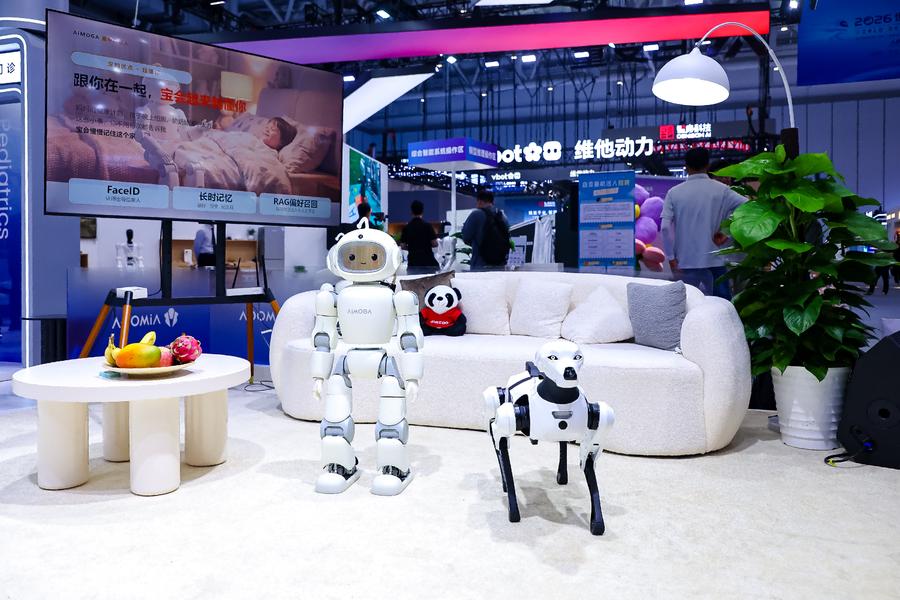
The interaction pitch maps well to real family needs: voice plus visual plus conversational context lets it hold a conversation and identify nearby objects, while per-member memory of habits and preferences adds continuity over time. The 22-degree-of-freedom motion system supports expressive gestures, stable movement and dance routines — companionship behavior, not factory labor. And the manufacturing pedigree matters: Chery supplies automotive-grade perception, supply chain and quality control that an unaffiliated start-up would have to build from scratch, and the 3,000-plus delivered commercial units prove the company can field machines at scale, even if those are not home robots.
What doesn’t
The honest headline: at pre-order launch, Mobo has no published price, height, weight, battery capacity, runtime, sensor count, shipping date, or delivery window. A buyer cannot calculate value, size a corner of the living room, or estimate how long it runs between charges. That makes this a pre-announcement rather than a purchasable product, and the end-of-2026 mass-production target comes from August coverage, not the October release, so its certainty is TBD.
Twenty-two degrees of freedom is modest beside full-size commercial humanoids, and the release claims no articulated hands, grasping, or manipulation tasks — Mobo talks, sees, remembers and dances, but the materials do not show it fetching objects or doing physical chores. “Home companionship and educational support” is the stated demo slot, which narrows expectations to a social device rather than a utility robot.
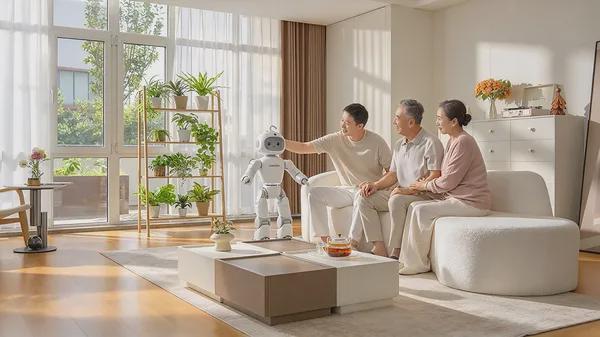
Memory is also the trust risk. Long-term recording of family members’ habits, voices and routines only works if buyers trust where the data lives; the release says privacy is built in and describes a localized design, but discloses no architecture, retention policy, encryption detail, or cloud vs local split. Navigation around real homes — stairs, thresholds, pets, clutter — is claimed generally, with no test data on mapping or fall recovery. Until these answers arrive, the skeptical reading is that Mobo is a well-backed concept entering pre-orders ahead of specifications.
Who it’s for
Early-adopter families curious about a social humanoid, Chinese consumers attending the Wuhu summit for hands-on demos, and investors watching Chery’s automotive-to-robotics pipeline. It is not yet for a practical buyer who needs a price, runtime and delivery date to make a household purchase; wait for the full spec sheet and a confirmed shipping window before judging whether Mobo belongs in the home.
Verdict
Mobo is a credible, automaker-backed attempt to move companion humanoids out of showrooms, with MoAgent’s task planning, multimodal conversation, family memory and a proven commercial deployment record behind it. Yet at pre-order day the review cannot score the things that decide a home purchase: price, battery life, size, and delivery. Fair verdict: an interesting promise worth watching, but a product that still has to publish its specifications before it earns a recommendation.
Related reads
- DOBOT LUMO: a first home-use humanoid, tested
- Luvbotics RUMI: a bipedal home robot with emotional AI
Frequently asked questions
When does the AiMOGA Mobo open pre-orders and ship?
Global pre-orders opened around Chery’s OMODA/JAECOO user summit: the official English release dated October 17, 2026, while mirrors cite an October 21 reveal; shipping date and price are not disclosed and mass production is targeted for end of 2026 per earlier World Robot Conference coverage.
What can the Mobo humanoid do today?
The MoAgent system decomposes complex instructions, supports voice and visual conversational interaction, object recognition, autonomous navigation and obstacle avoidance across 22 degrees of freedom, and remembers each family member’s habits and preferences.
How much does the AiMOGA Mobo cost?
Price, height, weight, battery capacity, runtime and delivery date were not published in the October 17, 2026 launch materials; any circulating figure should be treated as a rumor until officially confirmed.
Sources
- Daily Dispatcher English mirror, Oct 18, 2026: https://dailydispatcher.com/news/home-companion-robot-mobo-to-debut-globally-and-open-preorders-as-aimoga-showcases-its-robot-family-at-the-2026-exeed-international-user-summit/567020
- EXEED International official site: https://www.exeedinternational.com/global/
1 thought on “AiMOGA Mobo: Chery’s First Home Humanoid Opens Pre-orders, Yet Specs and Price Stay TBD”