
Lenovo’s new 14-class ThinkBook pairs a 120Hz OLED and a 65Wh battery in a 1.06kg chassis, but the Wildcat Lake AI story and real-world endurance remain unproven at launch.
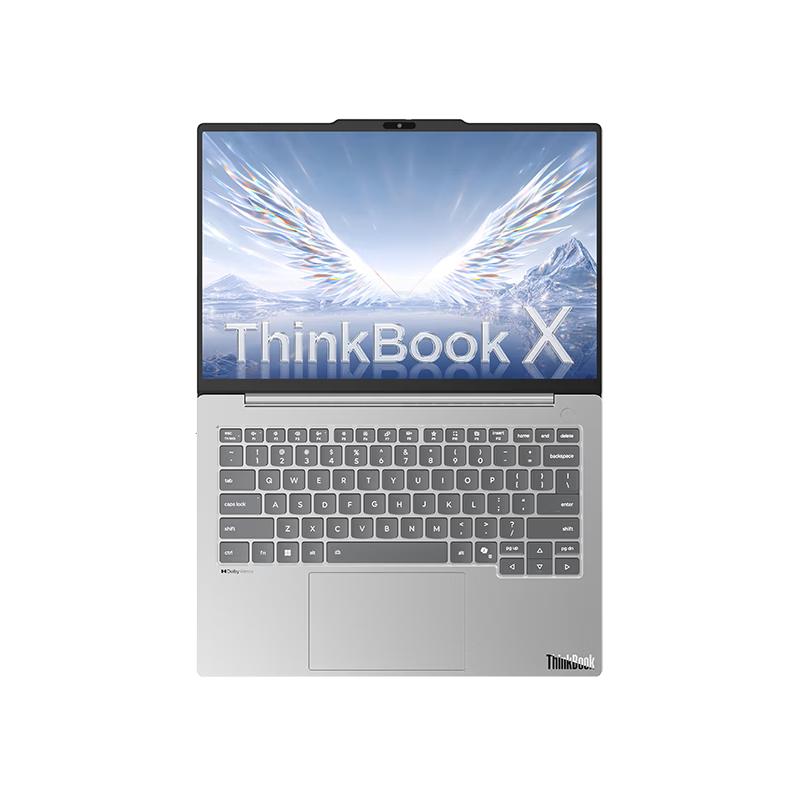
On October 18, 2026, Lenovo listed the ThinkBook X AI 2027 on Chinese e-commerce shelves, with sales scheduled to begin October 20 at 10:00. Built on Intel’s third-generation Core “Wildcat Lake” platform (internal model ThinkBook X G4 IWC), the machine aims squarely at the thin-and-light business segment: a 2880×1880 120Hz OLED, a 65Wh battery, and a claimed weight of about 1.06kg at roughly 12.9mm thick. IT之家, which broke the listing on October 18, noted that on paper it closely resembles a large-battery, OLED-equipped variant of the global ThinkBook 14x Gen 2 — an inference Lenovo has not formally confirmed. Pricing starts at ¥7,999 for the Core 5 315 / 16GB / 1TB configuration and climbs to ¥11,999 for the Core 7 350 / 32GB / 1TB build.
Product market analysis
The AI PC category has spent the last two years promising local neural processing, then mostly delivering marketing stickers. The ThinkBook X AI 2027 enters that crowded field with a familiar formula: a premium ultrabook chassis, a color-accurate OLED, and a latest-generation Intel Core platform rather than a disclosed NPU TOPS figure. Its direct competition includes Wildcat Lake rivals such as HP’s War 66 Air and OmniBook 5 14, also launching on the same platform, which makes the chassis, display, and port selection — not the AI label — the real decision factors. At ¥7,999–11,999, Lenovo positions it above mainstream thin-and-lights and below creator flagships, betting that business buyers will pay for sub-1.1kg portability and a reference-grade panel.
Specs at a glance
| Item | Specification (per launch listing) |
|---|---|
| Processor | 3rd-gen Intel Core “Wildcat Lake”; Core 5 315 / Core 7 350 (model ThinkBook X G4 IWC) |
| Display | 2880×1880 OLED, 120Hz, 500 nits typical / 1,100 nits peak, 100% DCI-P3; exact diagonal TBD |
| Memory / storage | 16GB + 1TB (Core 5); 32GB + 1TB (Core 7) |
| Battery | 65Wh; rated runtime TBD |
| Weight / thickness | ~1.06kg; ~12.9mm |
| Wireless | Wi-Fi 7; Bluetooth 5.4 |
| Ports | 2×USB-C 20Gbps, 2×USB-A 5Gbps, HDMI 2.1 (TMDS), 3.5mm audio |
| Chassis | Precision aluminum; backlit 1.5mm-travel keyboard; glass touchpad; FHD IR face camera; fingerprint power key; Dolby Atmos |
| Colors | Star White, Galaxy Purple, Star River Blue, Starburst Green, Moon Yellow; only Star White listed at launch |
| Pricing | Core 5 315 / 16GB / 1TB ¥7,999; Core 7 350 / 32GB / 1TB ¥11,999 |
| On shelf / on sale | Listed 10/18; on sale 10/20 10:00 |
| NPU TOPS / graphics | TBD (not disclosed) |

What works
The display is the headline. A 2880×1880 resolution, 120Hz refresh, 100% DCI-P3 color, 500-nit typical brightness, and a 1,100-nit peak are rare in a ~1kg business chassis. For anyone reviewing photos, drafting presentations, or watching reference-grade media, this panel sits closer to a creator machine than a typical office laptop.
Portability and battery are sensibly matched. Fitting a 65Wh cell inside a 1.06kg, 12.9mm aluminum body avoids the common thin-and-light trade-off where featherweight builds shrink the battery to chase grams. Wi-Fi 7 and Bluetooth 5.4 round out a modern wireless stack.
No port anxiety. Two USB-C at 20Gbps sit alongside two USB-A at 5Gbps, plus HDMI 2.1 (TMDS) and a 3.5mm jack — a welcome inclusion for hotel projectors, legacy peripherals, and wired docking without a dongle bag.
Business security and comfort. An FHD IR face camera for Windows Hello, a fingerprint-integrated power key, a 1.5mm-travel backlit keyboard, a large glass touchpad, and Dolby Atmos audio cover the daily enterprise checklist.
What doesn’t
The “AI” case is thin and undocumented. Lenovo does not publish an NPU TOPS rating, a supported local-model list, or dedicated AI benchmarks for either SKU. Calling this an AI PC currently rests on the Wildcat Lake platform name alone; whether the Core 5 315 and Core 7 350 deliver meaningful local inference is TBD.
Performance and endurance are unknown. No integrated graphics detail, sustained-load cooling data, or rated battery-life figure accompanied the listing. OLED panels also raise familiar questions about burn-in and real-world peak brightness that only hands-on testing can answer.
Premium pricing, narrow launch choice. ¥7,999–11,999 is a significant window, and the ¥4,000 gap between SKUs buys mostly memory (16→32GB) rather than a proven performance leap. Five colors are advertised, but only Star White is available at launch; HDMI 2.1 here is TMDS, not full bandwidth.
Positioning ambiguity. IT之家’s observation that the machine likely mirrors a global ThinkBook 14x Gen 2 large-battery OLED variant raises the usual rebadge question: global availability, local warranty, and future driver support are all TBD for buyers outside China.

Who it’s for
The ThinkBook X AI 2027 suits mobile professionals who carry a laptop all day, prioritize a vibrant OLED for documents and media, and want full legacy ports without adapters. It is a reasonable fit for business users who value Windows Hello and privacy-focused biometrics. It is not aimed at gamers, local-LLM enthusiasts chasing a TOPS number, or buyers who need verified battery life before purchase.
Verdict
This is a convincing hardware spec sheet — sub-1.1kg, 65Wh, 120Hz 2.8K OLED, complete ports — wrapped in a cautious AI branding effort. The chassis and panel are reasons to wait for it, but the undisclosed NPU capability, unproven battery life, and ¥7,999 entry price mean the smart move is to compare it hands-on with other Wildcat Lake ultrabooks after the October 20 sale rather than pre-order on the AI label alone.
Related reads
Frequently asked questions
What chip powers the ThinkBook X AI 2027?
Third-generation Intel Core Wildcat Lake, offered as Core 5 315 (16GB/1TB) or Core 7 350 (32GB/1TB); the NPU TOPS rating is not disclosed at launch.
What are the prices and on-sale date?
Core 5/16GB/1TB is Y7,999 and Core 7/32GB/1TB is Y11,999; listed October 18 with sales opening October 20, 2026 at 10:00.
Is it built for local AI models?
The 1.06kg chassis, 65Wh battery, Wi-Fi 7 and OLED suit productivity, but local-model capability, NPU TOPS and sustained cooling performance are TBD pending review units.
Sources
- Lenovo China official site: https://www.lenovo.com.cn/
1 thought on “Lenovo ThinkBook X AI 2027: A 1.06kg OLED Ultrabook — Yet Is Wildcat Lake Enough?”