
At its analyst and investor day on October 6, Agility Robotics pulled the cover off Digit 5, the fifth generation of the humanoid that has spent more warehouse hours in commercial service than any Western competitor. The headline claims are audacious: a 20-hour effective workday, enabled by battery swaps that take about nine minutes, and a deployment target of up to 25 customer facilities by the end of 2027. Here is what those numbers actually mean, and where the gaps are.
Reading the 20-Hour Claim Correctly
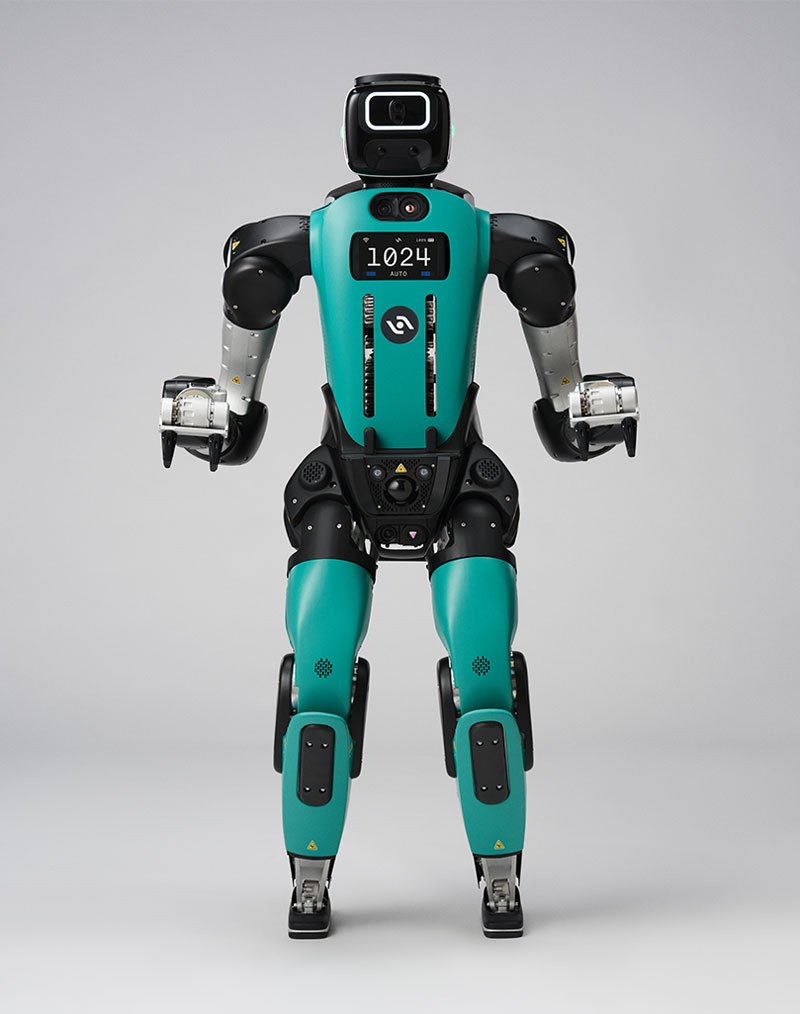
The 20-hour figure is not battery life — it is duty-cycle engineering. Digit 5 works a shift, dock-swaps its battery in roughly nine minutes, and returns to work. Agility’s materials reference a Nyobolt partnership for the fast-charge chemistry, and the architectural choice is deliberate: instead of chasing a mythical 20-hour cell, the robot treats energy the way forklift fleets do, with rapid swaps and a charging station in the corner.
This is a more honest framing than most humanoid announcements, and it addresses the actual bottleneck. Warehouse operators do not care about peak battery capacity; they care about the percentage of a paid shift during which the robot is doing work. A robot that runs eight hours and then needs three hours to charge has a duty cycle near 73%. A robot that runs four hours and swaps in nine minutes has a duty cycle near 96%. The second robot is worth substantially more per dollar even if its battery is smaller.

What’s New in Generation Five
Digit 5’s generational gains focus on the unglamorous skills that determine commercial viability: machine tending, tote induction and moving parts between cells with minimal per-site re-engineering. Agility’s roadmap materials describe machine-tending capability expanding from Q3 2026 through 2027, with EU and UK market access expected in 2027 conditional on CE marking and other regulatory approvals.
The framing of the company’s disclosures is notably careful. Commitments are described as customer-facility targets, with explicit caveats that actual results could differ materially. That is the language of a public-company filing, and it is a refreshing contrast to the demo-reel bravado that dominates the category. It also means buyers should read the targets as targets, not as bookings.
The Form Factor Is the Strategy
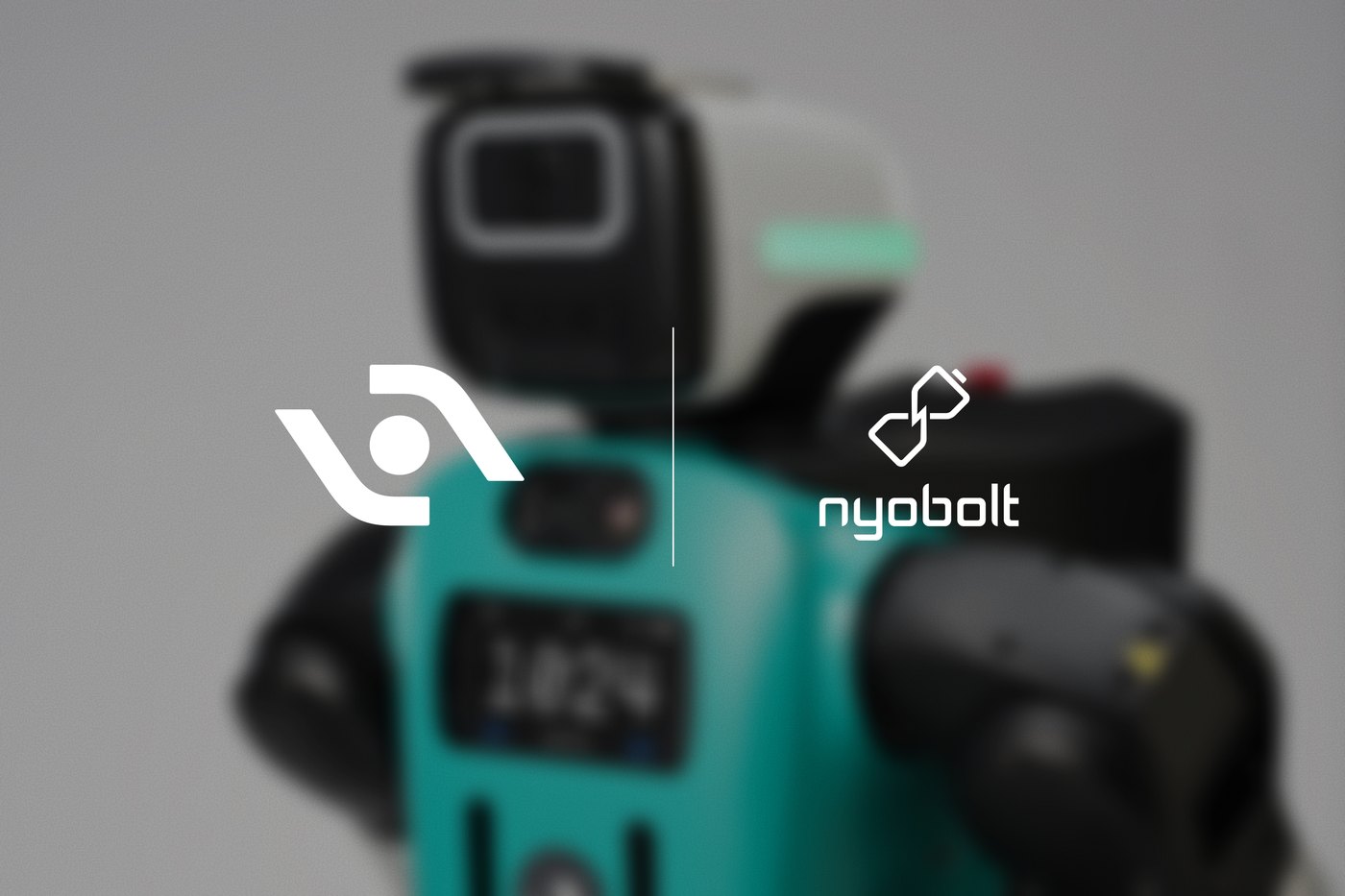
Digit is a backwards-knee biped with a torso, arms and a head that is mostly sensor. It is designed to fit warehouse footprints built for humans — aisles, rack heights, tote dimensions — rather than requiring operators to rebuild their facilities. That “drop-in” thesis is the core of Agility’s commercial argument, and it is the opposite of the approach taken by vendors selling humanoids as general-purpose platforms that will eventually do everything.
The trade-off is that Digit is not a generalist. It will not cook, clean a kitchen or assemble a phone. It will move totes, tend machines and do repetitive material handling in spaces designed for people. For the buyers Agility is targeting — third-party logistics providers, e-commerce fulfilment centres, automotive parts warehouses — that specificity is a feature, not a limitation.
The Competitive Frame
Digit 5 enters a market where Chinese vendors now ship the majority of the world’s humanoids at lower unit costs, and where Figure and Tesla command more capital and more media attention. Agility’s counter-position is boring and potentially decisive: Digit is the Western humanoid with the longest record of paid deployment, including GXO Logistics and Amazon pilots, a form factor designed for existing racking, and a service organisation built around uptime guarantees rather than viral video.
In logistics, uptime is the product. A humanoid that works 95% of the time and is supported by a technician network is worth more than one that works brilliantly 70% of the time and requires a specialist to fly in. Agility has invested heavily in that unglamorous layer, and it is the part of the business competitors consistently underestimate.
The Risks
Fast-swap infrastructure adds a fixed cost per site that slower-charging competitors avoid. A charging and swap station is capital equipment, and it needs floor space, power and maintenance — all of which reduce the robot’s effective payback period. The 2027 EU timeline depends on regulatory marks outside Agility’s control, and CE certification for a 1.7-metre machine operating near people is not a formality.
Meanwhile, Chinese rivals are iterating on duty-cycle claims of their own, and their unit costs remain substantially lower. Agility’s answer — that total cost of ownership, not sticker price, determines value — is correct in principle but harder to sell to a procurement committee facing a 40% price gap.
There is also the human question. Warehouse unions in several markets have pushed back on automation, and the political climate around job displacement has tightened. Agility’s messaging emphasizes filling vacancies rather than replacing workers, which is both true and tactically necessary.
What Would Change Our Mind
Three data points would move this from a promising roadmap to a proven product. First, published uptime figures from existing customer sites, including intervention rate per shift. Second, the actual cost of the swap station and its footprint relative to a conventional charging dock. Third, evidence that the 25-facility target is contractual rather than aspirational.
None of those are unreasonable requests, and a company with genuine deployments should be able to answer them. The fact that Agility’s filings are already written in the cautious register of a public company suggests the answers exist.
Verdict
Rating: 4/5 — Digit 5 is the least speculative flagship humanoid announcement of the season: real deployment history, a duty-cycle innovation that addresses the actual bottleneck in warehouse robotics, and roadmap language written by people who expect to be audited. If Agility hits even half its 2027 facility target, Digit 5 will have done more to normalise humanoids in logistics than a hundred viral demos.
The caveats are real: 2027 is a long time, Chinese cost pressure isn’t waiting, and the swap-station economics need scrutiny. But among Western humanoid programmes, Agility is the one whose next earnings report will tell you more than its next video.
The Warehouse Maths of a Humanoid Shift
Third-party logistics is one of the thinnest-margin industries in the developed economy, and its automation decisions are made with a calculator rather than a roadmap. A tote-moving shift in a fulfilment centre costs a specific amount per hour in wages, benefits, training, turnover and supervision. A humanoid has to beat that number including capital, service, energy, floor space and downtime, and it has to beat it in a facility where the alternative — a conveyor or an AMR — often costs a fraction as much.
That last point is the uncomfortable truth about humanoids in warehouses: most tote movement does not require a biped. Fixed conveyors and wheeled autonomous mobile robots are cheaper, faster and already proven. A humanoid earns its place only where the workflow is genuinely unstructured — picking from mixed shelving, tending machines designed for human reach, handling bags and irregular objects that defeat suction grippers. Digit’s commercial pitch has shifted toward exactly those tasks, which is the right call and a narrower market than the headline numbers suggest.
Within that niche, the case is strong. Machine tending in particular is a persistent labour problem: the work is repetitive, the shifts are long, and finding people willing to do it is getting harder in every developed economy. A biped that can load and unload a machine, move parts between cells and reach into spaces designed for human arms does not compete with a conveyor. It competes with an unfilled vacancy, which is a much better fight.
Why Bipedal, Honestly
Every humanoid debate eventually arrives at the question of why the robot needs legs. A wheeled base is cheaper, more stable, more energy-efficient and simpler to certify. The answer is not aesthetic; it is about the built environment. Factories, warehouses and hospitals were designed around humans: stairs, thresholds, narrow aisles, mezzanines, lifts, cable runs at ankle height. A wheeled platform needs the environment modified. A bipedal one does not, and not modifying the environment is worth an enormous amount of money in retrofit costs.
That argument holds only while the robot can navigate human spaces reliably at human speeds, and this is where every humanoid programme is judged. Digit’s known deployment history — including material handling pilots with logistics operators — is the strongest evidence any Western vendor can offer that the navigation and safety stack works in production conditions rather than in a lab.
The cost of legs is real: energy per metre travelled, complexity of balance control, and certification difficulty for a machine that can fall over near people. Agility’s answer to the energy problem is the battery swap, and its answer to the certification problem is a cautious market rollout with EU entry staged behind regulatory approval. Both are the responses of a company that has shipped hardware rather than one that has made videos.
What Uptime Really Costs
Industrial buyers evaluate robots on total cost of ownership, and humanoids are exceptionally sensitive to it because their utilisation is low by design. A robot working one eight-hour shift at ninety-five percent uptime delivers 7.6 productive hours a day. The same robot at eighty percent delivers 6.4 — a fifteen percent loss of output for the same capital cost, which turns a two-year payback into a three-year one and kills deals in procurement committees.
Getting from eighty to ninety-five percent is not a hardware problem, it is an operations problem: spare parts within a day, technicians within a shift, remote diagnostics that catch a failing joint before it stops a line. Agility has invested in that layer deliberately, and it is the part of the business that is hardest for a competitor to copy quickly, because it is built from accumulated field experience rather than engineering talent.
The swap station has to be included in that arithmetic. A battery swap dock is capital equipment, it needs floor space near the work area, and it needs power. If the dock costs as much as five percent of the robot’s price and occupies a square metre of a facility where space is rented by the pallet position, the economics shift. Agility’s public materials have not put numbers on the dock, and buyers should insist on them.
The Chinese Cost Gap
The most cited objection to Western humanoid programmes is price. Chinese vendors now ship capable humanoids at a fraction of Western unit costs, backed by a component supply chain that Western manufacturers buy from anyway. For a buyer comparing quotes, that gap is hard to argue past, and no amount of uptime philosophy survives a procurement committee that has two prices in front of it.
The counterargument is that the gap narrows once service, integration and downtime are included, and that a robot with no local support network has an effective uptime that is much worse than its datasheet. That argument is true and it is also self-interested, which is why the resolution will come from reference customers rather than from press releases. Buyers should ask for two names they can call, and call them.
Europe in 2027: The Regulatory Hurdle
CE marking for a 1.7-metre machine that operates in shared human spaces is not paperwork. Machinery regulation, electromagnetic compatibility, and increasingly the AI Act’s requirements for systems making decisions in physical environments all apply. Each requires documentation, testing and, in some cases, redesign. A 2027 European entry is plausible if certification starts now and nothing goes wrong, which is the least reliable kind of forecast.
Buyers in Europe should treat the timeline as directional and negotiate contracts that do not depend on it. Buyers in North America face a lighter but not trivial regime, with OSHA-adjacent safety expectations and insurer requirements that vary by site.
The Honest Summary
Digit 5 is the most commercially grounded humanoid announcement of the season, and the reason is unglamorous: the claims are about duty cycles and deployment counts rather than capabilities and demos. That is what a company sounds like when its customers are logistics operators instead of investors. Whether it wins depends on the arithmetic at each site, and the arithmetic favours humanoids only in the unstructured niches where nothing else works — which is, fortunately for Agility, exactly where the labour shortages are worst.
The Machine-Tending Case in Detail
Machine tending is the least discussed and most promising application for a humanoid, and it is worth walking through why. In a typical machining cell, an operator loads a blank into a fixture, closes a door, waits for a cycle, removes the finished part, inspects it, and repeats. The work is repetitive, the environment is hot and noisy, and the labour market for it is thin everywhere. A conveyor cannot do it because the fixture is designed for hands and the parts arrive in bins.
A humanoid can do it because the cell was designed around a human. That is the whole argument for legs and arms in one sentence, and it holds in thousands of small and mid-size factories that will never be rebuilt for automation. The technical requirements are modest: positioning accuracy in the low millimetres, a gripper that can handle the part geometry, and enough force control to close a door without breaking it.
What makes this market attractive is the economics per unit. A machine-tending operator in a developed economy costs a fully loaded salary, and the position is often on a night shift with a premium. A robot that works the night shift with one swap and needs a technician visit once a fortnight pays for itself in well under two years at a plausible price. That arithmetic is far more forgiving than the warehouse floor, where conveyors and AMRs set the cost floor.
The Certification Question
A humanoid walking through a shared space raises a question no datasheet answers: who is liable when it injures someone? Industrial robots have an established answer, built on physical separation and light curtains, and collaborative robots have a newer answer built on force limits and speed-and-separation monitoring. A mobile bipedal humanoid breaks both frameworks because it moves through space that people occupy.
The regulatory response emerging in Europe and elsewhere is function-based rather than platform-based: what the robot does, in what environment, under whose supervision. That favours vendors who can document their safety architecture precisely, and it penalises vendors selling capability without specification. Buyers should expect safety documentation to become a competitive differentiator rather than a compliance checkbox.
Why the Western Position Is Better Than It Looks
The headline comparison — Chinese vendors shipping multiples more units at lower prices — is accurate and incomplete. The Western position rests on three assets that unit counts do not capture: enterprise relationships with the large logistics and manufacturing customers who set the standards; safety and compliance expertise that becomes more valuable as regulation tightens; and service organisations that can respond inside a shift rather than inside a fortnight.
Those assets matter most in the accounts that matter most. A global logistics operator will not deploy a humanoid it cannot support in every market it operates in, whatever the unit price. That is Agility’s real moat, and it is the reason the company’s roadmap is measured in customer facilities rather than in units.
How to Read the Next Two Years
Four signals will tell you whether Digit 5 is a turning point or a footnote. A disclosed uptime figure per site. A referenceable customer willing to say publicly how many units are running. Machine-tending deployments in the announced window rather than warehouse-only work. And a European entry that actually happens in 2027 rather than slipping. Each is measurable, and each will be visible in public statements.
Until then, the correct posture is interested scepticism: the engineering is credible, the strategy is sound, and the arithmetic depends entirely on operational performance in facilities that nobody has visited with a camera crew. That is where humanoids will be judged, and it is the least cinematic place in the industry.