
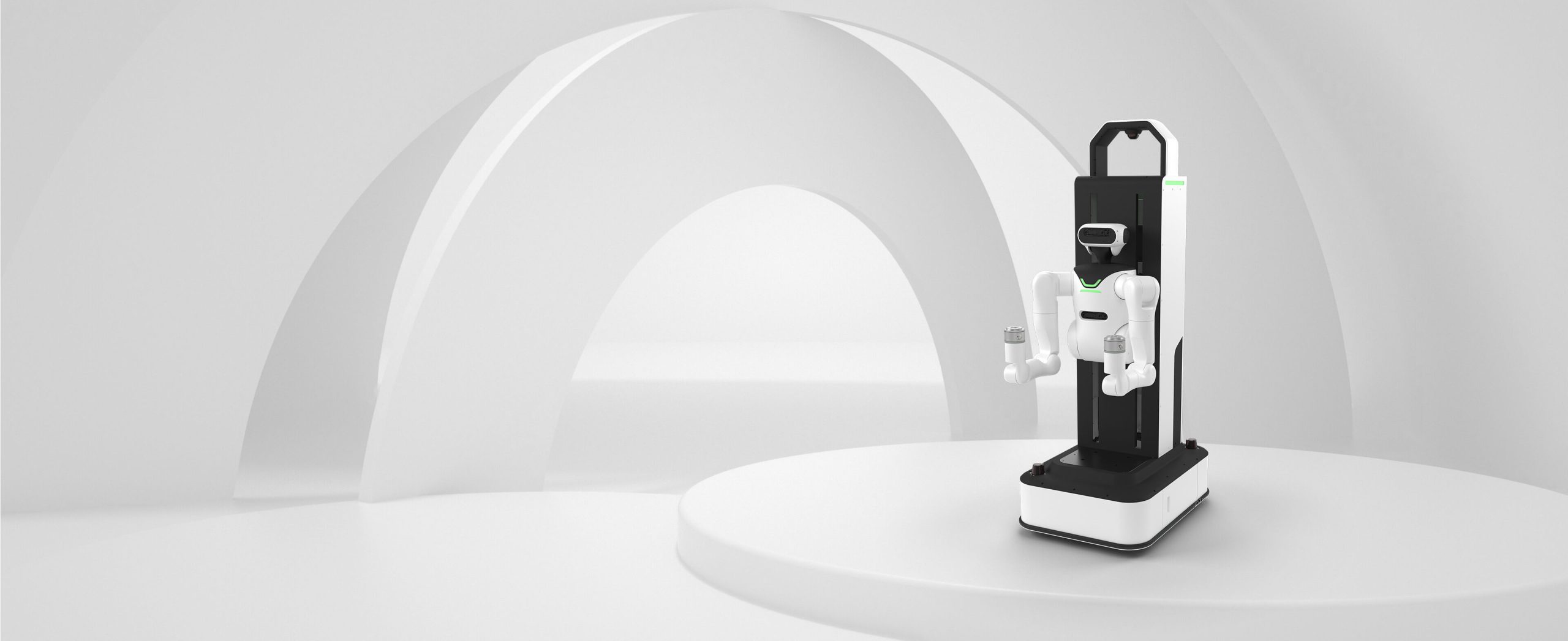
When JAKA Robotics rolled the Kargo50 onto its booth at the China International Industry Fair in Shanghai on October 12, the script was familiar. A 22-degree-of-freedom wheeled humanoid, 250 kilograms of white-and-black plastic and steel, paused in front of a bank of plastic totes, extended two slender arms, and lifted one. A company executive stepped to a microphone. The robot, she said, had achieved “L4-level comprehensive intelligence,” was already in “batch production” at a leading Chinese auto-parts plant, and compressed the cycle time of its predecessor, the Kargo10, from 105 seconds per tote to something the audience was meant to read as industrial-grade.
What the brochure does not say is that the arms lifting those totes are rated for five kilograms each. The machine that carries 250 kilograms of itself around a factory floor can barely lift a full suitcase. The “L4” autonomy grade has no independent certification, no published failure mode, and no standard that a European or North American plant engineer can audit against. And the “batch production” deployment, as this article will argue, is almost certainly a single lighthouse line at a single partner — Huayu Electric, the EV-motor subsidiary of SAIC — rather than a replicable product sale.
JAKA is a credible company. It is the world’s number-two collaborative-robot maker by unit volume, behind Universal Robots, with roughly 11% global share, and it has spent a decade building the arm and controller stack that the Kargo50 sits on. That credibility is precisely why the gap between the Kargo50’s marketing and its engineering matters: buyers who trust JAKA’s cobot brand may over-trust the humanoid.
This is not a review of whether the Kargo50 is impressive. It is. It is a warning about what a 250-kilogram, 1,600-watt, wheeled “humanoid” is actually good for on a real factory floor, and why most companies considering one in 2027 would be better served by a half-price autonomous cart, a fixed industrial arm, or — in the awkward cases — a human with a forklift license.
Product market analysis: the humanoid warehouse is a bubble wrapped in a narrative
The industrial humanoid category is, as of late 2026, the most aggressively hyped segment in robotics. Chinese players — UBTECH, Zhiyuan, Fourier, Agibot, Unitree, Galbot, and JAKA itself — have collectively raised more than $4 billion in the last 24 months on the promise that a general-purpose robot will walk into existing factories, reuse existing workflows, and displace the slow, inflexible automation that fixed cells cannot reach. Tesla’s Optimus program, Figure AI, Agility Digit, and 1X have pushed the same narrative in the West, and their fundraising valuations now read as if the robots are already shipping at scale.
They are not. Independent industry trackers estimate that fewer than 1,500 humanoid-class robots have been deployed in actual production environments worldwide through the end of 2026, the vast majority on short pilot contracts at OEM-friendly customers. Most are bipedal machines that spend more time being filmed than working. Most earn no production-line revenue. Most require a dedicated engineer, a babysitter, or both to run an eight-hour shift.
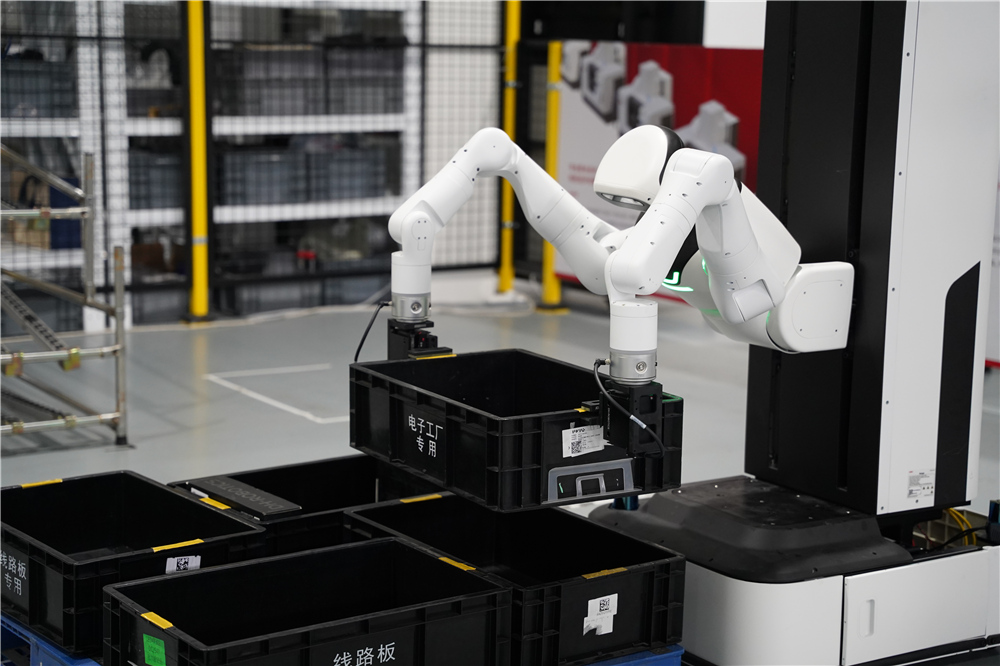
JAKA’s choice of a wheeled chassis rather than a bipedal one is, on the surface, a concession to reality. A wheeled platform is faster, more energy-efficient, easier to localize, and far safer around people than a 1.7-meter biped that might topple. It is also, inarguably, less “humanoid” in the way that viral video demands. The Kargo50 has no legs at all; it has a square mobile base, a rising column, and two arms bolted to a torso. Calling it a humanoid is a marketing choice, not an engineering one. What it actually is, is a mobile manipulator — a wheeled AMR with a couple of collaborative arms on top — wearing a friendly head unit that nods.
That distinction matters because the market is currently pricing wheeled humanoids as if they were bipedal generalists. A wheeled manipulator cannot climb stairs, cannot traverse uneven outdoor yards, cannot step over cables, cannot navigate a factory aisle with a five-centimeter threshold, and cannot enter the passenger seat of a pickup truck to drive to the next work cell. It also cannot fall over and break itself, which is the single largest reliability advantage it has over bipedal rivals. Investors and procurement teams should be underwriting the wheeled manipulator they are actually buying, not the legged vision they are being sold.
The “L4” label deserves special scrutiny. In automotive autonomy, L4 is a defined SAE standard requiring the vehicle to operate without human intervention within an operational design domain. In robotics, there is no equivalent standard. JAKA uses “L4 comprehensive intelligence” to mean, by its own product brief, that the robot can navigate, perceive totes, plan grasps, and transfer between stations without line reprogramming — a capability that any decent mobile-manipulator integrator could assemble from off-the-shelf ROS components two years ago. It is not a safety rating. It is not a reliability rating. It is a vocabulary borrowed from self-driving cars because it sounds impressive, and it should be treated as such in any procurement document.
The capital-markets backdrop makes the hype worse. Chinese humanoid startups priced in the first half of 2026 have carried forward revenue multiples that assume 10,000-unit annual shipments by 2028; the actual order books visible to industry trackers suggest something closer to a few hundred units across the entire category. JAKA itself is not a pure-play humanoid, which is part of its attraction, but its public narrative increasingly leans on the Kargo line to re-rate the stock from “cobot vendor” to “embodied AI platform.” That re-rating dynamic is precisely the kind that leads vendors to under-deliver on deployment evidence while over-promising on autonomy grades. A procurement team that underwrites a five-year contract into that environment is implicitly underwriting the vendor’s ability to keep its stock story intact long enough to honor the warranty.
Competitor product analysis: the four machines a buyer will actually compare
A plant engineer shopping for a heavy-payload mobile manipulator in 2027 will not compare the Kargo50 against Tesla Optimus. She will compare it against four machines that already exist, and each exposes a different weakness in JAKA’s pitch.
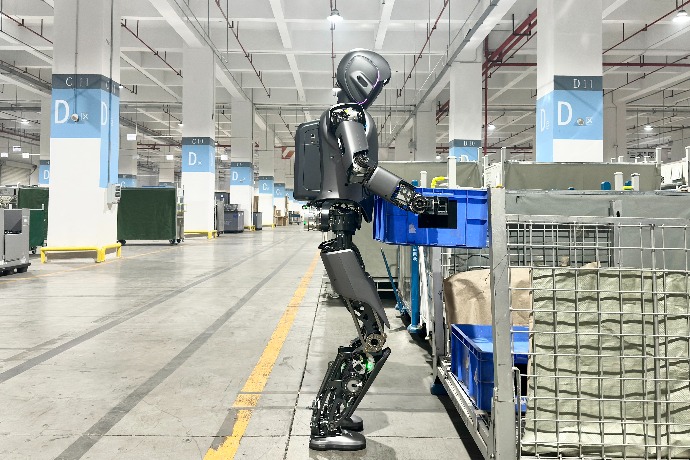
UBTECH Walker S / S1. UBTECH’s bipedal Walker S — and the newer Walker S1, which the company says has been trained on BYD’s and NIO’s assembly lines — is the closest Chinese analogue to the Kargo50 in industrial positioning. Where the Kargo50 is wheeled, the Walker S is genuinely legged, roughly 1.7 meters tall, and weighs around 65 kilograms. It has been filmed performing door-opening, bolt-running, and in-line inspection tasks, and UBTECH has signed agreements with several EV makers for small pilot fleets. The Walker S’s advantage is optical: it looks like a humanoid, it walks, and it can traverse factory stairs and raised work platforms that a wheeled base cannot. Its disadvantage is that walking is still slow, energetically expensive, and unreliable on oil-slicked concrete. JAKA’s wheeled bet is, ironically, the more honest engineering choice for flat-floor tote transport. But UBTECH can claim a breadth of tasks — stairs, platforms, irregular floor layouts — that the Kargo50 structurally cannot. A buyer choosing between them is choosing between reliability of motion (JAKA) and reach of terrain (UBTECH), not between a generalist and a specialist.
Zhiyuan Expedition A2 (远征A2). The Zhiyuan robot, founded by Tsinghua University’s Zh Jun, is the Chinese humanoid category’s favorite demo machine. The A2 is a bipedal humanoid, silver-and-black, with a roughly humanoid hand and the ability to wave, pour tea, and perform on-stage routines. Zhiyuan has announced partnerships with Midea and other appliance makers for pilot assembly tasks, and its valuation has climbed accordingly. The A2’s weakness, for an industrial buyer, is that its public footprint is overwhelmingly stage demo and science-gala footage. It has not, to date, published a multi-shift deployment in a real production line with cycle-time data, throughput, or uptime. Compared with the Kargo50, which at least has a named customer and a named task (EV-motor housing transfer at Huayu Electric), the A2 is a technology showpiece. JAKA wins on deployment evidence here. But the comparison cuts the other way on capability: the A2 has two real legs, real hands, and a vertical reach that a column-mounted wheeled base cannot match, which means a factory with heterogeneous terrain will keep looking at Zhiyuan regardless of what JAKA ships.
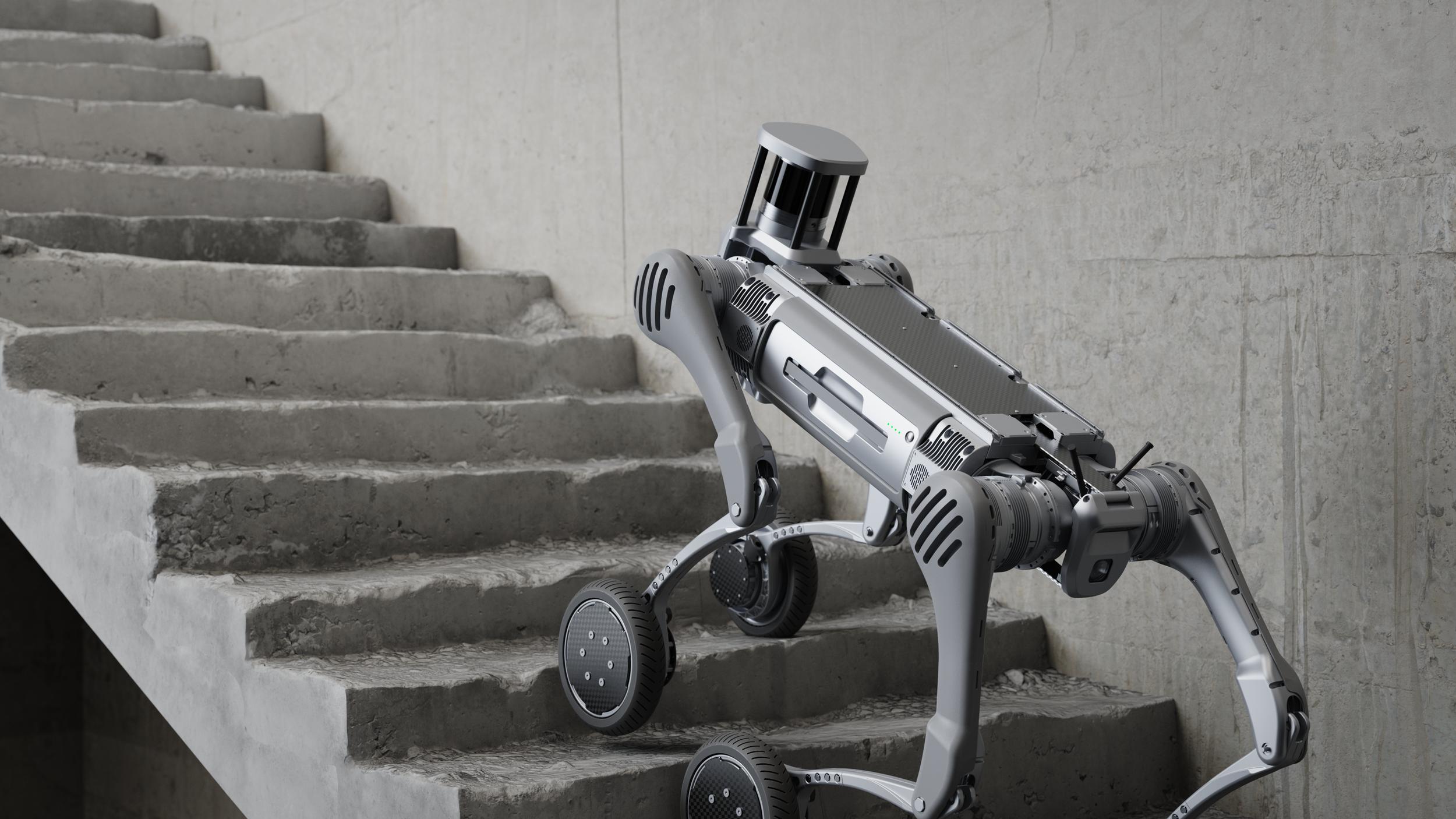
Unitree B2-W. The B2-W is Unitree’s wheel-legged quadruped — not a humanoid at all, but a four-wheeled robot dog with an optional arm, sold globally for roughly $78,000. It climbs stairs, crouches, slips under obstacles, and has been deployed in substation inspection, pipeline patrol, and light industrial pickup tasks. The B2-W is not a tote carrier; its arm payload is modest, and its form factor is wrong for box-handling. But it matters because it is the cheapest credible “mobile robot that can go where an AGV cannot” on the market. A plant manager who sees the Kargo50 pitch and asks, “why not just buy a dozen Unitree quadrupeds and call it a day?” has a real point: for inspection, light manipulation, and terrain-agnostic patrol, the B2-W is a tenth of the price and a tenth of the integration burden. JAKA’s answer — that the Kargo50 carries 5 kilograms per arm at a continuous 1,600 watts, and that the B2-W does not — is correct, but it is an argument for a narrow niche, not for the broad “generalist” positioning the marketing suggests.
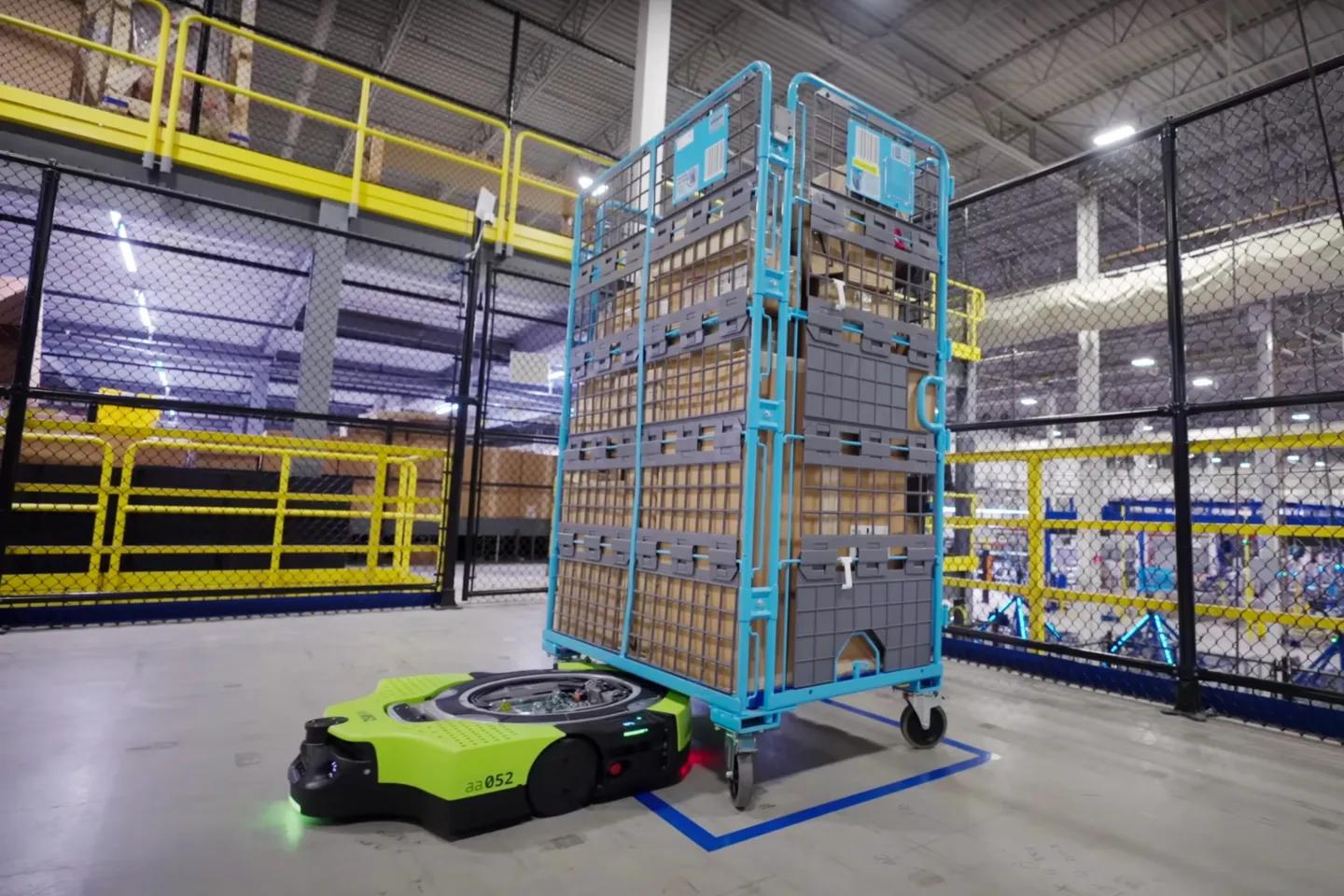
Amazon Proteus. Proteus is the elephant in the room. Amazon deployed its first fully autonomous flat mobile robot, Proteus, in 2022 and has since rolled the platform out to more than 25 U.S. fulfillment centers, moving the green autonomous carts under the drive-away shelving units that used to require human forklift operators. Proteus has no arms, no head, no humanoid pretension. It is a low, rounded, self-driving pallet mover that costs Amazon internal engineering an order of magnitude less than a Kargo50 per unit, by any reasonable outside estimate. It moves the vast majority of the tote-transport task that JAKA is pitching, without any manipulator at all, because Amazon redesigned its workflows around the robot rather than forcing the robot to fit a human workflow. The lesson for any buyer is uncomfortable: the highest-throughput tote transport in the world is being done by a dumb autonomous cart, not by a humanoid. If JAKA’s target customer is a factory that cannot afford a workflow redesign — a small auto-parts shop with existing racks and existing human aisles — then the wheeled manipulator is a reasonable compromise. If the customer is a scale player that can redesign the workflow, Proteus shows that the robot arm is unnecessary.
Pros and cons: where the Kargo50 genuinely helps, and where it will hurt
The Kargo50 does real things well. JAKA’s decade of cobot engineering shows in the arm stack: the 22-DOF configuration, the 0–780 mm waist lift, the native graph-based programming, and the claimed 80,000-hour mean time between failures inherited from JAKA’s collaborative-robot line are credible numbers for an industrial machine. The wheeled base is stable, predictable, and easy to localize with lidar. The company’s claim that the Kargo10’s single-tote cycle time dropped to roughly 30 seconds — down from 105 — is plausible if the task is a well-defined pickup-and-drop between two fixed stations. For a flat-floor, structured, multi-line tote-transfer job at a single partner plant, the Kargo50 is a defensible product.
But the cons are where a buyer should pause, and they are specific.
The name is a fiction. A machine called “Kargo50” implies a 50-kilogram cargo capability. The published arm payload is five kilograms per arm. Even granting dual-arm cooperative lifting, that is ten kilograms of actual graspable load — less than the load a healthy human line worker carries on a standard tote, and far less than the 25-kilogram single-arm figure JAKA’s own promotional articles have quoted in Chinese. A buyer who signs a purchase order expecting “50” gets a robot that lifts a laptop bag. JAKA should either rename the machine or publish the dual-arm cooperative payload with a clear, audited number. Until then, the model name is a misrepresentation.
250 kilograms on a factory floor is a safety event waiting to happen. A 250-kilogram mobile base moving at 1.5 meters per second carries roughly 280 joules of kinetic energy. A human hip, femur, or ankle cannot absorb that. The Kargo50 has lidar, safety scanners, and speed-limited zones, but so did every AMR that has ever rolled into a forklift because a safety scanner was occluded by a stack of empty totes. ISO 13849 and ISO 3691-4 require physical separation, speed and separation monitoring, or collaborative operation for mobile industrial robots. A 250-kilogram machine in an aisle shared with 60-kilogram human assemblers is a speed-and-separation problem, not a collaboration problem. Expect factories that buy the Kargo50 to end up painting yellow safety lanes around it, installing physical barriers, or restricting it to fenced night shifts — at which point the “flexibility” rationale collapses and the robot becomes an expensive fixed conveyor.
“Batch production at a leading auto-parts factory” is a lighthouse, not a product. The CIIF stage showed a Huayu Electric EV-motor housing transfer demo. Huayu Electric is a SAIC subsidiary with the engineering bandwidth to dedicate integrators, perception engineers, and floor supervisors to a single line. That is exactly the profile of a lighthouse customer: a brand-name plant that co-develops with the vendor, absorbs integration risk, and produces a favorable press release. It is not evidence that the Kargo50 is a shrink-wrapped product a 200-person Tier-2 supplier can install in a week. Ask JAKA, or any buyer: how many units have shipped, to how many customers, for how long, at what realized uptime, and with what integrator headcount per shift. The answers will likely be fewer, smaller, shorter, and heavier than the marketing implies.
The wheeled chassis draws a hard line under every doorframe, stair, and oil slick. Wheelbase clearance on the Kargo50’s base appears to be on the order of a few centimeters. Factory floors have thresholds at doorways, expansion joints, cable trays, oil and coolant puddles, irregular pallets, and the occasional dropped bolt. A wheeled platform stops at every one of them. A bipedal Walker S might step over; a Unitree B2-W will walk around. The Kargo50 will stop and call for help. That makes it a great fit for a clean, flat, modern automotive assembly bay — and a poor fit for the cast-house, machine-shop stamping, or outdoor logistics yard where the hard, heavy lifting actually happens.
The “L4 autonomy” collapses under software maintenance. Perception models drift. Tote dimensions change. A new SKU arrives. A stack of boxes is off-center. Each of these is, today, a phone call to a JAKA field engineer, not a self-recovery event. The total cost of ownership of a mobile manipulator is dominated by the software integration and the on-call engineering hours, not by the box price. A buyer who models ROI on hardware alone will find that a 250-kilogram robot with a 1,600-watt arm stack needs a full-time integrator at every site, and that the integrator’s salary erases the labor savings the robot was supposed to deliver.
The embodied-robot valuation bubble is a risk to the vendor itself. JAKA is a public-company-adjacent entity trading in a market where Chinese humanoid startups are being valued on pilot deployments and IPO narratives, not on cumulative robot sales. If the category corrects — and the history of robotics bubbles, from personal robots to home care, suggests it will — vendors merge, cut support, or abandon hardware. A buyer signing a five-year maintenance contract with a humanoid startup in 2027 is, in part, underwriting the startup’s survival. JAKA’s cobot business gives it more runway than pure-play humanoid rivals, but it is not immune.
Consumer and buyer considerations: who should not buy this, and how to do the math
For a plant manager, operations director, or supply-chain VP considering the Kargo50 — or any of its rivals — in 2027, the honest advice starts with who should walk away.
Do not buy it if your floor is not flat and clean. If your plant has stairs, thresholds, oil, irregular paving, or outdoor yards, a wheeled platform is the wrong base. Buy a legged machine, buy an AMR with a better suspension, or — most often — buy a forklift. Do not buy a 250-kilogram humanoid and then discover it cannot clear a five-centimeter doorway sill.
Do not buy it if the payload is near the ceiling. Five kilograms per arm is a tote of electronics, a small motor housing, or a box of fasteners. It is not an engine block, a transmission case, a battery tray, or a pallet. If your real task routinely involves loads above ten kilograms, the Kargo50 will not do the job, and no amount of software will make it so. Compare the Kargo50 against a traditional six-axis industrial arm on a linear track, which will lift 50–200 kilograms for a fraction of the price.
Do not buy it if you cannot staff an integrator. A mobile manipulator is a software project that happens to have wheels. If your factory does not employ, or cannot contract, someone who understands ROS, camera calibration, grasp planning, and fleet integration, the Kargo50 will sit in a corner and accumulate dust. Budget for at least one full-time integrator per robot site in year one, and a fraction of a head in years two through five. When that cost goes into the spreadsheet, the payback period most sales decks promise collapses from two years to four or five.
Do not buy it for safety. A 250-kilogram machine in a shared aisle is a safety liability, not a safety win. Require your vendor to produce a full ISO 3691-4 risk assessment, a PLd/Cat 3 functional safety architecture, and a written speed-and-separation plan. If the vendor cannot produce those documents on request, walk away. Insurance carriers and OSHA-equivalent regulators in China, the EU, and the U.S. are only beginning to write rules for mobile manipulators; the early adopters will be the ones who write the incident reports.
Do compare it against the boring alternative. The honest ROI comparison is not Kargo50 vs. Walker S. It is Kargo50 vs. a 50,000-dollar autonomous cart plus a fixed collaborative arm, or Kargo50 vs. a human with a pallet jack working a night shift. In structured, high-volume, repeatable tote transport — the Amazon Proteus problem — the boring cart wins on throughput, cost, and reliability. In unstructured, low-volume, mixed-SKU tasks, a human with a tablet wins on flexibility. The Kargo50 occupies the narrow middle: mid-volume, structured enough to perceive, varied enough to require a manipulator, and clean enough to be safe. That middle is real, but it is smaller than the marketing deck suggests.
A concrete illustration helps. Assume a Kargo50 lands at roughly $80,000 to $120,000 per unit, once vision integration, grippers, safety scanners, and site commissioning are added. A two-shift tote-transfer line at a Chinese auto-parts plant runs two human operators at roughly $15,000 to $25,000 fully loaded per operator per year — call it $40,000 in annual labor. The robot replaces, optimistically, one operator-equivalent of flexible task time, not two. Payback on hardware alone is three years. But add a 0.3 full-time integrator at $30,000 a year, add planned gripper and battery swaps at $8,000 a year, add the engineering hours lost when a new SKU breaks perception, and the payback stretches to four or five. Now compare that to a $40,000 AMR that does the same transport without any arm at all, because the line was redesigned to drop totes into a roller. The arithmetic rarely comes out the way the trade-show pitch promises.
Do not buy it without a pilot gate. Any serious vendor should offer a six-to-eight-week pilot at the customer’s own site, on the customer’s own SKUs, measured against baseline human throughput and uptime, with a written option to return. If the pilot fails on three of the five shift days — and early mobile-manipulator pilots routinely fail on perception edge cases, not on hardware — the customer should walk away. Vendors that refuse pilot gates, or that price pilots at list price, are selling a story, not a product.
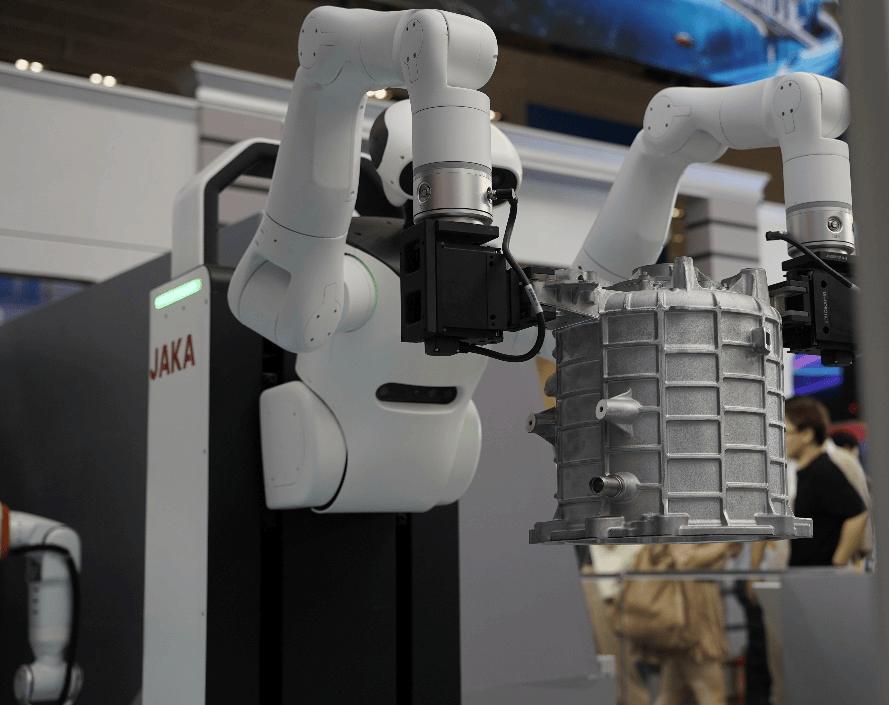
JAKA deserves credit for building the most engineer-forward wheeled humanoid in the Chinese market. It is not vaporware. It is a real machine, with real arms, real navigation, and a real customer. But the same Herculean engineering that makes the Kargo50 credible also makes its marketing uncomfortable. A 250-kilogram robot with five-kilogram arms, sold under a name that promises 50, is a product designed for a trade show floor before it is designed for a factory floor. The buyers who will be happy in 2028 are the ones who buy it for the narrow, flat, clean, structured tote-transfer task it actually solves, who staff the integrators it actually needs, and who refuse to call it L4 in their own procurement documents. The buyers who will be unhappy are the ones who watched the CIIF demo, took the model name at face value, and expected a generalist. The gap between those two buyers is exactly the gap between a credible product and a bubble.
Sources: JAKA Robotics product page (jaka.com/zh/productDetails/JAKA_Kargo); JAKA CIIF 2026 booth materials; Huayu Electric deployment announcement; MIR Databank collaborative-robot market share; company product briefs for UBTECH Walker S/S1, Zhiyuan Expedition A2, Unitree B2-W, and Amazon Proteus. Product photography courtesy of JAKA Robotics, UBTECH Robotics, Unitree Robotics, and Amazon.com.
Related reading: Faraday Future’s Nova Bet · LeXiang M1 Robot Integrates Tencent OpenClaw AI Agent · UBTECH U1 Humanoid Robot Review
1 thought on “The 250-Kilogram Promise: What the JAKA Kargo50 Doesn’t Show You on the Show Floor”