
Introduction
Against the backdrop of China’s deepening aging population, the core challenges of home-based elderly care have shifted beyond mere walking support to address issues such as fall risks, getting lost while outdoors, and the lack of timely responses to sudden health emergencies. As one of the fastest-to-market products in the “silver economy” hardware sector, the AI smart cane integrates posture sensors, 4G connectivity, BeiDou positioning, and on-device AI algorithms into a traditional walking stick. It is no longer just an assistive device, but a portable AI-powered health monitoring tool for the elderly. However, beneath the market buzz, issues such as hardware reliability, AI algorithm accuracy, user-friendly interfaces for the elderly, and battery longevity remain key bottlenecks hindering mass adoption. This article provides a comprehensive assessment of the domestic AI smart cane sector across five dimensions: hardware architecture, AI capabilities, product tiers, industry shortcomings, and future trends.
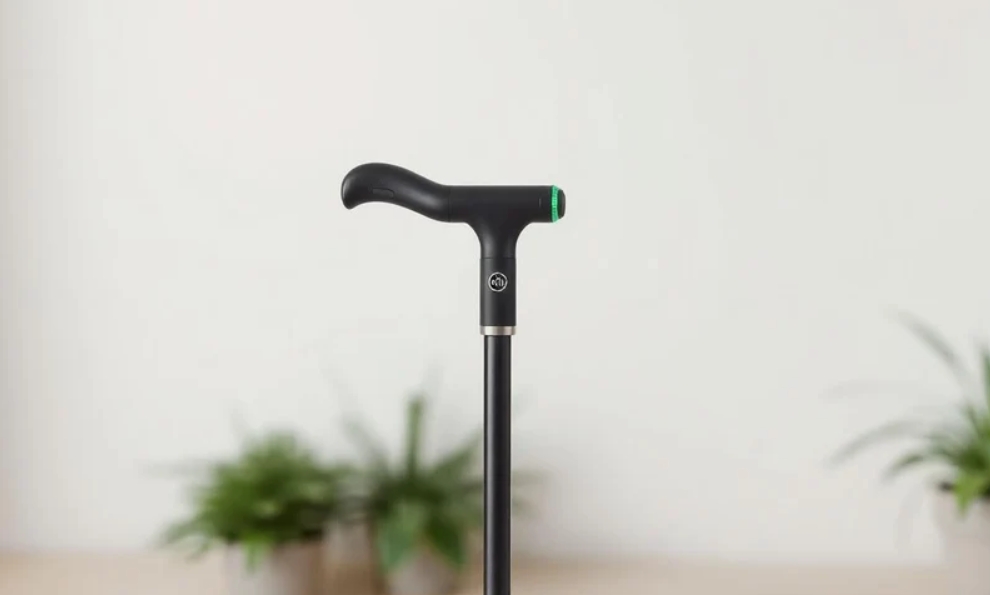
I. Product Positioning: Three Categories of AI Smart Canes with Distinct Hardware Architectures
Domestic AI smart canes can be broadly categorized into three tiers—basic security models, health monitoring models, and advanced AI-sensing models—each distinguished by clear differences in hardware configuration, AI capabilities, and price ranges.
1. Basic Security Models (Mainstream high-volume products; Price: 300–800 RMB)
The hardware typically features an aluminum alloy telescopic shaft and a four-legged anti-slip base. The handle integrates a 3-axis gyroscope, an accelerometer, a 4G Cat.1 module, multi-mode positioning (BeiDou + GPS + LBS), a dedicated red SOS button, and an LED night light; some models also include features like an FM radio, MP3 player, and voice-based time announcements.
Core AI Capability: On-device fall detection algorithm. Posture sensors collect 3-axis acceleration and angular velocity data, allowing the AI to determine if a fall has occurred. If the cane remains in a fallen position without being righted within a set period, it automatically triggers a local audio-visual alarm while simultaneously sending SMS and app alerts—along with real-time location data—to preset emergency contacts and initiating an automated call. It also supports geofencing, sending notifications to family members if the elderly user wanders outside a preset activity zone. Representative products: Anyangyun AI Smart Cane, smart elderly-care canes for telecom operators (China Mobile/China Unicom), and Laibang Technology Smart Cane.
Advantages: Controllable costs and low procurement barriers facilitate widespread adoption in community age-friendly retrofitting and government-led elderly care projects; extremely simple operation with large physical buttons, requiring no complex learning curve.
Drawbacks: AI fall detection suffers from false positives and false negatives. Actions such as bending over, sitting down, or leaning can trigger false alarms; conversely, low-impact falls—such as slowly sliding or sinking to the ground—generate weak signals that sensors may fail to capture, leading to missed detections. Health monitoring capabilities are limited, with virtually no physiological data collection.
2. Health Monitoring Models (Mid-to-High End, 800–2000 RMB)
An upgrade over basic safety hardware, these models integrate PPG optical physiological sensors into the handle to track heart rate, blood oxygen levels, step counts, and gait. They feature a built-in low-power AI SoC for on-device gait analysis, identifying instability or gait abnormalities to provide early warnings of fall risks. Data synchronizes with a cloud-based health platform to create long-term health profiles for seniors. These canes can link with other elderly-care hardware—such as smartwatches and blood pressure monitors—to form a comprehensive home health monitoring system. For instance, the smart cane included in the “Anyangyun AI Health 8-Piece Set” integrates with the system’s central data platform, allowing caregivers and family members to centrally view vital signs and mobility data.
Hardware optimization: Lightweight carbon fiber shafts reduce the physical burden of prolonged use; battery capacity is increased to extend standby time from 7 days to over 15 days; and waterproofing and dustproofing are enhanced for outdoor use in rain or snow.
AI Highlights: Evolves from “post-fall alerts” to fall risk prediction by continuously analyzing gait instability and cadence changes to assess trends in physical decline.
Drawbacks: Because the PPG sensor is located in the handle, data collection occurs only when the cane is gripped; lifting or releasing the hand interrupts monitoring, resulting in far less data continuity than wearable smartwatches. Additionally, these products lack medical-grade certification; most offer only consumer-grade monitoring and cannot serve as a basis for clinical diagnosis. ### 3. Advanced AI-Perception Models (High-end rehabilitation / Visually impaired models; priced above 2,000 RMB)
Primarily targeting rehabilitation patients and the visually impaired, these models feature significant hardware upgrades: ultrasonic sensors/LiDAR, micro-cameras, multi-axis IMUs, and on-device AI chips with higher computing power.
AI Capabilities: Environmental obstacle recognition, AI image perception, and indoor/outdoor navigation. Rehabilitation models also integrate gait-assistance algorithms to analyze walking posture and provide feedback for rehabilitation training. Some products support voice interaction in local dialects and provide voice announcements for navigation, health alerts, and medication reminders.
Drawbacks: High price and increased weight; LiDAR and cameras increase power consumption, shortening battery life. Versions for the visually impaired still face limitations in recognizing complex stairwells and low-lying obstacles; currently, they are mostly found in pilot programs and projects run by associations for the disabled, with very low penetration in the mass consumer market.
II. Evaluation of Core Hardware and AI Algorithms: Strengths and Critical Flaws
Hardware Level
- Cane Structure: Aluminum alloy is the mainstream material, while high-end models use carbon fiber to reduce weight. Telescopic adjustment and four-legged anti-slip bases are standard features. Structural safety is mature, with load-bearing capacities generally reaching 150kg, meeting daily mobility needs.
- Positioning Module: Multi-mode positioning (BeiDou + GPS + LBS) is the industry standard. Positioning accuracy in open outdoor areas is within 3 meters; however, in indoor environments, underground garages, or stairwells where GPS fails, the system relies on LBS (base station positioning), causing the margin of error to widen to 10–20 meters—which can impact rescue efficiency in emergencies.
- Sensors: IMU (Inertial Measurement Unit) sensors are central to AI-based fall detection; they are low-cost and highly mature but can only sense the cane’s orientation—they cannot directly sense the user’s body posture—representing a fundamental hardware limitation in the industry. A cane falling to the ground does not necessarily mean the elderly person has fallen; conversely, if an elderly person falls while still holding the cane, the device may fail to detect the fall event.
- Communication and Battery Life: Mainstream models use 4G Cat.1, which offers better power efficiency than traditional 4G modules, providing a standby time of 7–15 days. The primary pain point lies in the charging experience: elderly users often forget to charge the device, and once the power runs out, the positioning and alarm functions immediately cease to work.
AI Algorithm Perspective
- Mature capabilities: Posture classification algorithms demonstrate high accuracy in detecting rapid falls and falls involving hard impacts.
- Industry shortcomings:
- Persistently high false alarm rates. Actions such as sitting down, bending over to pick up an object, or laying the cane flat can trigger alarms; frequent false alarms lead to desensitization among family members, causing them to take alarm notifications less seriously.
- Weak recognition of complex fall scenarios: Patterns common among the very elderly—such as slow sliding, slumping into a seated position, or falling sideways—produce gradual acceleration signals that AI systems often fail to detect.
- Generally weak on-device AI computing power: The vast majority of products rely on event-triggered algorithms rather than true large-scale models capable of continuous learning; so-called “AI health analysis” often consists merely of cloud-based statistical processing, with limited real-time intelligent capabilities at the device level.
- Inadequate voice interaction design for the elderly: While Mandarin recognition is acceptable, dialect recognition is inconsistent, and performance in noisy environments is poor.
III. Market Landscape: Parallel Tracks of Consumer Retail and Government Procurement
The domestic AI smart cane market is primarily driven by the B-to-B (business-to-business) sector; key distribution channels include community age-friendly retrofitting projects, civil affairs initiatives, and procurement for long-term care insurance pilot programs, while C-to-C (consumer) retail accounts for a relatively small share.
- B-to-B Sector: Telecom operators, smart elderly care solution providers, and medical equipment manufacturers are the key players. These products prioritize stability, platform integration, and bulk maintenance, with core functions limited to positioning and fall alerts. Providers of comprehensive AI health hardware solutions (such as “Anyang Cloud”) incorporate smart canes into elderly care hardware packages for delivery to care facilities and home-based care programs.
- C-to-C Sector: Online retail offerings are mostly basic models marketed as gifts from children; these are price-sensitive products that often offer only simple connectivity and positioning, with scaled-back AI algorithm capabilities.
Significant industry differentiation exists: Many small and medium-sized manufacturers rely on off-the-shelf modules and standard AI algorithms, resulting in severe product homogenization. In contrast, a few leading rehabilitation robotics companies develop their own IMU-based fall prediction models and gait analysis algorithms; while these products feature higher technical barriers and superior capabilities, their high price points hinder mass adoption in the consumer market. ## IV. Key Industry Pain Points
- Hardware Limitations for AI Recognition: Since sensors are mounted on the cane rather than worn on the body, they cannot directly capture human posture; fall detection relies on the cane’s movement, a physical limitation that is difficult to circumvent. Compared to smartwatches (which are body-worn), canes inherently suffer from lower accuracy in fall detection.
- Inadequate Design for the Elderly: App interfaces are overly complex, making them difficult for seniors to use and forcing total reliance on children for backend management; screens are small and menus convoluted; many products lack features like large fonts, voice announcements, and dialect support.
- Limited Value of Health Data: Heart rate and blood oxygen monitoring via the handle is intermittent rather than continuous; most products lack medical device certification, meaning data serves only as a reference and cannot be used for clinical assessment in chronic disease management.
- Weak After-Sales and Maintenance: As low-frequency assistive devices, they lack offline repair centers; battery replacement is cumbersome; and long-term operating costs—such as SIM cards and data fees—are often overlooked by users.
- Feature Redundancy: Many products are cluttered with entertainment features like radios and MP3 players—increasing costs and power consumption—while failing to focus on the three core needs: fall warnings, location tracking, and emergency calls.
V. Future Evolution of the Sector
- Hardware Integration: AI canes will no longer exist in isolation but will function as part of a broader elderly-care hardware ecosystem. They will link with smartwatches, sleep monitors, and blood pressure cuffs to create a comprehensive closed-loop system for elderly health data (e.g., the “Anyang Cloud” AI 8-piece suite), moving beyond standalone devices.
- Algorithm Upgrades: From Post-Fall Alerts to Proactive Risk Warnings: By analyzing long-term data on gait, cadence, and posture, AI can detect declining walking stability and issue early risk alerts, shifting the approach from “alerting after an incident” to “proactive intervention.”
- Multi-Sensor Fusion: Some solutions are attempting to integrate millimeter-wave radar and human posture sensing to overcome the limitations of cane-based IMU sensors; however, cost, power consumption, and device size remain barriers to widespread adoption. 4. Medical Compliance: For models equipped with physiological monitoring capabilities, the process of obtaining Class II medical device certification is being advanced. This aims to give health data clinical relevance and open up payment channels via long-term care insurance and elderly care services.
- Lightweight Design and Low Power Consumption: As the prices of domestically produced low-power AI chips continue to drop, devices are becoming lighter and offering longer standby times, thereby reducing the burden of frequent charging for elderly users.
Conclusion
The AI-powered smart cane is a quintessential example of AI hardware designed for the elderly: it offers mature physical mobility support, while its AI-driven health monitoring capabilities are still evolving. It addresses the most significant drawback of traditional canes—the inability of seniors to call for help if they fall or get lost while out alone—though current products still suffer from issues such as AI false alarms, intermittent vital sign monitoring, and non-intuitive user interfaces.
In the short term, basic safety-focused models will remain the market mainstay, seeing continued volume growth in community- and home-based elderly care settings. In the medium to long term, success in this sector will not hinge on simply stacking features, but rather on the ability to integrate hardware sensors, on-device AI algorithms, elderly-friendly interaction designs, and elderly care service platforms. Products that merely pile on sensors or add gimmicky features will gradually be phased out; only products that deliver low false-alarm rates, long battery life, ultra-simple operation, and seamless integration with care services will succeed as viable AI health hardware.