
At the intersection of artificial intelligence and Embodied AI, humanoid robots are transitioning from precision laboratory exhibits to real-world applications. Among the many humanoid robots available, Sony Honda Mobility’s SHR E2 has emerged as a highly discussed smart hardware product, distinguished by its cross-industry DNA—centered on the concept of “human-vehicle symbiosis”—and its integration of cutting-edge AI hardware. This article provides an in-depth review of the SHR E2 across five dimensions: product background, hardware design, AI capabilities, application scenarios, and industry significance.
I. Product Background: A New Species of “Smart Hardware” Born from Cross-Industry Fusion
The SHR E2 is not a humanoid robot in the traditional sense; rather, it is a cross-industry product resulting from Sony Honda Mobility (SHM) deeply integrating humanoid robotics with smart automotive technology under the philosophy of “human-vehicle symbiosis.” As a cutting-edge smart hardware device launched by the joint venture between Sony and Honda, the E2 embodies Honda’s extensive expertise in bipedal locomotion and mechanical control, alongside Sony’s industry-leading technologies in large AI models, sensors, and consumer electronics. This fusion of mechanics, AI, and automotive technology grants it a unique cross-sector advantage in the smart hardware landscape.
II. Hardware Design: A Fusion of Precision Mechanics and Automotive-Grade Hardware
- Mechanical Structure and Locomotion Performance
The E2 inherits the DNA of Honda’s iconic bipedal robots, demonstrating robust fundamental capabilities in walking stability, balance control, and navigation across complex terrain (such as stairs). Its mechanical structure utilizes Honda’s proprietary precision joints and a multi-degree-of-freedom design, enabling fluid walking, turning, and complex limb movements—thereby achieving high-fidelity replication of human-like actions at the hardware level. - Sensors and Perception Hardware
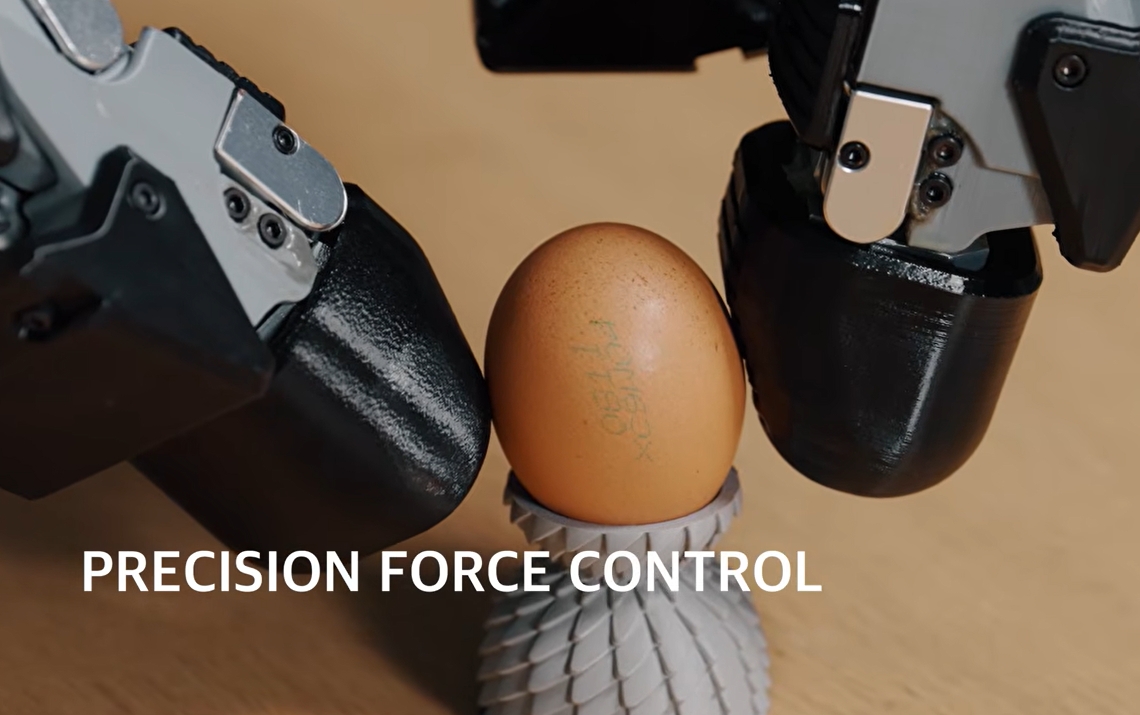
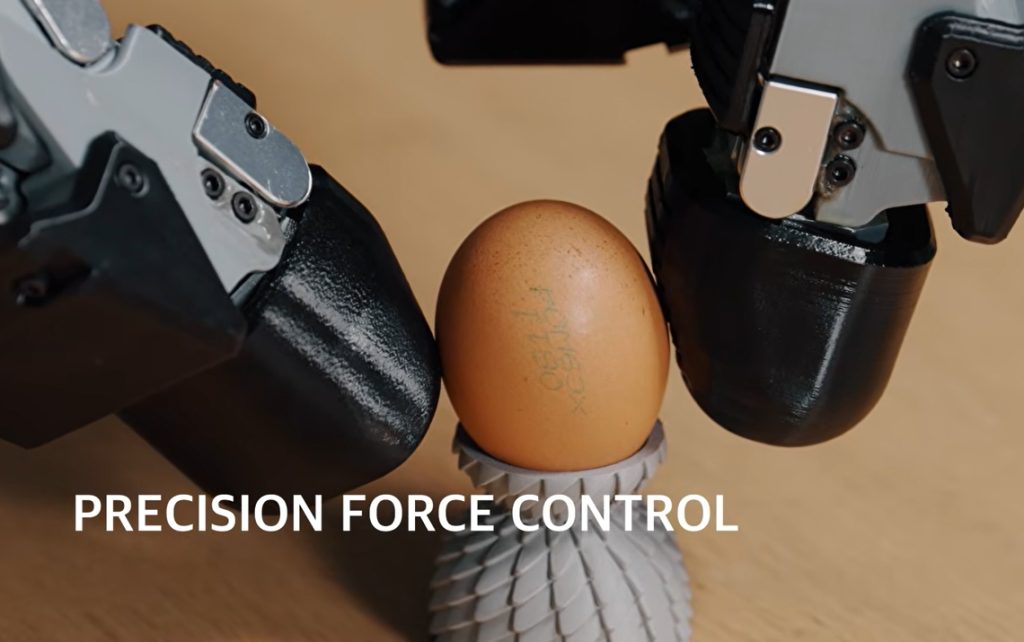
The E2 integrates an automotive-grade multimodal perception system, featuring high-precision visual cameras (for environmental awareness and visual recognition), LiDAR (for spatial modeling and obstacle avoidance), and an array of tactile and force sensors (for fine manipulation). This hardware configuration establishes a “perception-interaction-execution” closed loop, allowing the robot to “see” and “feel” the physical environment much like a human does. 3. Computing Power and Hardware Foundation
The E2 is equipped with a high-performance automotive-grade computing platform (such as the Qualcomm Snapdragon Digital Chassis). This provides the robust computing power necessary for complex AI large-model inference and real-time motion control, ensuring the robot can respond in real-time within complex, dynamic environments.
III. AI Capabilities: “Embodied AI” Driven by Large Models
- Multimodal Large Model Integration
The E2 deeply integrates Sony’s AI large models (such as conversational AI based on Azure OpenAI) with Honda’s robotics control algorithms, achieving an evolution toward “Embodied AI.” It can not only understand natural language commands but also perceive its environment through vision and touch, assess situations, and autonomously plan actions—marking a transition from “automated machines” to “autonomous machines.” - Natural Interaction and Emotional Expression
Leveraging Sony’s expertise in affective computing and speech recognition, the E2 possesses exceptional natural language interaction capabilities; it can engage in fluid two-way conversations and demonstrates a degree of emotional understanding and empathy. Furthermore, its high degree of freedom in joint movement allows for anthropomorphic actions—such as nodding, gesturing, and using sign language—enabling more natural and rich non-verbal interactions with humans.
IV. Application Scenarios: Moving from “Showrooms” to Real-World Deployment
- Smart Cockpits and Mobile Services
Serving as a platform for “human-vehicle symbiosis,” the E2 incorporates the interactive capabilities of an automotive cockpit. Future applications include interactive guidance within smart cockpits and deployment as mobile service robots, effectively merging “mobile spaces” with “robotic services.” - Substitution and Assistance in Complex Scenarios
With its powerful environmental perception and autonomous mobility, the E2 holds vast potential for applications such as inspections in hazardous environments, assistive tasks in complex industrial settings, and reception and guidance in high-end commercial venues. It demonstrates the capability of humanoid robots to replace humans in performing complex and intricate tasks. V. Review Summary: A “Proof of Concept” for Cutting-Edge Technology and a Look into the Future
The Sony Honda SHR E2 is a highly forward-looking AI-powered hardware device. It successfully integrates Honda’s precision mechanical control with Sony’s large AI models and consumer electronics hardware, marking a solid step forward in the hardware realization of “embodied AI.”
However, as a cutting-edge concept product, the E2 still faces numerous practical challenges regarding commercialization, cost control, generalization capabilities in complex scenarios, and long-term operational stability. It serves primarily as a “technology demonstrator” and an “industry bellwether,” offering valuable insights for the future development of humanoid robots—particularly regarding multimodal interaction and the integration of embodied AI within complex environments. As large AI models and robotic hardware continue to evolve, the “cross-sector intelligent hardware” paradigm represented by the E2 may well become a key direction for the future of intelligent robotics.