
Jollybaby Baby Elf AI Early Education Plush Toy Actual Testing Review

Jollybaby, which has been deeply involved in the sensory enlightenment of infants and children for many years.
A human-computer interaction method where users control devices by speaking rather than touching screens or clicking mice. In screenless AI hardware, voice interaction serves as the core interaction paradigm, combined with bone conduction technology for private calls. Compared to screen interaction, voice interaction allows users to complete operations while hands are occupied, but also faces technical challenges such as decreased recognition accuracy in noisy environments.
Jollybaby, which has been deeply involved in the sensory enlightenment of infants and children for many years.

One-sentence verdict: If a plush toy can make users feel genuinely understood through touch alone, Moxy proves that AI companionship does not need cameras or conversations to create emotional bonds—and at $96, it tests whether tactile interaction can carve out its own category.

One-sentence verdict: If you’ve been waiting for a robot roommate that can walk, act spoiled, and remember your preferences, RUMI is probably the closest thing to that vision in 2026—provided its bipedal stability survives daily wear and tear.
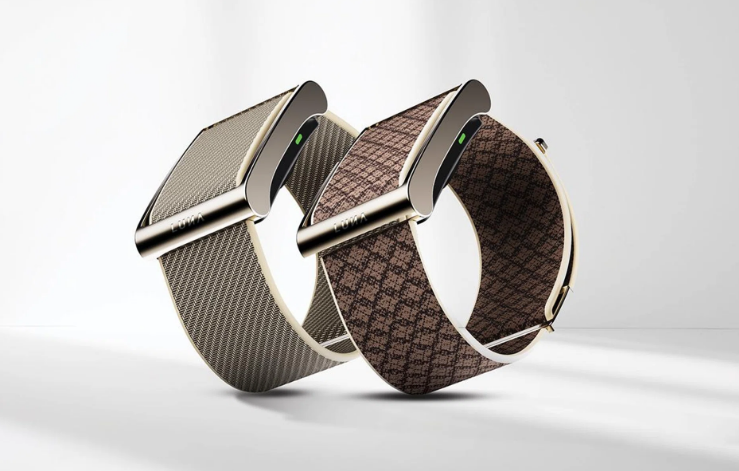
Amit Khatri co-founded Noise, the Indian wearable brand that shipped over 45 million units and became the country’s top smartwatch maker. He left to build Luna, a health intelligence company with a fundamentally different premise: most wearables show you what happened yesterday. Luna tells you what to do next.

On June 6, Jiangsu Wurun Chuanlian released a very special AI hardware product—the Fanyin AI Smart Earbuds. Not targeting consumers, not emphasizing audio quality, not competing on noise cancellation depth, but specifically designed for truck drivers: voice-driven cargo finding, order acceptance, navigation, fueling, and waybill inquiry. Simply put, it is an “ear assistant” for China’s 30 million truck drivers, letting them work by talking without looking at their phones or tapping apps while driving.
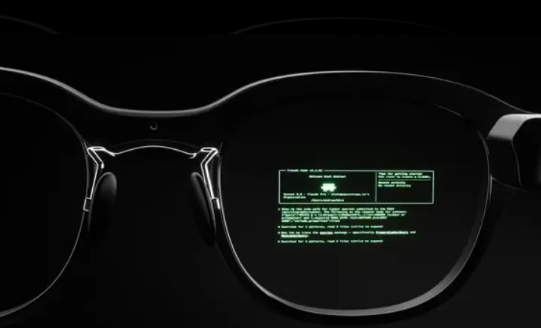
On June 3, an obscure Chinese startup named Monako dropped a bombshell: Monako Glass, the world’s first wearable Linux computer in glasses form. Not an AI assistant hanging on your glasses—the glasses themselves are a complete computer. MonoOS system, Lua application layer, Claude Code and OpenAI Codex running locally. Forty-eight grams, $399, $19 reservation.

When technology attempts to touch upon humanity’s most vulnerable emotional boundaries, controversy inevitably arises. Laihua, a Shenzhen-based AIGC company, has launched the Vinabot AI Smart Photo Frame on Kickstarter, sparking debate within both the global tech and ethical communities: is this hardware, which claims to transform still photos into conversational, expressive “digital humans,” truly an … Read more

In the high-end home appliance sector, Casarte has always been known for its “artistic home appliances.”