
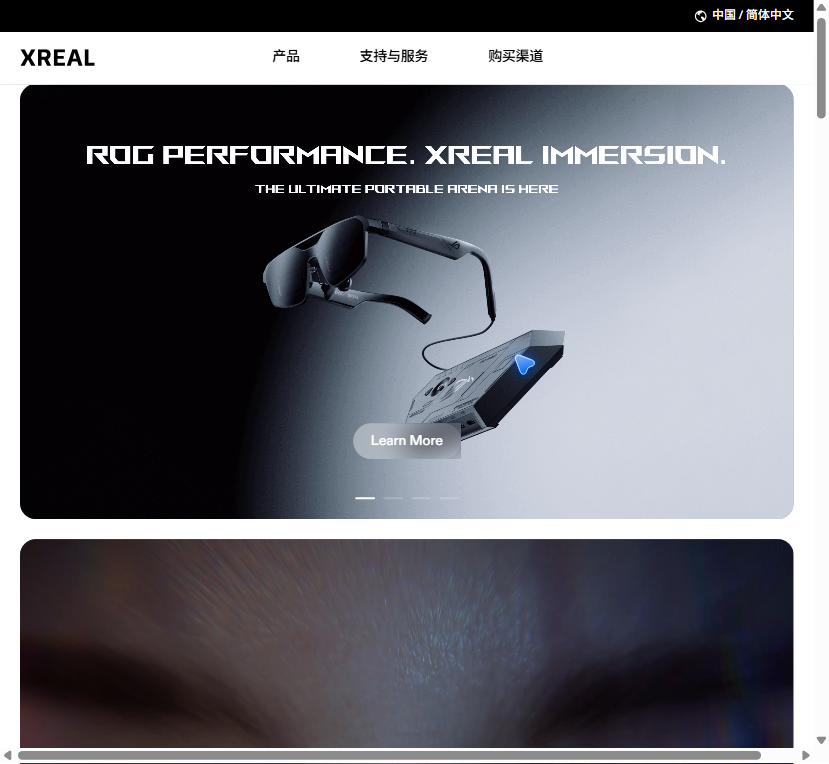
When XREAL, Google, and Qualcomm took the stage at Google I/O earlier this year, the AURA was pitched as the first true lightweight spatial-computing glasses: under 95 grams, a 70-degree field of view, Sony Micro-OLED displays, and the Snapdragon Reality Elite chip running Android XR. On October 7, 2026, XREAL opened pre-orders at $1,279 for 12GB/256GB and $1,499 for 16GB/512GB. In Japan, it carries a ¥229,800 price tag. It ships first to the US, Canada, Japan, and South Korea. On paper, the AURA is the most ambitious consumer XR glasses ever made. In practice, it carries a stack of compromises that make the price tag hard to justify.
The Weaknesses
1. It is not actually glasses — it is glasses plus a puck. The 95-gram weight refers only to the glasses. All compute, the battery, the Snapdragon chip, Android XR, and Gemini live in a separate puck clipped to your belt. That is not hands-free AR; it is a corded headset with the computer moved to your hip. For $1,500, the design feels unfinished.
2. The display specs are good, not great, for the price. Each eye gets 1920×1200 Sony Micro-OLED. It is sharp, but it is a resolution we have seen in $400-$600 XR glasses for two years. The 70-degree FOV is respectable but not immersive. Compare to a tethered VR headset like the Pimax Crystal Pro at 110 degrees, and the spatial computing claim feels like marketing.
3. There is no camera for photos or video. The Ray-Ban Meta Gen 2 at $379 ships with a 12MP camera for photos and 1080p video. The AURA has cameras, but they are dedicated to hand tracking and spatial mapping. There is no consumer-facing photo/video capture. You are paying $1,279 for a display-only device.
4. The ecosystem is brand new and thin. Android XR is Google first-generation spatial OS. The number of apps designed for the 70-degree form factor is, at launch, essentially zero. Buying into a v1.0 XR ecosystem at $1,500 is an early-adopter tax.
5. Battery life is unconfirmed and likely short. The puck suggests a modest cell. Expect 2-4 hours of real use. The AURA will not last a full workday without charging.
6. Fit is narrow and prescription support is unclear. Only two sizes: medium (60-66mm PD) and large (66-72mm). No official prescription program is published. Glasses wearers are asked to commit $1,500 without a clear path to corrected vision.
7. Open-ear audio is a privacy problem. Open-ear Bose speakers mean everyone within a meter can hear your movies, calls, and Gemini responses. No headphone jack, no bone conduction, no sealed earbuds included.
Competitor Analysis
The Ray-Ban Meta Gen 2 ($379-$499) wins on price, social acceptance, and camera. It looks like ordinary sunglasses, has a 12MP camera, 4 hours of battery, and Meta AI. It does not have a display, but for $1,279 less, it is a device you can actually wear in public. The AURA monopoly on augmented screens is a weakness, not a strength, at this price.
The VITURE Pro 2 ($299) is a tethered personal screen at one-fifth the cost: 1080p per eye, 50-degree FOV, 1600 nits, 63 grams, 120Hz. It does not run Android XR, but it plugs into a phone or laptop and gives you a 146-inch virtual screen. The AURA premium buys you spatial computing and Gemini, but those are the least mature features at launch.
Pros and Cons
Pros:
- Under 95g glasses form factor is genuinely lightweight for XR
- Sony Micro-OLED panels are bright and sharp
- Most complete spatial-computing stack available (Android XR + Gemini)
- 3ms motion-to-photon latency and 6DoF hand tracking
- Can double as a portable external display when tethered
Cons:
- Tethered puck design means two devices and a cable
- $1,279-$1,499 is extremely high for a first-gen XR product
- No photo/video camera at this price
- 1920×1200 per eye and 70 FOV are mid-range specs
- Android XR app ecosystem is essentially empty at launch
- Open-ear audio leaks sound in public
- Only two sizes, unclear prescription support
- Restricted to four launch countries
Buyer Guide
- Do not pre-order on impulse. v1.0 of any XR product has bugs. Wait for independent reviews.
- Ask if you need standalone compute. If you just want a big screen for movies, a $299 VITURE Pro 2 serves you better.
- Check your country. If not in US, Canada, Japan, or Korea, you cannot buy at launch.
- Prescription wearers: wait. No published lens program. Do not buy $1,500 glasses you cannot see through.
Conclusion
The XREAL AURA is an impressive engineering milestone, but engineering ambition does not equal consumer value. At $1,279-$1,499 with a tethered puck, no camera, a thin app ecosystem, and a four-country launch, it is a developer-grade early-adopter device. It is for XR enthusiasts and Android XR developers. It is not for mainstream buyers who want to watch movies on a plane or take photos. Wait for the second generation.