
It was just past eleven on a Tuesday night in a mid-rise residential compound in Hangzhou when Wang Lina’s phone buzzed once, gently, against the nightstand. The screen woke to a small rectangular thumbnail: a delivery rider, helmet under one arm, squinting up at the camera above her front door, holding a brown cardboard parcel roughly the size of a shoe box. A second later, a second ping confirmed what the thumbnail already suggested — someone had pressed the doorbell.
Wang did not get up. She fumbled for the phone on the pillow beside her, unlocked the Mijia app, and tapped the intercom icon. The rider’s voice came through the speaker, slightly tinny, asking whether she could sign for a perishable item her mother had shipped from the coastal city of Ningbo three hundred kilometers away. Wang considered the thumbnail, watched the rider shift his weight from foot to foot, and then, rather than walk the thirty paces to the entryway, she tapped a second button that let her speak to him in a deliberately lowered, gender-neutralised voice Xiaomi markets as “voice-changing intercom.” She told him to leave the package in the custom parcel locker her building’s property manager had installed last winter. He nodded, set the box down, and rode away. The camera on the door automatically snapped one last still frame as he turned the corner of the hallway and pushed it up to her phone.
Wang, 34, works in product marketing for a Chinese cloud-services company. Her husband, a civil engineer, was on a business trip three hundred kilometres away in Nanjing. The parcel her mother had shipped contained a thermos of homemade soup, vacuum-sealed dumplings, and a small bag of osmanthus candy, the kind of thing that cannot safely be left on a street-facing doorstep but that, on a secure building floor, can wait until morning. It is exactly this mundane, slightly domestic scenario — the late-night delivery, the elderly relative, the working couple who cannot always be home — that Xiaomi has designed the 5C Cat’s Eye Edition around. A decade ago, Wang would have had to get out of bed, pad to the door in her socks, squint through the peephole, and decide whether she trusted the stranger on the landing enough to unbolt three separate locks. Tonight she did it from under a duvet, in roughly ten seconds, without waking her six-year-old daughter in the next room.
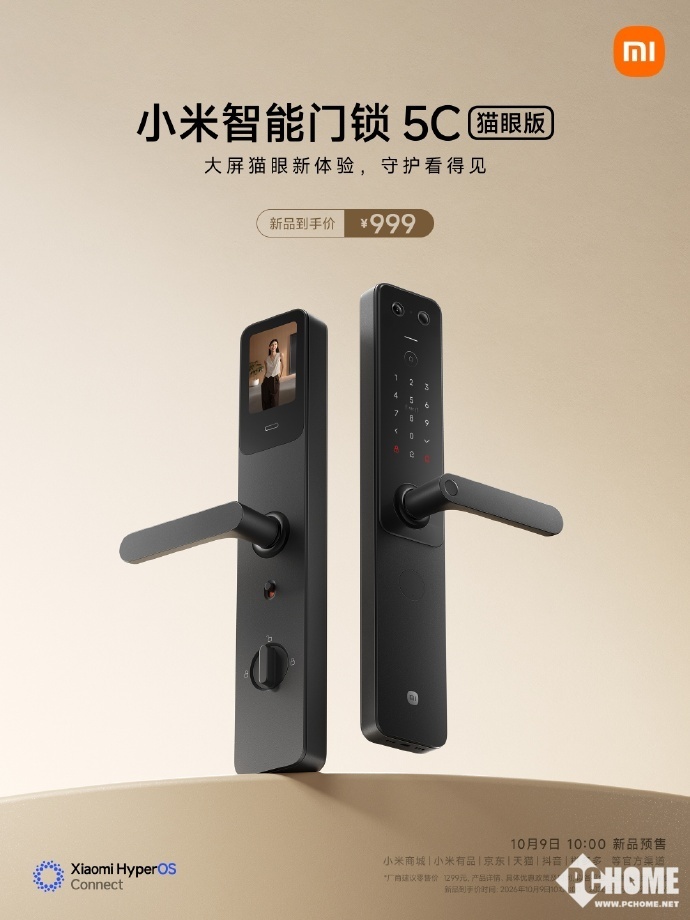
That nine-second transaction — a doorbell, a thumbnail on a phone, a disguised voice, a remote lock release that she chose not to use — is, in essence, the value proposition of the Xiaomi Smart Door Lock 5C Cat’s Eye Edition, which opened for pre-order on October 11, 2026 at an effective street price of ¥999 (about $139) after Chinese national trade-in subsidies. The lock, which pairs a handled deadbolt with a 160-degree wide-angle camera and a 3.5-inch display on the inside panel, is the latest salvo in a quiet but accelerating price war that has, over the past two years, dragged once-premium smart-security hardware down to the price of a mid-range coffee grinder. It is also, in its own modest way, a small case study in how Xiaomi and its sprawling Mijia ecosystem are trying to convert the last piece of hardware in the average Chinese home that has resisted digitisation: the door lock on the front door.
The launch itself was uncharacteristically low-key for a company that has, in recent years, become famous for staging Beijing press keynotes with giant holographic deer and 200-screen product walls. The 5C Cat’s Eye Edition was announced in a ninety-second clip on Xiaomi’s official Douyin channel, described in a handful of paragraphs on the company’s Youpin e-commerce store, and listed as a “new arrival” on JD.com. There was no second stage, no celebrity endorsement, no comparison wall with rival products. The reason, according to three people familiar with the launch planning who declined to be named discussing internal product strategy, is that Xiaomi treats this category as a volume game rather than a halo game. The locks that get the big keynotes are the face-recognition flagships that sell in the low tens of thousands; the locks that pay the bills are the sub-¥1,500 models that sell by the hundreds of thousands through livestream channels and developer bundles. The 5C Cat’s Eye Edition belongs firmly in the second category.
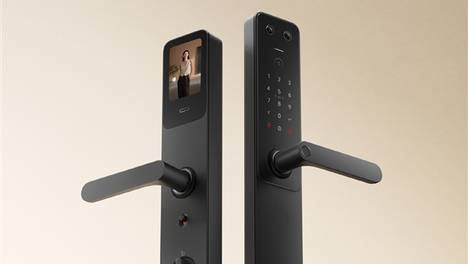
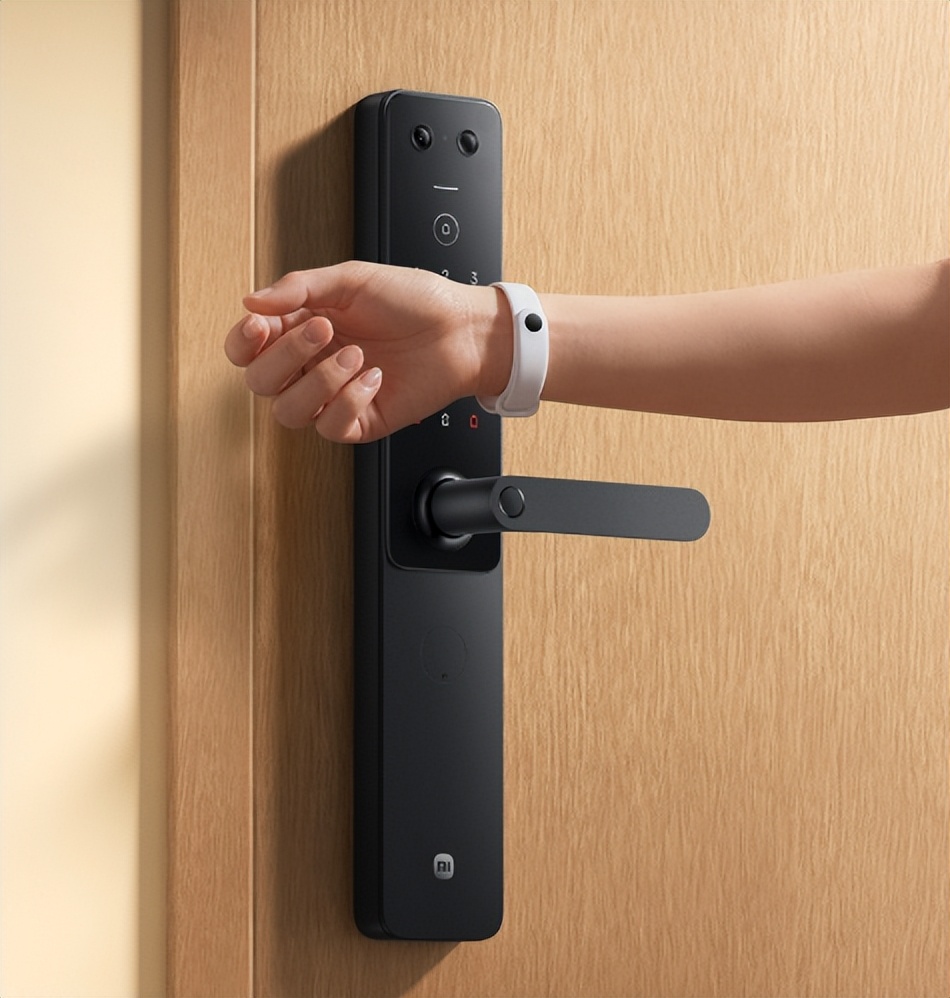
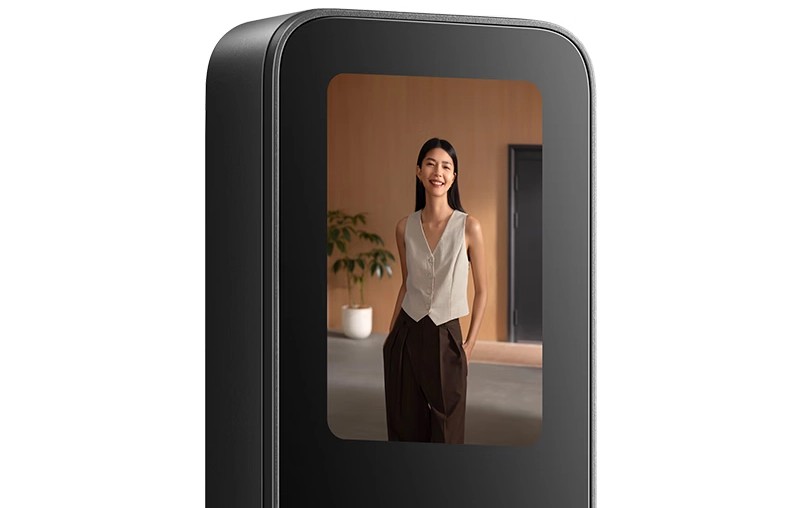
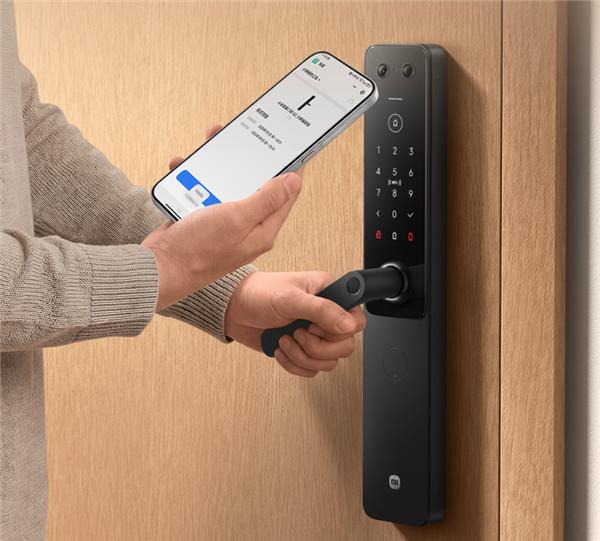
The 5C Cat’s Eye Edition is, on paper, a straightforward iteration of the standard Xiaomi Smart Door Lock 5C that the company released earlier in the year. Xiaomi kept the matte-black magnesium-aluminium alloy body, the backlit capacitive keypad, the semiconductor fingerprint reader embedded in the lever, and the mechanical keyhole hidden behind a flap at the bottom of the exterior panel. What changed is up top: the exterior panel now carries a one-megapixel camera and a doorbell button, while the interior panel gained a small 3.5-inch colour screen that lights up automatically whenever someone rings the bell. The lock body itself was upgraded to what Xiaomi calls its “self-ejecting” second-generation mechanism, which means the deadbolt throws itself the moment the door closes, eliminating the old habit of reaching back to flip a handle upward. The company advertises eleven different ways to open the thing — fingerprint, passcode, a one-time visitor code, the WeChat mini-program, the Mijia app over Bluetooth, remote unlock over Wi-Fi through a hub, an NFC card, an NFC-enabled Xiaomi phone, an NFC-enabled Xiaomi watch, an NFC-enabled Xiaomi wristband, and a physical key. It is, in other words, a conventional smart lock with a camera bolted on and a screen inside, sold at a price point that, until about eighteen months ago, would not have bought you a camera at all.
Product Market Analysis
To understand why Xiaomi is bothering to put a camera and a screen on a ¥999 lock, it helps to look at the shape of the Chinese smart-door-lock market, which is one of the stranger and more quietly lucrative segments in global consumer hardware. According to industry compilers tracking the mainland market, shipments of smart door locks in China reached roughly 23.5 million units in 2025, up from about 20.5 million the year before, and smart locks now account for roughly 32.4 per cent of the total door-lock unit sales in the country, up from 28.7 per cent in 2024. The broader Chinese lock-and-hardware category is itself worth about ¥180 billion (roughly $25 billion) and has grown at a compound annual rate of just under six per cent over the last half-decade. Western analysts looking at global smart-lock markets tend to fixate on the United States, where installed base is small but unit economics are attractive because consumers pay two to three hundred dollars for retrofit deadbolts made by Yale, Schlage, August and a handful of others. China is, by contrast, a vastly larger volume market with a much lower average selling price, and it is growing not because homeowners are voluntarily retrofitting their doors but because residential developers are bundling smart locks into new apartments as a matter of course.
That developer-bundling dynamic matters because it has trained an entire generation of Chinese homebuyers — particularly people in tier-one and tier-two cities who bought first apartments after 2020 — to expect a smart lock as standard. Where a US homebuyer might see a smart lock as a discretionary upgrade tacked on during a kitchen renovation, a Chinese homebuyer who takes delivery of a newly built unit in Hangzhou, Chengdu or Wuhan is more likely to treat a smart lock as a plumbing fixture: present whether she asked for it or not. Xiaomi, which for years watched as hardware startups like Lockin and Dachuan bundled themselves into developer pipelines, has been fighting back with a two-pronged strategy. It sells its cheaper locks directly to consumers through its own Mi Stores, its e-commerce flagship on JD.com, and the Douyin livestream channels where Chinese hardware launches now routinely clock tens of millions of views in a single afternoon. And it has spent the last two years steadily widening the price ladder at the bottom of the market, where the volume actually is.
The 5C Cat’s Eye Edition sits roughly at the bottom of that ladder. Below it are the no-frills 5C and a handful of rebranded OEM locks sold under the Mijia nameplate that can be had for under ¥800, often during promotional weekends. Above it sit the Xiaomi Face Recognition locks and the Xiaomi Smart Door Lock Pro series, which add 3D structured-light facial recognition and larger interior displays and typically retail between ¥1,500 and ¥3,000. The cat-eye edition slots into the ¥1,000 neighbourhood, a price point that Xiaomi has spent the last six quarters methodically redefining. Three years ago, a ¥1,000 smart lock in China meant a fingerprint reader, a keypad, and very little else — no camera, no interior screen, no cloud connectivity. Today, the same price buys a camera, a screen, two separate battery systems, AI motion detection, and an app.
The trend pushing the industry upmarket in features even as prices sag is what Chinese reviewers have started calling the “cat-eye and big-screen” upgrade cycle. A traditional peephole — the fisheye lens drilled into a door — has been a fixture in Chinese apartment buildings for decades, particularly in cities where ground-floor units are a vanishing rarity and most residents live on floors above the third floor. A camera replaces that peephole with something wider, sharper, and capable of recording. A screen on the inside panel replaces the awkward act of bending to look through the peephole with something that a grandparent in reading glasses or a small child reaching on tiptoe can actually use. The most aggressive deployments of this idea have come not from Xiaomi but from mid-market specialists like Lockin and Kaadas, who over the last two years have shipped locks with four-, five-, and even six-inch interior screens and wide-angle 2K cameras. Xiaomi’s 3.5-inch screen on the 5C Cat’s Eye is, by the standards of that trend, modest. It is, however, the first time a screen this large has appeared on a lock priced below ¥1,000, which is the commercial point.
The other piece of context that an outside reader needs is the Mijia ecosystem itself. Mijia, which rebranded under the Xiaomi HyperOS Connect banner in 2024, is roughly analogous to the combination of Apple’s Home, Amazon’s Alexa, and a thin slice of Works with Nest: a single app and a single cloud account that today connects more than eight hundred Xiaomi-made or Xiaomi-approved hardware devices, ranging from robot vacuums to rice cookers to air purifiers to ceiling lights. For a Chinese consumer who already owns, say, a Xiaomi television, a Xiaomi air-conditioner, and a robot vacuum, buying a Xiaomi door lock is not a purchasing decision so much as an administrative one — it slots into the same app, shares the same automations, and lights up the same timeline of device events. The 5C Cat’s Eye Edition is designed to trigger those automations. When the door unlocks, the foyer lights can come on and the air purifier can switch from away mode to home mode. When the doorbell rings, the living-room television can flash a small picture-in-picture feed of the visitor. When the lock detects a forced entry attempt, the cameras around the house can start recording. None of that is technically remarkable — SmartThings and Apple Home have done broadly similar things for years — but in the Chinese market the lock is the only device that reliably knows when you are actually home versus when your phone is just at home.
The broader industry backdrop is worth one more paragraph. China’s smart-lock category has consolidated sharply since 2021, when a wave of venture-backed startups raised money on the back of facial-recognition hype and then, almost without exception, folded or sold. The survivors now fall into three camps. The first camp is the dedicated lock specialists — Lockin, Dessmann, Kaadas, and a smaller handful — that have spent a decade building out their own hardware teams, install networks, and after-sales support. The second camp is the smartphone OEMs — Huawei, Oppo, and Vivo have all shipped smart locks in the last two years, largely as accessories to their flagship phones. The third camp is the cross-category ecosystem players like Xiaomi itself, which treat the lock as one line item on a much longer product list. The strategic tension inside that third camp is that Xiaomi, by definition, cannot pour the same engineering and after-sales resources into a lock that Lockin pours into a lock. What Xiaomi can pour in is the supply-chain leverage that comes from buying lithium cells, display panels, and camera sensors at the same volumes it buys phone components. That leverage is what brings a five-inch-screen, two-megapixel-camera lock down from ¥4,000 to ¥1,000 in the space of thirty-six months.
Competitor Product Analysis
The competitive set around the 5C Cat’s Eye Edition splits into two very different worlds. Inside China, Xiaomi is fighting on price and ecosystem against a handful of specialised lock brands that have spent the last decade building dedicated lock businesses. Outside China, the competitive set is almost unrecognisable: Yale, August, Schlage and Google Nest sell retrofit deadbolts that, by and large, do not include built-in cameras, do not include interior screens, and cost considerably more than the 5C once you buy the optional doorbell camera and the optional video intercom. The first and most direct rival inside China is the Lockin V6 Max, which is the current flagship of Hangzhou-based Lockin Technology, the closest thing the Chinese smart-lock industry has to a recognised premium brand. The V6 Max — and specifically the dual-screen version Lockin launched in September at the China International Hardware Show — is, in hardware terms, roughly two generations ahead of the Xiaomi. It uses a front exterior panel designed by Hartmut Esslinger, the German industrial designer who helped shape Apple’s early Macintosh look, and it pairs a 3.37-inch touchscreen on the outside panel with a five-inch IPS screen on the inside. It advertises thirteen unlock methods, including 3D facial recognition, palm-vein recognition, and finger-vein recognition — biometric modalities that the Xiaomi 5C does not offer at all. Its battery is a 6,735 mAh lithium pack paired with a 2,250 mAh secondary pack, a configuration that Lockin says is good for roughly four hundred and sixty days of standby between charges. Its street price, depending on the promotional channel, ranges from about ¥2,100 to ¥5,499, with the dual-screen edition sitting at the top of that range. The V6 Max is, by any fair comparison, a better product than the 5C. The point of the Xiaomi is that it does roughly eighty per cent of what a V6 Max does — camera, screen, AI alerts, app, multi-unlock — at roughly a fifth of the price.
A second important rival is the Dessmann Q50M Pro, made by the Hangzhou-based Dessmann Group, one of the oldest specialised lock brands in China and a company that has long positioned itself as the premium German-heritage choice (Dessmann’s branding leans heavily on German engineering, although the company is mainland-owned and manufactures in China). The Q50M Pro, which retails around ¥2,699, is best known for its “Shotax sentry cat-eye” system, a camera that maintains a low-power 24-hour watch on the hallway outside the door rather than waking up only when the bell is pressed. It supports remote video calls routed through WeChat — meaning a visitor can ring the doorbell and initiate a call that arrives as a WeChat voice call on the homeowner’s phone, which is a materially more convenient experience than forcing the homeowner to open a separate app, because WeChat is the default communications app for essentially every adult in China. The Q50M Pro uses a dual lithium-battery configuration rather than the lithium-plus-AA fallback the Xiaomi employs. Where the Xiaomi is designed for the buyer who wants a camera and a screen at a budget, the Dessmann is designed for the buyer who wants professional-grade monitoring and who is willing to pay a premium for the sentry mode and the WeChat integration. The trade-off, beyond the price, is that the Dessmann experience is heavily optimised for Chinese WeChat infrastructure and is not something that translates cleanly to a foreign household.
The third domestic rival worth naming is the Kaadas K20 Pro, made by Kaadas, a Shenzhen-based lock specialist that has the largest network of brick-and-mortar installation partners in China and that is commonly recommended by property managers and renovation contractors. The K20 Pro sits in the ¥2,000-and-up bracket, has a large 6,735 mAh battery, a C-level lock cylinder (the highest grade in the Chinese national standard), and a Type-C emergency-power port. Kaadas’s pitch is less about bleeding-edge AI features and more about the install-and-forget service: a Kaadas technician will come to your door, measure it, swap the lock, and leave a three-year warranty phone number. That matters in a category where the single most common consumer complaint, in Chinese e-commerce reviews of every smart lock brand including Xiaomi, is that the lock does not fit an older door or that the third-party installer contracted by the retailer botched the mounting. Kaadas’s moat is, in this sense, not its silicon but its truck roll.
When you look at the international brands, the picture changes almost completely. Yale, the centuries-old lockmaker whose Chinese joint venture has been in the market since the late 2010s, sells smart deadbolts that are reliable, plainly designed, and almost aggressively feature-light: a fingerprint sensor, a keypad, and, on the more expensive SKUs, a Z-Wave or Bluetooth radio. Yale does not, in any of its mainstream consumer SKUs, include a built-in doorbell camera or an interior screen. August, the San Francisco-based company that ASSA ABLOY acquired in 2017, built its brand on retrofit rings that screw onto the inside of your existing deadbolt without changing the exterior hardware; the August Wi-Fi Smart Lock and its successors pair with a separate August Doorbell Cam, which means the homeowner ends up buying two devices and two subscriptions to get what the Xiaomi 5C bundles into one. Google Nest x Yale is the closest international analogue to a cat-eye lock in the sense that it works with the existing Nest Doorbell, but the doorbell itself is sold separately and the bundle sits north of $350 once you add the optional Nest Aware subscription for cloud recording. None of these international competitors, at any price, currently ships a lock with a built-in interior display showing the live feed from the doorbell camera. That particular hardware configuration — the cat-eye-and-screen lock — is, for now, almost entirely a Chinese-market invention, driven by the same real-estate-density logic that made the peephole ubiquitous in Chinese apartment buildings in the first place.
The reason that configuration has not travelled abroad is partly cultural and partly regulatory. In a North American suburb, the front door sits twenty or thirty feet from the sidewalk, behind a lawn, and the homeowner can usually see a visitor from the kitchen window long before the visitor reaches the door. In a Chinese apartment building, the front door opens directly onto a six-foot-wide tiled hallway, the lighting is fluorescent, and the visitor is typically a delivery rider standing two feet from the lock. The economics of video intercoms also differ: in the United States, Ring and Nest have trained consumers to accept a separate fifty-dollar doorbell camera and a five-dollar-a-month cloud subscription. In China, the opposite has happened — consumers have been conditioned to expect the camera and the screen to be built into the lock itself, and they resist paying a separate subscription on top. Xiaomi’s three-day free rolling storage is, in that sense, less a product feature than a reflection of what the Chinese market will bear.
The practical effect of this split is that, if you are a Chinese consumer shopping at ¥1,000, the 5C Cat’s Eye Edition is competing with products like itself. If you are a Western consumer considering importing one through a parallel-purchasing agent, you are not really comparing it with the August or Yale on your own door — you are comparing it against the August plus a separate Nest Doorbell plus a Chime plus the subscription, and the totalised bill for that bundle is usually $400 or more. The Xiaomi wins that comparison on price and on screen, but it loses on software: the Mijia app does not run reliably on non-Chinese App Store accounts, it does not integrate with Alexa or HomeKit, and the cloud infrastructure that powers the remote viewing lives inside mainland China.
Pros and Cons
The case for the 5C Cat’s Eye Edition, as with most Xiaomi products, is built around a single arithmetic fact: it bundles features that used to require a much more expensive lock into a ¥999 chassis. The eleven unlock methods are, individually, unremarkable, but collectively they cover the actual range of ways a Chinese household uses its front door every day. A parent coming home with both hands full of groceries can lean their wristband against the exterior NFC pad. An elderly grandparent who has trouble remembering PINs and whose fingerprints are worn smooth can use a long numeric code or a physical key. A delivery driver can be given a one-time six-digit visitor code that expires after the door opens once. A renter letting out an apartment on a short-term rental platform can issue a time-limited code remotely. The self-ejecting lock body, which eliminates the upward handle flip that was required on earlier generations of semi-automatic Chinese smart locks, is the kind of invisible quality-of-life improvement that owners of older smart locks do not realise they were missing until they use one for a week. The C-level lock cylinder and the concealed clutch mechanism are, in security terms, the baseline that any serious lock at this price should have, and the 5C has them. The stress rating of 150,000 handle presses is a quietly important number: it means the mechanical lever should last through roughly ten years of four-per-door household use before it starts to degrade.
The camera and screen are the other genuine wins. The 160-degree wide-angle lens is wide enough to show not just the visitor but also the parcel on the floor beside them, which is the specific scenario that Wang Lina’s late-night delivery call illustrated. The low-light colour mode — using a small array of infrared-friendly fill LEDs — is, by Xiaomi’s own testing, good enough to show clothing colour and facial features in the kind of dim hallway lighting common in Chinese apartment buildings at night. The 3.5-inch interior screen is small but legible, and it wakes automatically when the doorbell rings, which is a thoughtful detail for elderly users who would never think to press a button on the inside panel to check who is outside. The AI loitering detection, which records clips and pushes them to the phone when someone stands in front of the door for more than a configurable threshold, is the feature that turns the lock from a convenience into a security device. The tamper-alert for the camera cover is a small but meaningful addition: anyone who has watched a CCTV doorbell get deliberately covered with tape will appreciate that the lock itself notices. The dual-battery system — a 5,000 mAh lithium pack for daily use, backed up by four AA alkaline cells that take over automatically when the lithium pack dies — is, in practice, the smartest engineering decision in the product. It means the homeowner never wakes up to a dead lock with no warning.
The cons are the cons you would expect from a price-leader. The one-megapixel camera is, by 2026 standards, modest. The competitors in the ¥2,000-to-¥3,000 bracket are shipping two-megapixel and even three-kilopixel sensors with wider dynamic range. The 5C’s still frames and recorded clips will look soft compared with those, particularly in the kind of low-contrast hallway lighting where a visitor’s face is backlit by the lobby behind them. The 3.5-inch interior screen is the smallest in its class; Lockin, Dessmann and Kaadas are all shipping four-, five- and four-point-seven-inch screens on comparable products, and the difference in legibility is real when you are holding the lock at arm’s length while wearing reading glasses. There is no built-in 3D facial recognition on the 5C, which means you cannot simply walk up to the door and have it open without reaching for anything. That feature exists on Xiaomi’s higher-end Face Recognition line, but it is the single most common upgrade buyers make once they have lived with a fingerprint-and-keypad lock for a year.
The bigger caveats are operational rather than spec-sheet. The AI loitering detection, as with every low-power camera of this class, will generate false positives from neighbours who linger in the hallway to chat, from cats that wander down the corridor, and from the building’s own cleaning trolley. Xiaomi includes sensitivity adjustment and an “activity zone” setting, but tuning it is a fifteen-minute chore that every owner should expect to spend on install day rather than something that works perfectly out of the box. The cloud storage is free but limited: three days of rolling clips, after which the oldest footage is overwritten. There is no local NVR option, and the clips are stored in Xiaomi’s mainland cloud, which matters for a subset of privacy-conscious buyers but is, for the average Chinese consumer, a non-issue. The remote intercom works only when the lock is connected to a home hub — Xiaomi sells a small Wi-Fi-Bluetooth gateway for this purpose, and many Xiaomi routers already include it — but if you do not have a Xiaomi hub, the remote features (as opposed to the on-lock features) will not function at all. The voice-changing intercom is, by most accounts, a gimmick: it flattens the voice into a moderately convincing baritone, but anyone who has spoken to a voice-changed caller will recognise the effect immediately. It is, however, the kind of feature that earns its keep precisely once, during the first late-night delivery call, and it is free.
Consumer Buying Considerations
If you are a prospective buyer in mainland China, the practical questions around the 5C Cat’s Eye Edition are less about the spec sheet and more about the door it will actually be mounted on. The first thing to check is the thickness of your entry door. Xiaomi specifies a supported door range of roughly 40 to 120 millimetres, which covers the vast majority of modern Chinese security entry doors — the heavy steel-and-wood “anti-theft doors” that dominate new Chinese apartments — but may not cover very thin hollow interior doors or very thick custom wooden doors in older villas. The second thing is the lock body compatibility. The 5C uses a standardised 6068 lock body, which is the dominant size in China, and Xiaomi says it will fit approximately 95 per cent of existing door preparations without re-drilling. The remaining five per cent — typically older doors with non-standard lock spacing, or doors where the previous lock was a European-style mortise — will require either a drilling adapter or a professional installer. This is the single most important variable in the buying decision, and it is why most Chinese reviewers recommend that you buy from a retailer that includes on-site installation as part of the price rather than ordering the lock yourself and then trying to bolt it on.
Battery life is the next question. The 5C’s primary 5,000 mAh lithium battery is rated for roughly five months of typical use, and the four AA alkaline cells are rated for roughly six months of backup. Xiaomi says the two systems switch automatically, meaning the lock will draw from the lithium pack first and then seamlessly fall back to the AAs when the lithium is depleted. The Type-C emergency port on the exterior panel is the safety net: if both battery systems somehow die, you can plug a portable charger into the bottom of the lock and power it up long enough to unlock the door. In practice, owners of earlier Xiaomi locks report getting closer to the advertised lifetime, though heavy use of the camera — more than a dozen recorded clips a day, for example in a busy apartment building — will shave a few weeks off the lithium pack’s endurance. The AAs, when called into service, will need to be replaced once, and the lock will send a low-battery warning to the phone roughly a month before they run out.
Privacy and cloud storage deserve a paragraph of their own, because the cat-eye camera is the part of this product that most intrudes on public space outside your apartment. The camera records a narrow strip of your hallway, which in a Chinese apartment building is technically common area but functionally your doorstep. The on-device AI person-detection is what triggers the clips, and the clips are uploaded to Xiaomi’s cloud only when an event occurs; the lock does not stream continuously. Xiaomi provides three days of rolling storage free, with longer retention available through a paid subscription that costs roughly ¥8 per month at the time of launch. For users worried about the cloud, the camera feed can also be viewed live on the interior screen without ever touching the network. It is worth noting, however, that the camera cannot be disabled entirely from the inside panel — there is a privacy shutter on the exterior lens on some Xiaomi higher-end locks, but the 5C Cat’s Eye Edition does not include it. If you are the kind of person who puts a sticker over your laptop camera, the 5C will irritate you.
Mijia integration is, for the existing Xiaomi household, the reason to buy. If you own a Xiaomi robot vacuum, a Xiaomi air conditioner, a Xiaomi ceiling light, or a Xiaomi television, the 5C will join the same automations you already use. You can set a rule that turns on the foyer light for thirty seconds whenever the door unlocks after 9 p.m., that sends a push notification to the family group chat whenever a child arrives home from school using a specific fingerprint, and that pauses the television audio when the doorbell rings. If you do not own any other Xiaomi hardware, the lock still works, but it becomes a standalone appliance rather than a node in a system. The decision tree, in that case, is whether you prefer the Xiaomi’s price and ecosystem or the install-service and brand of a Kaadas or Dessmann at a slightly higher price.
For overseas buyers — the Chinese diaspora member looking to ship one back to a home in North America or Europe, or the foreign renter who has read about the product and wants to try it — there are several practical caveats. The lock itself runs on batteries, so there is no voltage issue, but the physical form factor assumes a Chinese-standard anti-theft door with a 6068 lock body. Most North American and European doors use a different lock spacing, and retrofitting the Xiaomi onto one of those doors is a carpentry project, not a swap-out. The Mijia app works on global iOS and Android, but the remote video intercom and cloud recording features are tied to Xiaomi’s mainland cloud infrastructure, and users outside mainland China report inconsistent connectivity and periodic latency. The warranty is, as of launch, valid only in mainland China. And, perhaps most importantly, the Xiaomi 5C Cat’s Eye Edition is a product designed for the density of Chinese apartment living — narrow hallways, shared entrances, delivery riders arriving at all hours — and many of its features make less sense in a suburban North American home with a forty-foot driveway and a separate doorbell already installed by the previous owner.
One final practical note, which applies to every smart lock sold in China and not just this one: the “coercion fingerprint” feature that Xiaomi includes on the 5C deserves more attention than it gets in the marketing copy. Under the Mijia app, a second fingerprint can be registered as a “distress” print. If a homeowner is ever confronted at their door — a burglary in progress, an aggressive collector, an abusive former partner — they can unlock the door with that pre-registered print, and the lock will open normally but silently send an alert with the current location to a designated emergency contact. It is a small software feature that costs Xiaomi nothing to ship, but it is the kind of thing that, in the small number of cases where it is actually triggered, justifies the price of the lock many times over. It is also the kind of feature that, for understandable cultural reasons, no US smart-lock maker has seen fit to implement at scale.
Market Summary & Product Summary
The Chinese smart-door-lock market entered 2026 as a volume business with thin margins and rapidly converging feature sets. The 23.5 million units shipped in 2025 represented growth, but growth driven increasingly by developer bundling rather than by discretionary consumer upgrades, and by a slow but steady climb in the smart-lock share of the overall lock market from under thirty per cent toward a plateau that industry analysts expect to settle near forty per cent by the end of the decade. In that environment, brands compete on three things: biometric modalities, screen-and-camera systems, and price. Lockin has bet on the first, pairing its Esslinger-designed hardware with finger-vein and palm-vein recognition that older users with worn fingerprints can actually use. Dessmann and Kaadas have bet on the second, building out sentry cameras and interior screens that turn the lock into a small video intercom. Xiaomi has bet on the third, which is the bet that has defined the company since its earliest days: it takes a feature set that premium competitors sell for ¥3,000 to ¥5,000 and reduces it to ¥999, trusting that the Mijia ecosystem and the Xiaomi brand will carry the rest.
The Xiaomi Smart Door Lock 5C Cat’s Eye Edition is, measured on its own terms, a well-executed entry into that bottom-of-the-market tier. It does everything it says it will do. It has the C-level lock cylinder, the self-ejecting lock body, the eleven unlock methods, the 160-degree camera, the 3.5-inch screen, the AI loitering detection, the voice intercom, the dual battery system, and the Type-C emergency port. It will, for a typical Chinese household, be installed in under an hour by a technician who arrives from one of Xiaomi’s retail partners, and it will then sit on the door for the next two or three years, unlocking itself for the residents and quietly recording strangers who linger in the hallway. It is not a flagship product. It does not have 3D facial recognition, it does not have a five-inch screen, it does not have a 2K camera, and it does not have the long-tail install-service network that Kaadas offers. What it has is the thing that, in a market as crowded and price-sensitive as mainland smart locks, matters most: it is a perfectly competent cat-eye smart lock at a price point that, three years ago, would have bought you no camera at all.
For the Wang Linas of the Hangzhou apartment blocks, that is enough. They do not need a finger-vein reader. They need a lock that lets them answer a late-night delivery call without getting out of bed, that lets their mother open the door with a long numeric code, and that lets them know when their child comes home from school. The 5C Cat’s Eye Edition does all of that for ¥999, which is, in the quiet arithmetic of the smart-home business, a price that competitors will spend the next twelve months trying to match.
This review is based on published specifications and pre-release hands-on materials shared by Xiaomi during the October 9, 2026 pre-sale event. Units will begin shipping in mid-October 2026; long-term reliability, battery-life endurance in real-world use, and cloud-service quality will be updated after extended testing.