
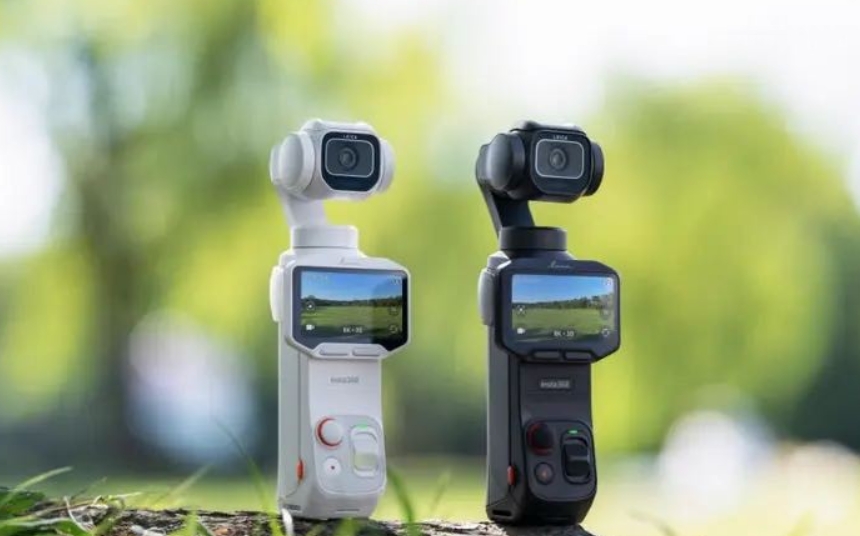
The explosion of short-form UGC (User-Generated Content) has spawned a brand-new consumer electronics category: the AI pocket camera. Positioned between smartphones and traditional cameras, these devices feature extreme portability, mechanical image stabilization, on-device AI for smart tracking and auto-framing, and one-touch editing capabilities. In 2025, global shipments of handheld smart cameras reached 16.65 million units—an 83% year-over-year increase—with the gimbal pocket camera segment growing by over 100%. Chinese manufacturers captured more than 87% of the global market share, fundamentally reshaping the landscape of the traditional camera industry. The sector has evolved into a competitive landscape characterized by a “duopoly” leading the pack, niche players competing through differentiation, and major smartphone manufacturers poised to enter the market. Competition has shifted from a battle over hardware stabilization to a comprehensive contest involving on-device AI algorithms, hardware-software ecosystems, and scenario-specific capabilities. This article outlines the industry’s driving factors, the competitive strategies of key players, technical barriers, existing challenges, and future development trends.
I. Industry Background and Market Drivers
Traditional compact digital cameras were long ago rendered obsolete by smartphones; however, smartphone photography reveals distinct limitations: footage is shaky when filming while walking, solo shooting lacks smart tracking, vertical short-video creation requires repetitive cropping, and post-production editing presents a high barrier to entry. AI pocket cameras precisely fill the market gap between smartphones and professional cameras. Compact enough to fit in a pocket while delivering high image quality and stabilization, they leverage local AI computing power to enable subject tracking, smart framing, voice enhancement, and automated AI video editing. This lowers the barrier to video creation, allowing average users to produce short-form video content without needing professional photography knowledge.
Market growth is driven by three key factors:
- Democratization of Content Creation: Demand continues to rise for vlogs, travel diaries, store reviews, and outdoor first-person perspective (POV) recording; short-video platforms are fueling the demand for dedicated filming hardware.
- Maturation of the Domestic Supply Chain: Shenzhen has developed a comprehensive supply chain covering optics, gimbal structures, and embedded AI chips. Hardware integration capabilities have improved significantly, and product iteration cycles have shortened to just 3–6 months. 3. Overseas Market Opportunities: Domestically produced AI pocket cameras enjoy high acceptance abroad; overseas consumers account for over half of sales at some offline retail locations, making exports a key growth engine.
The market is clearly segmented: high-end flagship models cluster in the 2,999–4,000 RMB price range, emphasizing professional image quality for creators; mid-range models (around 2,000 RMB) target general enthusiasts; and the sub-1,000 RMB segment focuses on use cases such as wearable first-person recording and field inspections. IDC forecasts that global shipments of handheld smart cameras will exceed 40 million units by 2030, with a compound annual growth rate (CAGR) approaching 20%; however, current market penetration remains below 1%, indicating the sector is still in an early stage of expansion.
II. Competitive Landscape of Key Domestic Enterprises
The domestic AI pocket camera sector currently comprises three main camps: a dominant duopoly, innovative niche players, and potential entrants (smartphone brands). These players differ significantly in their technical approaches, product positioning, and competitive moats.
1. DJI: Pioneer of the Gimbal Pocket Camera Category
Market Position: The global leader in handheld smart cameras, holding a 62.4% global market share in 2025. The Osmo Pocket series defined the product form factor for gimbal pocket cameras, with the Pocket 3 model alone surpassing 10 million units in sales, establishing a complete ecosystem encompassing hardware, algorithms, and accessories.
Core Advantages
- Mechanical Gimbal Barrier: Long-standing expertise in the precision structure of three-axis micro-gimbals and motor control algorithms constitutes a hardware capability that is the hardest to replicate in the industry, setting the benchmark for image stabilization performance.
- Comprehensive Hardware-Software Ecosystem: Features in-house developed ISPs and image algorithms, alongside a rich array of accessories such as microphones, wide-angle lenses, and battery handles; the app-based editing and footage workflow are highly mature, creating high user switching costs.
- Brand and Channel Strengths: A robust global online and offline sales network and strong consumer mindshare; products cater to both casual users and professional creators.
- AI Capabilities: Includes AI subject tracking, intelligent camera movement, scene recognition, and portrait optimization; AI functions are deeply integrated with the gimbal hardware, achieving seamless hardware-algorithm synergy. Weaknesses and Challenges: The gimbal structure results in higher overall production costs; the company was a late entrant into the 360-degree and wearable mini-camera segments; it was forced into a price war to counter Insta360’s offensive, putting pressure on profit margins.
Strategic Direction: Continuously iterate the Pocket series; expand into the 360-degree and action camera sectors; consolidate the high-end creator market while penetrating the mass consumer market.
2. Insta360: Leveraging 360-Degree Camera DNA to Enter the AI Gimbal Pocket Camera Market
Market Position: The undisputed global leader in 360-degree cameras, holding over 67% market share; officially entered the gimbal pocket camera sector in 2026 with the Luna Ultra and Luna Pro series, directly challenging DJI’s Pocket product line; holds approximately 20.4% of the global handheld smart camera market, ranking second.
Core Strengths
- Deep Expertise in 360-Degree Imaging: Extensive accumulation of technology in image stitching, multi-view algorithms, and AI editing; features like AI-generated videos and diverse lens effects are highly popular among young creators.
- Differentiated Product Portfolio: The GO series of wearable thumb-sized cameras focuses on first-person perspective (POV) recording; the Luna series of gimbal cameras features optics tuned in collaboration with Leica and native support for 4K vertical shooting, directly addressing the pain points of short-video creators; hardware is equipped with dual AI chips, enabling capabilities such as Deep Tracking 5.0 and wind noise suppression.
- Strong global brand foundation with a massive overseas user base; continuous software OTA updates bring new features to existing devices, enhancing user stickiness.
Weaknesses and Challenges: Less experience with 3-axis mechanical gimbals compared to DJI; gimbal cameras represent a newly developed business line, with the accessory ecosystem still under construction; the core 360-degree camera business faces competitive pressure from DJI, creating the challenge of fighting on multiple fronts.
Strategic Direction: Maintain 360-degree and thumb-sized cameras as the business foundation; aggressively target the AI gimbal pocket camera market; compete through differentiation strategies such as Leica partnerships, native vertical shooting, and AI editing capabilities. ### 3. Niche Innovators: Wearable AI Pocket Camera Brands (e.g., Maixiaoya)
A representative product is the Maixiaoya AI pocket camera, launched in late August 2026. Positioned as a wearable, on-device AI recording camera, it pursues a path distinct from that of gimbal cameras.
Product Positioning: It eschews mechanical gimbals in favor of portability and wearable, first-person perspective (POV) recording. It targets use cases such as cycling, field inspections, and store reviews—catering to both consumer and light industrial needs. Key features include offline AI recognition, local AI editing, a built-in 4G module (data-free), long-duration continuous recording, and a waterproof design.
Competitive Strategy: It avoids the “red ocean” of flagship gimbal cameras dominated by DJI and Insta360, focusing instead on the niche “wearable recording” segment. Rather than competing for the vlogger market, it targets the growing demand for POV and field recording applications.
Weaknesses: Limited brand influence, a weak consumer content ecosystem, and a lower ceiling for image quality compared to flagship gimbal models.
Other small-to-medium players in this segment—such as Hohem and Xunying—compete primarily on cost-effectiveness. They focus on basic image stabilization and simple AI functions, occupying niche market segments.
4. Potential Entrants: Smartphone Manufacturers (vivo, Honor, OPPO)
Smartphone manufacturers have established dedicated teams to develop AI pocket gimbal cameras; supply chain data suggests these products will launch between late 2026 and 2027.
Strengths: Deep expertise in computational photography algorithms, massive user bases, established account and cloud service ecosystems, and mature supply chains and distribution channels. Their capabilities in large AI models and NPU algorithms can be rapidly adapted for camera hardware.
Weaknesses: Lack of experience with miniature mechanical gimbal hardware (structural control is the biggest hurdle), and unproven track records in managing standalone hardware product lines.
Industry Impact: The entry of smartphone manufacturers will further intensify competition regarding AI algorithms and drive fiercer price wars within the sector. ## III. Core Industry Barriers: AI Is Reshaping the Logic of Competition
While early pocket cameras competed on hardware sensors and gimbal stabilization, the battleground has now shifted to on-device AI hardware-software synergy. There are three core barriers:
- On-device AI and hardware integration capabilities: Deploying large-scale vision models within strict power and size constraints to achieve features like object tracking, intelligent composition, and vocal noise reduction. AI algorithms cannot rely solely on software; they require deep coordination with gimbal motors and Image Signal Processors (ISPs) to adjust camera movement immediately upon recognition—a capability difficult for pure software companies to achieve. Many products merely stack simple AI features without achieving real-time on-device inference, leading to a significant drop in user experience under poor network conditions.
- Scenario-based data barriers: Training tracking and composition models requires massive amounts of real-world footage—covering diverse scenarios such as overseas travel, outdoor activities, sports, and urban life. Leading manufacturers have built a “data moat” through years of product accumulation.
- System-level engineering capabilities: Balancing sensors, gimbal motors, battery thermal management, and AI computing power within a compact body—while optimizing for size, battery life, heat dissipation, and image quality—presents a high level of system integration complexity that goes far beyond simply stacking modules.
Software ecosystems act as invisible barriers as well: AI editing templates, seamless media workflows, accessory ecosystems, and continuous OTA updates collectively raise the barrier to entry for new players.
IV. Existing Industry Pain Points
- Homogenization of AI features: Many products advertise AI tracking and AI editing, yet actual performance varies significantly. Some manufacturers offer “pseudo-AI” solutions that rely on cloud processing—failing in offline scenarios—and deliver inconsistent algorithmic performance.
- Conflict between battery life and computing power: Due to the limited size of pocket devices, enabling high-load AI tasks drains the battery quickly, and managing heat dissipation remains a universal challenge.
- Insufficient user education: Public awareness remains limited; many users question the need to buy a separate camera when they already own a smartphone, resulting in low overall market penetration.
- Price polarization: Flagship models are priced between 3,000 and 4,000 RMB, creating a high barrier to entry; low-end products suffer from significantly compromised image quality and AI performance, while there is a shortage of mid-range offerings. 5. Intensifying Patent Competition: Patent battles regarding gimbal control and AI tracking algorithms are raising startup costs for new entrants.
V. Future Development Trends
- AI as a Core Differentiator, Not Just a Marketing Gimmick: Competition is shifting from “greater stability” to “smarter filming.” Small on-device AI models are being deeply integrated into cameras to enable intelligent scene recognition, automated camera movement recommendations, and real-time semantic optimization; edge-cloud collaboration will become the mainstream approach.
- Further Market Segmentation: The market will diverge into two distinct paths: ① Gimbal-equipped Vlog cameras targeting content creators; and ② Wearable, gimbal-free AI pocket cameras designed for first-person perspective (POV) recording, sports, and fieldwork. These two product categories will develop in parallel.
- Smartphone Manufacturers Reshaping the Competitive Landscape: Smartphone brands are bringing computational photography and large-model capabilities to hardware, intensifying algorithmic competition; the current duopoly leaders must continuously strengthen their hardware and ecosystem moats.
- Globalization Remains a Key Growth Driver: Leveraging supply chain advantages, domestic AI pocket cameras continue to capture overseas market share, displacing traditional action cameras and point-and-shoot compact cameras.
- Ecosystem Value-Add: Beyond hardware, features such as AI editing templates, cloud storage, and supporting services are enhancing product value, marking a shift in the industry from selling hardware alone to a “hardware + software service” model.
VI. Conclusion
AI pocket cameras represent a new highlight in China’s consumer electronics industry; local enterprises have defined the product category and led technological iterations, achieving a “leapfrog” success in the traditional camera sector. While DJI and Insta360 currently form the core duopoly, the market landscape is far from settled: niche players are tapping into growth opportunities in specific use cases, while major smartphone manufacturers are eyeing the market. Future success will hinge not merely on sensor specifications or gimbal hardware, but on on-device AI implementation capabilities, integrated hardware-software ecosystems, and a deep understanding of users’ genuine content creation needs. As AI technology becomes increasingly accessible, AI pocket cameras are poised to evolve from tools for niche content creators into products for the mass consumer market.
Related reading: Dreame LEAPTIC Cube Review · Comparative Review of AI Pocket Gimbal Cameras · DJI Osmo Pocket 4
1 thought on “AI Pocket Camera: A New Battlefield for Imaging”