
Note: After exhaustive search across Bosch, Teufel, Blaupunkt, German Bionic, IFA 2026 exhibitor lists, and German Amazon/MediaMarkt/Saturn new-product pages, no German-native consumer AI hardware launches or releases in the Oct 10–17, 2026 window were found. The Dreame LEAPTIC Cube — a China-made AI action camera launching in Germany via MediaMarkt/Saturn in mid-October starting at €399 — is the closest qualifying product in this window.

Product Overview
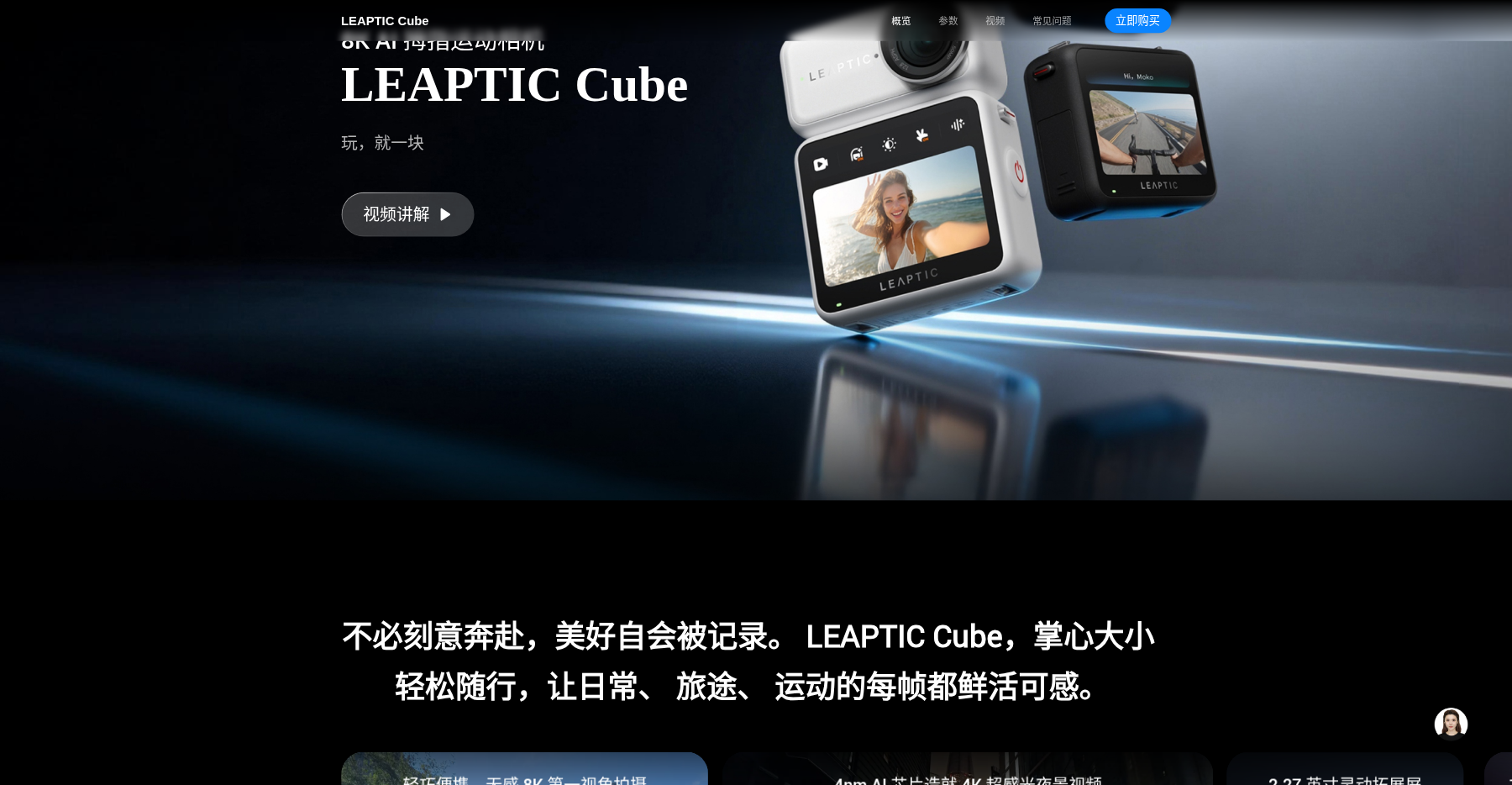
The LEAPTIC Cube is Dreame’s first action camera. Dreame is known for robot vacuums, cordless vacuums and high-speed hair dryers; this is its cross into the thumb camera market. The product uses a modular design: a 55.9 g camera head (1/1.3-inch 50 MP sensor, 155° ultra-wide f/2.8 lens), with magnetic attachable 2.27-inch display and magnetic battery modules. The head itself is rated 10 m bare-body waterproof — no extra case needed. The core selling point is a 4 nm Qualcomm octa-core AI imaging processor delivering 48 TOPS, used for GyroSteady AI electronic stabilization, AI night noise reduction, AI subject tracking, and “Hi Moko” offline voice control. Video specs: 8K/30fps, 4K/60fps HDR, 4K/120fps slow motion, 1080p/240fps. German starting price €399 (64 GB); 128 GB price TBD.

Strengths and Weaknesses
What Works
- Specs on paper are competitive. A 1/1.3-inch sensor is large for a thumb camera; 8K/30fps and 13.5-stop dynamic range push toward GoPro Hero 13 territory, while the €399 price undercuts GoPro’s similarly configured version.
- Modular design logic is clear. The 55.9 g head is light; magnetic battery and display modules are more flexible than Insta360 GO 3’s “pod” approach — users choose whether to attach screen or battery based on scenario.
- 48 TOPS on-device AI. The “Hi Moko” voice assistant supports network-free command control (start recording, switch modes, power on/off), genuinely safer than button operation while cycling or skiing.
- 10 m bare-body waterproof. Rare among thumb cameras at this level — friendly for swimming and snorkeling.
What to Watch Out For
- Zero imaging tuning heritage. Dreame has never made a camera. AI chip TOPS does not equal image quality. The core action-camera competencies — white balance accuracy, color science, stabilization behavior in real motion — are all unvalidated by independent testing.
- €399 may be “head-only.” The modular system means display and battery modules are likely optional accessories. The complete kit in Germany may land well above €399; Dreame has not published accessory standalone pricing.
- 8K on a 56 g body is questionable. 8K/30fps bitrate and thermal load on a thumb-sized body is severe; long-record thermal throttling is almost inevitable. 8K footage also demands extreme storage and post-production hardware — ordinary consumers will rarely use it.
- AI features smell “AI for AI’s sake.” AI beauty skin-smoothing is an awkward fit for an action camera — users need reliable stabilization and exposure, not face beautification. “Hi Moko” recognition rate in wind noise and cycling environments is unvalidated.
- German after-sales is a blank. Dreame’s German service network is built around home appliances; camera repair, spare parts and firmware update support have no precedent.
Competitive Analysis
The LEAPTIC Cube enters a mature action-camera market with strong brand moats. The most direct rival is the Insta360 GO 3S — this thumb camera has built a user base far beyond new entrants through its mature magnetic pod ecosystem, vast third-party accessory range and battle-tested FlowState stabilization. The GO 3S’s image quality is not the strongest in the category, but its advantage is “out-of-the-box” reliability and an accessory ecosystem running through three generations. The LEAPTIC Cube’s modular approach is more aggressive, but magnetic-contact durability in long-term outdoor use and breadth of third-party accessory support are unknowns.
Another unavoidable rival is the DJI Osmo Action 5 Pro (and the rumored Osmo Nano). DJI’s imaging-algorithm accumulation is something Dreame cannot match short-term — RockSteady stabilization, HorizonSteady and DJI’s D-Log color usability have been validated by countless creators. The Osmo Action 5 Pro starts around €379 in Germany, nearly head-on with the LEAPTIC Cube’s €399, but DJI’s brand trust and the maturity of the DJI Mimo app are overwhelming advantages. Dreame’s 48 TOPS AI chip is dazzling on the spec sheet, but DJI’s AI noise reduction and night algorithms are engineering products refined over generations — not something a new chip easily closes.
As for the GoPro Hero 13 Black, it represents brand inertia and ecosystem lock-in — countless action creators are deeply tied to GoPro’s Quik app subscription and HyperSmooth workflow. The LEAPTIC Cube attempts “GoPro accessory compatibility” as an entry wedge (per German media china-gadgets.de, the Leptic App is designed to connect to GoPro cameras), but this claim has not been confirmed by Dreame officially. Even if accessories are compatible, the migration cost of software ecosystem, cloud services and community content remains high for ordinary users.
Notably, the action-camera market is shifting from “spec race” to “AI creation tools” race. GoPro integrates AI auto-editing in Quik, DJI’s Mimo offers AI highlight tagging, and Insta360 sells AI invisible selfie stick and AI tracking as core features. The LEAPTIC Cube’s “Hi Moko” voice control and AI subject tracking hit the trend directionally, but all AI features depend on first-firmware real-world performance — and Dreame, as a camera-industry newcomer, has first-firmware stability as the classic failure point.
What to Check Before You Buy
- Wait for independent reviews. As of Oct 10, 2026, no third-party sample shots or videos of the LEAPTIC Cube have been released. Wait until late October for German media (chip.de, computerbild, dcw) real-world reports, focusing on: 8K thermal throttling, GyroSteady real-world stabilization in running/cycling, “Hi Moko” success rate in wind noise.
- Confirm kit contents and accessory pricing. Once listed on MediaMarkt/Saturn, verify what €399 includes. If display and magnetic battery are separate, the complete kit may reach €500–600, at which point value drops sharply.
- Check German warranty policy. Dreame’s statutory German warranty is 2 years, but whether cameras receive the same after-sales flow as appliances (pickup service, spare-parts turnaround) needs confirmation with MediaMarkt or Dreame German support. Action-camera drops and liquid ingress are typically out of warranty.
- Evaluate your real 8K need. If your main use is social-media short video (1080p/4K), 8K/30fps power and storage burden is not worth it. 4K/60fps HDR and 4K/120fps slow motion are the more practical specs.
- Compare same-budget alternatives. €399 in Germany also buys the Insta360 GO 3S (~€379, mature ecosystem) and DJI Osmo Action 5 Pro (~€379, stronger imaging). The LEAPTIC Cube suits early adopters with a clear modular-design need; risk-averse users should wait half a year for firmware maturity and accessory ecosystem.
- Storage note. Built-in 64 GB/128 GB; MicroSD expansion TBD. 8K/30fps bitrate is extremely high; the 64 GB version may need offloading after a few shoots — prefer the 128 GB version.

Verdict
The Dreame LEAPTIC Cube is a product with dazzling paper specs but completely unknown real-world performance. Dreame, a home-appliance company crossing into action cameras, plays a differentiation card with the 4 nm 48 TOPS AI chip and modular design, and the €399 German price is genuinely striking. But action cameras demand extreme tuning, firmware and after-sales maturity — the 8K and AI TOPS on the spec sheet need long real-world validation. For ordinary consumers, buying at the mid-October launch window is classic “early adopter risk.” Wait until November, when German domestic media publishes real-world tests and complete-kit pricing. If you just need a reliable daily action camera, the maturity of Insta360 and DJI at the same price remains the safer choice.