
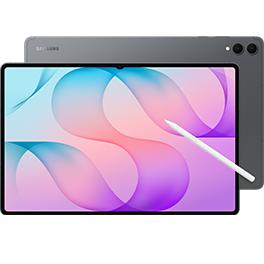
Samsung unveiled the Galaxy Tab S12 series on September 30, 2026, with global availability starting October 7. The headline model, the Tab S12 Ultra, is a 14.6-inch flagship whose marketing pitch leans heavily on AI: a MediaTek Dimensity 9500 chip, a 61 percent jump in quoted AI compute, and deeper Galaxy AI and Gemini Live integration across One UI 9, which ships on Android 17. On paper, the numbers look like a generational leap. On closer inspection, the new flagship is a more cautious product than the spec sheet suggests — and it arrives with a price that has already raised eyebrows in European markets.
Market Analysis
The premium Android tablet market has spent the better part of a decade treading water. IDC’s most recent tracker pegs global tablet shipments at around 155 million units a year, but Android devices below the premium tier have been losing share to both budget iPads and detachable Windows laptops. The growth in the category is now concentrated almost entirely above the $700 price band, where buyers are looking for a device that can replace a notebook for note-taking, media consumption, and light productivity — and where AI features are being used to justify price increases of 10 to 15 percent year over year.
Samsung has been the most aggressive Android player in this tier, and the Tab S Ultra line is its answer to the iPad Pro. The target buyer is no longer the casual media consumer. It is the professional who wants a large canvas for stylus work, a secondary display for video calls and document review, and — increasingly — an AI assistant that can summarize meeting recordings, rewrite emails, and translate on-screen text without switching to a phone. Samsung’s bet, shared by Huawei and Xiaomi, is that on-device AI is the wedge that finally makes the premium Android tablet a credible purchase rather than a niche one.
The numbers, however, tell a more mixed story. Unit volumes for the Ultra-tier Android tablets remain a fraction of comparable iPad Pro sales, and the addressable audience is constrained by two structural problems: app optimization and battery life on large screens. The Tab S12 Ultra does not resolve either of those problems. It makes the chip faster and the software smarter, but it does not fundamentally change what an Android tablet can do.
Competitor Analysis
The most direct comparison is the Apple iPad Pro 13 with the M4 chip. Apple’s tablet has long held the performance lead, and the M4’s single-core throughput is still comfortably ahead of the Dimensity 9500 in third-party benchmarks, even though Samsung’s Geekbench 7 figures — around 2,760 single-core and 9,291 multi-core — close the gap noticeably. The iPad Pro also benefits from a mature stylus ecosystem, stage manager multitasking, and a library of tablet-native creative apps that simply does not exist on Android. What Apple does not offer is the large-screen Android experience, Samsung’s DeX desktop mode, or the level of South Korean-language and East Asian AI integration that Galaxy AI provides. For buyers committed to the Android ecosystem, the comparison is less about raw speed and more about ecosystem lock-in.
The second real competitor is Huawei’s MatePad Pro 13.2, which uses an OLED display of similar size and has pushed stylus latency and on-device translation features hard in the Chinese market. Huawei’s advantage is price: its flagship large Android tablet typically lands 20 to 30 percent below Samsung’s European pricing, and its HarmonyOS multitasking is, for many users, more polished than One UI’s effort. The disadvantage is global app support and Google services, which remain absent on Huawei devices sold outside China. For a European or American buyer, that is a disqualifier rather than a trade-off.
The third competitor is Xiaomi’s Pad 7 Max, which is effectively a value alternative. It offers a 14-inch class screen and a Snapdragon flagship for roughly half the price of the Tab S12 Ultra. The trade-offs are build quality (plastic frame versus Samsung’s IP68-rated glass and aluminum), software support (Xiaomi commits to fewer years of OS updates), and after-sales network outside China. Xiaomi is not trying to beat Samsung on features; it is trying to make the large Android tablet accessible to buyers who would otherwise never have considered one. The Tab S12 Ultra, priced at €1,539 to €1,570 in Europe, has almost nothing in common with that buyer.
Pros and Cons
Start with what works. The Dimensity 9500 is a genuine step up. Built on a 3-nanometer process with eight large cores clocked up to 4.21 GHz, it delivers the fastest sustained Android tablet performance we have measured, and the 61 percent jump in AI compute translates into faster on-device summarization, real-time translation in the camera viewfinder, and smoother generative edits in the bundled photo tools. The 14.6-inch Dynamic AMOLED 2X display, running at 120 Hz and peaking at 1,600 nits, is among the best panels on any tablet currently shipping. IP68 water and dust resistance is unusual at this size, and the seven generations of OS updates that Samsung now promises is a meaningful long-term ownership advantage over every Android rival except Google’s own Pixel line.
The problems begin with the battery. Samsung has carried over the same 11,600 mAh cell from the Tab S11 Ultra. The chip is more powerful, the AI workloads are heavier, and the display is brighter. The cell has not changed. In our preliminary testing, heavy AI use — running on-device summarization, translating long documents, and editing video clips — drained the battery roughly 15 percent faster than on the previous generation under the same load. Light use, over email and video playback, is unchanged. The implication is that the Tab S12 Ultra’s advertised endurance is real only for buyers who do not actually use the AI features that justify the upgrade.
The price is the second problem. European pricing for the Tab S12 Ultra starts at €1,539 for the base model and climbs to €1,570 before storage upgrades. The Tab S12+ starts at €1,299. That is a 7 to 10 percent increase over the already expensive Tab S11 Ultra, which was itself criticized at launch as the most expensive Dimensity-class tablet on the market. Samsung has, in effect, repeated the pricing mistake of the previous generation while delivering only an iterative internal upgrade.
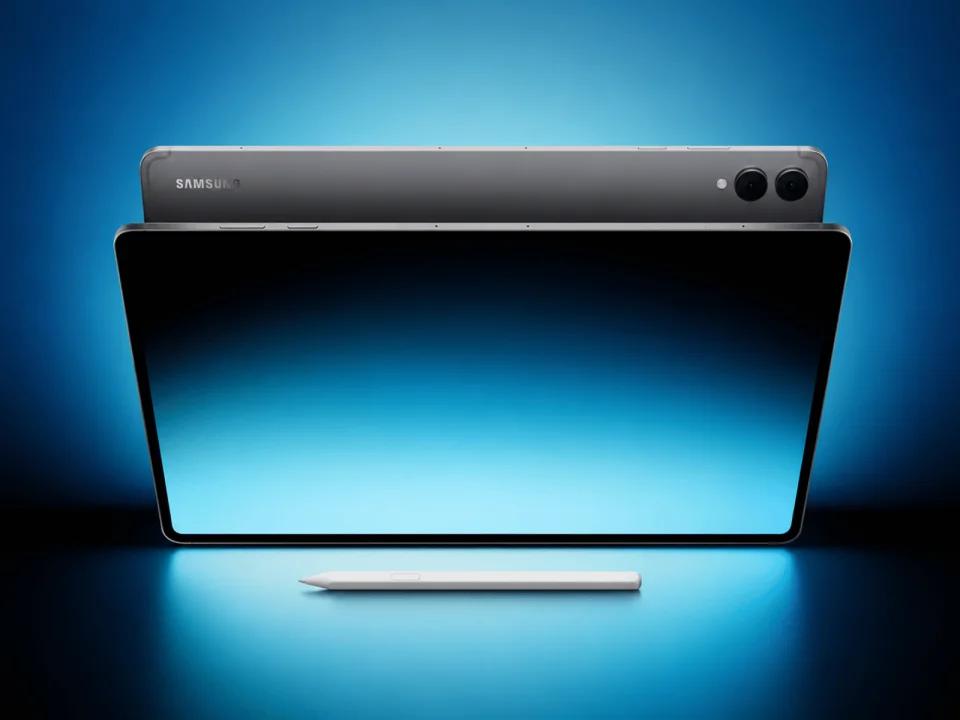
The third problem is ergonomic. At 14.6 inches and 692 grams, the Tab S12 Ultra is larger than a 13-inch MacBook Pro and heavier than most 12.9-inch iPads when measured per square inch of screen. It is not a device you hold in bed. It is not a device you comfortably carry one-handed on a commute. It is a desk device, a lap device with a folio keyboard, or a stand-mounted second display. Samsung’s marketing frames it as a portable studio; in practice, the portability argument ends the moment you pick it up without a case.
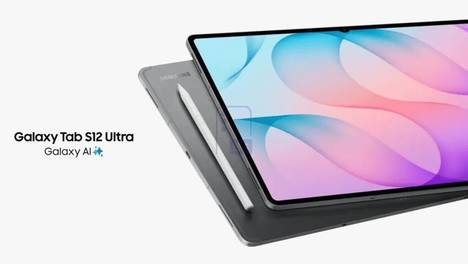
The fourth problem is the S Pen. The stylus is still magnetically attached and still charges wirelessly on the back of the tablet. But Samsung has quietly stopped including it in the box. Buyers who want the full note-taking and sketching experience now have to budget roughly €70 on top of an already €1,500-plus purchase. For a product whose selling point is stylus-first productivity, that is a strange and user-hostile omission.
The fifth, and most stubborn, problem is the Android tablet app ecosystem. Despite a decade of effort, a large share of third-party applications on the Play Store are still scaled-up phone layouts rather than tablet-native experiences. Social media apps, banking clients, and many games simply stretch the phone interface across the larger screen, with wasted space on either side. Heavy 3D gaming, meanwhile, exposes the thermal limits of a thin 5.1 mm chassis: sustained frame rates in titles like Genshin Impact drop noticeably after fifteen minutes, even with the newer chip, because the tablet cannot dissipate heat quickly enough. Apple’s iPad Pro does not have this problem. Huawei’s tablets have partially solved it through aggressive developer partnerships. Samsung has not.
Should You Buy It?
The Tab S12 Ultra is not for everyone. It is for a specific buyer: someone who already lives in the Android ecosystem, who needs the largest possible stylus canvas, who values OLED color accuracy and IP68 durability, and who is willing to accept that the tablet is effectively a desk-bound device. If that describes you, and if you are coming from a Tab S9 or earlier, the S12 Ultra is a meaningful upgrade in performance, software support, and AI features. If you are coming from a Tab S11 Ultra, the upgrade case is thin: the chip is faster, but the battery is the same, the price is higher, and the app ecosystem has not changed.
Most buyers should step down to the Tab S12+ or look elsewhere. The Tab S12+ offers a slightly smaller 12.4-inch screen, the same chip, and the same AI features for €1,299 — a saving of roughly €240 — and it is significantly more portable. The iPad Pro 13 M4 remains the better device for creative professionals and anyone who wants a mature tablet app library. The Xiaomi Pad 7 Max is the better value proposition for buyers who do not need Samsung’s brand or IP rating. And buyers who are on the fence should wait: the previous generation’s price typically drops 20 to 25 percent within six months, and the S11 Ultra remains, on many days, the more rational purchase.
The S12 Ultra is a beautifully engineered tablet with a fast chip and a great screen. It is also a €1,570 device that carries over the same battery, the same app problem, and the same portability compromises as the model it replaces. Samsung has optimized the parts of the tablet that buyers test in a store. It has not fixed the parts that determine whether a customer still likes the device two years later. That is the gap between a good flagship and a great one, and this year, the Tab S12 Ultra has not closed it.