
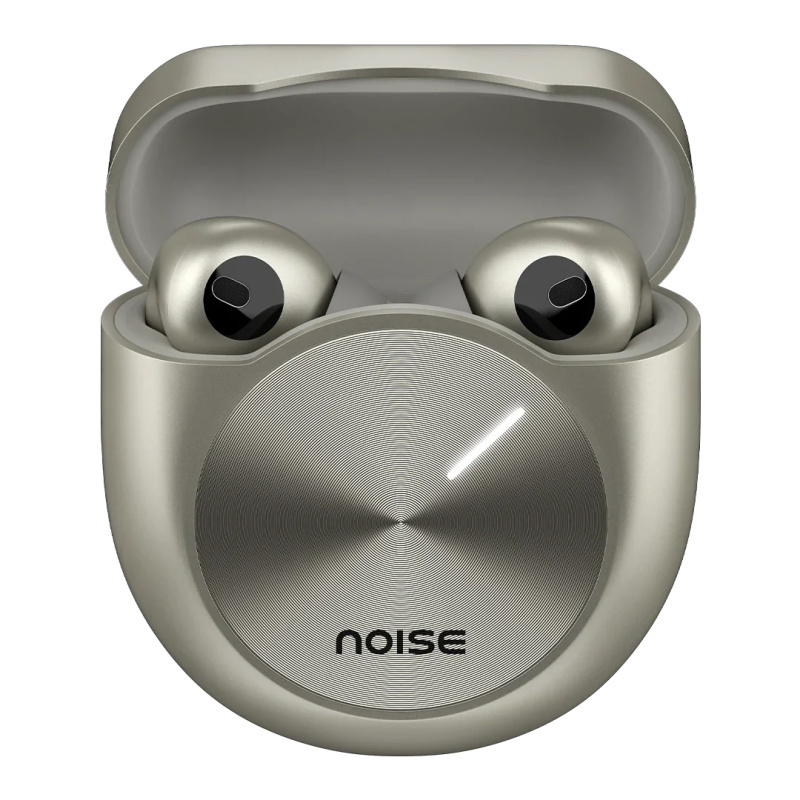
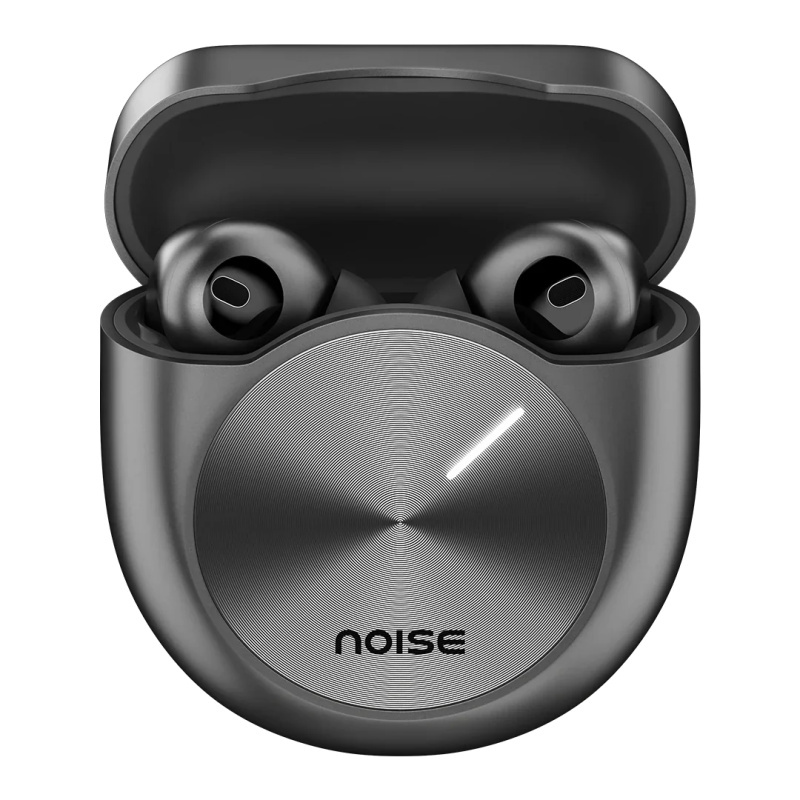
Noise, the Indian wearables brand that has spent the last five years competing with boAt and Boult on price-point smartwatches and neckbands, is trying to move upmarket. Its new Master Buds Open, announced for pre-order on October 8, 2026 at ₹7,999, is the company’s first open-ear pair of earbuds. It is also the first Noise product to carry a “Sound by Bose” co-tuning badge — a partnership that is, on paper, the most credible audio pedigree any Indian brand has put on a sub-₹10,000 pair of earbuds. With a 10.8 mm custom driver, Bose-tuned Dynamic EQ, a four-mic ENC call system, Bluetooth 5.4, dual-device pairing, and 28 hours of total battery life, the spec sheet reads like a mid-tier global product. The catch is that most of the features that justify the price premium are either software-gated behind Noise’s companion app, depend on cloud-connected AI that has not been tested in real Indian-language use, or are simply absent because open-ear physics does not allow them. The Noise Master Buds Open is, by any reasonable measure, a well-spec’d first attempt. Whether it sounds like one is a question Bose has not yet answered on our behalf.
Market Analysis
The Indian true-wireless earbud market is one of the most competitive on earth. India now ships more TWS units than any single European country, with the bulk of volume concentrated below ₹3,000. boAt, Boult, Noise, and a handful of regional brands have competed so fiercely on price that the average selling price of a sub-₹2,000 pair has fallen below the cost of the Bluetooth chip alone once marketing is factored in. That price floor is pushing every major Indian brand to look for adjacent categories where they can charge more.
Open-ear earbuds — the ear-clip and ear-hook form factors popularized by Shokz and Sony’s Float line — are the obvious next target. Indian commuters, runners, and gym-goers increasingly want to stay aware of traffic, street vendors, and trainers while listening. The post-pandemic shift toward outdoor exercise has expanded the addressable audience well beyond the urban fitness enthusiast. Shokz has, for years, sold open-ear units in India at premium prices between ₹10,000 and ₹18,000. Sony’s Float Run sits around ₹9,990. Below them, almost nothing of audible quality existed until 2025, when boAt and Boult began shipping sub-₹3,000 open-ear clips that are, by most reviews, adequate for podcast listening but thin on music.
Noise is stepping into the gap between those two tiers. ₹7,999 is a deliberate price point: it is roughly 60 percent more expensive than the average domestic open-ear clip, but 20 percent cheaper than the Sony Float Run. The bet is that Bose branding will justify the domestic premium, and that the Bose co-tuning will be close enough to Sony or Shokz quality to justify undercutting them. The target buyer is not the bargain hunter buying a second pair for the gym; it is the urban professional who has already exhausted the value tier and wants something that does not sound tinny on a morning run. Whether that buyer exists at volume, and whether Bose will allow its name to be carried on a product that has not yet been independently reviewed, are the two questions the next quarter will answer.
Competitor Analysis
The most direct domestic rival is the boAt Airdopes ProClip, which has been the default open-ear choice for Indian buyers who refuse to pay Sony prices. The ProClip uses a smaller driver, simpler call processing, and a more plastic build, but it is priced aggressively below ₹3,000 and carries boAt’s far larger offline retail footprint. Where Noise’s Bose co-tuning is supposed to win on sound, boAt wins on shelf presence: the product is available in every Croma, Reliance Digital, and mobile accessories stall from Delhi to Coimbatore. A buyer walking into a store will, more often than not, leave with a boAt because that is what is on the counter.
Boult Audio’s Astra line is the second domestic rival. Boult has, in the last eighteen months, been the most aggressive advertiser on Indian social media, with influencer seeding that reaches deep into tier-2 cities. The Astra open-ear variant is priced in the same sub-₹3,000 band and, like the boAt, competes on value rather than audio refinement. Neither rival has a Bose-equivalent audio partnership; that is the single strongest card Noise holds. But it is worth remembering that “co-tuned by Bose” is not “engineered by Bose.” The consumer will hear what Noise ships, not what Bose’s own reference headphones sound like, and the history of celebrity co-branding in audio is littered with products that borrowed a name and not a sound.
The third comparison point is the Sony Float Run at ₹9,990. The Float Run is not a spectacular-sounding earphone — open-ear physics caps the low end regardless of brand — but it is a mature product with a stable fit, dependable service, and no requirement to live inside a companion app. A buyer choosing between the Float Run and the Master Buds Open is choosing between ₹2,000 of extra cost for proven reliability, and ₹2,000 of savings for a Bose logo, newer Bluetooth, and an unproven AI assistant. For most commuters, the proven option will win.
Pros and Cons
The spec sheet is, on its face, the best in its price band. A 10.8 mm dynamic driver is large for an open-ear pair, where smaller drivers are more common because of space constraints. The Bose-tuned Dynamic EQ offers six presets in the Noise Audio App, which is more granular than the one- or two-preset offerings typical at this price. Bluetooth 5.4 with Google Fast Pair and dual-device connection is a genuine upgrade over the Bluetooth 5.3 found on most domestic rivals. The four-mic array with DNN-based ENC is the right architecture for call quality in windy street environments, which is where most Indian open-ear use actually happens. IPX4 sweat resistance covers the gym and the monsoon commute. The 28-hour total battery claim, if it survives real-world testing, is competitive.
The cons begin with the absence of active noise cancellation. This is not a flaw in execution — open-ear designs cannot seal the ear canal, and ANC relies on that seal — but it is a limitation that a buyer considering a Bose-branded product should keep in mind. The Bose name evokes industry-leading ANC, and the Master Buds Open offers none. On a busy Mumbai local train, a Delhi auto-rickshaw, or a roadside chai shop, audio leakage in and out of the ear will make detailed listening difficult. These are earbuds designed for quiet parks, treadmills, and home-office video calls, not for noisy transit.
The second major limitation is app dependence. The full EQ controls, the Bose presets, and the Chat AI voice assistant are all gated inside the Noise Audio App. A buyer who loses the phone, who uses a secondary device without the app, or who prefers to configure hardware once and forget it, will find a more limited product than the spec sheet suggests.
The Chat AI feature itself is a third concern. It is marketed as a voice assistant living inside the Noise Audio App, with transcription and conversational features. But it is not a system-level integration — it cannot read your notifications, handle Siri or Google Assistant fallbacks, or operate offline. Indian English accents, code-switched Hindi-English speech, and regional language requests are exactly the edge cases that break cloud-based voice assistants, and Noise has not published accuracy data. The feature is, at launch, a marketing bullet point rather than a dependable tool.
The low-frequency response of any open-ear design is physically constrained. Without an ear-canal seal, bass leaks out and is not perceived. Buyers who expect the thumping low end of a sealed in-ear monitor will be disappointed, regardless of Bose tuning. This is a category truth, not a Noise-specific defect, but it is worth stating because Bose’s own sealed noise-cancelling headphones set a low-end expectation this product cannot meet.
Finally, two smaller gaps. Charging speed — how long the case and buds take to top up — is not specified, an omission at a price point where rivals increasingly advertise 10-minute-charge-for-3-hours claims. And ₹7,999 is an awkward price: high enough above the domestic open-ear budget band to invite comparison, but low enough below established international options that Bose’s reputation alone may not justify the switch.
Should You Buy It?
The recommendation depends on which buyer you are. If you currently use a sub-₹3,000 boAt or Boult open-ear pair and are frustrated by the sound, the Master Buds Open is a reasonable step up — but only if you are comfortable living inside a companion app, only if your listening environment is relatively quiet, and only if you treat the Chat AI feature as an experiment rather than a daily driver. The Bose co-tuning, larger driver, and four-mic call system are tangible upgrades that should show up in real use.
If you are coming from a sealed noise-cancelling earbud and you want to try open-ear for the first time, the Master Buds Open is not the right starting point. You will miss the bass, you will miss the isolation, and the lack of ANC will feel like a regression. In that case, buy a cheaper domestic open-ear pair as a trial, and decide whether the form factor suits your commute before spending Bose-tier money.
If you are comparing directly against the Sony Float Run, the decision hinges on how much you value software features versus brand certainty. The Noise pair offers newer Bluetooth, app-based EQ, and the Chat AI experiment for ₹2,000 less. The Sony pair offers a known quantity, a simpler out-of-box experience, and no app lock-in. For a commuter who wants headphones that work the same way on day one as on day 700, the Sony remains the safer call.
The ₹999 pre-order deposit and the October 23 retail date make this an easy product to defer. Wait for the first independent reviews — particularly ones that test call quality on noisy Indian streets, measure real-world bass response, and stress-test the Chat AI against Indian English accents. Wait for charging-speed data. Wait to see whether the Bose co-tuning translates into a sound signature recognizably closer to Bose’s own reference products, or whether the logo is doing all the work. The Master Buds Open is, on paper, the most interesting open-ear launch in the Indian market this year. On your ear, in your traffic, with your accent — that is a claim we cannot yet verify, and neither, at the moment, can Noise.