
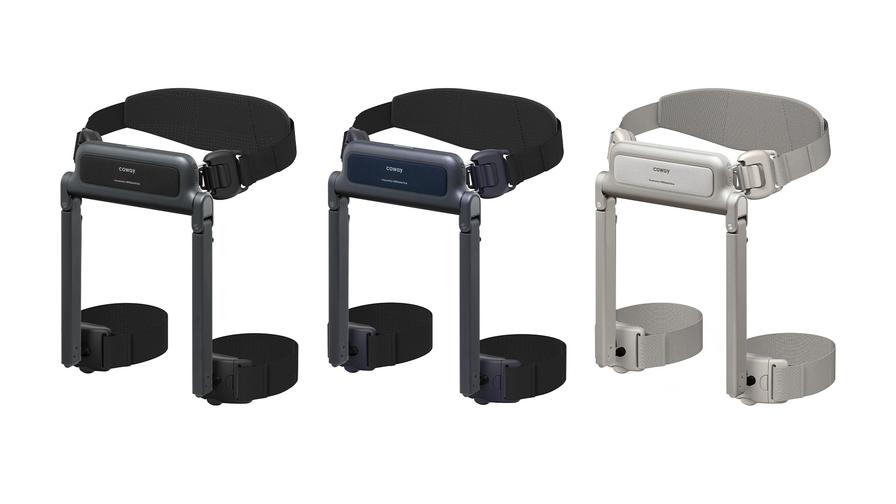
Coway, the Korean home-appliance maker best known for water purifiers and air filters, has entered the robotics market with a device that looks less like a laboratory exoskeleton and more like a weighted belt you would not be embarrassed to wear to the grocery store. Launched on October 2, 2026 under a partnership with WIRobotics, the Coway Walking Assist Exoskeleton weighs just 1.6 kilograms, clips around the waist and thighs, and is designed to slip on over ordinary clothing. It arrives with seven walking modes, an IP65 dust- and water-resistance rating, and a peer-reviewed clinical claim that it improves walking speed by 14.8 percent over four weeks. The product is also, importantly, not for sale. It is available only by subscription, with monthly pricing still undisclosed. That single fact does more than anything else to frame how serious Coway is about reaching a mainstream consumer.
Market Analysis
The consumer exoskeleton market sits at an unusual intersection of aging demographics, robotics maturation, and healthcare cost pressure. Industry analysts at ABI Research and Interact Analysis have, over the past two years, revised their forecasts for wearable lower-limb exoskeletons upward, driven less by industrial deployments than by the so-called silver market: adults between 65 and 80 who are still independently mobile but notice declining endurance, rising stair-climbing fatigue, or a growing sense of instability. South Korea is one of the earliest and most exposed markets for this demand. The country crossed into “aged society” status in 2018 and is on track to become a “super-aged society” by 2025, with more than 20 percent of the population over 65. Domestic policy has correspondingly tilted toward “aging in place,” subsidizing mobility aids rather than institutional care.
Coway’s bet is that a product positioned between a medical rehabilitation device and a fitness wearable can capture a slice of this demographic. The target user, by the company’s own description, is not a stroke survivor or a post-surgical patient. It is an active retiree who walks daily, plays golf, climbs neighborhood hills, and wants to keep doing so without the recovery time that used to be automatic. That is a deliberately narrow slice. It excludes the people who arguably need powered assistance the most — those with severe gait impairment, advanced osteoarthritis, or frailty — and includes people who already walk enough to benefit from a little extra push.
The broader category is still small. Global consumer exoskeleton revenue is measured in the low hundreds of millions of dollars annually, against a wearables market measured in tens of billions. Vendors are still figuring out pricing channels, durability expectations, and the uncomfortable truth that most buyers will return a device they do not wear every day. Coway’s rental-first strategy is, in that sense, a rational hedge: it keeps the customer locked in a recurring relationship, lets the company absorb early-unit defects, and avoids the sticker shock of a $2,000-to-$5,000 hardware purchase. But it also means the company is betting on a subscription habit in a demographic that, in Korea and Japan alike, has historically preferred outright ownership of durable goods.
Competitor Analysis
The Coway device does not enter an empty room. Hyundai Motor Group has, through its X-ble Suit line, been refining industrial and mobility exoskeletons since 2019. The current X-ble Suit models are heavier, more obviously mechanical, and aimed largely at factory workers who need lumbar support during repetitive lifting; a consumer-facing variant has been teased but has not reached Korean retail with the same color palette and fashion-conscious framing Coway is using. Hyundai’s advantage is deep automotive-grade motor and battery know-how; its disadvantage is that the brand still reads as industrial to a 75-year-old shopper.
Haier, the Chinese appliance giant, has pushed its AI Exoskeleton W3 into both healthcare and tourism contexts, notably at Chinese scenic sites where elderly visitors rent the unit for half-day sightseeing trips. The W3 is also a hip-actuator design, but it is distributed primarily through B2B channel partners — theme parks, rehabilitation clinics, municipal senior centers — rather than direct-to-consumer rental. That model works in China because municipal senior-care budgets absorb the cost; it has not translated well into OECD markets where elderly consumers buy their own devices.
Kinque (Kenqing), another Chinese vendor, sells a lighter hip-assist unit closer in form factor to Coway’s. Pricing in the domestic Chinese market is aggressive, often under the equivalent of $1,500 outright, but clinical evidence and after-sales service outside China remain thin. For a Korean consumer choosing between a Coway subscription and an imported Kenqing unit, the deciding factors will be local service, Korean-language app support, and warranty coverage — all areas where Coway has structural advantage, and all areas where the company has not yet published specifics.
What is missing from the comparison set is any serious consumer wearable from Sony, Samsung, or Apple. Those companies could, in principle, ship a lighter, better-sensing assist band with a mature app ecosystem within two product cycles. Until they do, the field is open to appliance makers and robotics startups willing to tolerate small margins and long qualification cycles.
Pros and Cons
On the positive side, the 1.6 kg weight is genuinely notable. Most hip exoskeletons on the market today sit between 2.5 and 4 kg; shaving nearly a kilogram off the waist reduces the fatigue that is the single most common reason early adopters abandon these devices. The seven walking modes — Air, Aqua, Care, Climbing, Balance, Soft, and Slow Jogging — suggest the software team thought about real environmental variation rather than shipping a single “on” setting. IP65 protection means a light rain shower or a dusty country path will not disable the unit, which matters for an outdoor walking product. The companion app’s voice announcements for stride length and speed, plus a weekly walking report, are a reasonable digital companion for an older user who may not want to stare at a phone screen mid-walk.
The clinical claim, while encouraging, needs to be read carefully. The study published in Scientific Reports enrolled nine adults with an average age of 78.6, who wore the device for four weeks. Average walking speed improved 14.8 percent. Nine participants is not a typo. It is a feasibility pilot, not a pivotal trial. A 14.8 percent improvement in a nine-person sample could shrink, hold, or even reverse in a larger cohort. Coway should be commended for publishing at all — most consumer exoskeleton launches in this category ship with no peer-reviewed data — but reviewers and prospective subscribers should treat the number as a hypothesis, not a guarantee.
The negatives are more concrete. First, the rental-only model is a real constraint. Coway has announced lease terms of 60 months, with shorter options of 3, 6, and 12 months, and a 50 percent discount on the first two months’ rent as an opening promotion. But the company has not disclosed the monthly fee. Until it does, a Korean retiree cannot compare the total cost of five years of subscriptions against simply buying a comparable unit outright — which, at the higher end of exoskeleton pricing, would be roughly the equivalent of a mid-range refrigerator. A buy-out option, a standard feature in medical device leasing, is absent.
Second, battery life is simply not mentioned in the launch materials. A wearable that does not tell you how long it lasts on a charge is a wearable that forces you to guess whether a day trip to a mountain trail will end with a dead motor halfway back. This is not a minor omission; it is a spec page item.
Third, WIRobotics, Coway’s partner, is primarily known as a CES-stage prototype company. The underlying technology may be sound, but consumer-grade durability, replacement-part availability, and a nationwide service network for a device strapped to a 78-year-old customer are entirely different problems from demoing at a trade show. Coway’s existing home-appliance service infrastructure helps, but it is not yet staffed for robotics repairs.
Fourth, the product is positioned as health enhancement, not medical rehabilitation. It will not help someone recovering from a hip replacement, managing Parkinsonian gait, or navigating advanced frailty. Coway is explicit about this, but marketing language around “walking assistance” can blur the line in a buyer’s mind. Anyone with a diagnosed mobility condition should use a clinician-prescribed device, not a subscription wellness gadget.
Should You Buy It?
Strictly speaking, you cannot buy it — you can only rent it. That changes the recommendation. If you are an active adult in your late sixties or seventies, living in metropolitan Korea, who already walks several kilometers a day and who has noticed that hills and long outings are getting harder, the Coway unit is a low-risk way to test whether powered assistance actually changes your behavior. The two-month half-price window is a legitimate trial. You can walk with it, compare your endurance, and cancel at the end of the short-term lease without being locked into sixty months of payments.
Everyone else should wait. Wait for the monthly fee to be published, so you can compute the five-year cost. Wait for the company to publish battery capacity and rated endurance. Wait for an independent reviewer to put the device through a real eight-hour walking day, not a press-demo stroll. Wait for a larger clinical cohort — ideally fifty or more participants — before treating the 14.8 percent speed improvement as a settled number. And wait, frankly, for the first round of owner reports on long-term fit comfort, strap durability, and motor noise.
The value proposition is a question Coway has not yet answered in numbers. If the monthly lease lands at roughly the price of a senior gym membership, the device is an interesting wellness product. If it lands closer to the price of a senior care attendant’s weekly visit, the math shifts entirely. Until that number is public, the Coway exoskeleton is best treated as an elegant engineering statement, not yet a consumer recommendation. The underlying idea — a featherweight, fashionable walking band that actually clips on over your clothes — is the right idea. Whether Coway’s subscription bet can make that idea affordable enough to wear every day is, for now, an open question.