
On October 14, 2026, NEURA Robotics of Metzingen, Germany, introduced Neuron AI, what it calls the “brain of the physical world” — a multimodal foundation model for robotics built around a Perception-Language-Action architecture with added touch, sound and memory. It was announced alongside the company’s full-scale humanoid, the 4NE1 (“For Anyone”), now offered as Gen 3.5. It is an ambitious pitch: a European answer to the humanoid gold rush, running locally on the robot rather than in the cloud.
Market Analysis
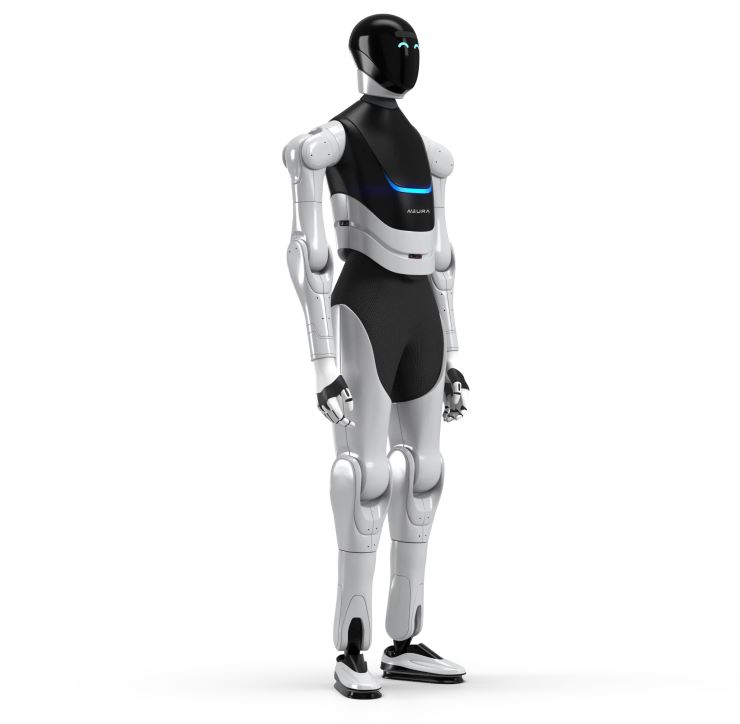
NEURA is chasing the highest-profile, most-hyped market in tech: general-purpose humanoid robots for manufacturing, logistics, service and eventually the home. Its wedge is “cognitive robotics” — robots that can perceive, reason and collaborate with people without a safety cage, rather than stationary industrial arms locked behind fences. The 4NE1 spec sheet reads competitively: 180 cm tall, 80 kg, 55 degrees of freedom, 15 kg payload, ~7-hour runtime, 1.39 m/s walking speed, and full-body tactile skin with 360° perception.
Neuron AI is the strategic centerpiece. Unlike camera-led Vision-Language-Action models that reason mostly on the current camera frame, NEURA adds touch, sound and object-permanence memory, arguing that a robot must know when a lock has audibly clicked or when a screw has tactilely “caught.” It runs on-board for low latency and data residency — a deliberate selling point for European manufacturers worried about cloud data sovereignty. The model is trained across five NEURA embodiments using real gym data, simulation, and human data-suit demos, with partners like Schaeffler and Bosch.
Competitor Analysis
NEURA is entering a brawl it did not start. Figure and Tesla Optimus command the best funding, the loudest demo reels, and automotive-scale manufacturing ambitions. Boston Dynamics’ electric Atlas sets the hardware-performance bar for legged mobility. In China, Unitree undercuts everyone on price, while UBTECH’s Walker S2, AgiBot’s A2, and Kepler’s K2 are the most cited spec-for-spec peers to the 4NE1.
NEURA’s differentiators are niche but real: it is the rare European player stressing safety-rated human collaboration and on-robot data control, which resonates with cautious German industry. But that is a narrow moat. Unitree can deliver a capable humanoid at a fraction of the price today; Figure and Tesla are pouring more capital into end-to-end learning. NEURA’s claimed edge — tactile memory plus edge inference — is genuinely interesting, but it is currently a paper and keynote advantage, not a demonstrated one at scale.
Pros and Cons
On the plus side, the engineering thesis is coherent. 55 DOF, full-body tactile skin, force-torque sensing, exchangeable forearms, and a dual-battery swap for claimed 24/7 operation are serious hardware. The decision to run Neuron AI on-board — no cloud round-trip, works offline, data stays local — is a thoughtful response to European manufacturing concerns. The “Time-to-Skill” framing (how fast a robot learns a new task) is exactly the right metric industrial buyers should care about.
The cons, though, are where a cautious buyer should pause. First, this is largely vaporware with a reservation fee. The 4NE1 has been “announced” since 2023, and Gen 3.5 is still expected end of 2026. What you can actually do today is pay a refundable €100 deposit to join a queue. There is no shipped, deployable product in volume.
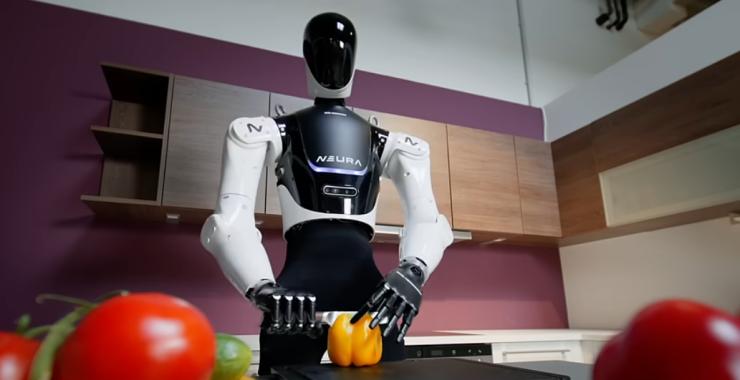
Second, the headline demo is a scripted, single take. The flagship Neuron AI showcase is an ~11-minute pre-scripted laundry sequence at NVIDIA GTC Berlin. A robot that sorts, loads and unloads a washing machine for a camera is a long way from one that reliably does unstructured factory work on shift. NEURA has not yet published independent benchmarks against Figure or Unitree on the “Time-to-Skill” it itself touts.
Third, the numbers are internally inconsistent. Marketing copy claims the robot can “lift up to 100 kg” thanks to joint technology, while the published spec sheet lists a 15 kg payload. That gap — 100 kg vs 15 kg — is exactly the kind of overpromising buyers should distrust. Speed figures also disagree across sources, signaling the platform is still in flux.
Fourth, the price is not cheap and the ecosystem is closed. Industrial Gen 3.5 units run roughly €98,000 (1–19 units), €60,000 at 20+, about $105,000 — and the software stack is proprietary (Neuraverse) with no official ROS support. That locks integrators out of the open robotics ecosystem that most research and smaller buyers rely on.
Buyer’s Guide / Things to Watch Before You Buy
Treat the €100 reservation as an option, not an order. Put down the deposit only if you want early access and can absorb delayed shipping; do not plan a production line around an “expected end of 2026” date that has already slipped through multiple “Gen” revisions. Demand the real payload figure in writing — 15 kg rated vs 100 kg marketing — and get it in the contract, not the keynote.
Watch the laundry run closely for what it does not show. Ask whether that sequence is repeatable, what failure rate it has, and how long “Time-to-Skill” actually takes on your tasks — then compare that directly against a Unitree or UBTECH pilot, where hardware is available now and dramatically cheaper. Before buying, confirm the software reality: no official ROS support means your engineering team must live inside NEURA’s proprietary Neuraverse stack, which is a significant lock-in. NEURA has a thoughtful, European, safety-first vision — but in October 2026 the 4NE1 and Neuron AI are a compelling promise on a deposit sheet, not a proven asset on your factory floor.
Related reading: UBTECH U1 Humanoid Robot Review · LeXiang M1 Robot Integrates Tencent OpenClaw AI Agent · The 250-Kilogram Promise