
The Geely Xingrui L PLUS puts a roof LiDAR and city NOA on a hybrid family sedan from a limited CNY 109,700 launch price, yet the full smart-driving suite lives only on the range-topping trim.
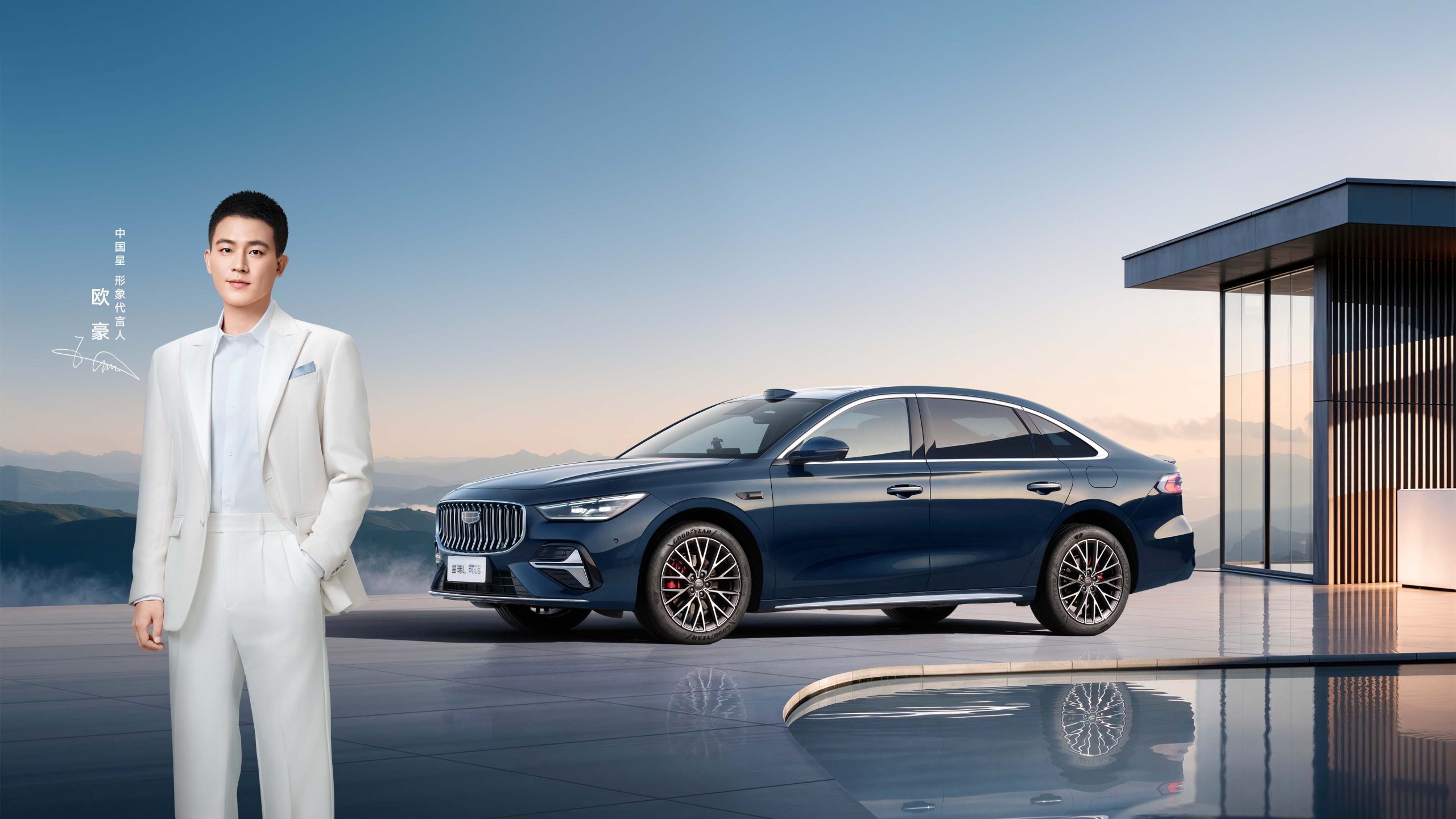
On October 17, 2026, Geely staged the Xingrui L PLUS launch at the Chengdu Tianfu International Circuit, offering a 1.5TD i-HEV hybrid and a 2.0TD petrol line side by side. Guided prices run CNY 119,700 to 153,700, with a limited launch price of CNY 109,700 to 143,700 (i-HEV CNY 109,700-139,700; 2.0TD CNY 113,700-143,700). Geely pitches the car as China’s first petrol or hybrid sedan to carry a LiDAR, mounting the Qianli Haohan H5 assist system with a city NOA capability on its top trim. Built on the CMA architecture and sold under the China Star family, the Xingrui L PLUS (Xingrui L Plus) competes in the crowded family sedan bracket where hybrids and plain petrol still outsell EVs.
Product market analysis
Family sedans in this price band have historically competed on fuel economy, rear legroom, and chassis tuning, not sensors. The Xingrui L PLUS changes the pitch by attaching a LiDAR to a combustion-platform car, a signal that Chinese OEMs are pushing assisted driving down-market into buyers who refuse to go electric. The i-HEV hybrid targets commuters who want WLTC economy without a charging cable, while the 2.0TD 8AT serves drivers who still want a conventional performance feel.
The catch is stratification. Per Sina/Kuaikeji coverage, the LiDAR and Qianli Haohan H5 package appear only on the top Yaoxing trim; lower trims are separated mainly by hybrid hardware and cabin equipment. That means the headline ‘LiDAR sedan’ label does not apply to the CNY 109,700 entry car, a gap marketing can blur. Skepticism is also warranted on real-world city NOA: Geely’s launch claims await independent validation, and the limited launch pricing is promotional rather than permanent.
Specs at a glance
| Launch / price | October 17, 2026, Chengdu; guided CNY 119,700-153,700; limited launch CNY 109,700-143,700 |
| Platform / size | CMA; 4956 x 1915 x 1505 mm; wheelbase 2845 mm; front MacPherson, rear multi-link; CDC adaptive damping |
| i-HEV hybrid | 1.5TD dedicated hybrid engine 120 kW / 255 Nm; drive motor 175 kW / 262 Nm; combined 238 hp; 0-100 km/h 7.7 s; WLTC 3.98 L/100 km; EV drive up to 66 km/h; no external charging; combined range over 1000 km |
| 2.0TD petrol | 2.0TD 200 kW / 400 Nm; Aisin 8AT; 0-100 km/h about 6.5 s; 95-octane petrol |
| Sensing (top trim) | Qianli Haohan H5; 1 LiDAR + 3 mmWave radar + 11 HD cameras (3R11V1L) |
| Assisted driving | City NOA, highway NOA, full-scenario automatic parking; LiDAR/H5 on top Yaoxing trim only |
| Safety | 11 airbags across the range; developed to a new five-star standard; 2026 China Top Ten Body award; blowout stability system |
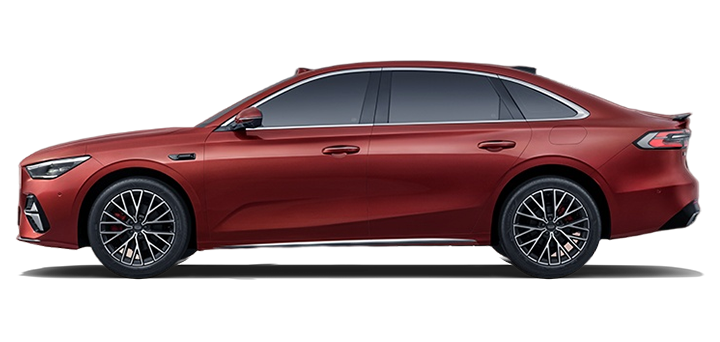
| Exterior | 31-slat vertical grille, fastback profile, mechanical door handles, full-width taillight |
What works
The hybrid economy number is credible and cable-free. The i-HEV quotes WLTC 3.98 L/100 km and over 1000 km on a tank without plugging in, which fits commuters in cities where home charging is awkward. A 175 kW drive motor combined with a 120 kW hybrid engine yields 238 system horsepower and a 7.7-second 0-100 km/h, brisk enough for a family sedan, and the car can drive on electric power up to 66 km/h.
The 2.0TD option keeps enthusiasts in the fold. A 200 kW / 400 Nm petrol unit with an Aisin 8AT and a quoted 6.5-second sprint gives buyers who dislike hybrids a conventional performance route, so the line covers both frugal commuting and direct driving rather than forcing a single technology on everyone.
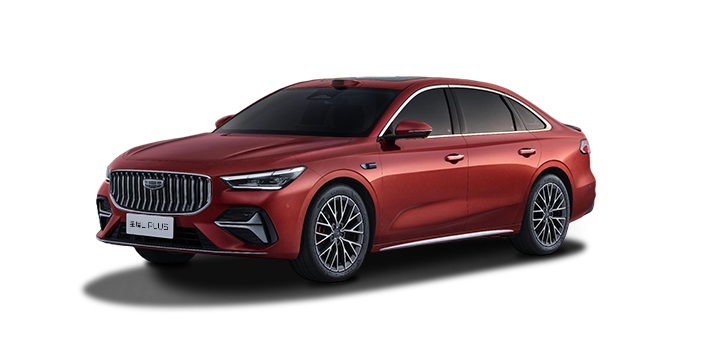
The chassis and safety story is solid on paper. CMA architecture, a rear multi-link suspension, and CDC adaptive damping aim to balance handling and ride, while 11 airbags across the range and a 2026 Top Ten Body award address the crash-safety concerns family buyers weigh heavily. Geely also lists an EVA in-car robot and a full-scenario blowout stability system as launch differentiators.
LiDAR finally reaches the petrol-sedan price class. Even restricted to the top trim, a roof LiDAR plus 3R11V1L sensing supporting city and highway NOA brings hardware that was exclusive to premium EVs into a CNY 150,000-ish family car, expanding the audience for assisted driving beyond early EV adopters.
What doesn’t
City NOA and LiDAR are top-trim only. The CNY 109,700 entry car and most mid trims do not carry the H5 package, so shoppers drawn by the ‘first LiDAR sedan’ headline must step up to the Yaoxing trim and its higher price. The marketing label overstates what the base car offers.
The limited price is promotional. The CNY 109,700-143,700 figure is a launch-time limited offer, not the steady-state price; the guided range starts at CNY 119,700, and buyers who miss the window pay more. No permanent discount should be assumed.
Real-world NOA behavior is unverified. City NOA takeover frequency, LiDAR effective range, edge-case handling, and highway NOA smoothness are TBD pending independent hands-on testing; launch claims are manufacturer figures. The i-HEV cannot be charged externally, so its electric-only role is a low-speed assist rather than a PHEV commute.
Specification gaps remain TBD. Cabin chip and screen size, LiDAR range/resolution, curb weight, trunk volume, combined hybrid torque, and overseas-market availability were not detailed in the launch coverage reviewed. The 2.0TD requires 95-octane fuel, a running cost premium over regular petrol.
Who it’s for
The i-HEV suits family buyers who want low WLTC consumption and 1000 km range without a charger, commuters covering long mixed routes, and drivers who prefer a proven sedan chassis over an EV. The 2.0TD suits enthusiasts who want conventional power and an 8AT. It disappoints shoppers who saw the LiDAR headline and expected city NOA on the entry trim, or anyone wanting a plug-in hybrid.
Verdict
The Geely Xingrui L PLUS is a sensible family sedan that makes a credible hybrid case, keeps a performance petrol option, and puts LiDAR-based city NOA within reach for the first time on a combustion-platform car. Yet the smart-driving suite sits only on the top trim, the low price is a limited-time promo, and real-world NOA is unproven. Recommendation: buy the i-HEV for economy if you do not need assisted driving; step up to the Yaoxing only if city NOA is a must-have you are willing to pay the top-trim premium for.
Related reads
Frequently asked questions
What is the Xingrui L PLUS launch price?
Limited launch pricing starts at CNY 109,700 after the October 17, 2026 Chengdu launch; guided range is CNY 119,700-153,700 depending on trim and powertrain.
Does every Xingrui L PLUS get LiDAR?
No. The 192-class LiDAR, Qianli Haohan H5 stack, City NOA and highway NOA are reserved for the top Yaoxing trim; lower trims use camera-based assistance only.
What is the hybrid fuel economy?
The 1.5TD i-HEV returns a WLTC 3.98L/100km, reaches 100km/h in 7.7s without external charging; a 2.0TD petrol with Aisin 8AT is also offered.
Sources
- CNR.cn: Geely Xingrui L PLUS launches from CNY 109,700 (Oct 18, 2026)
- Sina Finance / Kuaikeji: First LiDAR petrol sedan, specs and trims (Oct 18, 2026)
- Zhixun Culture: Xingrui L PLUS Chengdu launch coverage (Oct 17, 2026)
- Geely official Xingrui L PLUS page