
Samsung’s first entry into smart glasses has been one of the worst-kept secrets in mobile. Officially teased at July’s Galaxy Unpacked as part of a three-way collaboration with Google and Qualcomm, the device now has a full spec sheet and a design gallery courtesy of a leak from SammyGuru, amplified across GSMArena, PhoneArena and Notebookcheck within hours. The picture that emerges is of a product engineered to beat Meta at its own game on comfort, style and battery life rather than on raw specifications — and that strategic choice is the most interesting thing about it.
41 Grams Changes the Conversation
The headline number is weight: 41 grams with standard lenses, roughly the weight of two AA batteries distributed across your nose and ears. That is about ten grams lighter than the camera-equipped Ray-Ban Meta glasses and several grams lighter than Meta’s newer audio-only frames. Prescription lenses add a few grams, and the nine frame designs vary slightly, but Samsung has clearly treated low mass as a design constraint rather than an afterthought.
Weight matters more than any spec in this category. Every smart-glasses product that has failed commercially failed first on comfort — the “tech goggles” problem where the hardware announces itself on your face. Early renders from April suggested around 50 grams; the fact that the shipping design reportedly lands at 41 indicates genuine engineering effort in battery placement and frame materials rather than a restyled reference design.
Specs: Conservative Where It Counts
Inside, the glasses run Android XR on Qualcomm’s Snapdragon AR1 Gen 1 with 2GB of RAM and 64GB of storage — double Meta’s base storage and, importantly, enough for local model caching and photo buffering. A 12MP camera captures 3K video at 30fps, which sits comfortably above the social-media bar. Four microphones and two open-ear speakers handle calls and Gemini voice interactions.
Battery life is rated at up to nine hours on the glasses, stretching to 72 hours with the included charging case. The glasses carry IPX4 water resistance, enough for sweat and rain but not swimming; the case has no stated rating. Notably, Samsung has chosen a display-free design — this is an audio-and-camera product, not an AR product. That decision keeps the weight down, the battery honest and the price plausible, and it puts the Galaxy Glasses in direct competition with Ray-Ban Meta rather than with XREAL or INMO.
The absence of a display is also the most common criticism in early commentary. For a company that sells the Galaxy XR headset, shipping glasses without a screen looks like a step backwards. The counter-argument is straightforward: display-equipped glasses are heavier, more expensive, more power-hungry and socially conspicuous, and the market has consistently rewarded the lighter, cheaper, less capable product. Meta’s shipment numbers — more than 4.2 million smart glasses annually by Omdia’s count — are the evidence.
Fashion Is the Strategy, Not the Garnish
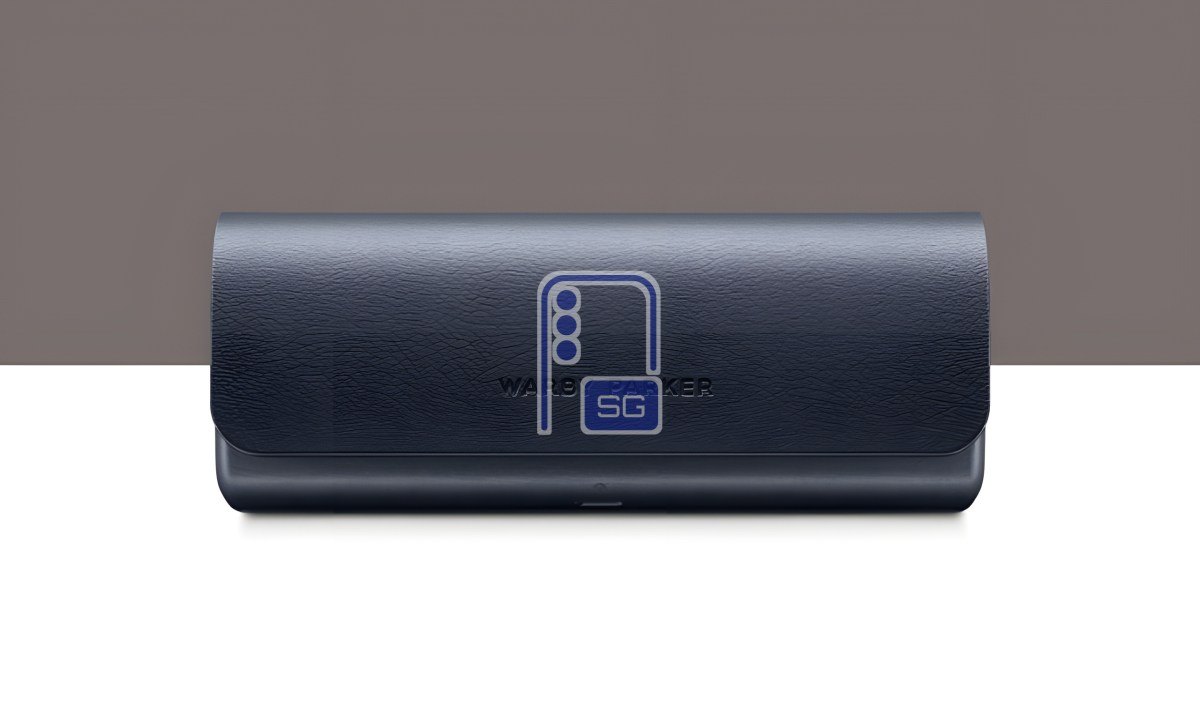
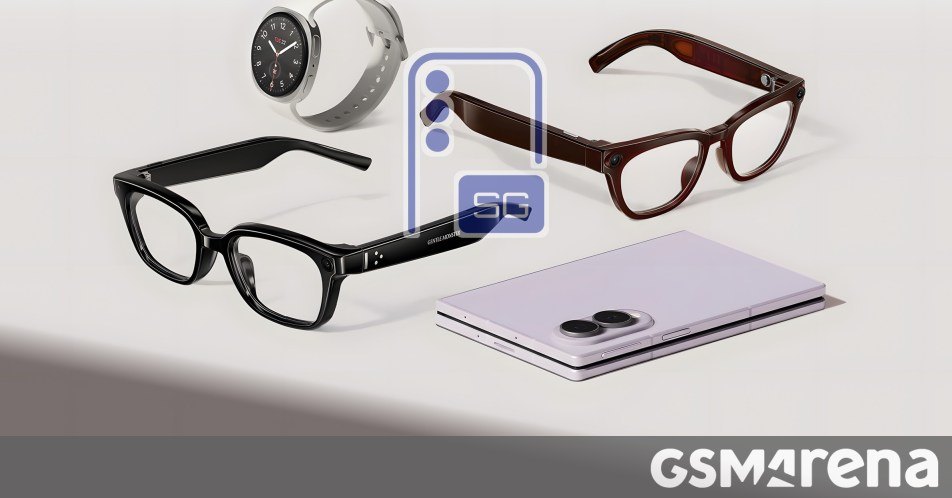
Samsung’s most consequential decision is treating eyewear brands as co-designers rather than suppliers. Gentle Monster contributes six frame shapes across sixteen color-and-lens combinations, running from a squared black frame through round and cat-eye shapes to slim pale-lilac ovals. Warby Parker adds three styles — Alden, Reid and Wren — in ten versions with clear or dark lenses, each shipping in a navy case.
Distribution follows the same logic. Gentle Monster frames will be sold in South Korea and the US; Warby Parker’s stay US-only at launch. Availability runs through the brands’ own stores and websites plus Samsung Experience Stores in the US. This is a recognition that smart glasses are bought in optical shops by people who care how they look, not in carrier stores by people who care about megapixels. It is also a hedge: if one collaboration underperforms, the other still has a runway.
Gemini Is the Differentiator
Because the glasses run Android XR with Gemini integrated at system level, the AI experience goes beyond voice-command lookup. The camera feeds context: photograph a whiteboard and the text lands in your Notes app; point at a foreign menu and translation arrives as audio; ask what you’re looking at and Gemini answers with camera awareness rather than from priors. Messages can be read aloud, and hands-free capture means you can take a photo without breaking eye contact with the person you’re talking to.
The integration depth is the reason Samsung is willing to ship without a display. If the assistant is good enough, the screen becomes optional — that is the theory, and it is the same theory Meta has been testing for three generations. Where Samsung has an advantage is the Android XR platform’s developer story and the Qualcomm silicon roadmap behind it. Where it has a disadvantage is that Android XR is young and Gemini’s camera-context features are still uneven in practice.
Compatibility and the Ecosystem Tax
Basic functionality extends to any Android phone and to iPhones — a deliberately broad posture that avoids the worst mistake a new eyewear platform can make. But some features will require a recent Galaxy S or Z series device running One UI 9 or later, and others will require a Galaxy Watch on Wear OS 7 or later. Regional variation is also expected, with Naver Maps support in South Korea standing as an early example.
This tiering is reasonable but worth naming plainly: the best experience requires Samsung’s whole ecosystem. Buyers who use an iPhone with a Galaxy Watch will find feature parity in neither direction. The glasses will still work; they just won’t be the product Samsung advertises.
What We Don’t Know Yet
Pricing remains unannounced, and that single number will determine whether this is a mainstream product or a niche one. Ray-Ban Meta starts at $449 in the US. Samsung will be expected to land near or below that figure, and the Gentle Monster collaboration in particular suggests a fashion-premium tier above it. The November launch window is also still a rumour, albeit an increasingly well-sourced one, with Korean media corroborating the US-first rollout.
The privacy question is unresolved in the leaked materials. Neither the leak nor Samsung’s public statements have described a recording indicator light, a hardware shutter, or any of the social safeguards that regulators in Europe and parts of Asia have begun demanding of camera glasses. Meta has faced nightclub bans and parliamentary scrutiny over exactly this gap. Samsung would be wise to ship with a visible, non-defeatable indicator.
Early Verdict
Rating (based on leak): 4/5 pending review — If the leaked specifications hold, Samsung’s Galaxy Glasses will be the first credible mass-market alternative to Ray-Ban Meta: lighter, longer-lasting, better stored, and backed by a fashion-forward frame lineup that treats smart glasses as eyewear first. The absence of a display is a defensible, market-tested choice rather than a shortcut. The risks are software polish, price, and the privacy safeguards we cannot yet confirm.
We will publish a full hands-on review at launch, including camera quality, Gemini latency, battery endurance in real use, and whether the Gentle Monster frames justify whatever premium Samsung attaches to them. On paper, this is the most interesting smart glasses launch since the category began to sell in volume.
Why Samsung Went Audio-First
There is a version of this product that Samsung could have built and chose not to: a headset successor, with a display, for people who want AR. The Galaxy XR exists for that audience. The Galaxy Glasses are aimed at a completely different one — the several hundred million people who already wear prescription frames and would consider a smarter pair if it cost about the same and weighed about the same. That audience does not want a screen hovering in front of their eye; a significant fraction of them would find it actively unpleasant.
Focusing on that audience forces a specific set of engineering trade-offs. No display means no waveguide, no projector, no heavy optics stack. Battery can go where the frame is thickest — at the temples, behind the ears — rather than competing for space with optics. The frame can use conventional acetate and metal materials instead of engineering plastics. The result is a device at 41 grams, which is within the normal range of what people already tolerate on their faces every day.
This is a well-trodden strategy in consumer electronics: win the mass market by solving the boring problem first. Fitness trackers succeeded by being jewellery that tracked steps; wireless earbuds succeeded by being audio products that happened to pair instantly. Smart glasses will succeed by being glasses that happen to be smart — and Samsung’s spec sheet is the first serious attempt at that framing from a major phone maker.
The Camera Is the Real Test
A 12MP sensor capturing 3K video at 30fps reads conservatively, and that is probably correct for a first generation. The interesting question is not resolution but whether the camera can be used as an input to reasoning rather than as a tool for output. Gemini’s camera-context features depend entirely on frame quality, stabilisation and how quickly the pipeline can hand an image to the model without making the user wait.
Latency is the number that will define the experience. Any round-trip to a cloud model introduces a delay that makes conversational interaction feel like interrogation. Samsung has the advantage of controlling the phone, the watch and the glasses, and of working directly with Google on the platform, which means more of the pipeline can be optimised end to end than a third-party maker could manage. Whether that translates into sub-second responses for camera queries is the single most important unknown left.
Battery life under real use is the second unknown. Nine hours of playback is not nine hours of continuous camera inference, and the difference is significant. Users who ask the glasses to look at things constantly will find the ceiling much lower than the rating suggests; users who ask occasionally will find the rating generous. Almost every smart-glasses review ever written has found the same gap between the headline number and the lived one.
How It Stacks Up Against the Competition
Against Ray-Ban Meta, Samsung wins on weight, storage and battery, and loses on ecosystem maturity — Meta has three generations of software iteration and a camera pipeline optimised through millions of hours of use. Against the audio-only Meta frames, Samsung adds a camera and a slightly higher price band, which is the correct direction. Against INMO’s translation-focused GO3, Samsung offers far better build quality and style, and gives up the near-eye display that makes real-time subtitles possible.
Against the noughties-inflected pitches of display-equipped AR glasses, the Galaxy Glasses are simply a different product for a different buyer, and comparisons between them miss the point. The relevant contest is for the everyday pair that a person puts on without thinking. On style, weight and partnership credibility, Samsung has put together the most serious challenge to Meta’s lead yet announced.
The Privacy Gap Is the Biggest Risk
Leaked specifications are never complete, and the most conspicuous omission here is any mention of recording indicators, capture signals or hardware shutters. Every camera-enabled glasses product shipped so far has faced the same backlash: nightclubs ban them, venues ask patrons to remove them, regulators in Europe ask pointed questions about bystander consent. Meta has handled this by putting a bright LED on the frame and making it non-defeatable. Samsung has not said what it will do.
This matters commercially as well as ethically. A device that makes the people around the wearer uncomfortable will not be worn, no matter how good its specifications. The social licence for camera glasses is granted by the visible signal — a bright light that tells bystanders a recording is happening. If Samsung ships without one, it will spend the first year of the product’s life in a regulatory and public-relations fight instead of a marketing campaign.
Who Should Wait, and Who Should Plan to Buy
The clearest buyer is an existing Galaxy phone owner who already wears glasses, wants hands-free capture and queries, and does not care about AR. That person will get a well-made, genuinely useful product, provided the price lands near Ray-Ban Meta.
People who should wait: iPhone users who expect feature parity, anyone who wants a display for navigation or subtitles, and anyone whose primary interest is watching video. All three groups will be better served by other products, and two of the three will be better served by products that already exist.
What a Good Launch Would Look Like
Three things would turn this from a promising leak into a strong recommendation. A price at or below the Ray-Ban Meta benchmark, with the Gentle Monster frames available at launch rather than months later. A visible, non-defeatable recording indicator that removes the social objection before it forms. And camera-query latency low enough that asking the glasses something feels faster than pulling out a phone.
Get all three right and Samsung will have done something Meta has struggled with: made smart glasses that a normal person buys because they are glasses. Miss the first and the category stays a niche. Miss the second and the category stays a controversy.