
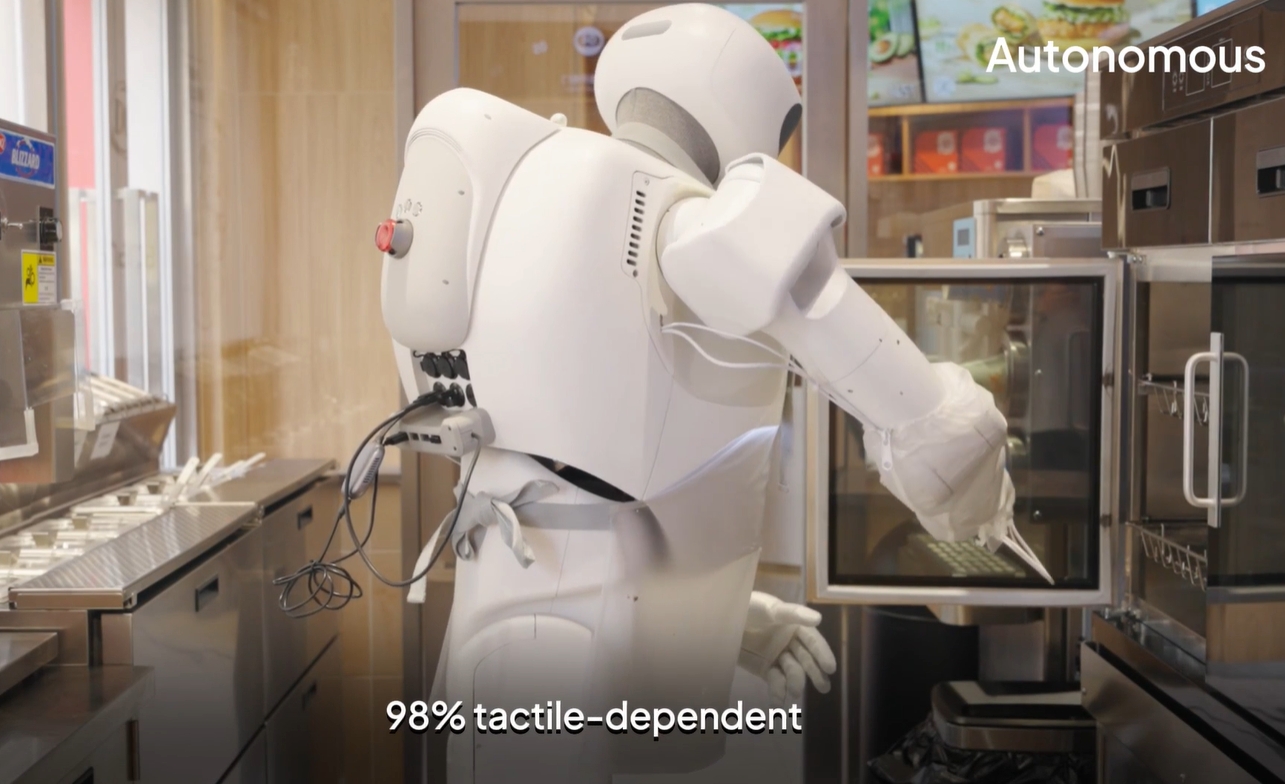
As the hottest fully autonomous humanoid robot restaurant solution currently on the market, Sharpa gained widespread fame through its collaboration with DQ on the world’s first robot-operated store requiring zero structural modification. Powered by its proprietary SharpaWave biomimetic dexterous hand, VTLA embodied AI brain, and multimodal vision-tactile fusion technology, it stands as the industry’s first robotic dining solution capable of executing the entire 55-step ice cream making process without back-of-house renovations or human assistance. Marketed with the selling points of “fully unmanned processes, zero human intervention, standardized product excellence, and 24/7 continuous operation,” it is hailed as the future of automated dining, garnering significant attention from both the industry and the investment community.
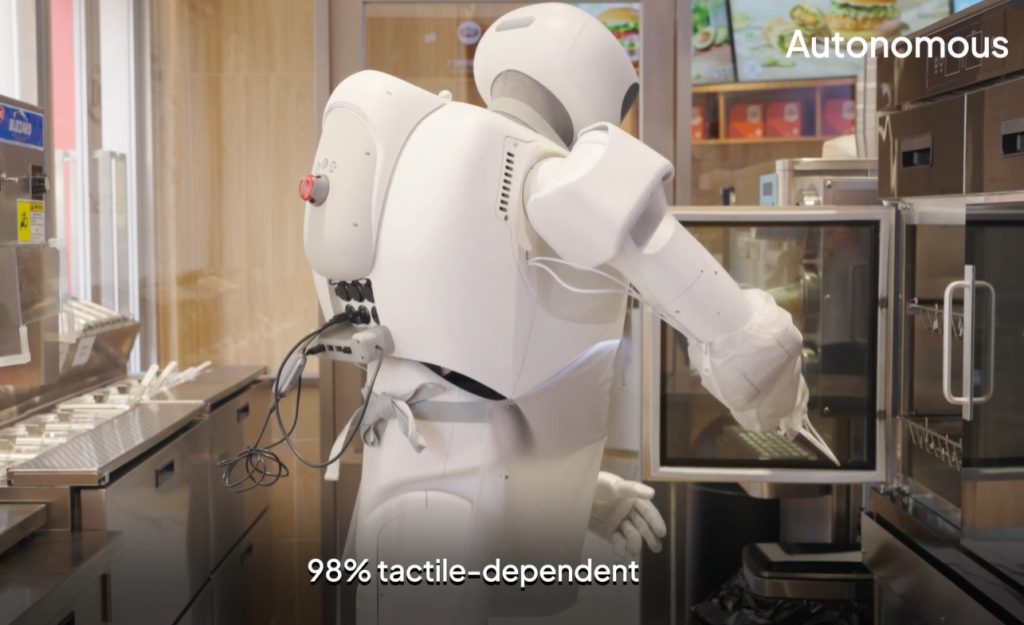
Stripping away the marketing hype surrounding this “tech sensation” and evaluating it based on real-world store operations, actual service performance, cost analysis, and long-term stability, the conclusion is clear: the Sharpa fully autonomous robot restaurant is an experimental-grade solution that excels in demonstrations but fails in commercial viability and practical utility. While technologically advanced, it suffers from fatal flaws regarding the essential requirements of the food service industry—specifically service efficiency, error tolerance, operating costs, scenario adaptability, and profitability models—rendering it entirely unsuitable for large-scale commercial deployment. This article objectively dissects the product’s true strengths and weaknesses, benchmarks it against similar industry solutions, and provides comprehensive “pitfall avoidance” guides for both consumers and investors.
I. Core Product Strengths: The Only Real Advantages in Technology and Differentiation
To ensure an objective and neutral assessment, we first outline the undeniable core highlights of the Sharpa robot restaurant—factors that have allowed it to lead the pack and generate massive buzz. Its advantages lie primarily in technological innovation and flexibility in scenario adaptability.
First, its biomimetic operational precision is top-tier in the industry, and the level of autonomy across the entire process is exceptionally high. Sharpa is equipped with dual SharpaWave dexterous hands featuring 22 active degrees of freedom and fingertips embedded with high-resolution tactile sensors (offering “thousand-level” tactile pixels). Capable of simulating the fine motor skills of a human hand, it can independently execute a complex 55-step food preparation sequence—including picking up cups, adding ingredients, stirring, scraping, and sealing lids. It stands as one of the very few humanoid robots currently capable of fully preparing non-standardized, semi-liquid food products. Operating autonomously in a closed-loop system without the need for human intervention or assistance, its technological maturity far surpasses that of traditional “pick-and-place” food service robots.
Secondly, it supports deployment without requiring store modifications, offering exceptional adaptability. Unlike traditional unmanned restaurants that demand custom kitchen equipment, workstation overhauls, or specialized machinery, Sharpa integrates directly with existing commercial equipment. It requires no machine modifications or changes to counter layouts, allowing for rapid deployment in traditional stores; this “light-touch” implementation significantly lowers the initial barrier to entry.
Finally, it achieves an extreme level of standardization with zero deviation in quality control. The robot operates entirely via programmed routines, ensuring absolute consistency in ingredient weights, mixing times, and preparation techniques. This eliminates issues common to human labor—such as uneven portioning, procedural oversights, or inconsistent methods—thereby preventing quality fluctuations and perfectly meeting the standardization needs of chain brands. Furthermore, the unmanned model eliminates hygiene risks associated with human staff, ensuring superior kitchen cleanliness and adherence to operational standards.
II. Critical Flaws: Structural Shortcomings Hindering Commercial Viability
In contrast to its impressive technical demonstrations, the Sharpa robot restaurant suffers from fundamental structural flaws that cannot be remedied through simple algorithmic iterations or firmware updates. These issues relegate it to the status of a “viral” showcase project, rendering it incapable of viable, long-term commercial operation.
First, its food preparation efficiency lags drastically behind human workers, making it completely unsuitable for handling peak customer traffic. This is its most obvious and fatal shortcoming. Real-world testing shows that a skilled human worker can prepare a DQ Blizzard in just 2 to 3 minutes, whereas Sharpa requires 6 to 7 minutes to complete its 55-step process—effectively cutting productivity in half. Furthermore, the robot lacks parallel processing capabilities and operates in a single-threaded, sequential manner; during peak customer traffic, this leads to severe order backlogs and delayed service, rendering it completely incapable of handling standard store volume and lacking the productivity required for basic operations.
Secondly, the system has extremely low environmental tolerance, with even minor variables frequently causing operational failures. Sharpa’s high-precision operations rely heavily on a stable, standardized environment, resulting in poor fault tolerance during real-world deployment. Subtle variables—such as paper cups being too soft and prone to deformation, ice cream consistency fluctuating slightly with temperature, or the cup shifting due to vibration during mixing—can cause errors in gripping, ingredient dispensing, or the mixing process itself, triggering task interruptions and product failures. Daily temperature fluctuations, slight equipment displacement, and variations in material conditions significantly increase the failure rate, necessitating frequent human intervention to reset the system or salvage the product; the concept of “fully autonomous, unmanned operation” is thus rendered meaningless.
Thirdly, the equipment cost is exorbitant and maintenance expenses remain high, causing the profitability model to collapse entirely. The complete Sharpa humanoid robot system costs hundreds of thousands of yuan—an investment for a single unit that far exceeds the annual labor costs of a traditional store. Moreover, components such as biomimetic dexterous hands, multimodal sensors, and high-precision servo units are delicate and prone to wear; they degrade rapidly under high-frequency operation, and the scarcity of proprietary parts combined with complex repair requirements leads to high costs for maintenance, calibration, and replacement. When contrasted with the food service industry’s “low-margin, high-volume” business model, the massive equipment depreciation and maintenance costs make profitability impossible; at this stage, the system serves merely as a brand showcase tool with no genuine commercial value.
Fourthly, the operational workflow is rigid and lacks the ability to adapt to contingencies, relying heavily on human intervention as a safety net. The robot can only execute a preset, standardized 55-step process and is unable to handle the personalized demands or unexpected situations common in food service environments. It cannot accommodate common consumer customization requests—such as reduced sugar, less ice, extra toppings, or specific dietary restrictions. When faced with issues like material shortages, equipment displacement, minor malfunctions, or order anomalies, the robot simply halts and issues error alerts; it lacks the ability to autonomously troubleshoot or adjust workflows. Consequently, it requires constant human oversight as a fail-safe, failing to actually save on labor costs and instead adding a burden of specialized maintenance personnel.
Fifth, the application scenario is extremely limited, versatility is poor, and reuse value is low. Currently, Sharpa is only suitable for preparing simple fluid foods like ice cream and desserts; it cannot handle mainstream categories such as milk tea, coffee, light meals, or snacks. It is completely incapable of complex cooking, heat control, ingredient processing, or multi-category mixed preparation. The equipment is highly scenario-specific; if a store changes its product range or updates its menu, the entire system is likely to become obsolete, resulting in extremely low reuse rates and versatility.
Sixth, it has weak capacity for handling customer flow and relies heavily on reservation-based limits. Due to low efficiency, poor fault tolerance, and a high risk of failure, deployed stores must restrict order volumes through reservation systems. They cannot support walk-in customers placing orders normally, which fundamentally contradicts the core requirements of food service outlets: efficient reception and immediate order fulfillment. While the store may appear bustling and fully booked, this is actually forced flow restriction caused by technical limitations, rather than a reflection of true operational capacity.
III. In-depth Comparison with Competitors: Leading Technology, Yet Lagging Significantly in Comprehensive Implementation
The food service automation sector is currently divided into two main schools of thought: humanoid robots capable of fine manipulation (represented by Sharpa) and the industry mainstream—specialized automated food machines, robotic arm workstations, and standardized unmanned kitchens. A horizontal comparison with mainstream market solutions reveals that while Sharpa maximizes its technological novelty, it is completely outperformed in terms of practical commercial viability.
In contrast, traditional specialized unmanned food machines (such as fully automated milk tea, ice cream, and coffee machines) have undergone years of iteration. These devices feature simple structures, exceptional stability, rapid output, and extremely low failure rates. With unit costs of only tens of thousands of yuan, they are easy to maintain, support high-volume production during peak hours, and are perfectly suited for standard store operations. While it lacks the flashy operation of a humanoid robot, the alternative—a standard six-axis robotic arm workstation—precisely addresses the core foodservice needs for speed, stability, and cost-efficiency. In contrast, Sharpa sacrifices efficiency, stability, and cost-effectiveness for the sake of humanoid aesthetics—a design approach that prioritizes form over function.
Compared to industry-standard six-axis robotic arm workstations, traditional industrial arms offer stable payloads, efficient movement, and high environmental tolerance. They are adaptable to various simple preparation tasks, material handling, and plating; they support prolonged, high-frequency continuous operation; and they have a track record of successful commercial deployment with controllable costs. Sharpa, however, trades high precision for high wear and tear, low efficiency, and high barriers to entry. While it appears “smarter,” it is actually more fragile, less efficient, and harder to deploy commercially; it is suited for demonstrations rather than mass-market operations.
When compared to fully digitalized, unmanned back-of-house solutions—which rely on interconnected standardized equipment to automate the entire workflow and optimize capacity and costs for profitability—Sharpa’s value proposition differs fundamentally. Its core value lies in brand marketing, tech-focused publicity, and data collection; it is essentially a promotional tool for capital and branding rather than an operational tool designed to cut costs and boost efficiency in the foodservice industry. Simply put, competing solutions are designed to “run a profitable business,” whereas Sharpa is designed to “generate buzz and attract attention”—a complete misalignment of commercial logic.
IV. Considerations for Purchase and Partnership (A Guide to Avoiding Pitfalls for Investors and Consumers)
- Key Pitfalls for Investors/Merchants (Important)
First, do not enter this space with the expectation of “reducing costs, increasing efficiency, and generating profit.” At this stage, a Sharpa robot restaurant offers no possibility of profitability. Costs for equipment procurement, maintenance, and necessary human backup far exceed those of a traditional workforce, yet production capacity is significantly lower. It fails to create operational value and is suitable only for short-term brand marketing and buzz generation, not for long-term commercial operation.
Second, avoid blindly following the trend of deployment; recognize that this is an experimental product. Currently, the entire solution is a first-generation prototype that has not yet undergone commercial iteration; it falls short of standards regarding stability, versatility, and fault tolerance. It remains a localized pilot project without proven large-scale implementation cases. Blind deployment carries a high risk of equipment idleness, sustained financial losses, and incompatibility with actual operational scenarios.
Finally, be wary of long-term maintenance and depreciation risks. The maintenance ecosystem for sophisticated humanoid robots is immature; repairs are costly and time-consuming. Furthermore, rapid technological evolution causes first-generation equipment to depreciate quickly, offering little long-term residual or reuse value—such units are highly likely to be scrapped once the store upgrades or product offerings change.
- Key Considerations for Consumer Experience
First, lower your expectations regarding taste and consistency. While robot-prepared food is standardized, the system cannot make real-time adjustments based on ingredient conditions or ambient temperature. The failure rate is relatively high, leading to issues like uneven mixing, portion inaccuracies, and off-putting textures; the experience lacks the nuance and consistency of human-prepared food.
Second, be prepared for long wait times. Robots are slow to prepare food, leading to significant order backlogs. Long queues are common, and the reliance on reservation systems means walk-in customers often cannot be served immediately, resulting in a poor, inefficient experience.
Third, view the “tech gimmick” aspect rationally. The concept of a “fully autonomous, unmanned restaurant” is largely a marketing ploy. Stores still require significant human oversight to handle contingencies and corrections; it is not truly unmanned operation, so there is no need to pay a premium for the technology.
V. Summary Review: Advanced Technology, Yet Zero Commercial Viability
The Sharpa fully autonomous robot restaurant is a product that excels technologically but fails commercially. While it demonstrates the technical potential of humanoid robots through cutting-edge biomimetic dexterous hands, complex multi-step autonomous operations, and deployment capabilities requiring no facility modifications, it completely fails to meet the core demands of the catering industry: efficiency, stability, low cost, and adaptability to diverse scenarios.
Its primary value lies in brand exposure, generating technological buzz, and collecting operational data, rather than in actual restaurant management, cost reduction, efficiency gains, or capacity expansion. To the average consumer, it is merely a trendy “Instagrammable” spot characterized by slow service, a lack of flexibility when things go wrong, and a mediocre overall experience. To business owners and investors, it represents an experimental setup that is prohibitively expensive and highly inefficient—unprofitable and ultimately impractical for real-world use.
Undeniably, this represents a direction for the future of automated dining; however, the Sharpa fully autonomous robot restaurant remains a long way from viable commercial implementation in its current state. It is a concept driven more by hype than substance, offering greater value as a spectacle than as a functional tool. Whether in terms of the consumer experience or investment viability, it is not a priority choice.