
A pre-launch consumer caution on the new Apple TV 4K (A19), expected on October 30.
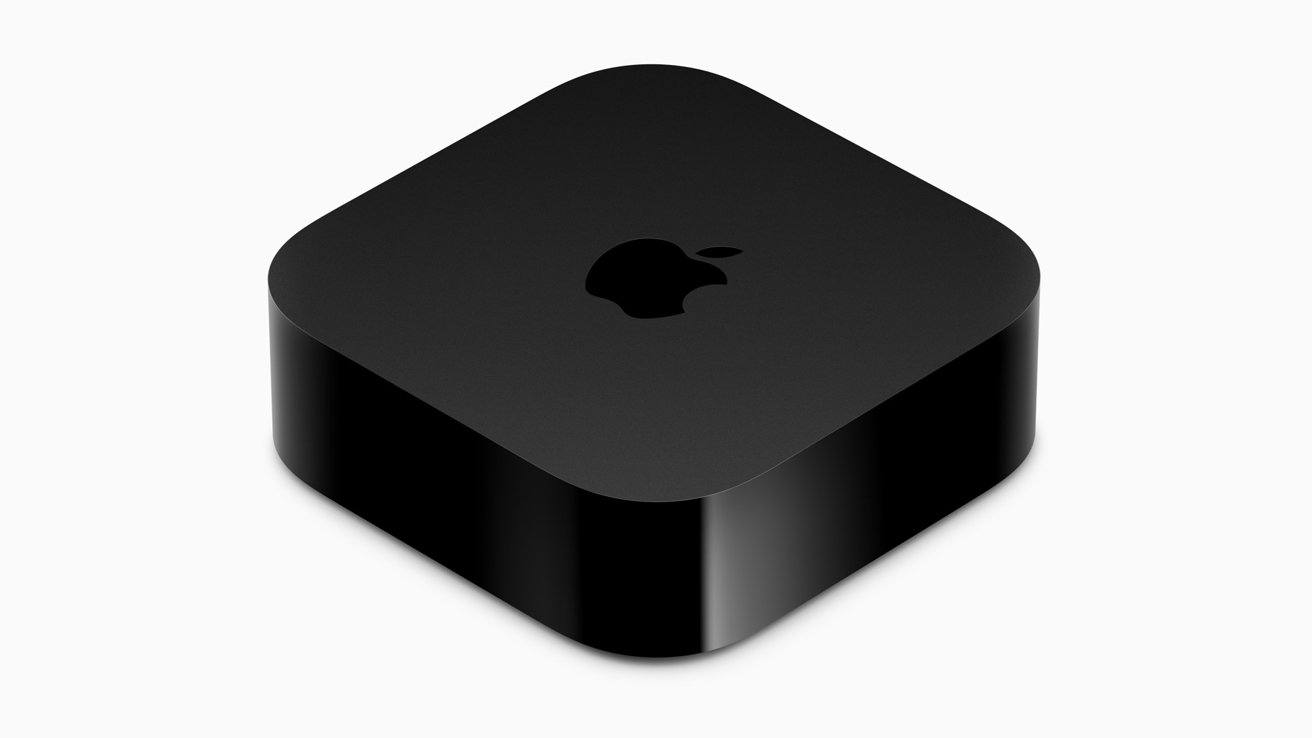
It is the product Apple would probably rather you stop asking about. On the morning of October 13, 2026 — a Tuesday, Pacific time, with a short “Welcome Home” event planned at Apple Park — the company is expected to finally pull the sheet off a new Apple TV 4K. According to Bloomberg’s Mark Gurman, whose reporting is the closest thing to an official leak channel Apple tolerates, the box will move from the A15 Bionic inside the 2022 model to a standard A19 chip, add built-in microphones so you can bark at Siri without picking up a remote, and may — only may, depending on whether the last engineering tests held up — ship alongside a redesigned Siri Remote with a tiny speaker built into it so you can honk it out from between the couch cushions.
This is where the story usually ends in the Apple fan press. New chip. New remote. New, slightly more expensive home hub. Order opens around October 30, ships a few days later, and a thousand YouTube reviewers call it the “best streaming box you can buy” because, well, it is the only streaming box left that costs this much.
But if you are a normal consumer staring at a $129-or-more price tag and a TV that already has Netflix, Disney+, Max, Prime Video, YouTube, Spotify, and a dozen other apps baked into its own software, the honest question is not whether the new Apple TV is good. It is why Apple is still making this thing at all — and whether the upgrade cycle, after four years of silence, has finally addressed the reasons people stop buying it.
This is a pre-launch caution, not a review. The hardware has not been turned on by any independent journalist yet. Where this article relies on confirmed facts — the 2022 model’s $129 price, the A15 inside it, the existence of tvOS, the HomeKit hub role — those are on the record. Where it relies on Gurman’s Power On newsletter, 9to5Mac, and MacRumors reporting for what is coming, those are flagged as rumors, and a rumor the week before an event is not a spec sheet.
Product market analysis
To understand what Apple is walking into, you have to understand that the entire category the Apple TV lives inside is shrinking. Not slowly, not gracefully — structurally.
Pay-TV subscriptions in the United States fell by roughly 4.8 million households in 2025, according to Mordor Intelligence’s set-top box tracking, continuing a multi-year bleed that has seen Comcast, Charter, Dish, and Sling shed video subscribers at double-digit rates in some quarters. The BBC itself is planning an internet-only switchover in the 2030s. When the public broadcasters stop designing hardware for cable boxes, the cable box is over.
But the more quiet collapse is not in cable boxes. It is in streaming boxes. Smart TVs from Samsung, LG, TCL, Hisense, Vizio, and Sony now ship with Roku TV, Google TV, Fire TV, or Samsung Tizen built in, and those operating systems are good enough that most households no longer feel they need to plug anything into the HDMI port to watch a show. Ken Research’s 2026 set-top box assessment explicitly names “smart-TV app substitution” as the structural drag on dedicated retail receivers, and Chinese data from洛图科技 shows the domestic smart-box retail market down 3.4% in 2025 to 2.4 million units — a fraction of the ten-million-plus units the category moved in 2014–2017.
In other words, the living room entry point that Apple tried to capture in 2007 with the first Apple TV — when Steve Jobs famously said the product was a “hobby” — has been eaten from both sides. On one side, the cable box is dying. On the other, the smart TV is absorbing the streaming box. The only people still buying dedicated streaming sticks are people with dumb TVs, people who dislike the interface on their smart TV, or people who want a specific feature their built-in apps lack.
Apple arrived late to all of it. The Apple TV was announced in 2006, shipped in 2007, and spent its first decade as a hobby unit that did not run iOS apps until 2015. By the time the 4K model arrived in 2017, Roku had already been selling streaming boxes for fourteen years, Amazon had a Fire TV Stick in basically every U.S. household, and Google had cast Chromecasts into tens of millions of living rooms. Apple never competed on price, never competed on app breadth, and never found a wedge product that made the box feel essential. The closest it ever came was as a HomeKit home hub — and even that role is now shared with the HomePod and HomePod mini, and increasingly with Matter bridges built directly into smart TVs and lights.
The “Welcome Home” event on October 13 is, by all accounts, not really an Apple TV event. It is a HomePod event. Gurman and 9to5Mac both expect a new HomePod mini — possibly with a screen, possibly called something like HomeView — to be the headline product. The Apple TV 4K is the warm-up act. That is the most honest signal Apple has sent about where the box sits in its strategy: the future of the Apple living room is a speaker with a screen, and the Apple TV is the legacy device that keeps the existing tvOS installed base alive until everyone upgrades to the new thing.
That is not a critique Apple would dispute. It is the implication of four years between Apple TV hardware refreshes.
Competitor product analysis
The uncomfortable comparison for anyone about to drop $129 on a new Apple TV is not the 2022 model they already own. It is the four boxes that cost a fraction of the price and do most of the same things.
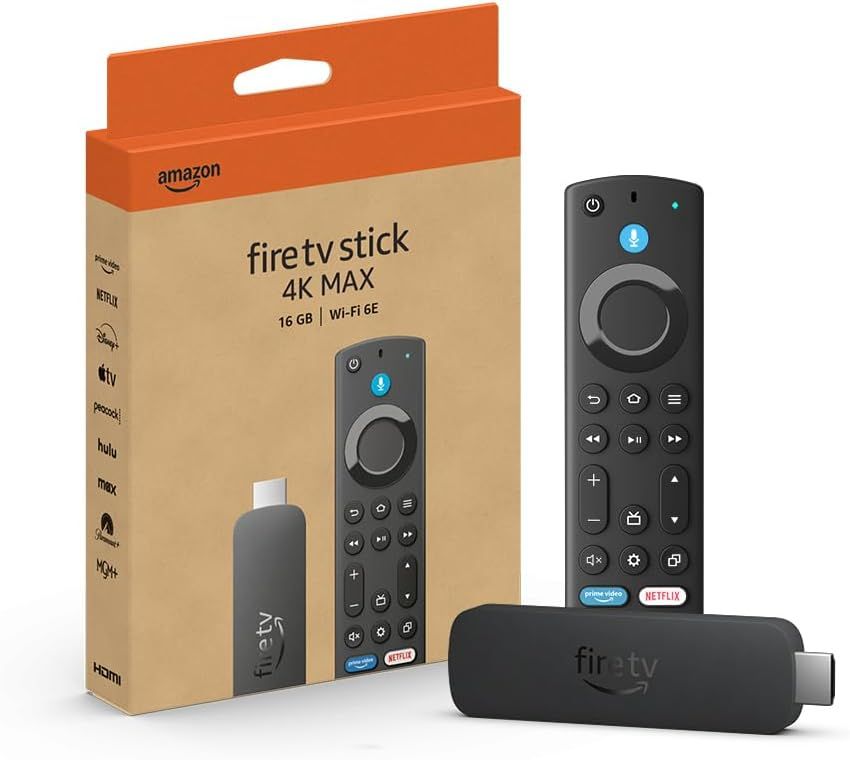
Amazon Fire TV Stick 4K Max. The current-generation 4K Max launched at $59.99 (and, per a 2026 price-memo circulating among Amazon device customers, has drifted up to around $84.99 as Amazon’s own hardware costs rose) with a 2.0 GHz quad-core processor, Wi-Fi 6E, 16 GB of storage, Dolby Vision, Dolby Atmos, and an Alexa voice remote with dedicated app buttons. It also runs the new Vega operating system, which Amazon has been pitching as faster and less ad-clogged than the old Fire TV skin. The Max is not elegant. The Fire TV home screen is aggressively merchandised — Amazon wants you to rent or buy something before you find your own Netflix app — and the Alexa experience is a five-second detour into product recommendations. But it is fast, it is cheap, it supports every streaming app you have ever heard of, and it will sit behind your TV on an HDMI plug instead of taking up shelf space. At roughly one-quarter to one-half the price of the Apple TV, it is the default answer to “what should I buy” for anyone who is not already inside Apple’s walled garden.
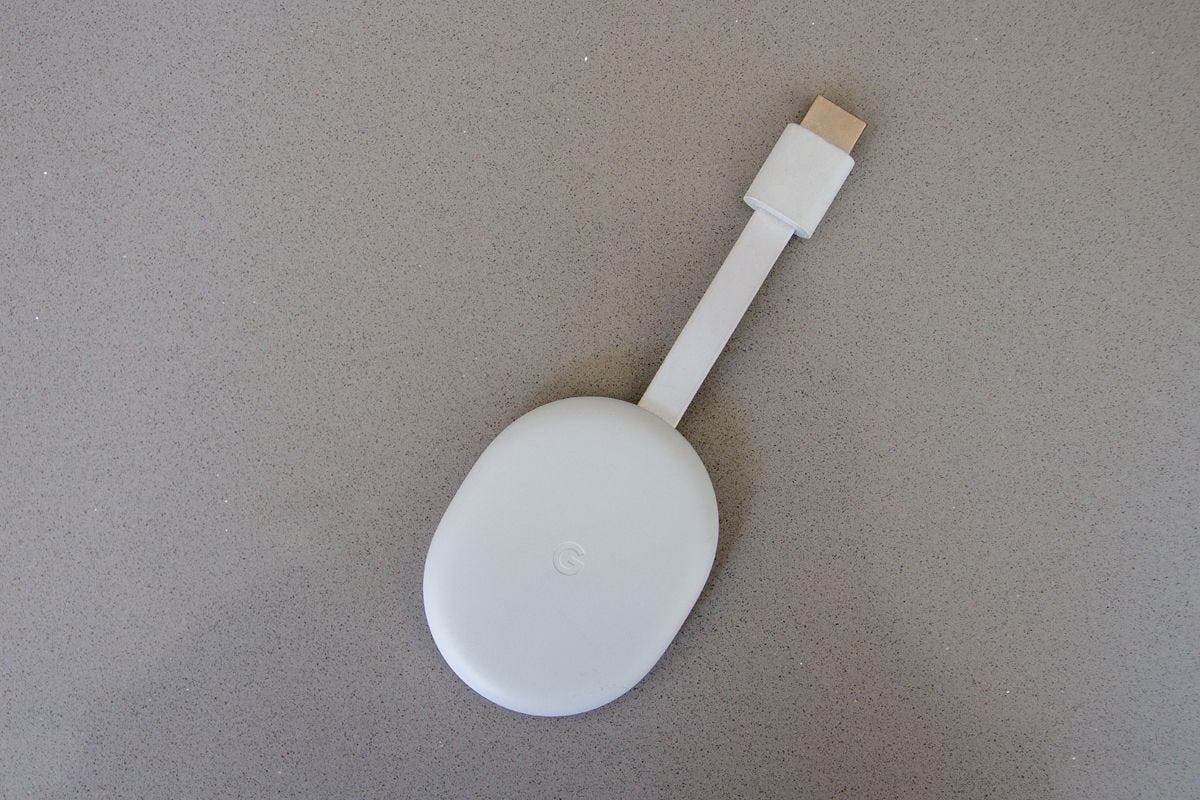
Google Chromecast with Google TV. The 4K Chromecast — the puck-shaped dongle with the little remote — launched at $49.99 and regularly sells for $30–$40 on sale. It runs Google TV, which is the best-designed recommendation interface in the category, it supports 4K HDR, Dolby Vision, Dolby Atmos, and it ships with Google Assistant built in. The more expensive Google TV Streamer at $99 adds a faster processor, more storage, and a Thread border router, which makes it a credible smart-home hub for Google Nest households. The Chromecast’s weakness is that it is a Google product: the home screen is a content-recommendation engine first and an app launcher second, and the advertising and data-collection posture is not to everyone’s taste. But for Android, Nest, or YouTube Music households, it is the natural box, and the price is so low that the purchase decision barely registers.
Roku. Roku is the quiet giant. Its streaming sticks start at $29.99 and its Express and Premiere boxes cover the low end; the Ultra, at around $99, is the flagship with Ethernet, a better remote, and Dolby Vision. Roku’s interface is deliberately sparse — no one mistakes it for a luxury product — but it is also the most neutral one in the category, with the widest app support of any streaming platform and no single studio getting special treatment. Roku’s problem is the same problem it has always had: the hardware is unremarkable, the remote is fine rather than great, and the company has had repeated missteps with ad-supported “Roku City” recommendations and platform-level ads injected into users’ content. But for households that just want a no-fuss box that runs every app and does not ask you to log into an account with a trillion-dollar ad business, Roku is the boring, defensible choice.
NVIDIA Shield TV. The Shield is the enthusiast box. It is the most expensive of the four at around $179–$199, but it is also the only one that runs a full Android TV experience with the ability to sideload apps, emulate retro games, run Plex as a proper media server client, and output to a high-end projector or AV receiver without choking. The Shield has not been meaningfully refreshed since 2019, and NVIDIA’s commitment to the category is ambiguous — the company talks about it in the present tense but ships nothing. It is a niche product for a niche audience: home-theater hobbyists who already have a 4K projector, a surround processor, and a Plex server in the closet. If you are that person, you already own one. If you are not, you do not need to read this paragraph.
The uncomfortable arithmetic for Apple is that, on price, every one of these competitors is under half the Apple TV’s starting price, and two of them are under one-third. The Apple TV is not competing on specs — the A19 will be faster than any processor in a Fire Stick, yes, but you do not need an A19 to play Netflix. It is competing on ecosystem lock-in, on video codec support for Apple’s own Apple TV+ service, and on the HomeKit hub role. For anyone who is not already bought into that stack, the value proposition is thin.
Pros and cons
Let’s be fair for a paragraph. The new Apple TV 4K, if the rumors hold, will be a genuinely excellent piece of hardware.
The A19 chip — the same family now inside the latest iPhone — will make the interface feel instant, will handle the on-device processing that the new, more Siri-heavy tvOS wants to do, and will future-proof the box for four or five years of software updates. 4K Dolby Vision output, HDR10+, Dolby Atmos audio, and the ability to route HomePod speakers as a home-theater surround setup are all real, and they are things the Fire Stick and Chromecast either do poorly or not at all. As a HomeKit, Thread, and Matter border router, the box is still one of the cleanest ways to keep your HomeKit accessories responding when you are away from home. FaceTime on TV, which the 2022 model added, remains a genuinely nice feature for families who call grandparents from the couch.
Those are the pros. Now the cons, which is where this article earns its caution.
The walled garden is the product, and the wall is getting higher. tvOS does not let you sideload apps. If an app developer decides not to ship a tvOS build — and plenty of smaller streaming services, niche media players, regional VOD apps, and indie games do not — you cannot install it. You cannot run a web browser on the TV. You cannot load an APK from a USB stick. You cannot run a Plex client with the same codec flexibility you get on an Android TV box. For users who are comfortable with “the apps that exist are the apps you get,” this is fine. For power users who want to load Jellyfin, Emby, Kodi, or a regional streaming service that Apple has not approved, the walled garden is a daily irritation, not a feature.
Not every app is there. This sounds like the same complaint, but it is a distinct one. Netflix, Disney+, Max, Prime Video, Hulu, Spotify, YouTube, and Apple TV+ are all on tvOS. But HBO Max’s live sports deal behavior, Paramount+’s regional variants, Peacock’s past carriage disagreements, and a long tail of smaller services have all at various points been missing, delayed, or degraded on Apple TV relative to Roku or Fire TV. Apple reviews tvOS apps; Roku and Fire TV mostly do not. The result is that, on a Tuesday night when you want to watch something specific, the Apple TV occasionally tells you “this app is not available” when the $39 Chromecast in the drawer runs it fine.
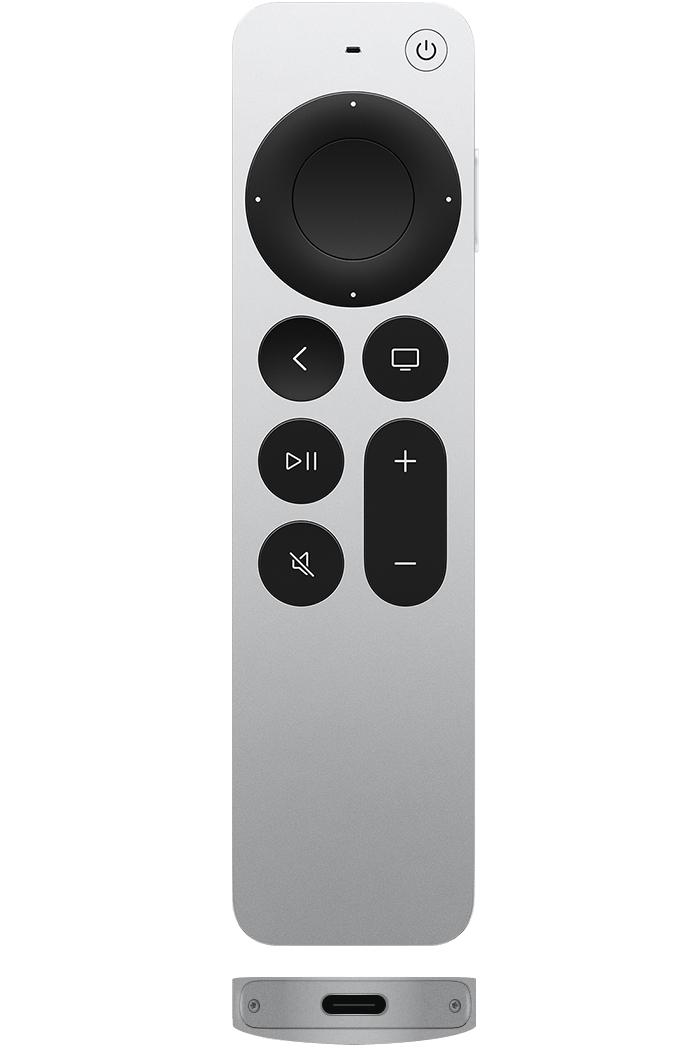
The remote. Again. The Siri Remote is the longest-running apology in consumer electronics. The 2016-generation touch-surface remote was so widely hated — glass, no tactile buttons, easy to lose, impossible to find in the dark — that Apple essentially re-issued the whole product in 2021 as a thicker aluminum slab with real buttons. That fixed the button problem. It did not fix the losing problem. The remote is thin, silver, smooth, and the same color as a lot of couch cushions, blanket folds, and coffee-table magazines. Losing it is a ritual. Apple’s current mitigation is the iPhone “Find My Remote” pinging, which works only if you are standing near the couch and the remote has enough Bluetooth range to be discovered.
The rumored new remote with a built-in speaker — which, to be clear, Gurman reported that Apple has tested, not that it has confirmed will ship — would be the first genuine fix. You would yell “Hey Siri, find my remote” and the remote would beep. That is obviously the right answer, and it is obviously something Amazon shipped years ago on the Fire TV Alexa Voice Remote. If the speaker remote actually ships, it is the single most consumer-meaningful change in this whole refresh. If it does not — if it stays in the lab the way so many Apple prototypes stay in the lab — the new box ships with the same silver rectangle you have been losing since 2021.
Siri on the TV has a track record you should not ignore. The Apple TV was supposed to be the living-room Siri showcase. In practice, Siri on tvOS has spent a decade being the slowest, least-capable version of Siri on any Apple device. It launches apps, it searches across a handful of video services, and it almost never works as a general assistant. The rumored addition of built-in microphones to the box itself — so you can talk to Siri without pointing the remote at the TV — is meant to fix this by turning the Apple TV into a home-listening device. But Siri, as a platform, has a years-long credibility problem. It confuses names. It fails on multi-step requests. It has been repeatedly surpassed by Alexa and Google Assistant on general tasks, and by the new wave of LLM assistants on basically everything. Betting $129-plus on a box whose headline upgrade is “now you can talk to Siri across the room” is a bet that Siri has finally caught up. There is reason to hope — the new Apple Intelligence Siri is genuinely better on the iPhone — but the track record is not encouraging.
The price. The 2022 Apple TV 4K started at $129 for 64 GB Wi-Fi and $149 for 128 GB Wi-Fi-plus-Ethernet. The new model, with the A19, more RAM, and possibly a N1 wireless chip and Wi-Fi 7, is widely expected to hold the $129 entry price but push the higher-tier model closer to $179 or $199. At $129, the box is already roughly two to four times the price of a Fire Stick or Chromecast. At $199, it is more expensive than the NVIDIA Shield, which has been on the enthusiast market for seven years. The price gap is not a bug; it is the point. Apple is selling you the Apple ecosystem experience. But if you are reading this as a consumer trying to decide whether to upgrade from the 2022 box you already own, the math is brutal: a $129 replacement to get a faster chip and maybe a beeping remote, when your current box already streams 4K Dolby Vision without breaking a sweat.
The category is in decline. This is the structural con. The smart TV in your living room will receive software updates for roughly five years and then start to feel sluggish. When that happens, the cheapest fix is not to buy a new TV — it is to plug in a $40 stick. That stick, not the Apple TV, is the default streaming upgrade for most consumers. Apple is selling the premium alternative to that default, in a market that is shrinking, to a customer base that is already mostly bought.
Consumer buying considerations
So who should actually buy this box? And who should politely pass?
You should think twice if you already own a smart TV made in the last four years. If your TV has Netflix, Disney+, Max, Prime Video, and the rest built in, and the interface does not make you angry, you do not need an Apple TV. The smart TV’s built-in apps will do the job, the TV’s own remote will be easier than pairing a second one, and the $129–$199 you were about to spend will go further on a new streaming service subscription or a better HDMI cable. The Apple TV adds value when the TV’s own apps are slow, missing, or annoying — not when they are merely adequate.
You should not buy it if you want to run arbitrary apps. If your media life revolves around Jellyfin, Emby, Kodi, sideloaded Android apps, regional VOD services, or anything that Apple has not chosen to approve, the Apple TV will frustrate you. Buy a Fire TV Stick 4K Max, a Google TV Streamer, or an NVIDIA Shield. They all let you load apps that tvOS will not.
You should not buy it if you are price-sensitive. The Fire TV Stick 4K Max does 4K Dolby Vision for under $85. The Chromecast with Google TV is routinely under $50. The Roku Express is under $30. If the choice is “streaming box now” versus “no streaming box this month,” the Apple TV is not the product that deserves your credit card. The gap between a $40 stick and a $129 Apple TV is not, in day-to-day viewing, three times the experience.
You should probably not upgrade if you already own the 2022 Apple TV 4K. The A15 inside the 2022 box is still fast. The 4K Dolby Vision output is still reference-quality. The HomeKit hub role still works. The rumored upgrades — A19 chip, built-in mics, possibly a speaker remote — are real improvements, but they are not generational leaps. They are the kinds of refinements that make sense on a four-year upgrade cycle, not a two-year panic purchase. Wait for the reviews, wait for the first tvOS updates, and wait to see whether the speaker remote actually ships before you open your wallet.
You should buy it if you are already deep in the Apple ecosystem. This is the honest target customer. If you have an iPhone, an iPad, a Mac, a HomePod or two, an Apple Music subscription, an Apple TV+ subscription, and a growing collection of HomeKit accessories, the Apple TV 4K is the missing centerpiece. AirDrop-to-TV mirroring, AirPlay from any iOS device, HomePod audio routing as TV speakers, Continuity Camera for FaceTime on the big screen, the shared Photos library on the screensaver, the HomeKit control center on the TV — these are not features a Fire Stick can replicate. They are the whole reason the box exists. If that describes your household, the new Apple TV will be the best version of the best box you can buy. It will also be the most expensive one. That is the deal you have already chosen.
You should also consider whether the better Apple-home purchase, in October 2026, is not the Apple TV at all but the rumored new HomePod mini — the screen-equipped, HomeView-adjacent speaker that the “Welcome Home” event is actually for. The Apple TV has been the also-ran in Apple’s living-room strategy for a decade, and the October 13 event is not going to reverse that. The future of the room is a speaker with a screen, and the Apple TV is the box that keeps the lights on until that speaker matures.
The new Apple TV 4K is, by every available signal, a fine upgrade. The A19 is a serious chip. The built-in microphones are a thoughtful addition. The speaker remote, if it ships, is the fix the Siri Remote has needed since 2016. The price, at the expected $129 entry, is the same price it has been since 2022.
But the questions that have hung over this product for a decade are the same questions it will walk into on launch day. Why is the walled garden still the default? Why does the remote still get lost? Why is Siri still catching up? Why is this box four times the price of the thing that does most of the same job? And why, in a shrinking market that smart TVs are eating from both ends, is Apple still pouring engineering into a set-top box when its real bet for the living room is the speaker next to it?
The reviews on October 30 will answer the first question. They will not, this time, answer the rest.
Rumors cited in this article, including the A19 chip, built-in microphones, N1 wireless chip, Wi-Fi 7 support, and the speaker-equipped Siri Remote, derive from Bloomberg’s Mark Gurman, 9to5Mac, and MacRumors reporting as of October 12, 2026, and are subject to change at the October 13 event. Confirmed details — the 2022 Apple TV 4K’s $129 starting price, the A15 Bionic inside it, tvOS, the HomeKit hub role, and the Siri Remote’s physical design — are on the record from Apple.
Related reading: FSL Xiaoban AI Voice Night Light · Google Home Gemini Preview · DESMAN Q60Ultra AI Smart Lock Review