
A skeptical guide to the AI wearables Reliance Jio showed off at India Mobile Congress 2026 — and why the most interesting product in New Delhi last week is still, for now, mostly a slide deck.
Stand inside Reliance Jio’s pavilion at India Mobile Congress 2026, in the Yashobhoomi convention centre on Delhi’s Dwarka outskirts, and the pitch is disarmingly good. Put on a pair of frames, glance at a merchant’s QR code on a wooden counter, and say: “Hello Jio, scan this QR code and make a payment.” Nod when the glasses read the amount back. Two seconds later, the vendor’s card machine chimes. No phone pocket, no lock screen, no payment app, no UPI PIN typed with damp thumbs.
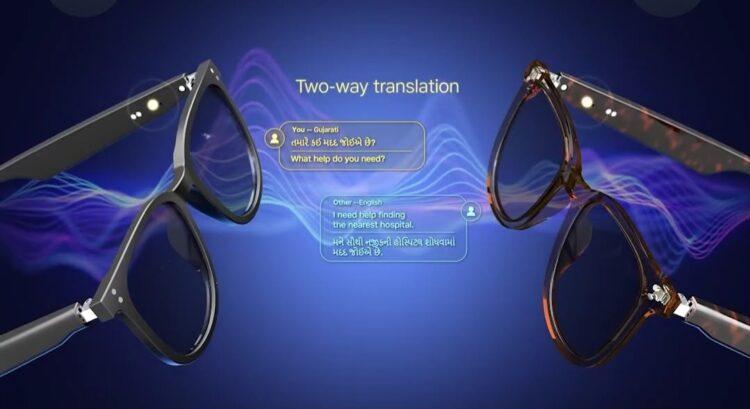
Between payments, the same frame murmurs live ball-by-ball cricket commentary in your language of choice, translates a Gujarati shopkeeper’s question into accented English and vice versa, and silently summarizes the last fifteen minutes of a meeting you forgot to take notes in. It is, by any measure, the most confident product story Reliance Jio has told since it turned India into a 4G nation a decade ago.
It is also, on the evidence available as of October 13, 2026, a product with no price, no shipping date, no published camera resolution, no rated battery life, no confirmed chipset, and no disclosed payment-authentication design. Jio did not decline these details. It simply has not released them, more than a year after the glasses were first teased on stage at the company’s annual general meeting.
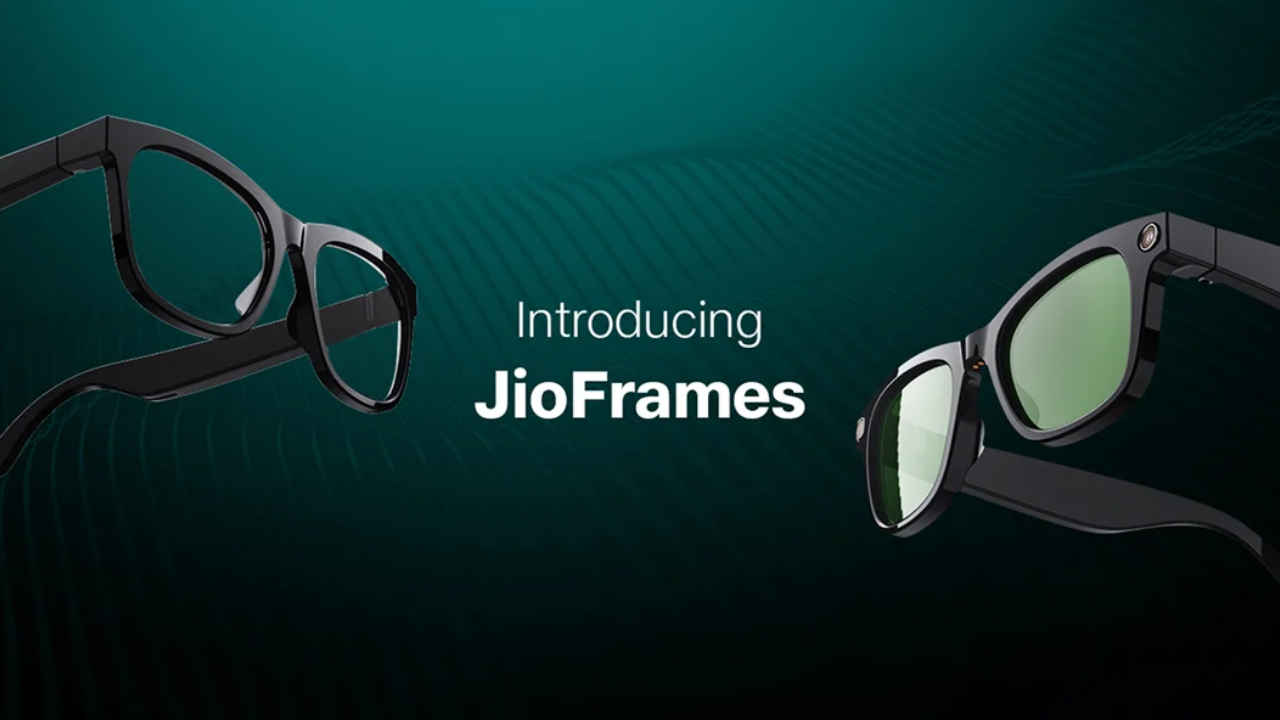
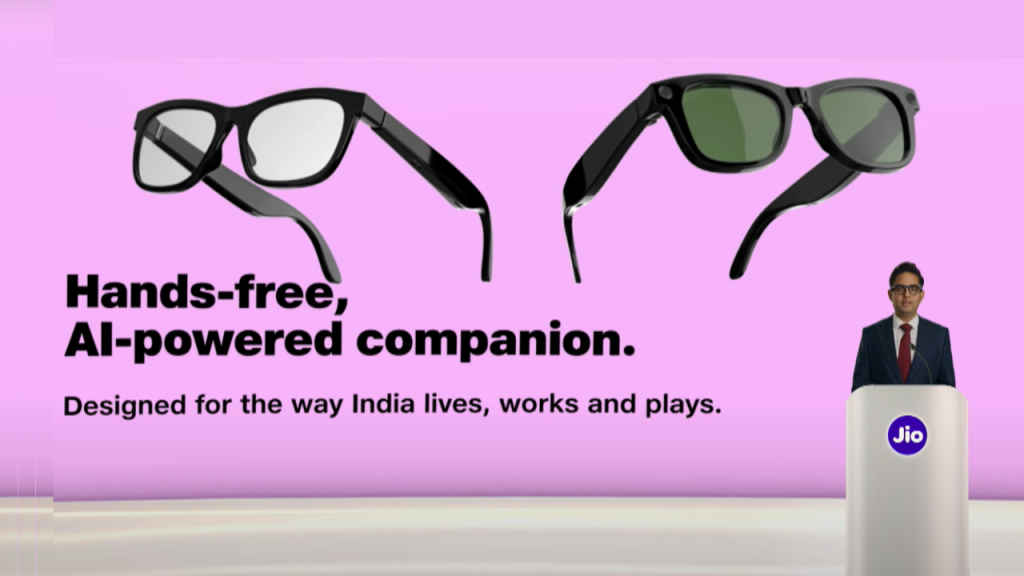
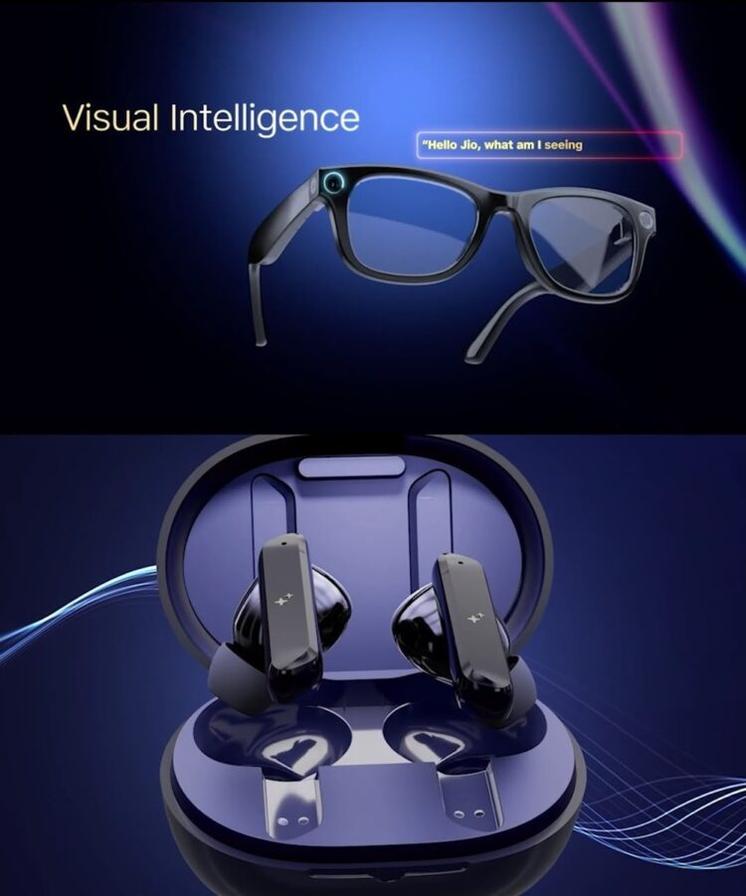
That gap between a flawless demo and an absent spec sheet is where this guide lives. The Jio AI glasses family — JioFrames camera glasses, a sibling pair of audio-only frames, and JioBuds earbuds, all running Jio’s JioRealityOS software — deserves to be taken seriously. It also deserves to be read with the skepticism reserved for hardware that has spent fourteen months on the runway and still has not taxied.
Product market analysis
The market Jio is walking into is real, large, and largely unclaimed. India has nearly a billion mobile connections, a smartphone market that sells more than 250 million handsets a year, and an payments rail — UPI — that processes over 20 billion transactions a month. Wearables, meanwhile, are one of the few hardware categories in India still growing at double digits, led by cheap smartwatches from Noise, boAt, Fire-Boltt and their ilk, almost all of which sell for under ₹3,000.
Smart glasses are the next logical slot on that belt, and nobody owns it. Ray-Ban Meta sells in India, but at ₹25,000-plus it is a premium novelty for a sliver of metro early adopters. Chinese audio glasses exist online, shipped grey-market, with no local warranty and no Indian-language AI worth naming. Bose effectively exited the category. Huawei barely sells consumer electronics in India at all. Into that vacuum, Reliance brings three things no foreign rival can match: a 5G network it controls end to end, a JioPhone/JioBharat distribution footprint that reaches towns where flagship stores do not, and a payments relationship Indians already trust with the bank accounts linked to UPI.
That is the bull case, and it is genuinely strong. Jio’s historical superpower is not inventing technology — it is taking infrastructure that exists in rich countries and slashing its price until a market the size of India can absorb it. Jio did this with voice calls. It did it with data. It did it with cheap 4G feature phones. If it can land AI glasses at, say, ₹9,999 or less, with UPI baked in, it could plausibly create the first mass-market wearable category in the country on its own terms: not for creators filming their brunch, but for vendors, delivery riders, tourists, elders and small-business owners who want to interact with the digital stack without touching a glass rectangle.
There is also a behavioral undercurrent working in Jio’s favor that no spec sheet captures. Indians already live in voice: voicetime on JioCinema’s sports coverage, regional-language podcasts on Spotify, UPI voice flows, and a whole generation of first-time internet users who type with their thumb but think in speech. A voice-first wearable does not require the same conversion that persuaded Americans to put a camera on their face. The wearables Indian consumers actually buy are disposable, $25-ish smartwatches from domestic brands that they strap on for six months and lose on a train. If Jio can price AI glasses in that neighborhood and bundle them into a prepaid plan the way it once bundled JioPhone handsets, adoption economics stop being the bottleneck.
The catch is that the comparison Jio itself invites — “India’s Ray-Ban Meta” — flatters the price point and hides everything else about the comparison that matters. The AI-glasses business in 2026 is not won on hardware BOM. It is won on the quality of the on-board assistant, the ecosystem of services it connects to, the years of camera and microphone refinement that Meta has quietly shipped across three generations, and a software-update promise that survives past the holiday quarter.
Jio has the distribution. It has not yet shown it has the model, the tuning, or the maintenance culture. And that matters more than the ₹20,000 gap in price.
Competitor product analysis
Start with the machine Jio is measured against. Ray-Ban Meta Gen 3, the latest camera glasses Meta launched alongside a Connected conference in late September 2026, starts at roughly $449 (about ₹38,000 in Indian street price). It weighs a touch over 40 grams, runs up to nine hours on a charge, and packs a six-microphone array that Meta says cancels more than 90 percent of background noise — a claim you notice the moment you wear one on a windy street, because calls and voice commands actually work. It shoots 12-megapixel photos and 3K video, includes a configurable action button that summons Meta AI with one press, and — crucially — has now been through three product cycles, two years of software updates, and a deep integration with WhatsApp, Instagram, Spotify, Audible and Meta’s own Llama-based assistant. It is not exciting to read about. It is boringly competent, and boringly competent is what wins wearables.
Then there is the device that is actually Jio’s closest philosophical twin, and it is also Meta’s: Ray-Ban Meta Audio, announced the same week, at $349. No camera. Forty-three grams. Twelve hours of battery on the glasses and another forty-eight in the charging case. Clubmaster and Burbank shapes, twenty-three frame-and-lens combinations, prescription support, open-ear speakers, and a hands-free Meta AI that answers questions, dictates messages and reads out directions. Jio’s audio glasses — the pair without the camera — are entering this exact product slot. The comparison is uncomfortable: Meta, after four years of wearable acoustics, still could not make open-ear speakers sound private on a busy sidewalk, and every review notes leakage at anything above a library-quiet volume. Jio, with no audio-glasses track record at all, is promising not just music and calls but cricket commentary, voice payments confirmation and translation over the same transducers.
Huawei’s AI glasses, the Chinese benchmark for audio-first frames, are the quietly impressive competitor everyone in New Delhi ignored. The latest Eyewear 2 line sells for roughly ¥1,699–2,899 (about ₹20,000–34,000), weighs under forty grams, delivers about eleven hours of audio playback and nine of calls, is IP54 sweat-rated, and — the feature Jio should be nervous about — offers face-to-face interpretation across up to twenty-one languages with speaker-voice cloning, so each side hears the other in a natural timbre rather than a robot. Huawei has its own silicon, titanium hinges and a prescription-optical network across China. It is also, practically speaking, unavailable in India, which is convenient for Jio. But the point stands: a serious audio-glasses product requires acoustic engineering, call-noise cancellation and translation latency tuning that takes years, and Huawei has spent those years while Jio is still handing out press decks.
Then there is the grave marker. Bose Frames, the original open-ear audio sunglasses, are no longer sold on Bose’s own website — the company’s support page now redirects existing owners toward Ultra Open Earbuds. Frames launched in 2019 to rave reviews, sold for $249, won design awards, and disappeared. The autopsy written by reviewers and the market is consistent: nice sound, terrible battery (3.5 hours of streaming on early models), no assistant worth summoning, and a privacy conversation that never happened. Jio’s leadership team would be wise to study Bose’s post-mortem. Premium audio glasses are not a product category that rewards a single generation of hardware; they reward a decade of patience, and Bose itself, one of the best audio companies on earth, did not have it.
Pros and cons
To be fair to Jio, the merits are real and worth naming once.
The price, if it lands where Indian media expects — a small fraction of the roughly ₹30,000 Ray-Ban Meta bracket — would be an earthquake. The Indian-language story is authentic: a “Hello Jio” assistant tuned for Hindi, Tamil, Bengali, Gujarati and the other nine languages Jio claims, is a service Meta will never prioritize for global English-first models. The UPI tie-in, if the security model holds, is the one feature no foreign competitor can legally or culturally replicate, because UPI Circle is India’s own low-value wearable-payment framework. And Reliance’s distribution — Jio stores, Reliance Retail, MyJio app, the same network that put a 4G phone in two hundred million pockets — is a moat no startup and no multinational can buy.
Now the cons, which is why you are reading this.
Start with the elephant in the press kit: there is no product to buy. No price. No on-sale date. No battery rating. No camera megapixel count. No weight. No water-resistance rating. No chipset. No storage. No list of supported phones. Some outlets report a possible November or December 2026 launch; others, citing company representatives, hinted at a vague “first half” window. That is not a launch schedule. It is a kite-flying exercise. When a company as disciplined as Reliance — a company that can move 4G spectrum and retail footfall on a schedule — withholds the spec sheet this long, the most charitable interpretation is that the hardware is still in flux. The less charitable one is that the demoed features are server-side promises that depend on AI model performance Jio itself is still tuning.
Consider what the glasses must actually do on a Delhi street. The payment flow requires the camera to read a vendor QR printed on a smudged, rain-spattered sticker under a shop awning, while a scooter rumbles past and a six-piece brass band sets up fifty meters away. Then the wearer, possibly sweating, possibly in a crowded queue, has to enunciate an amount to a wake-word listener in open air. Jio demonstrated this in a quiet booth with a perfectly lit QR. Every layer of real-world noise is a place where this fails. Meta’s Gen 3 exists at $449 precisely because it spent three generations learning to tell “Hey Meta” from Delhi traffic. Jio has not published a single microphone count.
The cricket commentary feature is the most marketed and least defensible. Live ball-by-ball audio over open-ear speakers means either a stream from JioCinema’s rights infrastructure, or an AI narrating a data feed — both depend on the same street-side microphone array failing to mangle the wake word, both push audio straight into a speaker pointed at nobody in particular, and both will look faintly ridiculous on a commuter train. It is a spectacular demo for a two-minute stage slot. It is a feature people will turn off after the second match, when they realize open-ear audio leaks commentary to the seatmate and the latency makes the narration arrive after the ball has already hit the stumps. It is a marketing hook, not a use case.
The translation feature deserves similar scrutiny. Twelve Indian languages sounds like an opening of borders, but the hard problem in Indian speech recognition is not language count — it is code-switching. Real Indian speech is Hinglish, Tanglish, Gujarati sentences punctuated by English business words, all delivered at volume with ambient rickshaw noise. A model that ships demo-perfect on curated stage phrases and folds in a bazaar is the classic wearable trap. Jio’s multilingual credentials on JioPhone and JioHotstar are genuinely strong, but on-device or near-device latency for two-way voice interpretation is a different engineering problem than captioning a streamed movie.
Then there is the money. UPI Circle caps each transaction at ₹5,000 and monthly spend at ₹15,000 — limits Jio correctly attributes to the framework, not itself. The guardrail is reassuring until you think about theft: whoever picks up or steals a lost pair of glasses, and can say the words “Hello Jio,” gets a ₹15,000-per-month line of credit with no phone, no PIN screen and no biometric that the eyewear itself cannot verify. Jio has not disclosed how payment authentication actually works — whether it requires the paired phone nearby, whether there is a spoken-PIN fallback, what happens if someone coerces the wearer aloud. A lost pair of AirPods is an annoyance. A lost pair of voice-payment glasses is a small-money cyber-theft waiting for a fraud team that does not exist yet.
The biggest con, though, is institutional. This is not Jio’s first time unveiling magical hardware. The JioPhone was a revelation in 2016 — free-feeling 4G for a billion people — and years later the story around it is one of discontinued plans, renamed tariffs (JioPhone plans quietly folded into the JioBharat branding in 2026), patchy software updates and a consumer-complaint docket the size of a phone book. Jio’s history at the lower end of hardware is: thunderous launch, phenomenal first-year pricing, then a long, slow taper. A pair of ₹10,000 AI glasses is a five-year decision. Will JioRealityOS get the same long tail as JioPhone’s KaiOS environment — or a shorter one? The company has not promised years of AI updates, and its own record does not invite blind faith.
Finally, note the small print buried in the demo: Jio showed three things — camera glasses, audio glasses, earbuds. The audio glasses, the pair most people will buy, cannot scan a QR code at all. UPI Scan & Pay lives on the camera model. Cricket commentary, translation and the assistant, by contrast, are pitched across the whole family. Buy the cheaper audio frames expecting to pay by voice, and the headline feature is physically missing.
Walled-garden lock-in is the other under-examined con. Every clever feature Jio demoed — the multilingual assistant, the meeting summaries, the visual search, the cloud storage for your photos and cricket narration — appears to run on Jio’s own cloud and services, tied to a Jio SIM and a Jio prepaid or postpaid relationship. That is great while you are a happy Jio customer. It is a trap the day your number moves to Airtel, the day Jio raises its tariffs, or the day the AI service is quietly deprioritized on cheaper plans. No one has yet said whether the glasses work with a non-Jio phone. No one has said what happens to the years of meeting notes and photo archives stored on Jio’s AI Cloud if the customer leaves. Compare that with Meta, where the glasses pair with any Android phone, export photos to WhatsApp and Google Photos, and do not care which carrier pays your bill. Hardware sold as a subscription hook is fine while the honeymoon lasts; it is a nightmare the day you want out.
Consumer buying considerations
If you are a sensible Indian reader eyeing these frames, here is what the road ahead looks like, and what to hold off on.
Wait for the spec sheet. Do not pre-order, do not place a booking, do not let a mall kiosk take your money in November based on a press render. The honest product is the one that shows up on Reliance’s own newsroom with weight, battery hours, camera megapixels, water resistance, supported phone list, and a written statement of how payment authentication works. Until those exist, everything printed about “Jio AI glasses” is a demonstration of intent, not a consumer product. The fourteen-month gap between the August 2025 AGM teaser and today’s IMC encore is itself the data point: Jio is still polishing.
Do not buy the glasses for cricket commentary. That feature will be free for one IPL season, heavily promoted, and quietly abandoned in favor of whatever the next demo hook is — AI note-taking, landmark recognition, whatever slides into the following year’s keynote. If your honest use case is “I want to listen to cricket without holding my phone,” cheaper Bluetooth earbuds and a JioCinema subscription do that today, privately, and without a camera on your face.
Remember that the product is, in every practical sense, India-only. UPI payments do not work abroad. The multilingual assistant is tuned for Indian languages, not Spanish or Japanese. The translation feature bridges Indian tongues, not world ones. The moment you fly to Dubai, Singapore or London, you are wearing an expensive paperweight whose flagship feature simply does not exist.
Privacy deserves its own paragraph. A camera that scans your field of view, an always-listening wake word, and a payment rail tied to your bank account is three surveillance surfaces in one frame. Ask the important questions before launch: does recording have an obvious indicator light? Where do the meeting notes and visual-AI queries get stored — Jio’s cloud, for how long, and who at Reliance can access them? How does the Data Protection Board’s DPDP regime treat biometric voice signatures used for payments? A company that has not answered these on a spec sheet is asking you to trust it with money and memories at the same time.
Then there is the stuff no press release can answer and no review exists for. How heavy are the frames after three hours? Do the open-ear speakers leak your transaction amount to the commuter beside you? What happens to battery life when the AI assistant is running on 5G all day instead of sitting idle? How warm does the frame get on a Mumbai afternoon? How does the modular temple system actually work with an optician? None of these questions have answers, because no reviewer outside Reliance has worn the product for a week.

There is a bullish version of this story, and it should be said plainly: a cheap, UPI-connected, Indian-language AI wearable from a company with Reliance’s balance sheet could be one of the most important hardware launches India has produced this decade. It could genuinely shrink the smartphone for hundreds of millions of people. It could also, like so many Jio product moments before it, be remembered more for the keynote than for the device in the drawer.
The fair advice, as of this Tuesday in October 2026, is neither to pre-order nor to dismiss. It is to watch. Watch for the spec sheet. Watch for the independent review units. Watch for whether “Hello Jio” actually works over rickshaw traffic, whether a lost frame costs a family ₹15,000 or nothing, and whether Jio’s software team is still shipping assistant updates three winters from now — the way Meta does, and the way Bose, despite making great audio, never quite did.
The glasses on the Dwarka stage this week were beautiful. The numbers on the counter next to them, as of today, are still blank. That blank space is exactly where your patience should live.
Related reading: Moonix AI Glasses Review · The Camera-Free Gamble · MemoMind Memo One
3 thoughts on “Jio’s Cricket-Commentating Glasses Sound Great. Here’s What It Won’t Tell You.”