
Product Overview
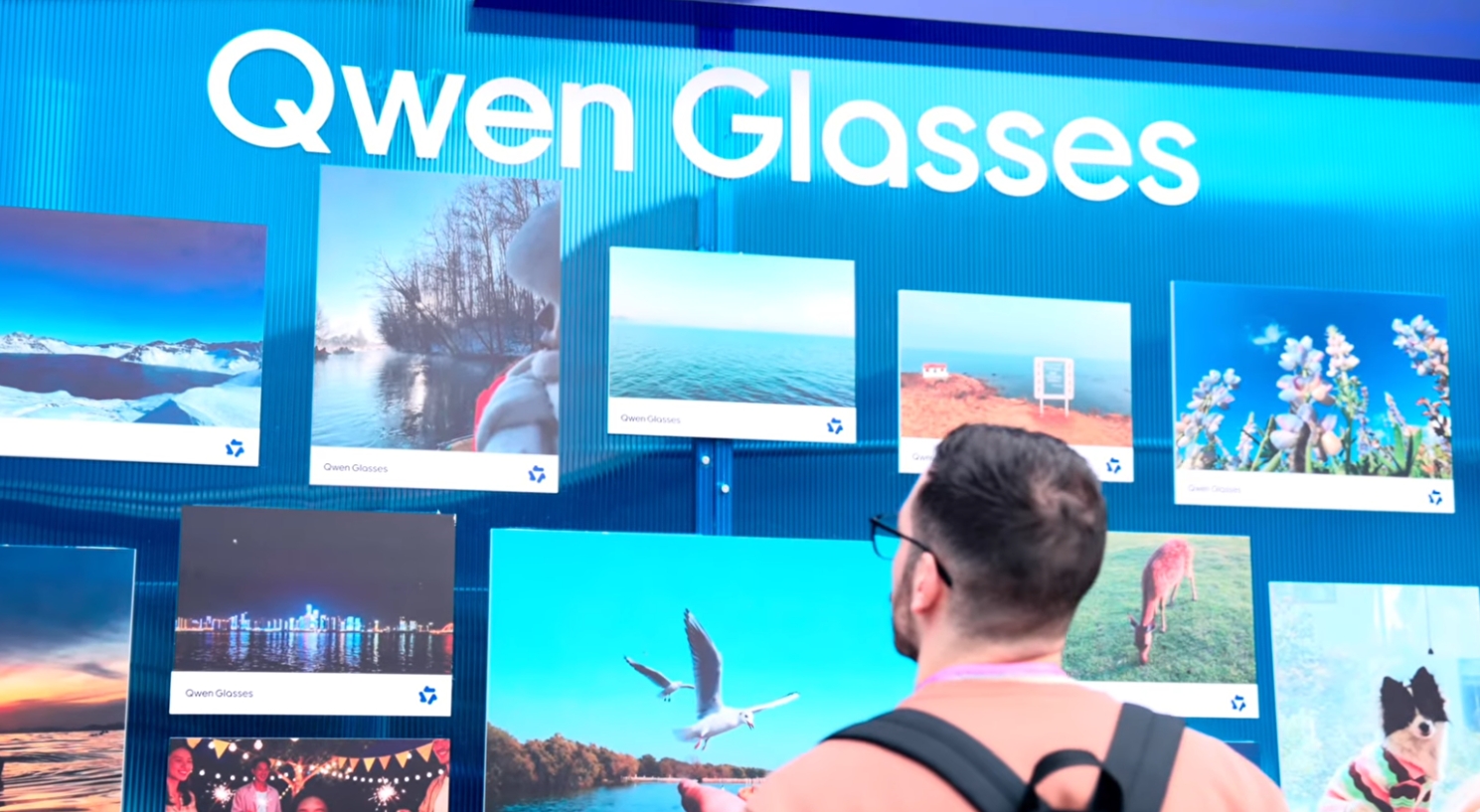
The Qianwen N1 series represents Alibaba’s third generation of AI glasses, taking a path opposite to the rest of the industry: completely eliminating the display screen to focus costs and computing power on perception and interaction. The hardware utilizes a “triple-chip architecture”—Qualcomm Snapdragon AR1 + Bestechnic BES2800 + a low-power perception chip. Imaging capabilities feature a 50-megapixel “large-format” CMOS sensor (with a 49.8% increase in light-sensitive area), supporting 4K video recording and multi-axis image stabilization. The N1 Pro exclusively features the industry’s first mass-produced, lightweight, high-precision eye-tracking system (center accuracy <1°), iris-based payment authentication developed with Ant Group (false acceptance rate <1 in a million), and PPG plus temperature health monitoring. The temple-mounted battery is hot-swappable (allowing for continuous use during swaps), with the N1 offering approximately 9 hours of battery life. The ecosystem integrates with DingTalk, Amap (Gaode Maps), and Alipay.
Key Drawbacks
“Eye-scan payment” remains a showroom feature: While the iris authentication technology is impressive, there are virtually no offline merchants accepting it; in the short term, it is merely a demo scenario and should not be the primary reason for purchase. The real value lies in eye-tracking—it solves the age-old problem of “pointing” with screenless glasses (when you say “this,” the AI finally knows exactly what you are looking at).
No display means no teleprompter, translated subtitles, or projected navigation: The previous generation (S1) featured a display (priced around 3,000 RMB, it was the best-selling model across all channels in the first five months of this year), whereas the new generation has removed the screen. Users who want text displayed right in front of their eyes should look elsewhere; the N1 series isn’t the right choice—they should wait for the Rokid second-generation model or the XGIMI MemoMind One, both launching on October 27.
Health monitoring accuracy is questionable: With PPG sensors embedded in the temple arms, fit, sweat, and movement can all affect heart rate and blood oxygen readings, limiting their reliability compared to professional smartbands or smartwatches. A common industry pain point is high return rates, ranging from 30% to 70% overall (according to RUNTO data). The primary causes are lackluster functionality and wearer discomfort—most models still fall short of the 30-gram “comfort threshold.”
Competitor Product Analysis
Meta Ray-Ban Meta Audio (US; launched in the US on Oct 13; $349): Also following a “minimalist” approach, Meta went a step further by removing the camera entirely. Weighing 43g with a 12-hour battery life, it emphasizes privacy and lightweight design. While it lacks eye-tracking and payment capabilities, it boasts superior branding, stylish frames, and privacy features designed with bystanders in mind. The Qianwen N1 Pro differentiates itself through “photography + eye-tracking interaction + payment ecosystem,” whereas Meta Audio stands out for being “lightweight, long-lasting, and stylish.”
Xiaomi AI Glasses (¥1,999) and Rokid Glasses (¥2,969): Direct domestic competitors in the ¥2,000–¥3,000 price range. The Xiaomi model has already shown issues such as translation lag and poor low-light image quality; the first-generation Rokid glasses drew widespread complaints regarding “light leakage when looking straight ahead,” with users reporting that colleagues saw “green light emanating from their eyes.” On paper, the N1 holds a hardware advantage thanks to its large-format CMOS sensor and triple-battery power system; however, the intelligence of its AI Q&A feature depends on the actual performance of the Qianwen large model, which remains to be verified post-launch.
Samsung Intelligent Eyewear (Launching in November; approx. $379–$499): Camera-equipped glasses featuring Gemini AI, highlighting a privacy-focused hardware design that automatically cuts power if the camera indicator light is obstructed. While it does not support eye-tracking payments, its backing by the Android XR ecosystem poses a greater long-term threat.
Summary of Pros and Cons
Pros: Features the world’s first mass-produced eye-tracking solution for lightweight AI glasses; offers the best-in-class combination of 4K recording and a large-format sensor; hot-swappable batteries eliminate range anxiety; and leverages an irreplaceable domestic ecosystem (DingTalk, Amap/Gaode, and Alipay). Drawbacks: No visual display capabilities; iris-based payment has no immediate practical use; health monitoring accuracy is mediocre; significant price gap between the N1 and N1 Pro (with eye-tracking, iris recognition, and health features exclusive to the Pro), making the purchasing decision more complex.
Consumer Buying Tips
Decide clearly whether you want “photography + voice assistant” (N1) or “eye-based interaction + health monitoring” (N1 Pro); the price difference likely spans the 1,000-yuan and 2,000-yuan tiers.
Users seeking screen displays (translated subtitles, teleprompter, navigation) should skip this series and wait for the Rokid Gen 2 or XGIMI MemoMind One, launching on October 27.
Those with myopia or astigmatism should prioritize in-store trials and eye exams (Rokid has established 604 experience stores across 82 cities) before purchasing—the 30%–70% online return rate serves as a cautionary tale.
Do not buy solely for the “iris payment” feature; verify eligibility for government subsidies, price protection policies, and whether lens costs are included in the retail price.
With the Double 11 shopping festival approaching, wait for the major sale to compare final prices if you aren’t in a rush; launch prices rarely beat the post-launch price drop curve.
Verdict: Eye-tracking offers genuine added value, making the Pro model worth the extra cost; iris payment is a feature for the future. It currently sets the hardware benchmark for “on-device AI camera glasses” in China, though the absence of a screen means it focuses on liberating “head-down” users rather than providing “head-up” information. Rating: 8.0/10 (N1 Pro).