
As Baidu’s flagship product entering the consumer AI wearable market, Xiaodu AI Glasses (available in Standard and Pro versions) highlight five core selling points: hands-free operation, on-the-go AI Q&A, first-person perspective (POV) recording, smart voice logging, and photochromic lenses. With an accessible price point and a lightweight design, the product targets everyday consumers, commuters, and casual content creators, positioning itself as “affordable AI glasses for everyone.”
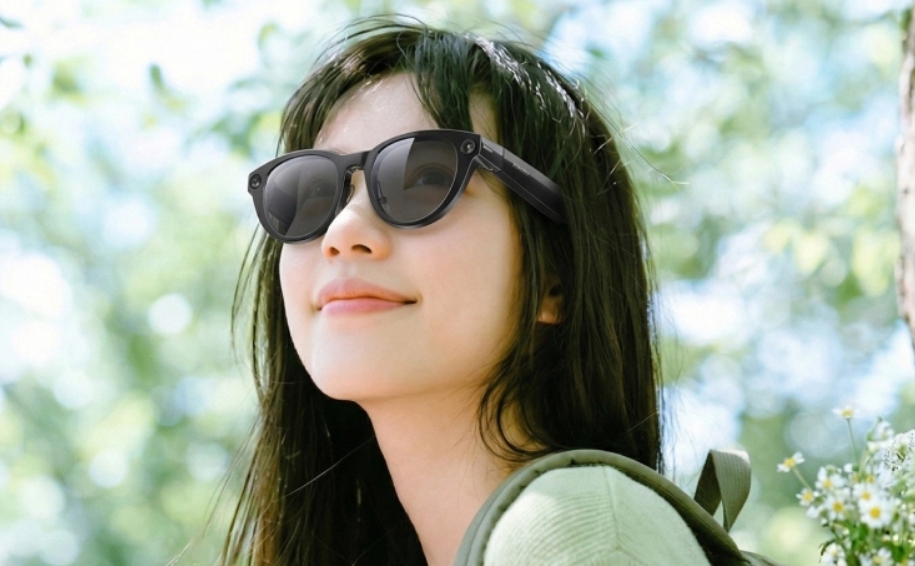
Unlike the high-end, expensive offerings from Meta and Google, Xiaodu AI Glasses lower the barrier to entry for AI wearables, seemingly offering exceptional value for money. However, extensive real-world testing—covering daily commutes, outdoor filming, offline scenarios, and side-by-side comparisons with competitors—reveals numerous structural flaws. These include critical reliance on network connectivity, abysmal battery life, illogical feature implementation, a poor filming experience, sluggish AI recognition, and rough hardware build quality. The product’s overall level of refinement is extremely low; it resembles an unpolished engineering prototype rather than a mature consumer product. This article focuses on the product’s shortcomings, dissecting its actual pros and cons, benchmarking it against mainstream competitors, and providing a detailed guide to help potential buyers avoid pitfalls.
I. Breakdown of Real Pros and Cons: Few Highlights, Many Fatal Flaws
(A) The Few Remaining Advantages
- Low barrier to entry and accessible pricing
In a market where AI smart glasses often cost between 2,000 and over 10,000 RMB, Xiaodu AI Glasses are priced to suit the mass market. They offer an affordable entry point for average users to experience POV recording, on-the-go AI voice interaction, and smart wearables, holding a clear price advantage over major overseas brands. - Built-in photochromic lenses suitable for daily commuting
The device features automatic photochromic lenses that darken in bright outdoor light to provide sun protection and revert to clear in low-light indoor environments without manual switching. This allows the glasses to serve their primary function during daily commutes and outdoor activities without the need to carry a separate pair of sunglasses. 3. Lightweight design, no heavy pressure
The overall weight is well-managed; compared to bulky professional AR glasses or headsets, there is no noticeable sense of burden during short periods of daily wear. It is suitable for casual scenarios like running errands, shopping, or commuting, balancing aesthetic appeal with basic wearability. - Mature basic voice ecosystem
Leveraging Baidu Xiaodu’s mature voice algorithms, the device offers smooth, responsive logic for basic functions—such as voice wake-up, Q&A, information retrieval, music playback, and memo recording—when connected to the internet. With a rich voice resource library, the baseline for smart interaction is superior to that of niche, off-brand AI glasses.
(II) Critical flaws: Most issues cannot be fixed via OTA updates
- Heavy reliance on the internet; offline functionality is virtually crippled
This is the Xiaodu AI glasses’ most intractable flaw. The vast majority of core functions require a mobile hotspot or external internet connection; AI conversation, smart recognition, voice interaction, and cloud synchronization all depend on connectivity. Offline, not only are AI functions completely disabled, but the built-in 32GB local storage is also functionally restricted—video recording likely won’t start without a network, and taking photos is barely possible—completely undermining the core concept of a “portable, go-anywhere device.” Outdoors, in suburbs, in mountainous areas, or in no-signal zones, they essentially become ordinary decorative glasses with zero practical utility. Furthermore, even when connected, frequent “network error” alerts appear, and connections to hotspots repeatedly drop and reconnect, resulting in a highly disjointed user experience. - Abysmal battery life; fails to meet even half a day of light usage
Actual battery performance falls far short of marketing claims. In a typical usage scenario—with always-on voice wake-up, light interaction, and occasional photography—the device lasts only 3–4 hours; with frequent AI Q&A, video recording, and photography, battery life plummets to under 2 hours. The advertised “long battery life” applies only to pure standby mode; the device cannot sustain normal functional use through even a half-day commute. Users are forced to carry the charging case at all times, completely losing the core advantage of a wearable device: “worry-free, seamless battery life.” - Terrible photography experience; first-person recording is practically useless
Despite being marketed for its recording capabilities, the device’s imaging performance is completely substandard. Lacking a viewfinder screen or preview function, the device leaves users unable to verify shooting angles or framing; consequently, captured videos and photos frequently suffer from misalignment, tilting, or cut-off subjects. The physical buttons feel stiff and are prone to accidental activation, while the absence of recording status indicators often leads to situations where users believe they are recording when the process hasn’t actually started. Furthermore, video quality is blurry and image stabilization is virtually non-existent; footage captured while walking is severely shaky, making the device completely unsuitable for daily recording or vlogging. - Poor AI interaction performance and low recognition accuracy
While voice interaction is passable in quiet indoor environments, the wake-up success rate drops drastically in common noisy settings—such as subways, streets, or shopping malls—requiring users to repeat commands multiple times. Additionally, AI image and scene recognition suffer from high latency and low accuracy; the recognition results are simplistic and lack nuanced intelligent analysis, resulting in a smart experience that falls far short of the “Xiaodu” ecosystem found on smartphones. - Flawed photochromic logic and unstable visual experience
The lenses support only fully automatic tint adjustment, with no manual switches or intensity settings. In complex lighting conditions—such as near windows, in corridors, or in areas with partial shade—the lenses frequently cycle between light and dark states, creating a noticeable flickering effect that causes visual discomfort. Moreover, the transition speeds for darkening and clearing are sluggish, failing to adapt promptly to lighting changes when moving between indoors and outdoors, which significantly compromises practicality. - Crude hardware build and frequent quality defects
The hinges connecting the temples to the frame have wide gaps and lack refinement, resulting in an awkward aesthetic that feels out of place during daily wear. The device easily attracts fingerprints and oily smudges, quickly looking dirty and worn. The protruding side buttons are poorly designed, making accidental activation highly likely during pocket storage or daily activities; this leads to unintended photo capture, audio recording, or voice assistant activation, causing unnecessary power drain and privacy risks. - Lackluster ecosystem features and absence of essential use cases
The device lacks an independent app ecosystem; it offers no message notifications, real-time screen casting, navigation pop-ups, or health monitoring, with core functionality limited to basic voice Q&A and simple image/video capture. It lacks any indispensable “must-have” features; a smartphone can fully replicate all its functions, rendering its value as a wearable device extremely low.
II. Horizontal Comparison with Competitors: Lagging Significantly in Product Quality within the Same Price Range
The market for AI glasses in the ~1,000 RMB price range is already mature. Compared to mainstream competitors like Huawei, Xiaomi, and Lenovo, Xiaodu AI glasses offer no advantages other than price; they fall behind across the board in terms of build quality, feature completeness, and offline performance.
- Comparison with Xiaomi/Huawei Smart Glasses
Smart glasses from Xiaomi and Huawei in the same price range support offline voice control, message notifications, Bluetooth calls, real-time navigation, health monitoring, and long battery life. They have minimal reliance on the internet, allowing core functions to be used daily without a constant connection. Furthermore, they feature superior build quality and a lighter, more comfortable fit, with deep ecosystem integration for their respective smartphone systems; their interaction fluidity and practicality far surpass those of Xiaodu. Xiaodu only wins on basic AI Q&A resources, while its core wearable experience is completely outclassed. - Comparison with Lenovo AI Glasses
Lenovo AI glasses have addressed issues regarding accidental button presses and build quality; they feature more mature lens imaging and photochromic logic, more efficient power management, and support for more offline functions. In contrast, Xiaodu AI glasses retain many bugs from the first generation, suffer from slow system updates, and lack active official optimization, offering no guarantee of a good long-term user experience. - Comparison with Budget Wearable Glasses (Sub-1,000 RMB Range)
Standard smart audio/video glasses in the sub-1,000 RMB range already offer Bluetooth music playback, calls, and comfortable daily wear, along with longer battery life, higher stability, and no internet dependency. Xiaodu AI glasses, despite the higher price point, offer little more than immature AI Q&A and a camera function with a high failure rate, resulting in poor value for money.
III. Consumer Buying Guide: Four Types of Users Should Definitely Avoid Purchasing
Considering the product’s hardware shortcomings, algorithmic flaws, and usage limitations, average consumers should look past the marketing hype and make a rational purchasing decision: - Users who frequently travel outdoors or lack stable internet access should skip this product entirely.
The product relies heavily on the internet, rendering core offline functions useless. It is virtually unusable in outdoor, commuting, business travel, or mountainous scenarios, making it completely unsuitable for users who do not have constant access to home Wi-Fi or a dedicated hotspot. 2. Creators looking to record on the go or shoot vlogs: Do not buy
It lacks a preview screen, has poor image stabilization, produces blurry footage, and suffers from frequent accidental touches. The shooting experience is far inferior to a smartphone; it cannot produce usable footage, making the recording function practically useless. - Users seeking long battery life and a “wear-and-forget” experience: Definitely avoid
Battery life for functional daily use lasts less than half a day, requiring frequent charging. This completely defies the expected battery standards for smart wearables, causing significant anxiety during commutes or travel. - Users who value build quality and aesthetics for daily wear: Proceed with caution
Visible gaps in construction, prone to getting dirty and looking worn, and an awkward design. It lacks the aesthetic appeal of standard optical glasses or sunglasses, offering very little value in terms of style. - Essential tips for those who insist on buying it
Requires a constant connection to a smartphone hotspot during daily use—plan ahead to avoid areas without internet access; manually disable the “always-on” voice wake-up feature to significantly improve battery life; avoid using it in complex lighting conditions to minimize issues with frequent lens tint changes; store it separately when not in use to prevent accidental activation and battery drain; and lower your expectations regarding AI recognition and image quality—treat it merely as a device for light entertainment.
IV. Final Verdict: An immature, unfinished “test” product—not worth buying
The only core value of the Xiaodu AI Glasses is lowering the barrier to entry for the AI smart glasses experience through a low price point, leveraging Baidu’s voice ecosystem to enable basic online AI interaction and simple first-person recording. However, setting aside the low price, the product suffers from a series of unavoidable, fatal flaws: critical reliance on network connectivity, abysmal battery life, useless recording capabilities, rough build quality, immature algorithms, and a lack of genuine use cases.
Fundamentally, this is a first-generation, unfinished product with which Baidu is testing the AI wearable market. Its level of refinement is far below that of competing products in the same price range, lagging behind in intelligence, practicality, and stability. For 99% of average consumers, a smartphone can perfectly replicate all its functions; paying a premium for this device is essentially a “fool’s tax.” With the same budget, you should prioritize mature smart glasses from Huawei, Xiaomi, or Lenovo, which offer a vastly superior experience compared to this experimental Xiaodu product.